JetBlue Airways, known for offering comfort and affordability, announced that it will no longer service Miami International Airport (MIA) starting on September 3.
The stoppage in service is due to financial trouble, unprofitable margins and low performance on the Boston to Miami route. JetBlue’s financial struggles began in early 2020, but worsened significantly in 2024 after a failed $3.8 billion merger with Spirit Airlines. Federal judges blocked the deal, citing concerns that it would eliminate low-cost options for passengers who depend on Spirit’s lower fares. In Q1 of 2024, JetBlue reported a loss of $716 million, which continued to decline through the end of the year into 2025. The losses, primarily driven by rising fuel costs and a decline in passenger demand, have left them projected to remain unprofitable through 2025.
JetBlue has been in service at MIA since 2021 and at its peak offered 14 daily flights including the New York City area, Boston and Los Angeles. In an effort to attract leisure travelers, the airline expanded service to Miami, positioning themselves as a competitor to Delta Air Lines and American Airlines, the ladder of which having a hub in Miami.
The New York-based carrier will still offer daily service to Fort Lauderdale and West Palm Beach.
Until September 3, JetBlue will offer 1-2 direct flights only to Boston. According to JetBlue, passengers who booked flights to Miami after September 3 will either be able to fly to Fort Lauderdale or receive a full refund to their original form of payment, according to a spokesperson from the airline.
In addition to ending service at MIA, the airline is also scaling back operations from Seattle-Tacoma International Airport. JetBlue CEO Joanna Geraghty claimed that it is “unlikely” the airline will even reach break-even operating costs in 2025.
“We’re hopeful demand and bookings will rebound, but even a recovery won’t fully offset the ground we’ve lost this year and our path back to profitability will take longer than we’d hoped. That means we’re still relying on borrowed cash to keep the airline running,” Geraghty said in a note to staff, according to CNBC.
With the departure of JetBlue, American Airlines, MIA’s primary carrier, may see a boost in passenger traffic, with Delta Air Lines potentially benefiting as well.
JetBlue’s decision to leave MIA could impact many University of Miami students residing in the Northeast looking for affordable travel, especially around busy periods like holiday breaks. Now, it can be even more expensive for students to fly home given that MIA’s main carriers, American and Delta, have less competition and more demand. Students will have no choice but to pay the pricey fare to get home to their families. While Fort Lauderdale can be a good alternative, it is further from campus and may be less convenient based on the traveler’s location.
It wasn’t too long ago that Miami, with all its sunshine and beauty, was primarily known for tourism and senior citizens. It was a place to vacation at or retire to, certainly not a hub of digital innovation. But over the course of a few transformative years, catalyzed by a raging pandemic and a surge in venture capital (VC), Miami is emerging as the nation’s new tech epicenter. Today, it is no longer just a pretty beach, it’s Silicon Beach.
The COVID-19 pandemic marked the turning point for Miami’s tech landscape. As remote work became the standard, the old boundaries holding tech workers to specific locations were lifted. Entrepreneurs began seeing Miami as more than just a vacation spot. The appeal wasn’t just aesthetic though, as Florida’s zero state income tax and business-friendly climate quickly gained attention among founders and investors.
For Nathanael Scheer, a sophomore at the University of Miami studying business technology, Miami’s fast-growing tech scene made it stand out among his college options.
“When I was deciding what colleges to choose from, one of the things I weighed heavily was the location of the school and how it could help me in the future,” Scheer explained. “Miami proved to be the best option for me, since I am someone who’s tech-driven and interested in the business world. Now, as a rising sophomore, I hope to work with one of the many companies driving the growth we are seeing in Miami.”
In December 2020, current Mayor Francis Suarez took notice of the trend and wanted to capitalize on it. Responding to a tweet that said, “Ok guys hear me out, what if we move Silicon Valley to Miami,” Suarez famously replied, “How can I help?” This simple response resonated with the business community who saw it as a warm welcome for entrepreneurs, venture capitalists and large tech companies to establish a presence here in Miami.
The movement of technology workers and companies to Miami continued to gain momentum rapidly since the pandemic. In 2022, Citadel, a global hedge fund, announced it would relocate its headquarters from Chicago to Miami. By the end of that summer, the city led the nation in tech job growth. Miami suddenly gained the interest of Amazon, Microsoft and several of the nation’s biggest firms.
Apple Store in Dadeland Mall, Miami. Taken on 22 October 2022. // Photo Credit: Phillip Pessar
The Magic City had another big win in early 2024 when Apple committed to building a 45,000 square-foot office right here in Coral Gables. Apple’s decision drew major headlines and contributed to an 18% year over year increase in tech jobs in Miami, outpacing the national average.
Venture capital followed the talent. In 2024, Miami attracted a record $4.6 billion in funding, vaulting it to fifth place nationwide for VC deals.
Another consequential element in Miami’s tech growth was its embrace of Crypto. Blockchain conferences, in addition to projects such as MiamiCoin, have resulted in some referring to Miami as the world’s crypto capital.
Peter Smith, the CEO and Co-founder of Blockchain.com, commented on his decision to move the company from New York to Miami.
“Miami was an easy choice for us,” he said. “It’s on the East Coast time zone. And more importantly, it’s probably the most excited city in the world about crypto right now.”
While promising, it is important to keep in mind that the volatility of digital currencies continues to raise concerns about long-term stability. As such, it is not yet clear whether Miami’s embrace of crypto will be worth the risk.
The message for UM students is simple. If you are interested in tech, opportunities may be closer than you realize. While the “Silicon Beach” evolution is still underway, Miami’s tech scene already offers promising opportunities when searching for internships and jobs.
The U.S. Department of Education Office for Civil Rights opened an investigation into the University of Miami’s U Dreamers Program for allegedly breaching civil rights laws by providing specific scholarships to students without permanent legal status.
UM’s website states that the U Dreamers Program is “available to academically talented and admissible Deferred Action for Childhood Arrivals (DACA) and undocumented high school seniors and transfer students.”
According to the DOE website, providing scholarships specifically to “Dreamers,” undocumented immigrants who came into the U.S. as children, is a violation of Title VI of the Civil Rights Act of 1964, which prohibits against discrimination on the basis of national origin.
The DOE is investigating claims that the U Dreamers Program provides “unlawful exclusionary funding based on national origin.” The DOE’s investigation will determine if UM is “granting scholarships only for Deferred Action for Childhood Arrivals (DACA) or ‘undocumented’ students.”
This investigation began due to complaints from the Equal Protection Project. EPP is “devoted to fair treatment of all persons without regard to race or ethnicity,” according to its website. The EPP is associated with the Legal Insurrection Foundation,which is “widely recognized as one of the leading conservative law and politics websites.”
UM is one of five schools under investigation. The four other schools are the University of Louisville, the University of Nebraska Omaha, the University of Michigan and Western Michigan University.
Through this program, UM commits to meeting “100% of demonstrated financial need for admitted students,” including tuition, fees, housing, food and other expenses.
First-year and transfer DACA and other undocumented applicants are required to provide their country of birth and number of years they have lived in the U.S., but they must “attest that they will not require a student visa for university study in the U.S.”
The “terms and conditions” section of the U Dreamers Program page also outlines that if a student in the U Dreamers Program has a citizenship change that enables them to qualify for federal student aid, the funding from the program will be taken away.
The University has not responded to any request for comment.
Miami is known for its beaches and sunshine, but also faces hurricane advisories almost every year. After all, we’re called the Miami Hurricanes for a reason.
While Miami has not experienced direct landfall of a hurricane in decades, it does frequently experience the primary effects of other storms that make landfall across Florida
If a hurricane threatens our campus, it is important to be informed and have an action plan with your family. Consider this article your hurricane 101 guide with everything you should know during your time at the University of Miami.
The forecast 411
When it comes to monitoring hurricanes, the National Hurricane Center (NHC) is your new best friend. All important information regarding the hurricane’s location, path and intensity is found on their website.
During hurricane season, this information is regularly updated at 5 a.m., 11 a.m., 5 p.m. and 11 p.m. Eastern time. As a storm intensifies and nears land, updates are published every three hours or less depending on the intensity of any new developments
The website uses many visuals to help you track the storm and understand how your area may be impacted.
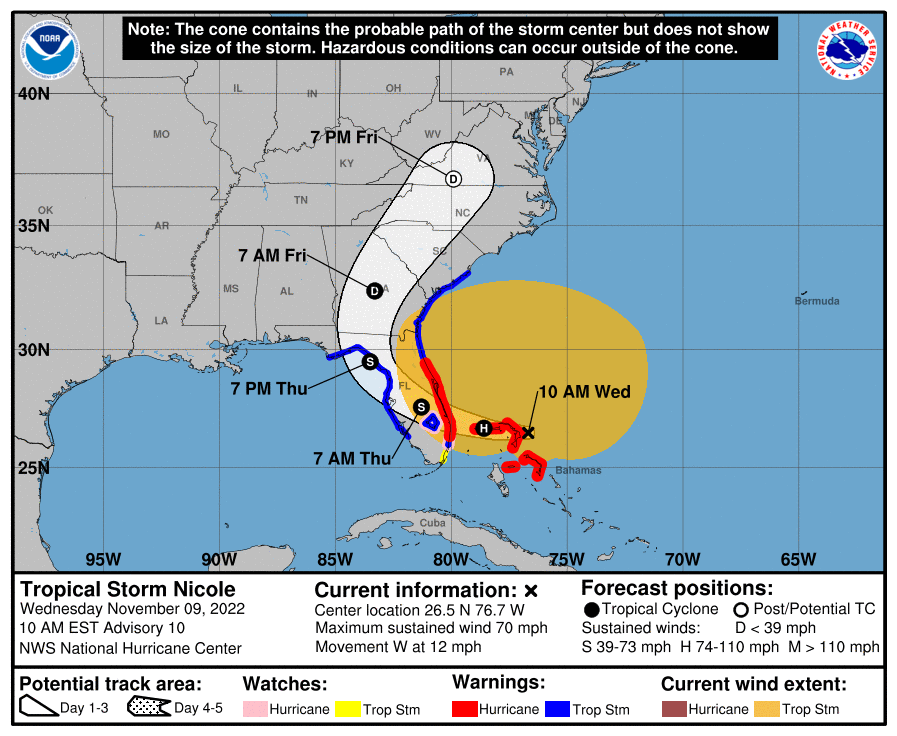
You may have heard of the ‘cone of concern.’ The cone does not track where the effects of the hurricane will be felt, but rather where the eye of the hurricane is projected to make landfall.
Tropical Storm Nicole is expected to make landfall late Wednesday and could strengthen to a category 1 hurricane. Photo credit: The National Hurricane Center
Additionally, the NHC will release two kinds of advisories: a watch or a warning. A hurricane watch means that hurricane-force winds are possible in the designated areas. A hurricane warning means that hurricane conditions are expected in the specified areas.
The NHC shares additional graphics that track other hurricane related effects such as storm surge, wind speeds and estimated wind arrival times.
The what’s what
Hurricanes are classified by its sustained wind speed into one of five categories. Storms that sustain wind speeds lower than a category one hurricane are considered a tropical storm or depression.
While no hurricane should be taken lightly, certain storms are more concerning than others. Hurricanes that are a category three or higher are considered major hurricanes.
These classifications are used in the NHC’s graphics to express how they predict the storm will develop as it moves. These letters are D for depression, S for tropical storm, H for hurricane and M for major hurricane.
Plan and prepare
The one (and only) good thing about hurricanes is that, most of the time, we have time to prepare. Unlike other natural disasters, hurricanes can usually be tracked for weeks, ensuring ample time to evacuate if needed.
Regardless of what category the storm is, it is important to listen to the government’s advisories. UM tries to make the decision to close and evacuate 72 hours before tropical storm winds are expected to reach campus.
Additionally, the school will provide ongoing communication regarding protective measures students can take in preparation for the storm, as well as bus transportation to both Miami International Airport and Fort Lauderdale-Hollywood International Airport.
Access to a carpooling app will also be available, connecting students in need of a ride with those who are evacuating by car.
Before moving to Miami, talk to your parents about evacuation plans in the event of a hurricane. Think of relatives or loved ones that are easier to travel to if going home is not feasible.
Make sure there are back up plans seeing that oftentimes there will be a limited time window to secure travel plans before being advised to leave campus.
In the event of a shelter in place, students should be prepared with at least three days’ worth of food and water although food services will be offered through UM for as long as possible. It is also recommended that students sheltering in place provide themselves with their own light source in the event of a power outage.
Hurricanes are scary, but not knowing what to do or expect is scarier. Beat the stress of the storm by planning ahead and staying informed.
With move-in quickly approaching, there are a few unspoken rules between roommates that can make or break your first semester. Living in close quarters with a new person requires communication, compromise and respect.
While your RA will be there to assist you with larger conflicts, there are smaller and often unspoken rules all roommates should follow to help keep the peace in your shared space. Fortunately for all freshmen, The Hurricane compiled these rules into a list for your benefit and your roommate’s.
Keep your area clean
Even though your dorm room should be a safe and comfortable space while at school, you should not be leaving your things scattered around. When living just a few feet away from another person, any sort of mess on either side of the room can make it feel cramped in your already small space.
People in Mahoney/Pearson and Eaton residential halls have the luxury of a private bathroom, but with that comes more cleaning responsibility. Things can get gross quickly with four people sharing one bathroom.
Come up with a cleaning schedule early on in order to get ahead of the mess.
Give your roommate a heads up about any guests
Your roommate should never be surprised to find someone else in their room. Whether it’s a mutual friend from down the hall or a friend from home spending the night, your roommate deserves a notice in advance. Not only is this a matter of respect, but it also gives you an opportunity to discuss and establish boundaries with each other.
Don’t touch the other person’s belongings without asking
This one is kind of a given, but still necessary to include.
You may find it useful to come up with a system for shared appliances before arriving on campus. If you’re the type to buy a full load of groceries every week, it’s probably best to have your own mini fridge while still sharing the microwave.
Even if you’re sharing things like appliances and a Brita, be sure to ask before using something that isn’t yours. It’s a small courtesy but it goes a long way.
Use headphones and respect quiet times
Early in the semester, discuss quiet times with your roommate. The residential colleges have set quiet hours, but if you’re the type to stay up extra late or fall asleep early, it is best to determine your own quiet hours.
Regardless of the time, you should always use headphones for phone calls, movies and music unless otherwise agreed upon.
Talk things out
As awkward as it may feel to confront your roommate about a situation, it is always better to talk it out. If you don’t voice your concerns, your roommate could have no idea that something they are doing is bothering you.
Whether you choose to send a text, leave a message on a sticky note or speak to them face to face, any form of communication is better than suffering in silence. If you need extra support, your RA is also there to help facilitate a conversation.
At the end of the day, your roommate doesn’t have to be your best friend, but they should be someone you feel comfortable sharing a living space with. Start the semester off right by setting expectations early and being the kind of person you would want to share a room with.
Tucked away in the residential neighborhood of Coral Cables, UM is a little more removed from the downtown lights of the city of Miami. While campus is still very close, it can be tricky to get off campus, especially for freshmen who don’t have access to their own car.
So, what exactly do people do on campus all day?
Here’s a few places where students pass time with friends and take part in activities while not in class.
Wellness Center
Any time of the day you can find students staying active at the Wellness Center. The Patti & Allen Wellness Center is a recreational facility with something for everyone. Whether you want to lift weights, play basketball, practice your swing on the tennis courts, go for a run or take a spin class, the Wellness Center has it all at no cost to students.
Feeling stressed about your health on campus? The wellness center also offers workshops on general health, body positivity and more.
The pool
The Whitten University Center outdoor pool is also always full of students. The UC pool is an olympic sized swimming pool with lap lanes and low diving boards. It is perfect for laying out in the sun or for a quick dip to cool down in the Miami heat.
Outdoor Adventures
However, if you prefer to be in the open water rather than splashing in the pool, you can utilize the school’s Outdoor Adventures for activities such as hiking, camping, paddleboarding or surfing.
Don’t want to venture off campus just yet? Don’t worry, Outdoor Adventures offers their own exclusive indoor rock climbing wall! This excursion allows students to practice their strength and see if their wits will allow them to reach the top. Students can experience this exhilarating activity their first time during orientation!
Lake Osceola
Need a break from the books, but want to stay on campus?
Lake Osceola, the freshwater lake at the center of campus, is the perfect place to relax and enjoy the campus scenery. The grassy steps leading up the lake also make fantastic back rests if you want to bring your lunch. Students also love to fish in the lake and you may even spot the campus manatees.
Off campus options
Miami’s Metrorail is a great resource located across the street from campus if you’re looking to go off campus to shop, eat, explore and relax. The metrorail makes it convenient for students to go shopping or out to eat without needing a car. Stops along the way include Brickell, Coconut Grove, Vizcaya Gardens and Museums and even Miami International Airport.
A good way to get accustomed to campus is to explore it. Spend some time before your first day of classes walking to each of the buildings and important places on campus. Miami is your home now. Instead of staying cooped up in your dorm, venture off to find your new favorite places!
This achievement is the largest philanthropic effort by any private institution in Florida.
“The priorities were really based on the University’s priorities and the roadmap to our second century,” Joshua Friedman, senior vice president for development and alumni relations said in a statement to The Hurricane. “There were investments in supporting our students through scholarships, facilities across the entire university, research everywhere from the Rosenstiel campus to the Sylvester Comprehensive Cancer Center and then in athletics.”
The success of the Ever Brighter campaign shows the support that UM has accumulated from alumni, donors and friends from around the world. More than 470,000 gifts were contributed by more than 160,000 individuals, with donations coming from all 50 U.S. states and 98 countries.
The top two priorities of the Ever Brighter campaign included expanding support for students through scholarships and opportunities and increasing the number of endowed faculty positions — both of which have been exceeded.
A total of 113 new endowed faculty positions, known as Centennial Talents, were created through the campaign. These positions help the university attract and retain leading scholars whose teaching and research push the boundaries of their fields.
Additionally, more than $280 million was raised for student support, significantly increasing students’ access to scholarships. These funds are helping students from all backgrounds attend the U and pursue their academic goals without the burden of financial strain.
Grecia Dianel Rivera Carrasquillo, a 2024 graduate from the Frost School of Music, brought her dream to be a singer-songwriter to life by releasing her debut Latin pop single, “Hipérbole” in 2023.
“Scholarship support gave me that opportunity and has changed my life,” she said to News@TheU.
Donor support has also led to major investments in research, innovation and campus development. The campaign added more than 564,000 square feet of new facilities across the university’s campuses, including state-of-the-art labs, classrooms and performance spaces.
But the fundraising effort started long before it was publicly announced in November 2021. Behind the scenes, donor support had already been fueling these major investments since 2015.
“Really the campaign was a 10 year campaign. It was quiet before it was public,” said Friedman. “We actually were going to announce the campaign publicly about the same time that COVID was hitting, so that slowed down that public announcement a bit. It was one of our first homecomings back on campus after COVID when we were able to really share the news of Ever Brighter with everyone.”
After four years of being public the campaign reached a historic milestone in major gifts, securing more than 440 contributions of $1 million dollars or more.
Among these was a $126 million anonymous donation, the largest in UM’s history, gifted to the Sylvester Comprehensive Cancer Center in recognition of its director, Dr. Stephen Nimer. Phillip and Patricia Frost contributed $100 million to launch the Frost Institute for Chemistry and Molecular Science and Philanthropist Kenneth C. Griffin donated $50 million in support of the new 12 story Kenneth C. Griffin Cancer Research Building, scheduled to open this year.
While these major donations were critical, the campaign’s success was powered by the widespread UM community. Nearly 90 percent of all gifts were $1,000 or less, and the median gift was $50.
This collective generosity was a key factor in surpassing the campaign’s goal.
“This is an incredible achievement and demonstrates how deeply people feel connected to the University,” Guillermo “Willy” Prado, interim executive vice president for academic affairs and provost said. “Ever Brighter is fueling student success, academic and research distinction and discoveries that will benefit society.”
Transitioning from high school to college classes can be scary, but UM has plenty of tools to help you make an A+ transition.
From whiteboards to workshops, there is a resource for every study method. These are the need-to-know study tips and tricks to help you pass your classes at the U.
Study spaces
A productive study session cannot happen without the perfect study spot.
From the silence of the stacks to the music at patio jams, there is a study space for everyone. With six libraries across three campuses, common areas and study lounges in the residential colleges and gliders all over campus, the U offers plenty of study space options.
Prefer studying in groups? Try the first floor of Richter Library, a study lounge in the freshman dorm hallways, or the lobby of your residential college. These areas allow multiple people to work together without having to worry about volume.
If you prefer privacy while you work, reserve a study room in one of the libraries. You can book a room for a group of people or you can choose an individual study room or pod to work alone.
Want to keep the silence but not feel entirely alone while you study? Check out the second floor of Richter Library, the “Stack Tower” on floors four to nine of the library and other designated quiet areas across UM’s other libraries.
For fuel as you study, you can grab a bite to eat or a cup of coffee from one of the many on-campus dining options.
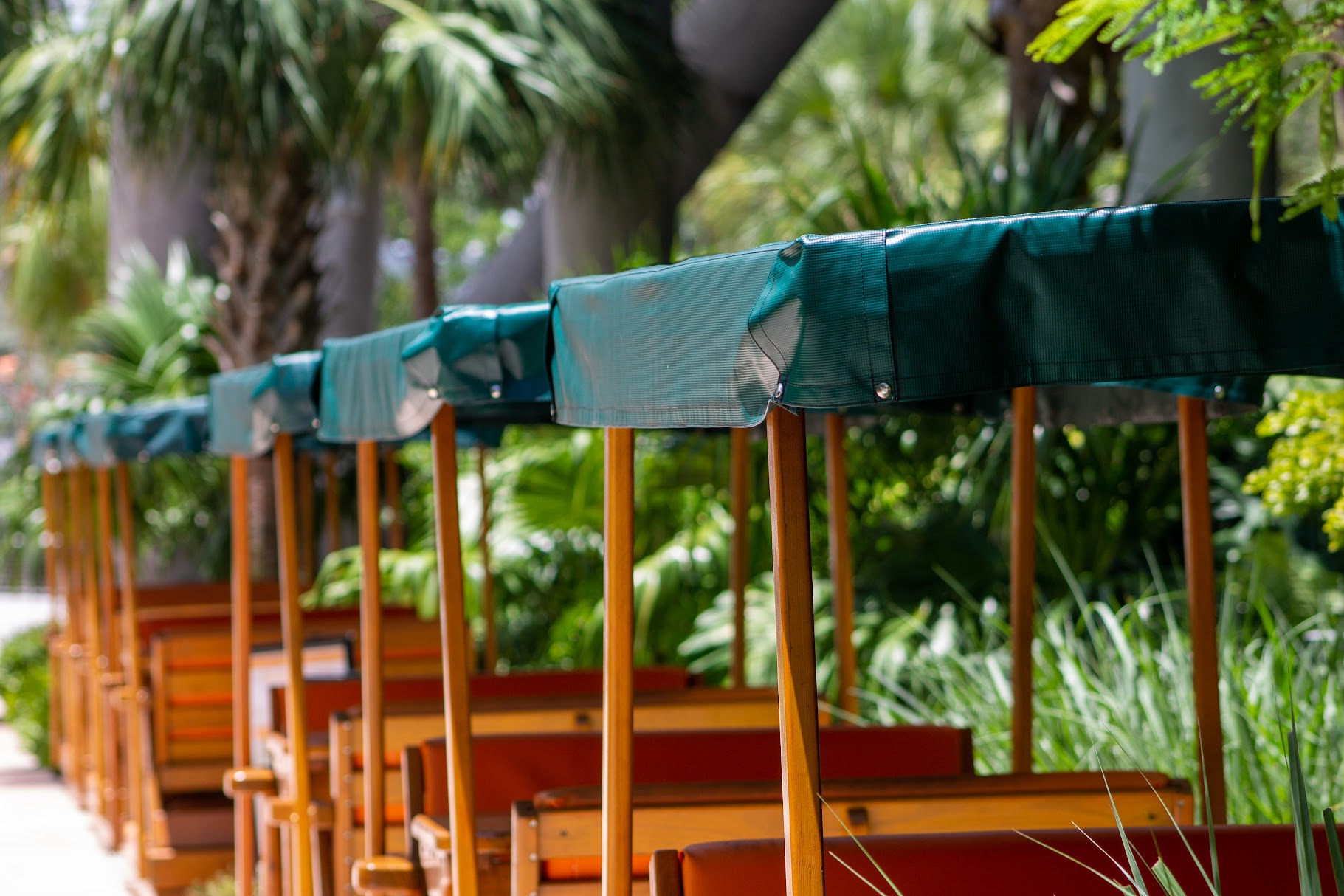
The gliders outside of Lakeside Village are another great study spots for UM students. Photo credit: Dan Snitzer
Lastly, if you need a breath of fresh air or change of scenery while you study, you can sit in a rolling glider, check out the School of Communication’s courtyard or grab a seat at Lakeside Patio during patio jams.
Tutoring and resources
Sometimes, the best study spots just are not enough. Remember, it is okay to need some extra guidance. Thankfully, UM provides several resources designed to help you succeed in your studies.
Located on the first floor of the Richter Library, the learning commons is home to some of the most widely used academic support services on campus.
The Math Lab offers free, drop in tutoring for a variety of math and statistics courses, whether it’s working through homework assignments or prepping for the final exam. Tucked right around the corner, the Writing Center provides one-on-one student feedback on your writing, at any stage of the writing process.
You can find both of these resources on the Navigate platform to schedule an appointment.
The U also offers free one-on-one tutoring for more than 70 subjects at the Camner Center for Academic Resources.
Camner tutors are active students with a cumulative GPA of a 3.0 or higher and received an “A” in the course(s) that they tutor.
To book a tutoring session, open the Navigate platform, click “make an appointment” on the upper right hand side, and select “Camner Tutoring” under the appointment type.
Tips from the teacher
Ultimately, the best resource for any class are the professors themselves.
No one knows the course better than the person who teaches it, so take advantage of their availability and willingness to help you learn. When you first receive your syllabus, take note of when your professor holds office hours and go to them.
Office hours are your opportunity to receive face-to-face feedback on your performance in the class. It is also your opportunity to seek advice if you are struggling in one area or another.
Professor Deroo teaches the students in his TAP class on Thursday, Feb. 9 at the University of Miami Photo credit: Cecelia Runner
Not only are office hours great academic resources, they help you establish relationships with professors that you can utilize throughout your time at UM.
This may seem obvious, but if a professor hosts a review session before an exam, do not miss it. Most likely, these review sessions reflect the style of questions and content that the teacher plans to include on the exam.
Make sure to ask as many questions as possible to ensure that you have a clear understanding of the material and expectations for each course. After all, professors are there to teach you and help you succeed.
When coursework becomes overwhelming and exams are right around the corner, just remember the U wants you to thrive and with these study tips you can make it happen.
Sports are at the very core of what makes UM special — and baseball is no exception.
Nationally considered a “blue-blood” program with four College World Series Championships and a litany of MLB stars that played at Mark Light Field, Miami Hurricanes baseball has been a pipeline to the pros.
This summer, that legacy continued.
After falling one game shy of Omaha, three Hurricanes took their next steps towards the big leagues at the MLB Draft in July.
For freshmen seeing ’Canes baseball for the first time, the MLB draft provides a perfect introduction to one of college baseball’s most historic programs.
Griffin Hugus, Round 3, Pick 91, Seattle Mariners
One of Miami’s most consistent arms in 2025, Hugus earned his way to being a top 100 pick.
Hugus played his first two years at the University of Cincinnati before playing his junior season with the Hurricanes, where the Saturday starter turned Friday ace was electric all season long.
Pitching for a career best 4.16 ERA, 1.28 WHIP, and 95-to-35 K/BB in 93 innings. Hugus topped out at 96 mph with his fastball, featuring a mid-80s slider.
And while the ERA might not stand out initially, that’s due to Hugus’ team-first nature, consistently pitching deep into games well over 100 pitches.
Hugus’s best start of the season came in the Hattiesburg Regional. Throwing a complete game, only giving up one run, and striking out nine in a 14-1 rout of the Columbia Lions. His efforts throughout the year were nationally recognized, making the 2025 All-Hattiesburg Regional Team and named to the All-ACC Second Team.
The Mariners organization is a perfect fit for Hugus with a mid-level market that will allow him to hopefully develop successfully throughout the minors. The Seattle organization is highly regarded for their pitching development with notable major league pitchers like Logan Gilbert, George Kirby and Bryan Woo.
Miami right-handed pitcher Griffin Hugus throws a pitch against Niagara at Mark Light Field on Feb. 15, 2025. Photo Credit: Brian Mulvey
Brian Walters, Round 8, Pick 25, Philadelphia Phillies
The most electric man in Coral Gables, Brian Walters, was never shy of the spotlight. The Sunday starter turned closer midway through the season, becoming a vital piece to the pitching staff.
The flamethrower topped out at 98 with wicked movement on his off-speed pitches. In 2025, the three-year Hurricane had a 2.62 ERA in 14 relief appearances. Overall, Walters hoisted a 5-2 record with 11 saves, a 4.94 ERA in 51 innings, while striking out 58 batters.
Walters becomes the second pitcher in his family to be drafted from UM, joining brother Andrew Walters who was drafted by Cleveland in 2023. Brian hopes to follow the path of his brother by quickly climbing through the minor leagues en route to the pros.
The rowdy Philadelphia fan base is exactly where Brian Walters belongs. Walters feeds off crowd noise and loves firing up the fans after a big strikeout. As one of the nicest guys in the clubhouse, Walters is made for the City of Brotherly Love.
Junior Pitcher Brian Walters closed the game against FAU to seal the win at Mark Light Field on April 15, 2025. – David Lebowitz, Contributing Photographer
Shortly after the draft ended, Reese Lumpkin became the second Hurricane to go to Seattle, as the 6-foot-6 righty signed an undrafted free agent deal with the Mariners,
Lumpkin, used primarily as the midweek starter, appeared in 15 games and started 12. In his lone season as a ’Cane, Lumpkin held a 5.31 ERA and 51 strikeouts across 57.2 innings pitched.
His best start came on April 15 against Florida Atlantic, where he went seven innings, giving up five hits, striking out five, and only allowing two runs.
But his most important start came in the regional final game versus Southern Miss, where Lumpkin provided a steady one-run start for Miami. While he might not have been credited with the win, his stress-free opening innings allowed the Hurricanes to snatch the momentum and reach the super-regionals for the first time since 2016.
Multiple other starters from the 2025 roster expected their names to be called, but had the benefit of eligibility and a return to Coral Gables if they chose to do so.
Rob Evans, Jake Ogden, Derek Williams and Max Galvin who all hoped to get drafted, did not hear their names called.
Recently all four have announced their intentions to come back to the U for one more year in hopes of a championship run.
Additionally, Dorian Gonzalez Jr., Will Smith and several others were not selected or signed during the draft week. Their next steps remain uncertain, but updates on their baseball futures are expected soon.
David Lebowitz, Contributing Photographer / Outfielder Max Galvin celebrates after scoring a run in the first inning versus Villanova, March 5, 2025.
In 2000, measles was declared eradicated from the United States largely due to the vaccine. However, the CDC established that as of Friday, July 18 the state of Florida has between one and nine confirmed cases of the measles. Across the U.S., there have been 1,309 confirmed cases of measles since the start of 2025.
Measles is a virus that can cause rash, fever and other flu-like symptoms and even more severe symptoms including pneumonia and bronchitis. This virus is highly contagious and estimates suggest that if one person has measles in a room of unvaccinated people, nine out of 10 people in the room will contract the virus.
Most housing on UM’s campus is shared and the majority of classes are held in person. Since measles is highly contagious and college students are in close proximity to others, there is some concern about what this outbreak means for college students.
A person is contagious for about four days before the rash appears and the virus is contagious in the air or on surfaces for about two hours.
“While attending a large school like UM, we are constantly in close contact with others. Even one measles case could turn into a bigger issue, and no one wants to deal with an outbreak during the school year,” said rising junior Amara Brueck.
As of the 2023-2024 year, 88.1% of Florida residents are vaccinated against measles, less than the 94.3% vaccination rate in Texas, the state with the most confirmed cases of measles (more than 700 confirmed cases). To achieve herd immunity, 95% or more of the population must be vaccinated.
Graphic credit // Matthew Bernard
“Any student who is not sure about their vaccination status can stop by Student Health Service. Required vaccines are listed here. Contact Student Health at 305-284-9100 or via e-mail at studenthealth@miami.edu,” said Dr. Emilio Volz, director of Student Health Service, in a statement to The Hurricane.
UM requires that all new students upload proof of the measles, mumps and rubella (MMR) vaccine before arriving on campus. This vaccination plays a significant role in protecting the UM community from contracting measles.
“Measles is a highly contagious disease. However, it’s also highly preventable,” said Dr. Volz. “If you’ve received both doses of the MMR vaccine, you’re about 97 percent protected. In the rare case that a vaccinated person does get measles, the illness tends to be much milder. The best way to protect yourself — and others — is to make sure you’re fully vaccinated with both MMR doses.”
Brueck shared similar sentiments about vaccination as a form of protection.
“Something like measles can spread fast, and with it now in Florida this is a good reminder to stay on top of your vaccines,” said Brueck.
As a student at the University of Miami, the sports industry world is truly in the palm of one’s hands. From UM’s prestigious collegiate athletics program to the headquarters of FIFA and multiple professional sports organizations, Miami is a global hub for sporting activity.
And while the city has more than enough to offer, some opportunities arise across the globe that simply cannot be turned down. My professor, Paul Resnick, stressed persistence in this industry, encouraging each of his students to “throw as many darts as you can” to unlock the marvels of the industry. Those words resonated with me, and are what prompted me to throw the dart that happened to land in Bahrain, leading to this unforgettable experience this summer.
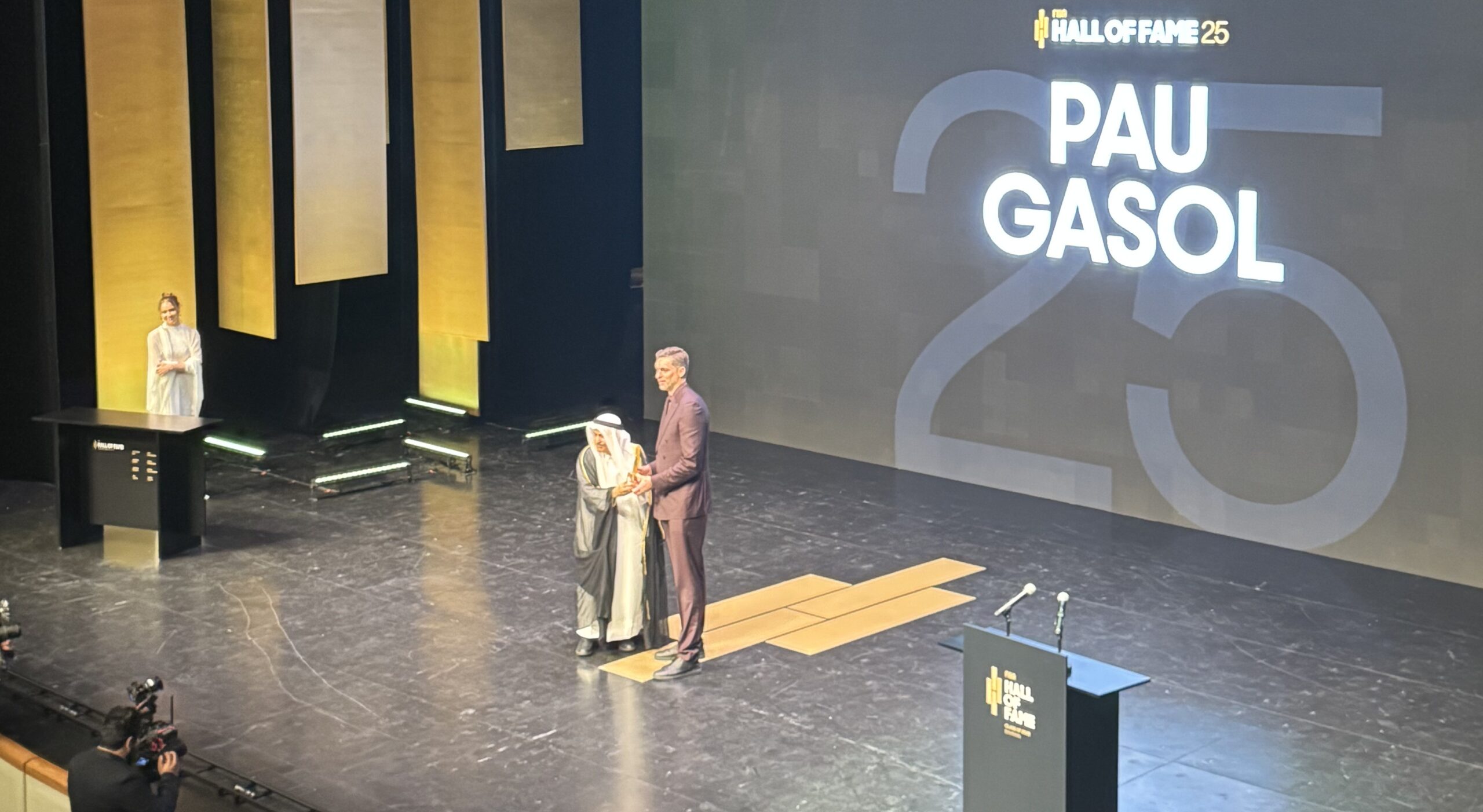
During the middle of May, members of the international basketball community came together to celebrate eight accomplished individuals. The International Basketball Federation (FIBA) held its 2025 Hall of Fame induction ceremony at the state-of-the-art Bahrain National Theatre in Manama, Bahrain.
Held alongside FIBA’s Mid-Term Congress, the event honoured eight storied individuals who impacted the sport at an international level both on and off the court.
The Class of 2025 epitomizes FIBA’s mission: “developing, growing, and promoting basketball to unite the global basketball community.”
Hall of fame inductees line up in front of the crowd in Bahrain following the ceremony, photo by Daniel Fridman
This year’s inductees represent the sport from seven countries across four different continents — Andrew Bogut (Australia), Coach Mike Krzyzewski (USA), Leonor Borrell (Cuba), Alphonse Bilé (Côte d’Ivoire), Ticha Penicheiro (Portugal), Ratko Radovanović (Serbia), Dawn Staley (USA), and Pau Gasol (Spain).
Following opening remarks from previously-inducted Hall of Famers Peja Stojaković and Michelle Timms, each inductee accepted the honour, one by one, alongside FIBA President, Sheikh Saud Ali Al Thani.
Among the eight inductees, three stand above and beyond with their significant contributions to the American basketball community.
Pau Gasol
A household name across his two decades in the United States, Gasol spent 18 seasons in the NBA (2001-2019) where he won two NBA championships, was awarded all-star honours in six of those seasons, and all-NBA honours four times in his career.
Gasol’s two Larry O’Brien trophies came in back-to-back years as a member of the Los Angeles Lakers in 2009 and 2010, part of his seven year stint on the West coast.
And even in a moment where all the praise should be on him, the ever-selfless Gasol seized the opportunity to pay respect to another basketball great.
In an emotional speech upon accepting his hall-of-fame honours, Gasol paid tribute to his late friend, and basketball icon, Kobe Bryant. An opponent at the international level but a teammate at the professional level, Bryant played alongside Gasol in all of his seasons in Los Angeles.
As it’s well-known, Bryant’s life was tragically taken in a helicopter crash in January of 2020, just four years following his retirement.
Gasol reflected upon a quote from Bryant during his speech.
“You have to work hard in the dark to shine in the light.”
He attributes much of his work ethic and habits from Kobe; putting in the work when nobody looks will emphasize results in the biggest moments. Bryant’s impact on the game was immeasurable, and Gasol continues to pass his legacy onto basketball’s future generations — a true partnership that stands the test of time.
18-year NBA veteran and fan-favorite Pau Gasol accepts his induction into the FIBA Hall of Fame, photo by Daniel Fridman
Dawn Staley
Born in Philadelphia, Pennsylvania, to Staley, her world was “only about five blocks wide.”
She had never left the United States until her first trip with the U.S. Women’s Junior National Team in 1989 to Bilbao, Spain. And at 19 years old, this first glimpse of international competition, representing her homeland across her chest, changed Staley’s perspective on herself, the world, and the game of basketball.
Fast forward to the present, Staley is a three-time Olympic gold medalist and two-time FIBA World Cup champion. She helped pave the way for women’s basketball to progress to its current thriving levels.
Even after her playing career ended, Staley still impacted the game in a way she’s arguably more known for — currently the head coach of the University of South Carolina’s women’s basketball team and also served at the helm of Team USA’s women’s team. Under her leadership, she has led the stars and stripes to its seventh straight Olympic gold medal at the 2020 Tokyo Games, an unquestioned global powerhouse.
While reflecting upon her impact on women’s basketball, Staley emphasized that “the proof is in the numbers. When you pour [everything] into it, it expands and grows.”
Staley hopes the game grows for girls long after she retires from coaching.
Legendary women’s college coach Dawn Staley accepts her induction into the FIBA Hall of Fame, photo by Daniel Fridman
Mike Krzyzewski
The second American inductee in Bahrain was legendary head coach Mike “Coach K” Krzyzewski.
With three USA Olympic golds and two FIBA World Cup titles, and 1,202 NCAA wins over 47 coaching seasons, Krzyzewski may be the most decorated head coach in basketball history across both levels of the game.
After joining USA Basketball as an assistant coach in 1979, Coach K quickly worked his way up the ranks to work his first FIBA tournament as a head coach for the 1983 U.S. Olympic Festival South team. He coached his first FIBA World Cup team in 1990 and was an assistant coach for the great Chuck Daly on the iconic USA Dream Team in 1992.
He went on to lead Team USA to three more World Cup medals, including golds in 2010 and 2014, as well as being the only coach ever to lead a team to three straight Olympic golds in each of the 2008, 2012, and 2016 Games.
At the collegiate level, Krzyzewski began his coaching career at the University of Indiana in 1974 as an assistant, before accepting the head coaching position at Army from 1975 to 1980. He then took the reins at Duke University, where he cemented his legacy as one of basketball’s greatest coaches of all time, winning 15 Atlantic Coast Conference titles and five NCAA tournaments, all alongside three Naismith College Coach of the Year awards from 1980 to 2022.
While Krzyzewski couldn’t travel to the ceremony, he did speak virtually.
Always maintaining his humble character, Coach K first took the time to honour each inductee independently. He summarized his coaching journey from start to finish, reminiscing upon the joy of winning for your country at the highest level.
“There’s no greater feeling for a coach than to be there when your team has won, see them have gold medals around their necks and your national anthem is being played as your flag is being raised,” said Krzyzewski. “No greater moment.”
And while Krzyzewski’s presence on the court is missed dearly at all levels of the game, his impact on coaching and American Basketball pride is forever enshrined in the Hall of Fame.
Coach Krzyzewski speaks virtually as he accepts his induction into the FIBA hall of fame, photo by Daniel Fridman
As a whole, the 2025 Hall of Fame Ceremony honoured eight of the most influential figures in basketball’s rich history. From coast to coast and continent to continent, these eight individuals continue to grow the game of basketball and impact generations. With the FIBA Hall of Fame now eclipsing 200 members, the standards to reach greatness are set. The ceremony not only praised the greats but set the tone for a future shaped by legacy, strength, and evolution.
Entering my freshman year at UM, I had no idea what the sports world had in store for an 18-year old Canadian. Fast forward nine months, after an academic year filled with memories, broadcasts, and incredible opportunities, it was that one sentence by Professor Resnick that propelled this journey. Attending and covering the ceremony as well as speaking with some of the most influential members that the sport of basketball has to offer was an invaluable experience for which I am extremely grateful. The trip to Bahrain was rather impromptu, but surprises and quests such as this are what make working in the sports industry so thrilling and exciting, and for that I am forever thankful.
With under a month left before the 2025 fall semester starts, the University of Miami and its sports teams are soon to kick off their respective seasons.
There’s a variety of stadiums and arenas on and off campus to watch the Miami Hurricanes play, and often dominate the competition.
From NFL stadiums to public used facilities, here’s a breakdown on where students can watch their favorite sports this year.
Baseball – Alex Rodriguez Park at Mark Light Field
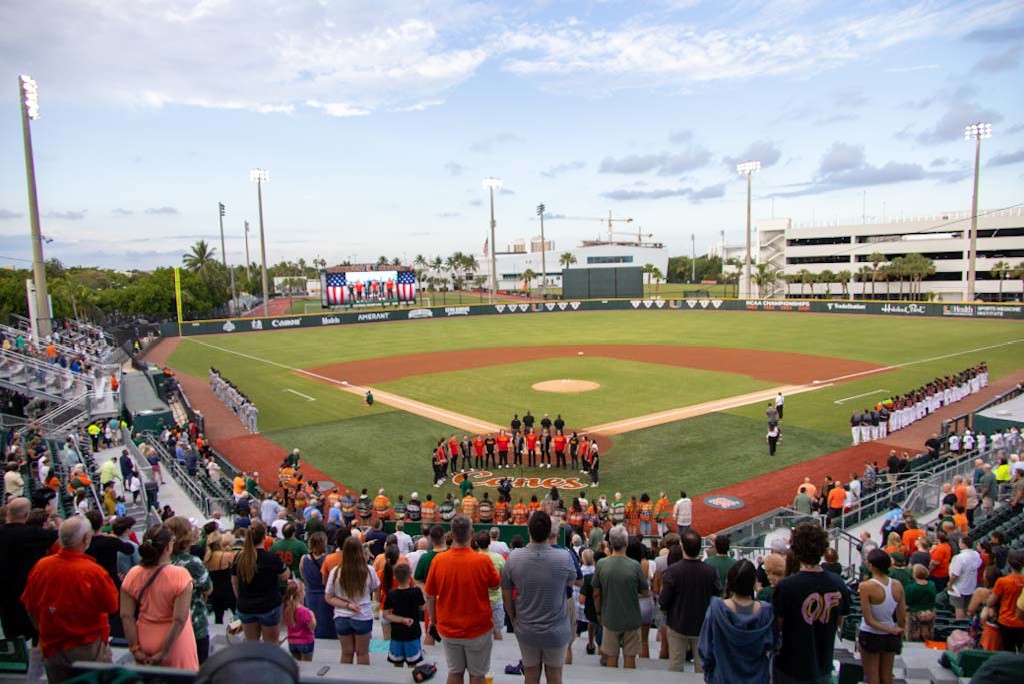
Home to Miami’s four-time national champion baseball team (1982, 1985, 1999, 2001), Alex Rodriguez Park at Mark Light Field is located right on the Coral Gables campus.
Known for its electric atmosphere and iconic milkshakes, the stadium underwent $3.9 million in renovations thanks to former MLB star Alex Rodriguez. Whether you’re returning to campus or just starting college, Friday nights at the ballpark in the spring are a must.
The National Anthem is sung moments before the Miami Hurricanes open a three-game series against Georgia Tech on April 21 at Mark Light Field. Photo credit: Annika Alves
Football – Hard Rock Stadium
Located in Miami Gardens as the home of the Miami Dolphins,Hard Rock Stadium is the home of Hurricanes football on Saturdays.
Last season, the ’Canes had one of their best years in recent memory by No. 1 overall NFL Draft pick Cam Ward and with Georgia transfer Carson Beck now under center, expectations remain high.
The stadium has hosted six Super Bowls, two World Series, four BCS national championships, the Orange Bowl and the2021 and 2026 College Football Playoff National Championships in 2021 and 2026
And while it’s not directly on UM’s campus, the University offers free shuttles to and from the stadium. So, you can spend your Saturdays tailgating and cheering as Miami aims for its first-ever ACC title.
Basketball – Watsco Center
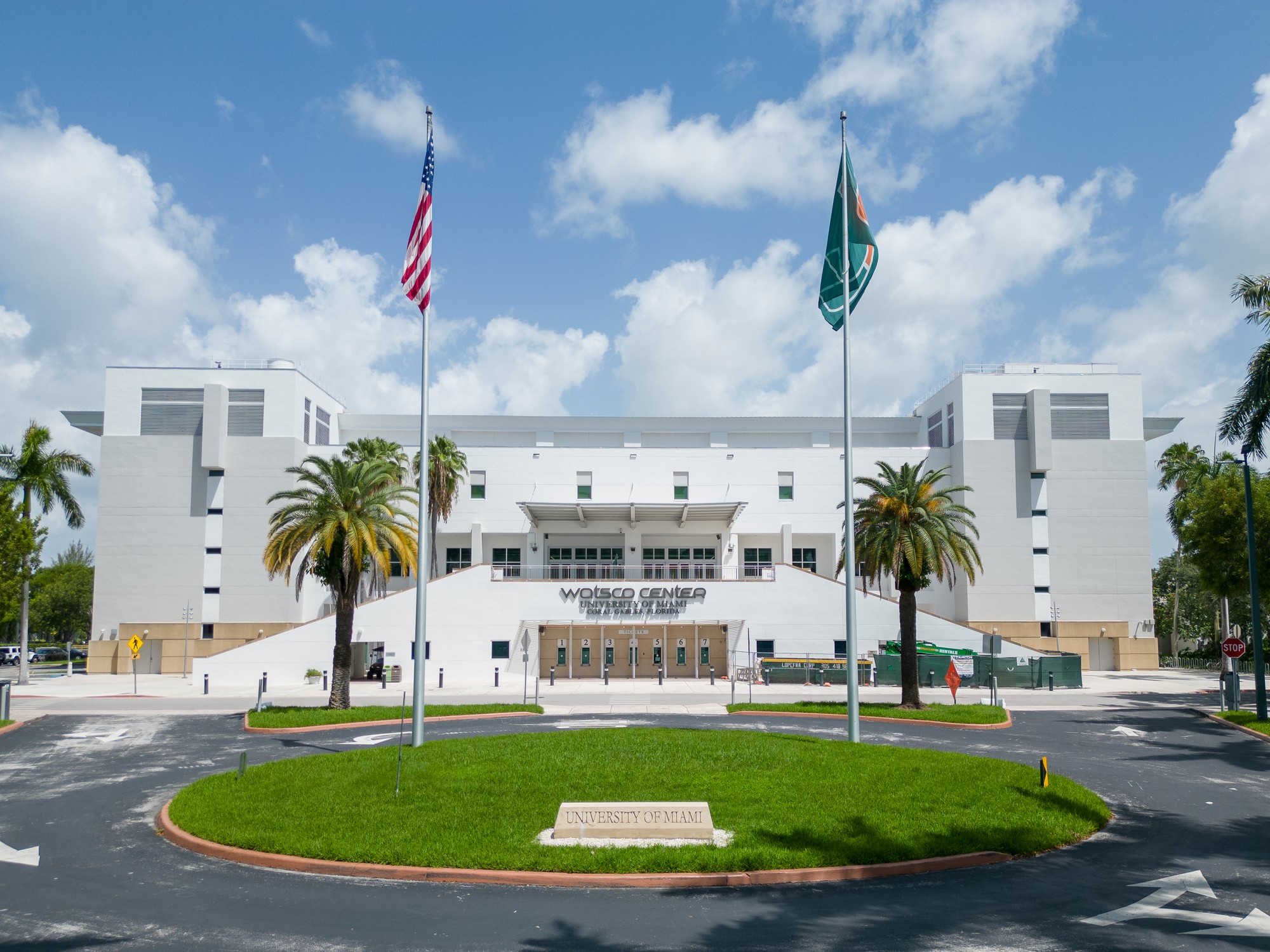
The Watsco Center, a 200,000-square-foot arena with 7,972 seats, is home to the Hurricanes’ men’s and women’s basketball teams. Since its opening in 2003, the arena has hosted several memorable moments, including the men’s ACC regular season title, a 20-0 home record for the women’s team in the 2010-11 season and selling out every seat in 2015-16.
With new men’s head coach Jai Lucas and a second year for women’s head coach Tricia Cullop, there’s tons of optimism surrounding the ’Canes at Watsco.
Watsco Center at the Coral Gables campus.
Track & Field – Cobb Stadium
Cobb Stadium, located at the main campus, is home to the Hurricanes’ men’s and women’s track and field programs. Seating 500 people, students can enjoy the talented athletes coached by longtime and legendary head coach Amy Deem.
Cobb Stadium is home to athletes such as javelin national champion Devoux Deysel and school record-holder Maddie Scheier in the 3,000-meter steeplechase. You can expect more to add their names to the long list of dominant student-athletes at Cobb Stadium
Golf – The Biltmore
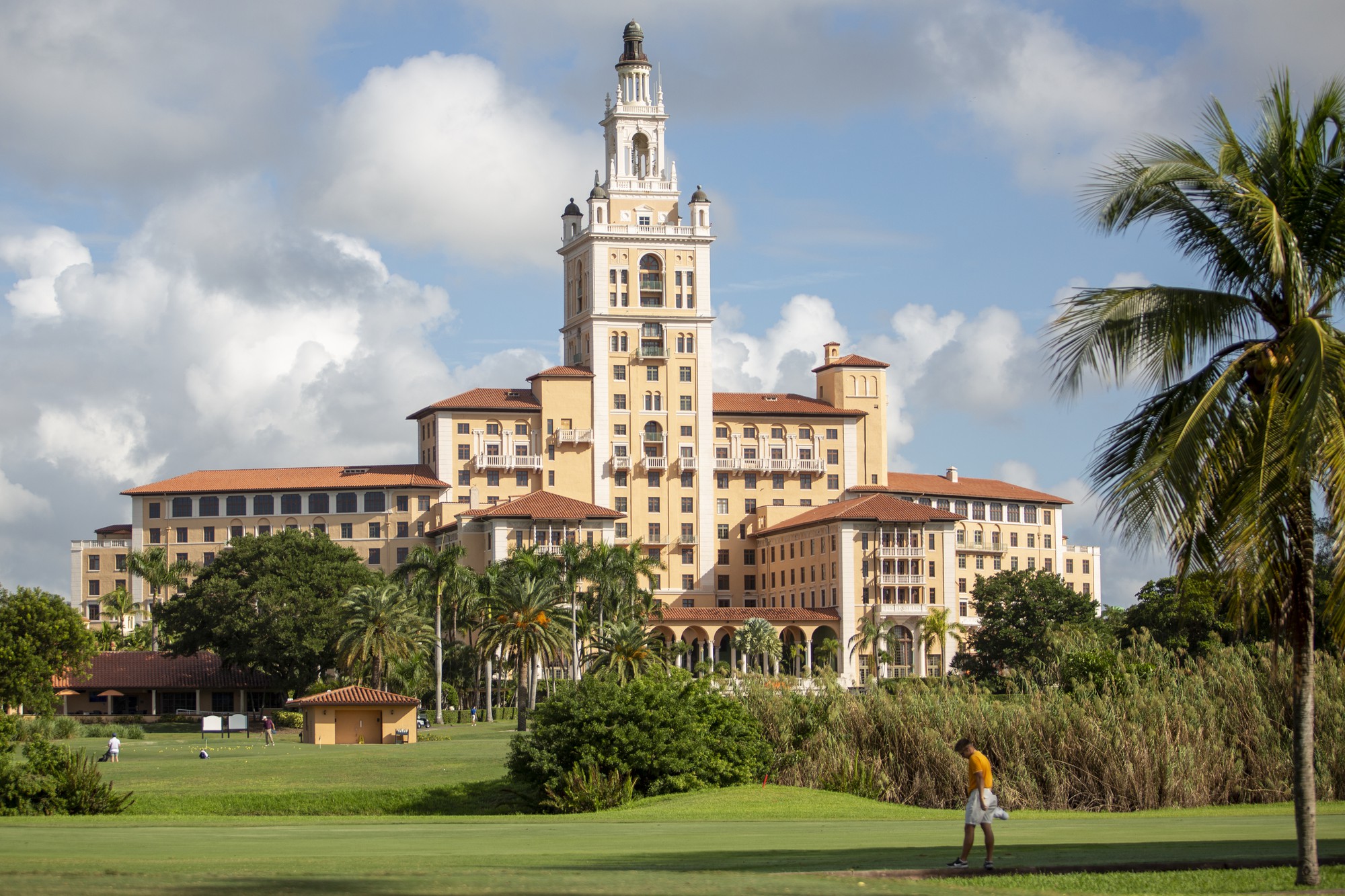
The Biltmore Golf Course is one of the most iconic landmarks around the University of Miami and Coral Gables overall. At almost 100 years old, the 18-hole, par-71 course is home to the Hurricanes’ women’s golf team and is adjacent to the Biltmore Hotel.
The course is a mainstay in Miami and is known for its beauty and excellence. The golf course is 6,800 yards and features amenities such as a full practice facility, private instruction, and a pro shop.
Miami’s Hurricane Invitational was held at the Biltmore Hotel on Monday, Oct. 31 and Tuesday, Nov. 1. 12 teams attended and the tournament with Miami finishing in second place. Photo credit: Sam Peene
Volleyball – Knight Sports Complex
The Knight Sports Complex is where students can watch the Miami women’s volleyball team.
In 1994, it was home for most of the women’s basketball team, where they won 24 consecutive games. Now, it has been used since 2001 as the home facility for the volleyball program.
A fan-favorite on campus with a lively student section, catch women’s volleyball all fall as they look to reach their fifth postseason appearance in a row.
Tennis – Neil Schiff Tennis Center
Home to the men’s and women’s tennis teams, the Neil Schiff Center features world-class tennis courts with a stadium feel. Students can witness the masterclass performances on the varsity courts with premium seating for 1,000 spectators. It also includes 144 courtside chair backs for prime viewing.
The women’s team is a consistently nationally acclaimed program, and the men’s team didn’t take a single loss at home all season last year. Watch your ’Canes dominate on Campus at the ’Schiff this year.
Credit: Claudia Campi – Staff Photographer // The University of Miami Men’s Tennis Team huddle up with Assistant Coach Filip Vittek during a match against Colgate at the Neil Schiff Tennis Center on March. 18, 2025.
Soccer – Cobb Stadium
Cobb Stadium, which hosts all the track and field events at UM, is also the home to the Hurricanes’ women soccer team.
Coached by second-year coach Ken Masuhr, the soccer program looks to build off its momentum as the team had their most wins since the 2018-2019 season.
Hurricane fans can catch UM soccer on August 21 against Florida Atlantic for the season opener along with a ten game slate at home this fall.
Swim & Dive – Whitten Center Pool
Last but most certainly not least, UM students can watch Miami’s nationally acclaimed swim and dive program right on campus at the Whitten Center Pool.
A program which consistently wins and boasts All-Americans and future Olympians, the swim and dive team always delivers when needed most.
With 39 Olympians donning the orange and green over the past century, you could be watching a future Olympian right before your eyes as you head to and from classes.
Miami swimmer finishes a butterfly lap during the First Chance Meet at the Whitten Center Pool on Feb. 16, 2024. Photo credit: Antonia Botta