The semester is starting and your hosts are back…what to know about starting the semester? Find out on 20’s Unfiltered…
Part of a collaboration between the 20sUnfiltered team and TMH.
The semester is starting and your hosts are back…what to know about starting the semester? Find out on 20’s Unfiltered…
Part of a collaboration between the 20sUnfiltered team and TMH.

Summer may be the off-season for network television, but streaming services thrived in these past few months. As students moved out of their dorms and returned to their hometowns, many new seasons of their favorite shows were waiting for them.
Summer was paved with the mid-May release of a new, eight episode series on Netflix, “Overcompensating.” With a soundtrack reviving the greatest hits of the 2010s and even some guest appearances from celebrities like Charlie XCX, viewers are taken through Benny (Benito Skinner) and Carmen’s (Wally Baram) problematic starts to college.
The slogan, “come as you aren’t” encapsulates the show. In hopes of being socially accepted, the characters navigate college by attempting to adopt ungenuine personas. While often dramatized for comedic value, it’s relatable for anyone who is new to college or fresh into the next chapter of their lives. The final product is entertaining and far too easy to binge in one day.
Pearl Amromin, a sophomore at the University of Miami and fan of “Overcompensating” says the series “shows that everyone is in the same boat when they first go to college, so there is really no need to be someone you’re not.” She gathered that it’s best to, “just be you, and everything else will work itself out.”
Five friends. One house. Essentially grown-up children, the tight-knit group finds themselves in outrageous situations in this eight episode Hulu series.
Much like the set-ups of hit sitcoms “Friends,” “How I Met Your Mother” and ‘New Girl,” the May-release “Adults” follows an ensemble cast, including Samir (Malik Elassal), Billie (Lucy Freyer), Paul Baker (Jack Innanen), Issa (Amira Rao) and Anton (Owen Thiele). “Adults” isn’t quite at their level. Given that it’s only their first season, however, they have time to improve – if they’re renewed for another season as rumors insinuate.
At the beginning of June until mid-July, reality TV faced its rise. Season seven of “Love Island” had viewers on a tight grip, tuning into Peacock almost everyday at 9 p.m. sharp. Typical, cheap drama often ensued at the villa, but it was couples like Nic and Olandria who had, and still have, fans making video edits of their moments together and coining the name “Nicolandria” for their relationship.
Although the two weren’t the winners of this season, they are still together off-screen. Meanwhile, the winners of the total $100,000 prize, Amaya Espinal and Bryan Arenales, are rumored to be broken up.
Much of the love for the show stems from the hype of talking about it with other viewers. Since the season ended, if you missed it, it may be best to just tune in for the next one in summer 2026.
It all comes down to red ex’s, blue o’s and a couple of children’s games. The stakes: life or death. A complete 180 from the fun chaos of “Overcompensating” and “Adults,” the third and final season of “Squid Game” is not to be watched for comfort or laughs.
“Squid Game” is a South Korean drama that stars Lee Jung-Jae as Gi-hun. Making its Netflix debut at the end of June, the final six episodes of the series are haunting and often a hard-watch. If you are able to get past the gore and utter insanity of the show, however, it’s an impressive metaphor for human greed, society’s illusion of choice and raw human emotions overall.
UM sophomore Daniella Vega views the show as a depiction of “how people handle stress so differently.” While the circumstances are drastically unlike reality, she believes “a lot of us can see ourselves in it.”
While lives aren’t on the line as in “Squid Game,” “The Bear” remains notorious for its stressful encapsulation of the world of cooking. Viewers piece this family of co-workers’ story together through their grieving eyes and broken memories. Carmy (Jeremy Allen White), Syd (Ayo Edebiri) and Richie (Ebon Moss-Bachrach) are among the stars of the intense series.
Incomplete explanations and toxic communication make it all compelling and so personal it feels almost intrusive — with the help of intimate close-up shots highlighting every pore, blemish and micro-expression that encapsulates raw human emotion.
Also in late June, “The Bear” returned to Hulu with season four, following a disconnected-feeling during the prior season.
Feelings are complicated. They’re even more complicated in Belly’s (Lola Tung) case, as she has fallen for two brothers, Conrad (Christopher Briney) and Jeremiah (Gavin Casalegno).
In the third and final season of the show, a Jenny Han book adaptation, Belly’s decision seems final until it doesn’t. Taking place four years after the preceding season, these episodes portray both character growth and regression that occurred in the years off-screen.
This love-triangle trope, though immature and unrealistic, is still a good watch. Give it a few episodes, and you’re invested. You’ll find yourself declaring which team you’re on in no time.
Eight out of the eleven episodes have made their way to Amazon Prime Video so far, with one new installment releasing every Wednesday from July to September.
A dark-comedy enjoyable for children and adults alike, “Wednesday” returns for season two after three years since the first season’s release. As the titular character, Jenna Ortega’s apathetic performance carries the show, with the help of returning characters Enid (Emma Myers) and Bianca (Joy Sunday), in addition to more screen-time of the rest of the Addams family.
Part one of “Wednesday” debuted on Netflix at the beginning of August. Only four episodes are currently available to stream, but the remaining half is set to release on Sep. 3rd.
It’s been an eclectic few months of television, with new shows ranging from cliché rom-coms to dystopian thrillers to appeal to just about anyone. While these shows were all the hype over the summer, it’s not too late to start watching now if you’re looking for your next binge-worthy series.

Heading into Sunday night’s matchup between Notre Dame and Miami, the Hurricanes had won the last previous six at home.
And while it wasn’t flawless, Miami (1-0), extended that streak to seven in a statement 27-24 win over the No. 6 Fighting Irish (0-1).
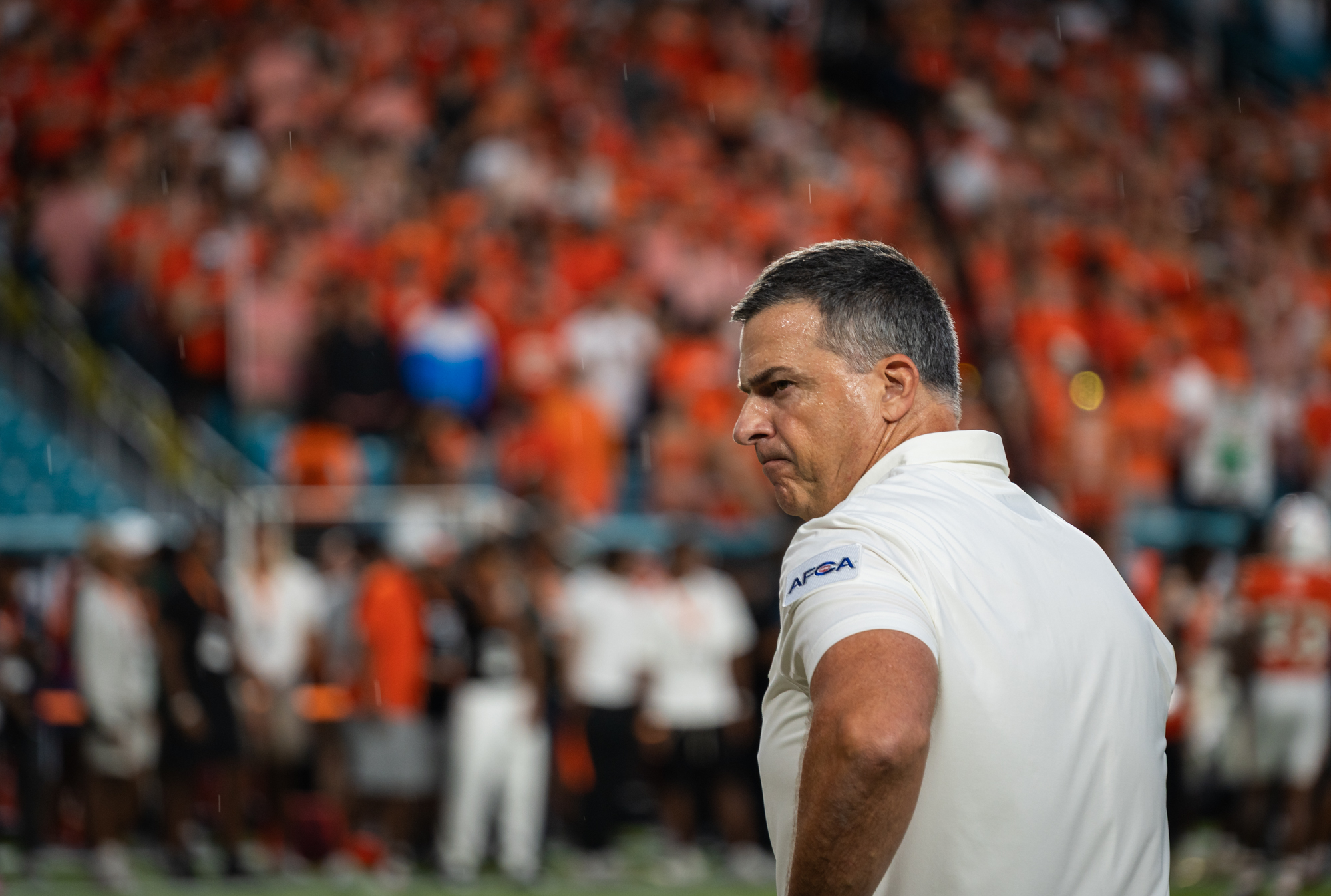
“This game, this victory, is for everybody. It’s for our university, our players, our students, alumni, former players,” UM head coach Mario Cristobal said.
The ’Canes took their first top-ten since 2017 and sent a clear message to the nation:
This isn’t the Miami of old
A defense reborn
Miami held all the offensive firepower in the world last season: first in points per game, first in yards per game, all orchestrated by Cam Ward, the 2025 No. 1 draft pick.
Yet after the defense gave up 42 to Syracuse in the final week of the season, even the high-powered Hurricane offense couldn’t overcome such a deficit, ending the season.
A clear focus on defense ensued as former defensive coordinator Lance Guidry was replaced by Corey Hetherman. However questions arose on how the former Minnesota defensive coordinator could flip the room in such a short period of time.
And while schemes and gameplans clearly play a factor, the simplest fix came from letting his players be athletes.
Throughout the offseason defensive players raved about the simplicity of Hetherman’s style, how “free” they felt in his system.
From swarming every ball carrier to making every tackle with the intent to do damage, the defense showed an edge to itself that hasn’t been seen in years.
Notre Dame’s running back Jeremyiah Love was expected to be the focal point of the game, but was completely neutralized. Love only racked up 33 yards on 10 carries, stuffed in the backfield on multiple occasions.
Miami wasn’t able to stop anyone last season, let alone a number one option like Love.
“In the words of Coach Hetherman, I was swarming,” said defensive end Rueben Bain when asked about snagging a key fourth quarter interception.
Alongside Bain’s interception, the defense forced two fumbles on the day. And when needed most they stepped up, sacking ND quarterback CJ Carr twice to end the game.
Miami has turned their defense from a liability to a cornerstone of their success, and it could make the difference for the ’Canes playoff hopes.
The Malachi Toney show
Throughout spring and fall camp, one name consistently received glowing reviews from coaches and onlookers alike—Malachi Toney.
And while always heralded locally and around the university, he announced himself to the college football world Sunday night.
“Malachi Toney, he’s special,” said coach Cristobal. “Been trying to keep him a secret, but it didn’t take long right?”
Toney opened the scoring for the game with a 28-yard touchdown in the second quarter, connecting on a Carson Beck rollout at the front of the end zone.
For most freshmen, that spark would’ve capped their day. But for Toney it was just the beginning.
He went on to lead the team in receptions and receiving yards, consistently finding space in coverage and fighting for more yards.
“I got the chance to go out there and show my god-given ability,’’ said Toney.
Notre Dame may have overlooked the 17-year-old in their gameplans, remaining teams on Miami’s schedule will have to learn from ND’s mistake if they hope to contain the Hurricanes offense.
The fan factor
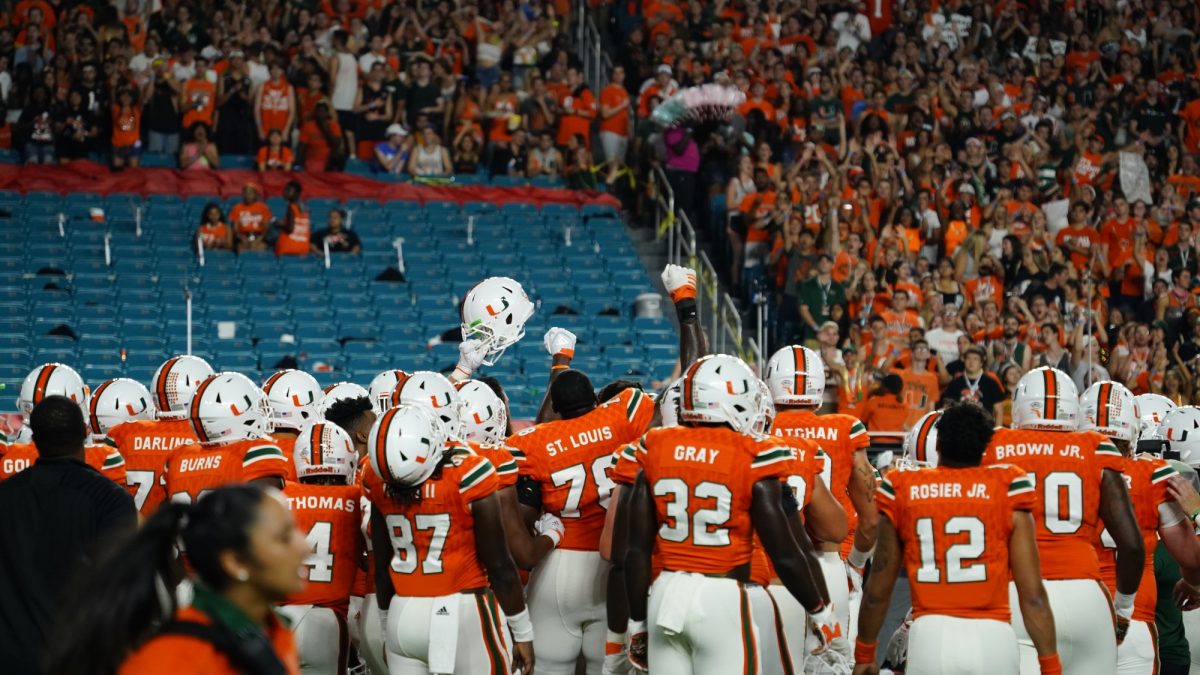
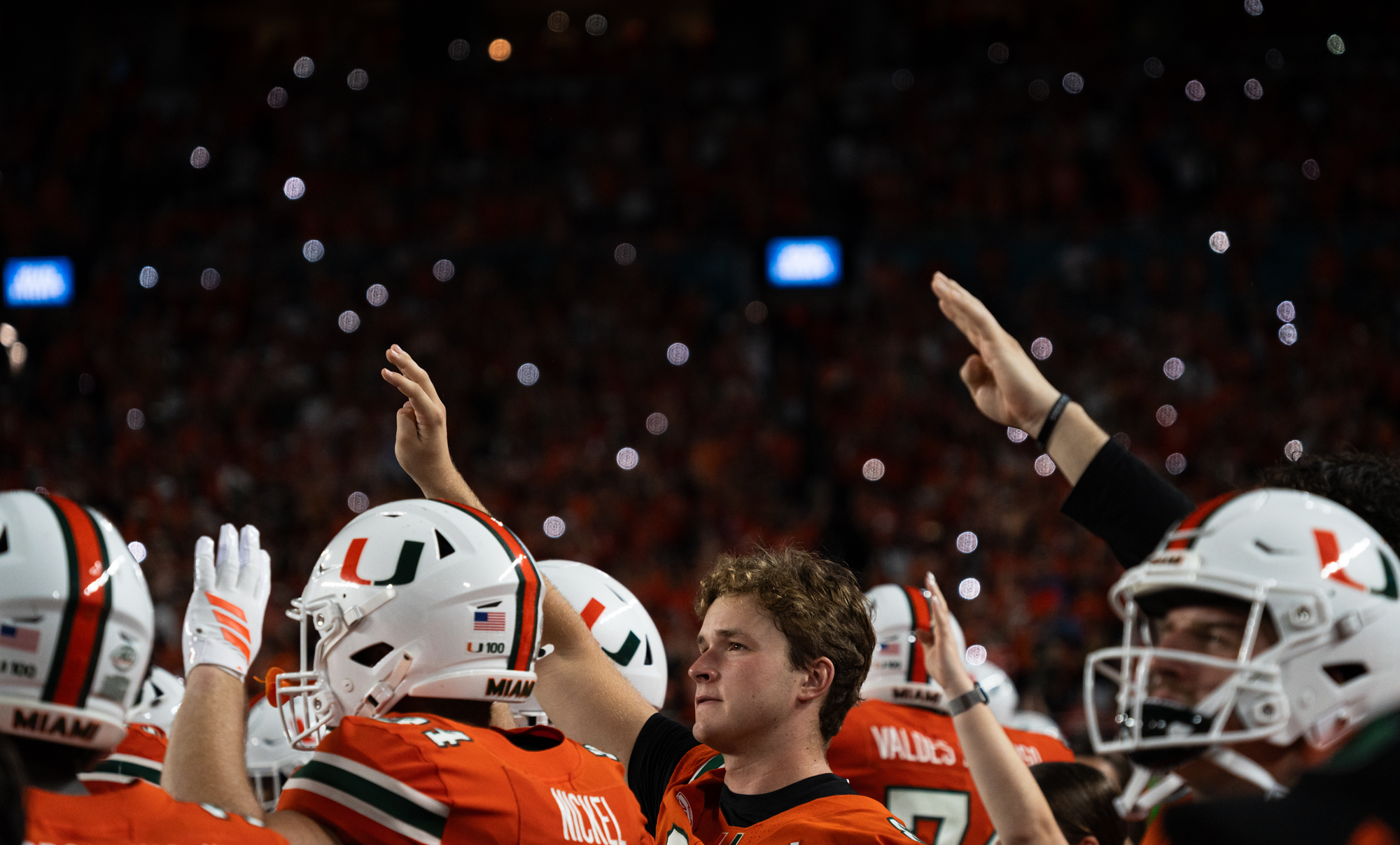
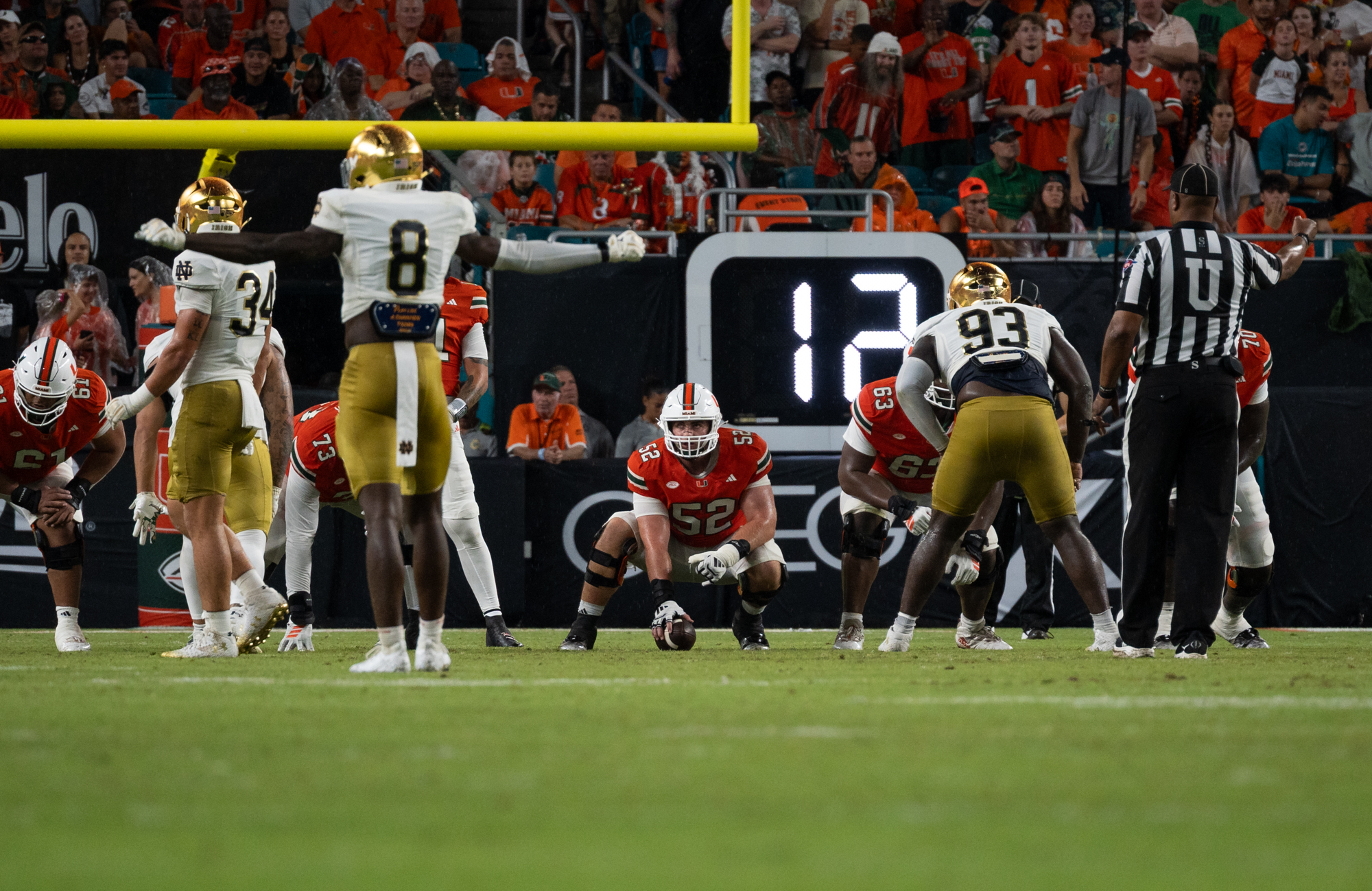
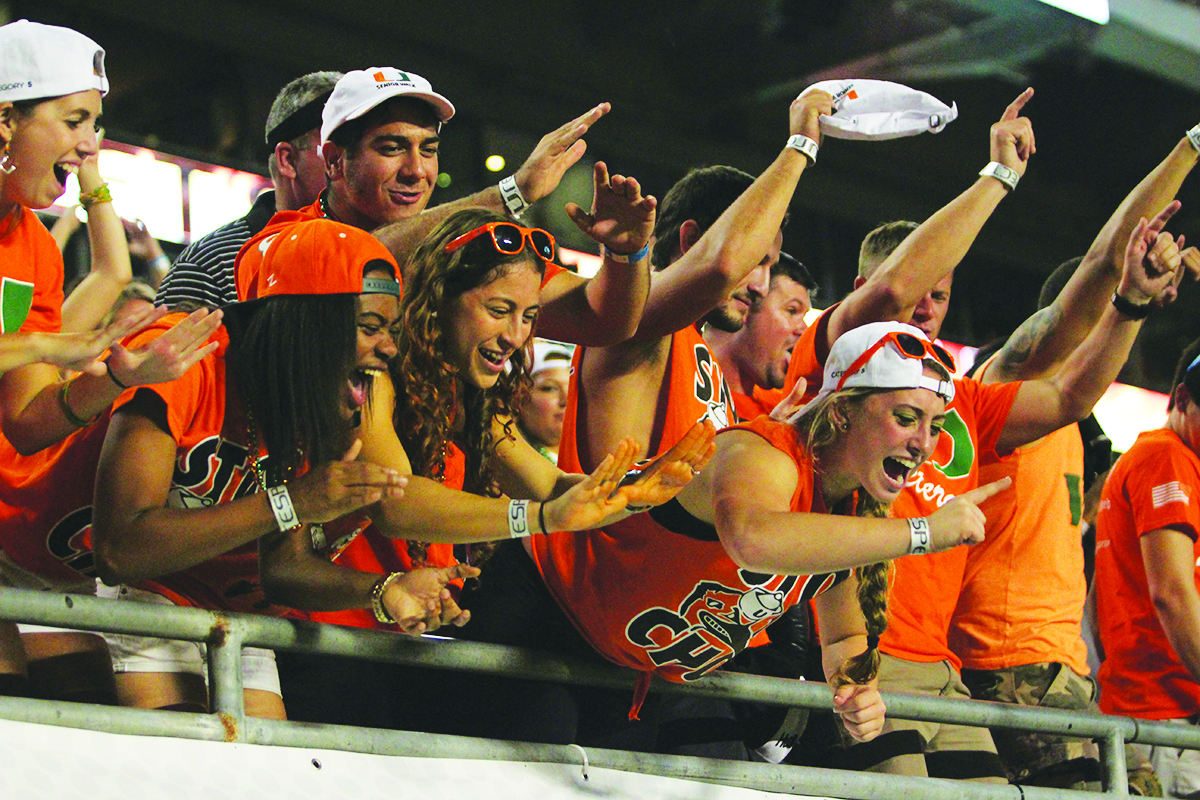
For all the narratives that surround the University of Miami and its “lack” of fan turnout at home games, Hurricane fans showed up and brought the energy to Hard Rock Stadium.
66,793 fans donned in orange packed out the sold-out event, and their energy was clear from the get-go.
From chants to crowd pops and everything in between, the Hurricane faithful poured their heart and soul into Sunday night’s affair.
And the players took notice.
“We feed off [the crowd’s energy], there’s no better feeling,” said linebacker Wesley Bissainthe.
Multiple players could be seen swinging their arms to get the crowd amped, and every time the fans delivered.
Quiet simply did not exist on Sunday night, Miami fans made their mark on the game.
Each fumble the Hurricanes forced, the crowd erupted in a sea of orange, cementing the momentum firmly on Miami’s side.
“Just an unbelievable night, an unbelievable night for so many people that poured so much into this,” said Coach Cristobal.
“Just grateful to be in this opportunity and really hungry and driven to get our opportunity at the next one.”
The fans play more of a role than often given credit for, and if they continue to show up, this Hurricane team will continue to show out.

A raucous Hard Rock Stadium, filled in orange, roared as the clock ticked under 30 seconds in the game.
On their own 30-yard line, redshirt freshman quarterback CJ Carr and Notre Dame’s offense looked to pull off a miracle, trailing by three.
Carr fielded the snap cleanly, but Miami’s defensive pressure was too much as defensive linemen Rueben Bain Jr. and Akheem Mesidor stormed Carr, forcing the sack and sealing the deal for the Hurricanes.
The clock hit zero, and UM fans exhaled a sigh of relief as the No. 10 Hurricanes took down the No. 6 Fighting Irish 27-24 in a Sunday night thriller.
“Sometimes domination takes place at the final play of the game, as crazy as that sounds,” Miami head coach Mario Cristobal said following the game.
Senior linebacker Wesley Bissainthe had high praise and confidence in his team following the big play and victory.
“Bain and Mesidor, they do that every day in practice. I see it all the time,” Bissainthe said.
“I knew one of them was gonna come clutch, if not both.”
In a matchup of two top-10 teams, a rivalry was renewed after an eight-year hiatus. And despite being the underdog, Miami wasn’t fazed.
The ’Canes stayed resilient, faced adversity, and fed off the crowd noise.
66,793 fans sold out Hard Rock Stadium, marking a record. The crowd energized the players and made a difference in Sunday night’s victory.
“This game, this victory, is for everybody. It’s for our university, our players, our students, alumni, former players, Coach [Jimmy] Johnson,” Cristobal said.
The game was a testament to hard work and great plays, one of which happened just under two minutes left in the game.
After holding a 14-7 lead in the first half, the Irish outscored the Hurricanes 17-3 in the second half. ND tied the game following a 65-yard pass from Carr to Eli Raridon and a seven-yard touchdown run from Carr.
With three minutes remaining, Miami was in search of taking back the lead, hoping quarterback Carson Beck could step up late.
The Georgia transfer marched the Hurricanes down the field on a 10-play drive, putting the team in a fourth and three on Notre Dame’s 29-yard line.
Cristobal called on FAU transfer Carter Davis to kick the go-ahead 47-yard field goal. Despite the pressure, the senior kicker delivered, splitting the uprights to give Miami a 27-24 lead.
Even though there were worries about Miami’s kickers coming into the game, Cristobal had full confidence in Davis.
“A lot of confidence here for Carter. In practice, he hits them at 55 plus, actually two 63-yarders,” Cristobal said. “So we have a lot of confidence in him.”
Davis acknowledged that it was a tough journey to get the nod as the starting kicker.
“It means the world,” Davis said. “ When I found out that I got it, I cried. I’ll be honest. But I was just so ecstatic about that. It meant the world.”
Late in the second quarter, Miami was in search of points of a big score before halftime.
On second down from the Notre Dame 20-yard line, Beck, under duress and off-balance, sent a prayer to receiver CJ Daniels. In between two defenders, the LSU transfer made an incredible one-handed grab in the endzone to give Miami a 14-7 lead.
Daniels finished the night with five receptions for 46 yards, including a touchdown.
Beck distributed the ball methodically today, but usage-wise, 17-year-old true freshman Malachi Toney was his favorite.
Toney shone bright under the night sky in his collegiate debut, where on second and 10 on Notre Dame’s 28, Beck rolled left and hit Toney in the front of the endzone.
The touchdown marked Beck’s first touchdown pass as a Hurricane and Toney’s first collegiate touchdown reception.
Toney would finish his debut with six catches for 82 yards and a touchdown.
“Malachi Toney, he’s special. Been trying to keep him a secret, but it didn’t take long, right?” Cristobal said. “And what’s special about Malachi, to me, is his approach to the game. That guy approaches the game as if he’s a 5-6 year NFL veteran.”
It was also a solid night for Miami’s running back room.
Mark Fletcher Jr. ran for 66 yards on 15 carries and CharMar “Marty” Brown, on the same number of carries, had 54 yards, but his hard-nose runs paid dividends in the end game.
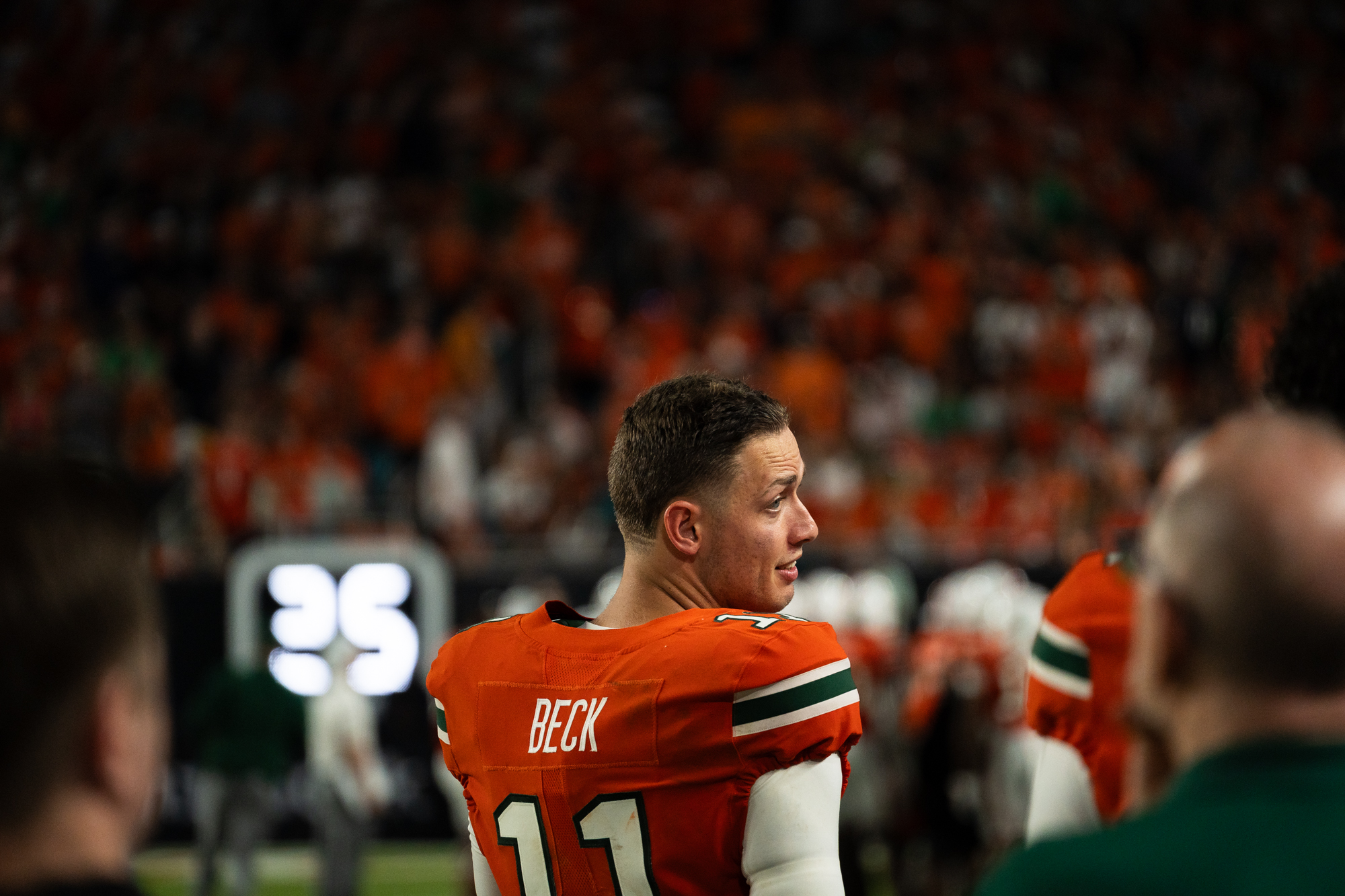
Carson Beck’s supporting cast performed well, but it shouldn’t undermine the Georgia transfers’ Hurricane Debut. He threw for 205 yards and two touchdowns, going 20-of-31 passing.
“The past eight months have been so hard. I’m just so blessed to be out here to have the opportunity to be out there,” said Beck after the game.
Major talks this offseason included a need for an improved defense. Miami defensive coordinator Corey Hetherman saw improvements in his defense tonight.
The defense already looked better than it did last year. Bissainthe noted postgame that the difference is night and day.
“[Corey Hetherman’s] level of teaching, his level of communication, his scheme, his intensity, like he was a game changer for us today, and you can see why the players love him and what he brings to the table makes everybody around him better,” said coach Cristobal.
They were able to hold the run game under 100 yards. Two of the best running backs in the country, Jeremiyah Love and Jadarian Price, combined for 93 yards.
Carr, the redshirt freshman, did have a good game for the Fighting Irish, throwing for 221 yards and two touchdowns on 19-of-30 passing.
Week one marks the beginning of a long season, but Cristobal was grateful for this opportunity.
“Just an unbelievable night. Unbelievable night for so many people who poured so much into this. Just grateful to be in this opportunity and really hungry and driven to get our opportunity at the next one,” said coach Cristobal.
It’s a one week at a time mentality for Hurricanes football. With Sunday night’s win comes a new opponent to get ready for next week. Miami will be back at Hard Rock Stadium to face Bethune-Cookman at 7 p.m.

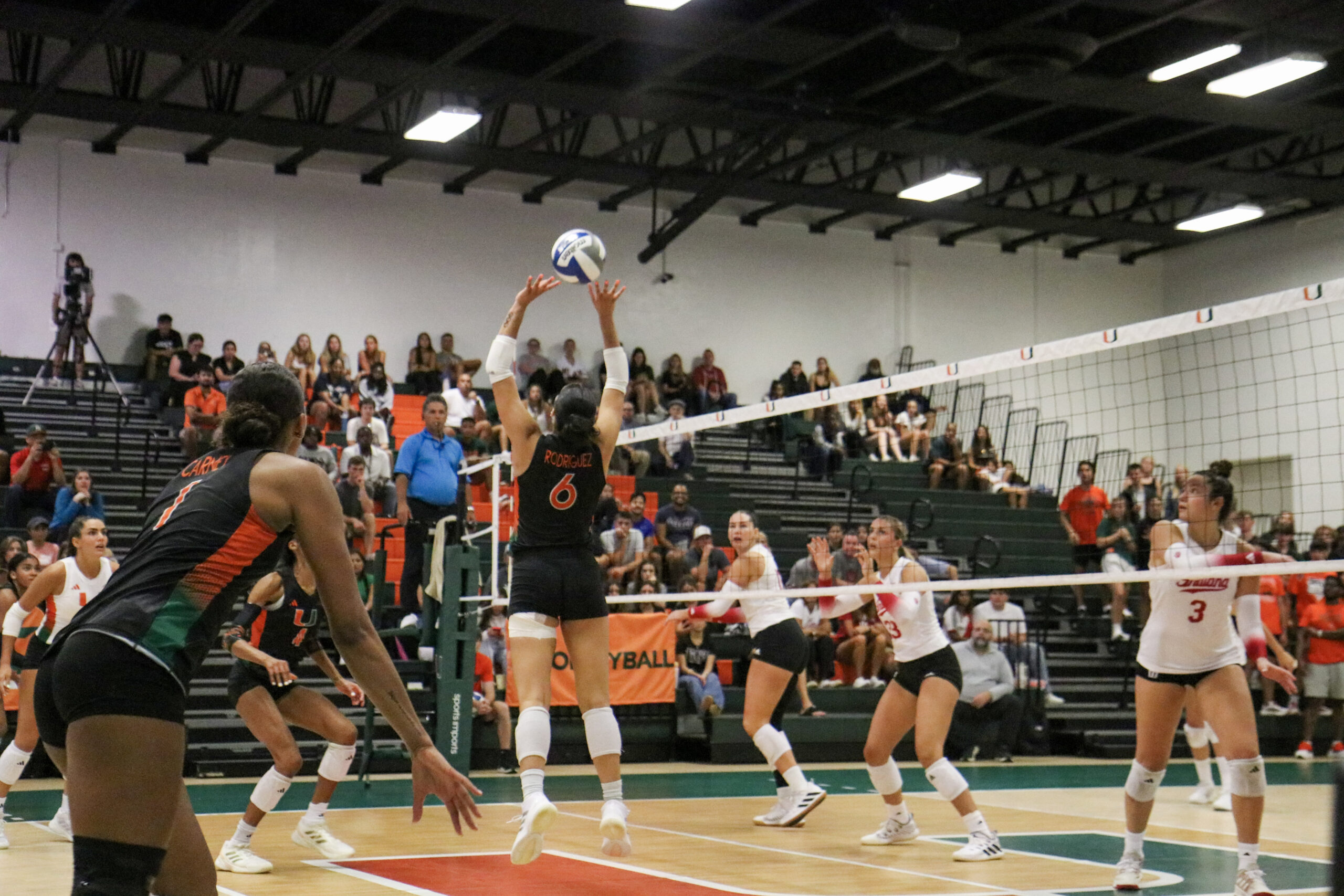
In front of a home crowd that was inspired by a dominant performance from beginning to end, the University of Miami women’s volleyball team defeated Ohio State in three consecutive sets (25–18, 25–16, and 25–21) to earn their first victory of the year.
The Hurricanes sought redemption after losing by a slim margin to Indiana the previous evening, and their hunger was evident.
Head coach Jose “Keno” Gandara’s starting lineup consisted of:
Outside hitters – Ava Carney, Flormarie Heredia Colon, Jazmin Vergara
Setter – Ariana Rodriguez
Middle blocker – Dalia Wilson, Simone Baskin
Libero – Naylani Feliciano
The ’Canes established the tone right away when Carney made a defensive stop early on before Vergara and Wilson then joined forces for a crucial block that gave Miami the lead in the first set, which concluded 25–18.
Miami maintained control throughout the second, opening with a 4-0 run and ending the set 25–16 with incisive hitting and solid blocking.
The Buckeyes battled to survive in the third and final set, but the Canes’ unity was at its strongest. Feliciano dug out a hard ball and connected with Rodriguez, who then set up Carney for a massive kill that helped secure the 25–21 victory.
Miami held a clear statistical advantage over Ohio State in every category, including kills (43–32), hitting percentage (.327 to.156), blocks (7-3), digs (42–33), and assists (33–30).
Baskin and Wilson combined for seven blocks to anchor the net. Carney contributed 12, while Heredia Colon led all scorers with 17 kills. Feliciano led the defense with 19 digs, while Rodriguez led the attack with 30 assists.
The sweep demonstrated Miami’s depth, adaptability, and poise. Ohio State was no match for the Hurricane’s speed and effectiveness, especially at the net.
UM (1-1, 0-0 ACC) will remain in South Florida next week for the upcoming “305 Challenge” where the team will face the likes of Drake, North Texas and UCF.

Sebastian Font, Co-Sports Editor
The Hurricanes have won their last six home games against Notre Dame, a streak dating back to 1977. And after Sunday’s matchup, that number will be up to seven.
Both teams match up well across the board, especially in the trenches. Miami boasts the three-headed attack of Mark Fletcher, Jordan Lyle and CharMar Brown, while ND trots out Jeremiyah Love.
And while the run game will be the main focus for both teams, Miami’s passing game could be the difference. Between the likes of Jojo Trader, CJ Daniels and Malachi Toney, Carson Beck has plenty of weapons at his disposal to spread the ball across the field.
Expect one of those three wideouts to lead the way for the ’Canes in front of a sold-out Hard Rock crowd.
Final Score: Miami 31, Notre Dame 20
Jayden Gonzalez, Co-Sports Editor
With both teams testing out new quarterbacks this season and rainy weather in the forecast, expect this game to be won between the line of scrimmage. Notre Dame and Miami pride themselves on elite offensive lines and solid running back groups.
In order to win the trenches, Mark Fletcher Jr. and Jordan Lyle will have to play big roles, giving Carson Beck a chance to get in rhythm against a very good Notre Dame defense.
Miami’s new-look defense has to contain Heisman Trophy candidate Jeremiyah Love and force CJ Carr to step up. Defensive coordinator Corey Hetherman will look to make the redshirt freshman quarterback uncomfortable in a loud Hard Rock Stadium environment.
If Miami controls the clock and makes less mistakes, the Hurricanes will be set up to take victory over the Fighting Irish.
Final Score: Miami 24, Notre Dame 21
Brendan Cafferty, Staff Writer
Ranked sixth and tenth respectively per the AP poll, Notre Dame and Miami come in as two powerhouse programs in the preseason.
With the historic rivalry among them, this will serve as a statement for how the two programs’ seasons will progress.
While ND touts a lockdown secondary, with projected 2027 first rounder Leonard Moore and ESPN ranked 40th overall player Christian Gray at corner, much of their offensive game will be reliant on star running back Jeremiyah Love behind the redshirt freshman quarterback CJ Carr.
Miami features a fresh roster, filling gaps in their defense and holding onto hope that Carson Beck can fill Cam Ward’s shoes in helming their high-octane offense.
With that said, the homefield advantage will play into Miami’s favor as Notre Dame will succumb to the damp conditions.
Final Score: Miami 24, Notre Dame 17

Omar Pinto, Contributing Writer
With heavy rain in the forecast, this top-ten showdown is shaping up to be a gritty, ground-heavy slugfest.
Expect the trenches to play a big role in this one as Miami’s elite offensive line will look to clear the way for RB duo Mark Fletcher and Jordan Lyle, while Notre Dame will lean on Heisman hopeful Jeremiyah Love to carry the load and ease the pressure on redshirt freshman QB CJ Carr.
Love will certainly have success, but the rough weather and hostile environment will get to Carr, leading to costly mistakes.
On the other side, Miami QB Carson Beck is entering his third year as a starter, and is no stranger to big games. His ability to maintain poise under pressure could be the difference.
Final Score: Miami 28, Notre Dame 24
Anirudh Kannan, Contributing Writer
Notre Dame and Miami may have undergone major roster transformations since the end of the 2024 season, but the rivalry between the two schools remains as heated as ever.
With a rainy evening on the forecast for this Sunday, their next encounter is sure to be won in the trenches.
The Fighting Irish arguably have the best running back in the nation with Jeremiyah Love, but Miami’s defensive line is more than formidable and has the potential to shut Love down. Another X-factor in this game is the play of Notre Dame quarterback CJ Carr, who will make his college football debut this Sunday.
Ultimately, Miami’s ability to stop Love on the ground and Carr’s inexperience will be the two key deciding factors in this matchup as UM comes out on top.
Final Score: Miami 28, Notre Dame 23
Olivia Attalla, Contributing Writer
While Notre Dame is being favored for this game, UM will take the upset win.
Notre Dame has a stronger defensive line, but it won’t be enough to stop Miami’s relentless offense. The Hurricanes have built a great offensive line around their quarterback and can dominate the game from start to finish.
As long as Miami’s defense can limit ND’s scoring early in the game, the ’Canes should have enough cushion to hold on.
Either way, it’s gonna be a competitive, exciting game and the energy on Sunday night will be electric at Hard Rock Stadium.
Final Score: Miami 27, Notre Dame 24

The Hurricanes’ volleyball team (0-1, 0-0 ACC) lost a close 3-2 game against the Indiana Hoosiers (1-0, 0-0 B1G) on Friday night.
The Knight Sports Complex was packed for the team’s first official match of the 2025 season.
The Hurricanes tallied 57 kills, 33 digs, 13 blocks and 12 aces. Their loss came after a hard fought back-and-forth with the Hoosiers.
Offensively, junior Ava Carney led the team with 17 kills, respectively. On the defensive side, sophomore Logan Wiley had nine block assists and senior Naylani Feliciano recorded 13 digs.
Set one opened with a 4-0 start from Miami with Senior Dalia Wilson behind the serving line. The Hoosiers combated this quickly, eventually cutting the lead to 12-11.
However, redshirt sophomore Ariana Rodriguez and senior Flormarie Heredia Colon pushed back, recording kills to extend the Hurricanes to an 18-13 score. Miami ended the set with five consecutive points thanks to Heredia Colon’s two aces that ultimately handed the Hurricanes the first set, 25-18.
Indiana started the second set leading 4-2, trying to combat Miami’s set one win. The Hurricanes eventually took over the lead after a 4-0 run, making the score 8-5. The set stayed close, but after back-to-back blocks from Wiley to lead 19-15, the Hurricanes ended up dominating set two 25-17.
In the third set, Carney led the momentum, notching a block kill to lead Miami 9-8. The Hoosiers countered, but Heredia Colon’s seventh kill tied it up at 14-all. Miami came out of set three with the most kills all match, but Indiana eventually came out with the win, 25-19.
From then on Indiana controlled the match with a late surge of energy following their first set win.
The Hoosiers took an early 7-3 lead in the fourth set, but Miami was able to bounce back, notching yet another four-point run. Wilson then took back-to-back blocks to increase Miami’s lead 13-11.
However, it wasn’t enough, as Indiana forced a fifth set with the final score of 21-19.
The Hoosiers sustained their rhythm into the final set, taking complete control leading 10-3. While the Hurricanes tried to bounce back, they fell short with Indiana taking the fifth set 15-11.
Miami hopes to bounce back from this narrow defeat on Saturday as they face Ohio State following the Indiana vs. VCU match.
On Sportscast’s first preview ever, Pablo covers the upcoming volleyball, football, and other sports games coming up soon in Hurricane Athletics.

Entering the second half trailing 2-1, University of Miami women’s soccer scored two unanswered goals in the final 45 minutes of play to seal a 3-2 comeback win over Lipscomb.
The Hurricanes found success on the night through set pieces with all three goals via dead ball plays: two corners and a free kick.
Lipscomb opened the scoring in the 11th minute when All-ASUN midfielder Bella Carapazza played an outside of the boot pass to an overlapping Hailey Johnson on the left flank, who pulled the trigger on goal in a highly congested penalty area. The shot ricocheted in off the leg of a Hurricane defender to give the Bison their first lead of the game.
Miami immediately answered six minutes later, as Brie Severns bagged her third goal in three games off of a brilliantly executed free kick by Tori Grambo to level the game at 1-1.
Grambo lofted a beautiful ball over the top where Severns timed her run to the penalty spot and climbed the ladder for a header which found the back of the net.
But the Bison took the lead once again at the 28 minute mark.
After several failed clearance attempts from the Hurricanes’ back line, the chance fell to Annessa Shively at the top of the 12-yard box, who calmly slotted it into the left corner to put her side on the front foot going into the break.
At the outset of the second half, it became clear the ’Canes had flipped a switch. Momentum had noticeably swung in favor of the home side, as Miami tormented Lipscomb for the next 45 minutes.
Total control of possession and midfield supremacy wore down the Bison, who rarely strung together a sequence of passes. Relentless pressure from UM kept the ball firmly in Lipscomb’s defensive third, and it was only a matter of time before the ’Canes found an equalizer.
Miami’s breakthrough came in the 55th minute by way of a corner kick orchestrated by Nanaka Inaba. The Jacksonville State transfer launched it into the box, pinballing inside the danger area before landing at the feet of Sarah Greiner, who poked it into the side netting to draw the score even at 2-2.
And in the dying minutes of regulation, UM substitute Allie Serlenga sent Cobb Stadium into delirium.
Springboarded by another corner kick, Lipscomb’s failure to sort out the danger left it to fall to Serlenga’s left foot from 20 yards out, who made no mistake and rifled a grass-cutting missile inside the right post, beating the goalkeeper and securing the three points for Miami.
The ’Canes (4-1, 0-0 ACC) have now won three straight, handing Lipscomb (2-1-1, 0-0 ASUN) their first loss of their 2025 campaign.
Miami will look to continue their successful homestand next week, with showdowns against Princeton and FIU on the horizon.

Miami Hurricanes linebacker Adarius Hayes was arrested on Friday, Aug. 29 for a crash that killed two children and an elderly woman in May.
“On May 10, 2025, at approximately 1:43 p.m., the Largo Police Department responded to a two-vehicle traffic crash with fatalities at the intersection of Orange View Drive and Ridge Road,” said Megan Santo, the public information officer at Largo Police Department.
Two children and one elderly woman were killed and another individual was injured. Hayes is charged with three counts of vehicular homicide and one count of reckless driving with serious bodily injury. His bond is set at $350,000.
After an arrest warrant was issued, the 20-year-old turned himself into the Largo Police Department on Friday at 10:53 a.m. He was transported to Pinellas County Jail and released at 2:18 p.m. with a surety bond and pending court date.
Largo Police said that Hayes was travelling 78.9 miles per hour in a 40 miles per hour zone at the time of the crash. Santo also said that about five seconds before the crash, Hayes made a “rapid and dangerous maneuver.”
“Moments later, Hayes abruptly re-entered the curb lane, again crossing all three lanes without signaling. At that point, Hayes’ vehicle collided with the 2017 Kia Soul, which was lawfully executing a left-hand turn westbound onto Orange View Drive,” said Santo.
Prior to this crash, Hayes had numerous other driving incidents — including a speeding ticket and multiple citations for improper lane changes — and had his license briefly suspended in 2023 after failing to complete driving school.
The linebacker remained on the football team while police conducted the investigation and UM gathered more information.
“Following the charges issued today by the Pinellas County Sheriff’s Office, student-athlete Adarius Hayes has been indefinitely suspended from all athletic related activities per athletic department policy. We will have no further comment,” Miami Athletics said in a statement to The Hurricane.
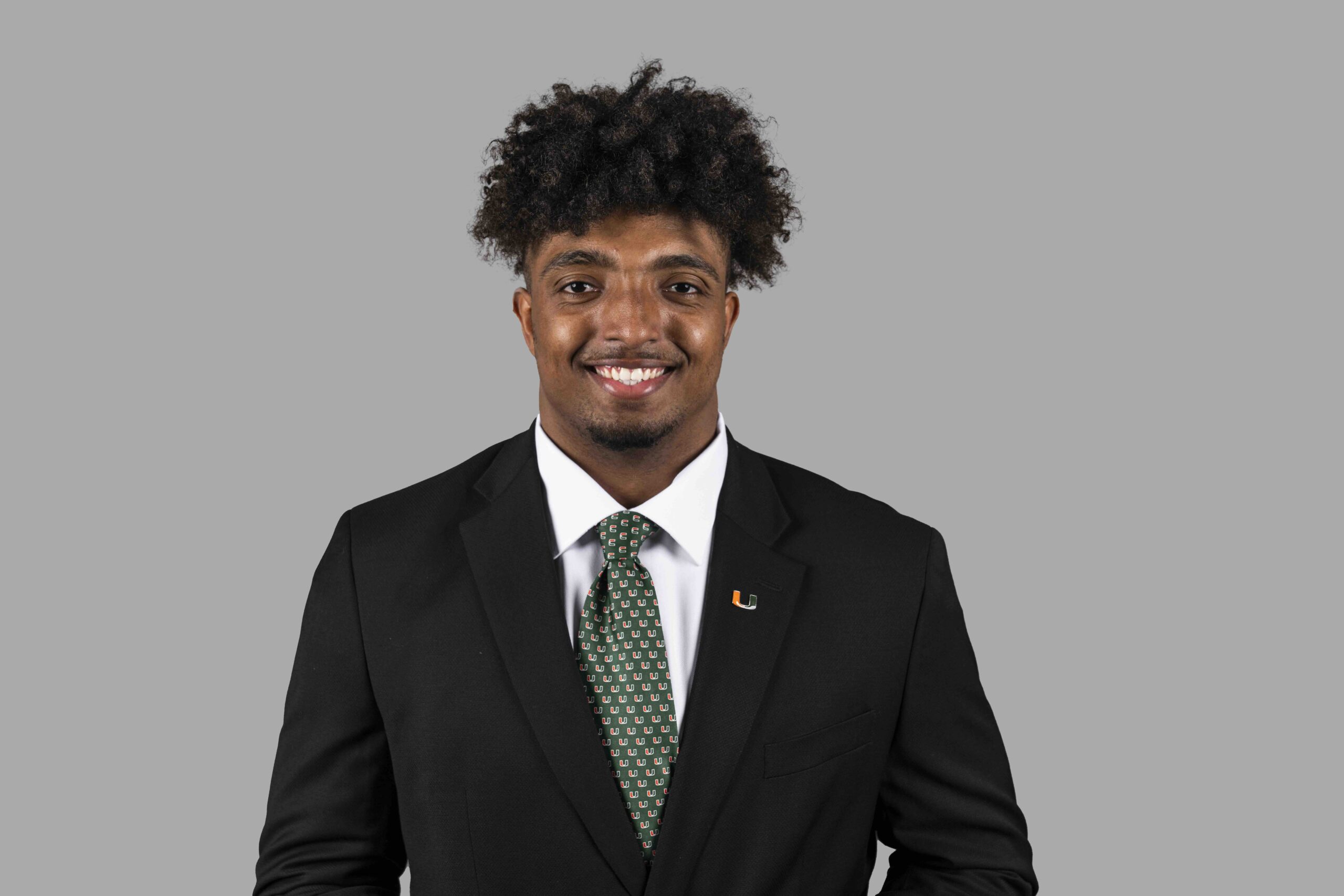
The arrest comes just days before UM’s football opener against Notre Dame, a notable rivalry. Although Hayes was not a starter, his arrest may pose a distraction for the team.
“The investigation concluded that Adarius Hayes’ egregious speed, aggressive and reckless lane changes, and complete disregard for surrounding traffic conditions demonstrated a willful and deliberate disregard for the safety of others, constituting reckless driving,” said Santo. “These actions directly led to the tragic deaths of the three victims.”
This is a developing story.
Lazaro Chavez, Katie Karlson and Mel Tenkoff contributed to the reporting for this story.
In our very first episode of TMH Sportscast, Bella covers the latest sports scores and news over the past week, including soccer, volleyball, and the selling out of Notre Dame tickets.

“Touchdown Jesus” and the U statue, Sebastian against the Leprechaun…
Yet with all these positive icons and nicknames, the rivalry will always be remembered by one phrase: “Catholics vs Convicts.”
Division I football is filled with historic rivalries: Michigan-Ohio State, Army-Navy, and Alabama-Auburn. Among them rests the matchup of the Notre Dame Fighting Irish and the Miami Hurricanes. .
Both teams have consistently maintained a bitter rivalry through the years, despite South Bend and Coral Gables being separated by nearly 1400 miles. As the two teams are about to face each other for the 28th time, it’s important to take a look back on the birth of the tension between them.
In the early meetings of both schools, there was a clear favorite coming into every game: Notre Dame.
With a 12-1-1 record to begin the series against the ’Canes, ND dominated from the beginnings of this rivalry in 1955 through 1980.
The 1980s, however, brought a vitalization of the Miami Hurricanes football program and in turn, competition. Miami’s aggressive offensive nature paired with a lockdown defense fueled a 58-7 win in 1985, raising hostility on both sides.
Coupling the 1985 win with a shutout victory in 1987 for UM, the stage was set for the infamous 1988 game.
“Catholics vs Convicts,” the phrase that pitted two fanbases against each other for years, started out simply on tailgate shirts.
Former Notre Dame student and basketball player Pat Walsh created the shirts after hearing the slogan from his teammates in anticipation for the ‘88 matchup.
Tensions rose as news of these shirts spread to the UM campus, and the rivalry became much more significant for the Hurricanes. Being labeled “convicts,” held layers of offensive subtext beneath the guise of Miami’s aggressive playstyle.
ND touted their religious affiliation while reducing Miami to the “bad seed” of the FBS. While Pat Walsh faced consequences from administration at Notre Dame, it was more due to the shirts being unlicensed through the school.
UM players expressed their feelings on the matter, as multiple players on that ‘88 team were Catholic.
“Notre Dame hasn’t cornered the market on Catholic football players,” said Miami Quarterback Steve Walsh.
Miami, then defending national champions, were upset 31-30 in South Bend in a nail-biter that ended on a stopped two point conversion by Notre Dame safety Pat Terrell.
The Hurricanes and Fighting Irish would trade off wins in 1989 and 1990 respectively, but then would not meet for exactly 20 years, fizzling out a once brutal rivalry.
The rivalry was rekindled in 2017 where the Hurricanes stormed through the Fighting Irish in a dominant 41-8 blowout at home.
This Sunday, another chapter will be written in this historic rivalry as Notre Dame heads down to Hard Rock Stadium for a primetime matchup.
With both teams coming off of competitive 2024-25 seasons, the atmosphere is layered with excitement and trepidation for both ‘Canes and Irish fans.
QB Carson Beck spoke in anticipation of this matchup, displaying confidence in himself and his team.
“It’s just another football game, right? It’s another opportunity to go compete,” said Beck.