Home Blog Page 234

“Fundamentally misunderstood”: NFTs’ digital impact

Today’s technological innovation has taken theory and turned it into a reality — artificial intelligence is now capable of curating and creating art of its own. New developments paired with the rise of NFTs have caused legislative skepticism in both the art world and economy.

Despite the extensive discourse about non-fungible tokens (NFTs), many still don’t understand what they are or their place in the art world. For those unfamiliar with financial technology and art, tech jargon like NFT, AI, blockchain and digital art can be confusing.

NFTs are distinct digital certificates written into the blockchain — or, digital distributed database — that can represent both digital and physical assets. In terms of art, NFTs serve to verify ownership and authenticity of artworks to ensure that an artist’s piece is irreplicable.

The discussion of NFTs includes the topic of artificial intelligence. AI can curate personalized selections of art for collectors based on their individual preferences in style, artist and subject matter.

Dr. Jill Deupi, the director and chief curator of the Lowe Art Museum, is not afraid of AI, especially not in a curatorial sense.

Deupi referenced an exhibition held earlier this month at Duke University’s Nasher Museum of Art entitled “Act as if you are a curator.” The exhibit was entirely AI-curated, but not entirely accurate.

ChatGPT used a database with all 14,000 of the Nasher’s collected works to curate an exhibition that was not only incohesive, but also had mistitled works and false or misleading descriptions.

“That experiment was clarifying,” Deupi said. “It proved that, at least at this stage, AI is not going to displace human-based curatorial practice.”

However, Deupi did express concern regarding the use of AI to recycle copyrighted works and transform them into something new, a practice some artists may object to.

“The most virulent threats are copyright violations for artists because so much material is just being pulled willy-nilly from the web and recycled and reused without permissions,” Deupi said.

Despite her concerns over AI art forgery, she rejected the notion that artists should create NFTs of their works. Deupi explained that AI should be more properly regulated, and that a copyright should be enough to secure artistic works.

“Art is a very powerful tool for propaganda, and in the wrong hands — and of course, behind AI there are the human programmers — some nefarious works of ‘art’ can be generated by AI, depending on what the prompts are,” Deupi said.

If an artist wants to sell their artwork, be it digital or physical, there is an intrinsic risk that their work could be forged. By creating an NFT, the artist can ensure that their art cannot be copied through the terms of their license — artists can give or deny permission for subsequent owners of their NFTs to use their art for further creation.

For AI and computer-generated art, however, there are no intellectual property rights, meaning it cannot be copyrighted, trademarked or considered intellectual property. There are no existing legal guidelines regarding AI and NFTs, but bills moving through Congress, including the House Stablecoin Bill and Financial Innovation and Technology for the 21st Century Act, would provide guidance on the qualification and management of digital assets, if passed.

The Securities and Exchange Commission (SEC), the government organization responsible for regulating the US securities industry, has pursued enforcement actions against several companies for selling “unregistered securities,” but the greater issue lies in how the SEC qualifies securities, which are assets with economic value like stocks.

UM finance law professor Dr. Vanessa Guzzi, claims that NFTs are “fundamentally misunderstood.” She explained that whether or not NFTs can be defined as securities is still unclear. The SEC has settled with the companies they’ve targeted, leaving no case law or clear guidelines to follow.

“We are in a period awaiting more clarity on whether particular crypto assets and NFTs are securities. And, once we get a regulatory framework — whether through Congress or case law — innovation and creativity will be able to flourish,” Guzzi said.

The debate on whether NFTs are securities is central to the transitioning art world. If marketed improperly, an unregistered artistic NFT could be considered a security by the SEC.

Registering NFTs as securities is extremely expensive and the average artist may not have the means. This starving artist may resort to selling their NFTs as commodities, not securities, but without a strong legal framework, they are subject to significant legal risk.

Ultimately, NFTs exist to help artists, and AI poses no real threat to art at the present moment. Regardless, NFTs and AI are here to stay. The question is, where do we go from here?

What’s inside GPT-4’s “brain” anyways?

Shortly after ChatGPT ballooned in popularity, Microsoft released a paper: “Sparks of Artificial General Intelligence: Early experiments with GPT-4.”

Artificial Intelligence? Sure. Most people are familiar with the day-to-day AI tools of Siri or Google Maps, which use algorithms and extensive data to make predictions based on the input. Getting computers to replicate human tasks has been a goal and reality since the 1940s. As early as 1966, a computer program named ELIZA could interpret and output human language akin to today’s ChatGPT.

This early conversation is taken from the inventor’s academic paper about his chatbot:

“Men are all alike,” the human wrote to the program.

“IN WHAT WAY,” Eliza replied.

“They’re always bugging us about something or other,” the human wrote.

“CAN YOU THINK OF A SPECIFIC EXAMPLE,” Eliza replied.

“Well, my boyfriend made me come here,” the human wrote.

“YOUR BOYFRIEND MADE YOU COME HERE,” ELIZA retorted.

ELIZA was so convincing that some users couldn’t believe they were talking to a computer. To some, ELIZA may have seemed like artificial general intelligence (AGI), the theoretical concept that a machine could learn and think like a human, implying it has self-awareness and a consciousness.

The misconception that one is talking to a human when, in reality, it’s a computer is a basic test for AGI. Computer scientists had achieved a couple “sparks” of this in the mid-century in the form of ELIZA, among others.

In Microsoft’s recent paper, researchers tested GPT-4, the most advanced publicly available large language model (LLM), on a wide array of tasks that tested the model’s creativity and curiosity. The paper demonstrates the powers of a computer that can interpret complex, emotional, open-ended situations.

This is only “sparks” of AGI though. The possibility of achieving full-fledged AGI remains hotly debated. Open AI, the company behind ChatGPT and GPT-4, has gone so far as to fund, research and report extensively about safety precautions in case they achieve AGI.

Sam Altman, the CEO of Open AI, has equated AGI with the “median human,” a term he uses for a computer that could replace a co-worker. Since GPT-4 emerged and ChatGPT grew in popularity, Open AI’s rhetoric around AGI has suggested that it is feasible.

Dr. Ubbo Visser, the graduate director of the University of Miami’s computer science department and a member of the AI field since 1986, remains dubious about current prospects of AGI.

“I don’t think right now we can get there because we would have to have social intelligence, to have emotional intelligence. You have to have a deep understanding of how humans work and how they feel and how is this possible? How would you represent that? Right now, we’re just putting a bunch of words in there and telling them to learn the connections between words,” Visser said.

Current LLMs work by predicting the next token, such as a word, based on what it has understood from an extremely large dataset. The model uses “weights” to help assign priority to its data. If there’s an error, a process called “backpropagation” helps the model learn from its mistake and avoid them in the future. Over the past few decades, these fundamental tricks that allow GPT-4 to perform like a human have remained the same.

“That has not changed, really. What has changed is the sheer dimensions I mentioned. Instead of 1000s of weights, now you have trillions of weights,” Visser said.

The scaling is incredible. As AI models have improved in the past decade, the advances have come from more computational power and the ability to process inputs, especially visual. Instead of trying to copy what the brain does, AI models focus on computer-specific methods and take inspiration from how the brain works.

For example, in visual processing, experimentalists learned how the brain receives an image to further their own understanding of how a machine could also “see.”

“The brain processes inputs hierarchically, so when we see a cat we process first the orientation and edges of the image and then textures and parts of shapes and objects until we can identify the cat,” said Odelia Schwartz, an associate professor of computer science whose research is at the intersection of the brain and AI.

Computer scientists applied this principle to AI models to help it make sense of images. Still, experimenting with the model reveals shortcomings indicative of its non-human nature. In one study, the machines with this visual processing ability were asked to process a cat with the skin of an elephant. While humans identified the animal as a cat, the machine identified an elephant, revealing a bias towards the texture of the animal.

Ultimately, AI is still only complicated algorithms making sense of a massive conglomeration of data. Despite acting remarkably human at times, the machines lack the precision humans take for granted.

“Not only that you’re being able to speak in a certain language and choose your words wisely. You are also being able to mix this with emotional intelligence,” Visser said. A human can evaluate, “Is it a safe environment? Is your discussion partner friendly or out to harm? All this information we have as humans. We feel it. We don’t think about it.”

But what if these AI models, chatbots for example, could feel as humans do through the embodiment of a robot? Visser works in both of these fields, with an extensive history in robotics. Part of his work at UM focuses on designing service robots that use LLMs for communication and other AI for additional human tasks, such as object identification.

“Robotics have an important piece which is the interaction and embodiment with the physical world. So they interact with us, they can interact with other objects and then sense, like we do, in real time,” Schwartz said.

Between robotics and deep learning, the field that allows AI to extract detailed data, computers are improving at processing the inputs that humans only need to passively understand.

Combined with the field of quantum computing, which could theoretically make computers exponentially faster at processing very large datasets, there seems to be potential for AGI in the next several decades. The field is always rapidly changing, making speculation difficult, but perhaps in a world where computer hardware can process a tremendous range and amount of inputs, AGI could exist.

This is where Visser objects with perhaps the most important point: the data. GPT-4 trains itself off of the millions of users who have contributed to websites such as Stack Overflow, Reddit and Wikipedia.

“Who can guarantee that that information that is out there is actually true?” Visser said.

The falsities and inaccuracies within these data sets contribute to the errors of GPT-4, still present in Microsoft’s experiments.

Not only do computers need to accurately process incredible amounts of data, but it needs to be very strong data. The subtleties and details that one learns over 30 years of living experience are summarized bluntly on the Internet. For Open AI, with its undoubtedly massive datasets, architectural strengths and thorough training systems, it still lacks a human’s extreme attention to detail. The question will remain, can humans create a database that has the same information as the human brain?

Redefining the classroom: artificial intelligence enhancing education not cheating it

0

3 a.m., overwhelmed and only a few clicks away, the urge to turn to artificial intelligence platforms to complete assignments is on the rise across the University.

The boundary between cheating and the constructive use of AI in the classroom, however, has yet to be clearly defined.

The task of drawing this line falls on the UM Undergraduate Honor Council. Established in 1986, the Council hears cases of students accused of plagiarism, cheating, collusion and academic dishonesty.

“While we, the Honor Council do not have a written policy on AI, we view it as plagiarism and are supporting the faculty members stance on usage within their classroom as outlined in their syllabus,” they said in a statement to The Miami Hurricane.

Violations are broken into three categories (Class Violations I, II or III) depending on the severity of the actions. Nearly a year after the launch of ChatGPT, the Council has not yet heard an AI Class III Violation, traditionally for repeat offenders, or any appeals of a Class I or II violation.

“There have been Academic Integrity incidents submitted that involve AI that were resolved on the Academic Integrity Committee level as they fell under the Class I violation of plagiarism,” they said.

With nearly no precedent set by the Honor Council, the guidelines for AI usage have almost entirely been led by individual professors. While some have banned the technology outright, others are finding ways for it to strengthen their curriculum.

Following a discussion with her students at the beginning of the semester, English professor Dr. Pamela Hammons decided to alter her syllabus to allow for the incorporation of AI technology.

“My students and I discussed AI at length early in the semester, and I learned from [my students] about how they use it when they write,” Hammons said. “I discovered, for example, that they sometimes use AI as a tool to help them play with, reflect upon and develop their ideas for writing assignments.”

Within her class syllabus, Hammons has made two key changes.

“The first change is to make clear that there is no penalty for using AI if it helps, as long as they take an additional step in their learning process by reflecting explicitly upon and sharing how they have used the tool,” Hammons said.

“The second change is meant to allow for ways of engaging deeply with literature that encourage a greater individual connection to it that might—for some students—be more purposeful than writing in a strictly analytical manner and that might discourage overreliance on AI.”

These emotional and creative responses are less easily replicated by generative language models like ChatGPT, she noted. Hammons also specifies that students are required to detail how AI was utilized in the writing process for any applicable assignments.

Dr. Doctor Paul Russel Shockley, a professor of philosophy and religious studies in the College of Arts and Sciences, has also allowed students to open up a dialogue with ChatGPT.

“What motivated me to incorporate AI is the idea to recognize the educational resources that AI can provide, but also to be able to critique the claims and the positions, etc, that AI gives,” he said.

He plans to have students engage in discussions with chatbots and reflect on the AI-generated responses.

Shockley believes that AI has the potential to allow students to think critically in new ways by bouncing ideas off the constantly evolving, collective intelligence of the internet. According to him, AI has the ability to go beyond the individual mind and, with this strength, it creates an interesting educational opportunity for students.

“No matter if we are engaging AI, or engaging each other, critical thinking is paramount,” Shockley said. “The focus should be on the application of critical thinking skills, regardless of the medium.”

Isabella Lozano, a senior creative advertising and sports administration major, has taken advantage of AI to aid her in the process of creating visuals. For a recent mockup assignment, she gathered photos of a train cabin seat and a bookstore then used AI visual tools to merge the two together. She instructed AI to add legs to the seat and a rug under the coffee table, creating a lifelike image from parts of other real photos.

“It is like any other system. I would fully say that I used AI to make this, but I made it technically.” Lozano said. “I use this to help me.”

In many of her creative design classes AI is encouraged, but students are required to cite any AI technology used. The inclusion of a citation may also be helpful in denoting the difference between plagiarism and using AI as a helping-hand, she explained.

“If you use it, you have to cite it. And if you don’t, and if you get caught, then that is plagiarism,” Lozano said.

Because of the difference among professors, she advises any AI incidents to be approached by the Honor Council on a case-by-case basis until a further consensus is reached on its impact on enhancing the collegiate experience.

While the confusion among acceptable usages of AI remains to be debated, it seems likely that AI will eventually be as essential to the learning process as the internet is today.

“Whether we like it or not, this is the way the world is going, we must embrace it and learn how to use it,” said Anthony Miles, a senior at the University of Miami majoring in motion pictures.

Jenny Jacoby contributed to this story.

Timeline: An investigation into The Cloisters “cluster”

Updated Oct. 12, 2023.

A general record of the difficulties residents have faced moving into the Cloisters Miami student housing apartment and townhome complex.

Aug. 13

On Aug. 13 the would-be residents of The Cloisters Miami were notified that their scheduled move-in was pushed back two weeks due to unforeseen delays. They were moved into local hotels, THesis Miami and the Biltmore, until their units were ready — or so they thought.

Aug. 17

Four days later, an email reminder was sent listing the provisions the Cloisters would offer for its residents during their hotel stays. Hotel costs and parking were fully covered by the property, stipends for laundry and food costs were provided as well as a free shuttle to bus students to campus.

Aug. 27

The Cloisters’ apartment residents were told their units were further delayed another two weeks. On this day, the townhome residents, the other living facility option, were alerted that their scheduled move-in day was Sept. 2.

Sept. 19

Miami-Dade County’s Building Official issued the Cloisters’ Temporary Certificate of Occupancy (TCO) on Friday, Sept. 19, based on the inspection approval and recommendations provided by Universal Engineering Sciences, the private provider for inspections hired by Landmark Properties, that recommended the TCO be issued and to allow occupancy.

Sept. 22

On Friday, the apartment residents moved out of hotels and into their units at 5830 SW 57th Ave. They were given less than one day’s notice to relocate all of their property to their new units.

Sept. 22-Sept. 26

Over the next few days, residents experienced inconvenient disruptions including dirty units, sewage issues, foul-tasting water, no internet connection, incomplete electrical wiring and broken air conditioning.

Sept. 26

On Tuesday morning, and based on the complaints received, Miami-Dade County building inspectors of all trades were on site to meet with the private provider and contractor to inspect the complaints and current on-site conditions.

The Miami-Dade Water and Sewer Department also sent inspectors to collect water samples of the water provided by the city to the Cloisters residence. The results of these tests showed the water was clean of contaminants and safe to drink.

TMH was notified that an open-hydrant water flush was also conducted on this day.

Sept. 27

Following the County’s inspections, the Cloisters called the residents of four units, giving them less than a day’s notice to vacate the units. After three hours of incoherent communication, the residents were notified they would be moving back into hotel rooms until Oct. 4.

Some of those impacted negotiated until the Cloisters’ agreed to cover AirBNB accommodations after struggling in hotels with no access to kitchens and other utilities the previous month. The AirBNBs are being paid for by the residents with the understanding that the Cloisters will later reimburse them for those costs.

Sept. 29

Statement from Miami-Dade County Regulatory & Economic Resources

Oct. 3

The residents of the four previously vacated units at the Cloisters were notified at 6 p.m. to extend their Airbnb or hotel accommodations to Oct. 10 because of the ongoing repairs to the first-floor vacated units.

Oct. 4

In the evening, a gas leak in a unit in building one of the Cloisters drew law enforcement to the property and required gas to be shut off until further notice.

Out of caution, the Cloisters shut off the gas in Building one, alerting residents the following day that it will remain off for two to three business days. Residents have expressed frustration over having been unable to use their gas stove and oven, and some are hesitant to use other appliances.

On the same day, an anonymous member in the Facebook group posted a photo of what looked like mold on their unit’s ceiling. The photo raised concern, causing parents to continue to question the habitability of the complex.

Section 6a of the lease, the “mold disclosure,” signed by residents states that the Cloisters will not be held liable for mold damages.

Oct. 11

After seven days without gas, residents received an email notifying them of a hopeful gas restoration date of Friday, Oct. 13.

What now?

The County is currently conducting a full audit of the private provider’s services to ensure that all required inspections for the project were performed and the personnel sent to inspect have the proper credentials, are employees of the private provider company and maintain the proper level of professional liability insurance, as required by law.

Residents and their parents continue to voice concern and seek legal action, demanding either a reduction in the cost of rent or to be released from their leases. Several families sent letters to the Cloisters demanding changes be made to their units. As per Florida law, landlords are required to provide residents with liveable conditions that are up to code. Once officially notified that their property is not meeting these standards, landlords have seven days to resolve the issue or residents may qualify to break their lease.

TMH will continue to monitor this situation.

Jenny Jacoby contributed to the reporting of this article.

UM News Briefs: Pulitzer Prize winner, vice president and House Speaker

0

Note from the news editors: UM News Briefs are a new segment from The Miami Hurricane. News briefs provide a weekly snapshot of life at the University of Miami, in Miami and sometimes around the state, country or world. Stay up to date with UM News Briefs.

THIS WEEK AT THE U

The Miami Hurricane speaker series presents Pulitzer Prize winner Amy Driscoll

On Wednesday Oct. 4, The Miami Hurricane will host Amy Driscoll, the deputy opinion editor at the Miami Herald, to speak at TMH’s first general body meeting of the semester. Driscoll recently won a Pulitzer Prize for her editorial series “Broken Promises” which highlighted a series of promises made to Miami-Dade residents that failed to be implemented. These include a Metrorail line in Northwest Dade and a park next to the Kaseya Center.

Prior to her time as deputy opinion editor, Driscoll served as the Herald’s editor for health policy and before that as the world affairs editor. She will be discussing her myriad of experiences with TMH staff and interested students at 7 p.m. in Whitten Learning Center Room 160.

This year, TMH will continue to bring in well-established, successful journalists and experts in the field of media who can provide staff with personal insight into what a career in journalism entails and all the tricks-of-the-trade that come with it.

Interested students can RSVP for the event here.

U KNOW MIAMI

Kamala Harris brings ‘Fight for Freedom’ college tour to Miami

U.S. Vice President Kamala Harris visited Florida International University’s main campus on Thursday afternoon in Miami-Dade County for the sixth stop of her “Fight for Our Freedoms College Tour.”

Vice President Harris spoke to the diverse youth of Miami-Dade County, encouraging them to research issues and turn-out to vote in upcoming elections.

“One of the many ways you can and will make a difference, one of those ways, is to vote,” Harris said.

Introduced by Miami-Dade County mayor Daniella Levine Cava and administrator of the Small Business Administration Isabel Guzman, the conversation with Harris was moderated by American rapper, Fat Joe, and award-winning singer and actor, Anthony Ramos.

According to WPLG Local 10 News, Harris was also scheduled to attend a Biden campaign reception at 6 p.m., in Miami Shores, and will then fly out of MIA back to Washington, D.C.

IN CASE U MISSED IT

18 climate protesters arrested at Kevin McCarthy’s office

Eighteen youth climate protesters were arrested on Thursday afternoon after occupying House Speaker Kevin McCarthy’s office on Capitol Hill.

Protesters carried signs saying “Climate Action not Shut Downs” and “Green New Deal Now,” demanding action to avert a government shutdown.

In an 11th hour deal, McCarthy was able to negotiate a short-term funding deal with democrats to avoid the shutdown for another six weeks.

The protesters were arrested under a D.C. code that prohibits crowding, obstructing or incommoding. The code is often cited by officials when arresting protesters during planned acts of civil disobedience.

Olivia Rodrigo comes crashing back with sophomore effort “Guts”

"153080_TH01_7019" by Walt Disney Television is licensed under CC BY-ND 2.0.
Photo credit: "153080_TH01_7019" by Walt Disney Television is licensed under CC BY-ND 2.0.

Global popstar Olivia Rodrigo returns after a two-year hiatus with her sophomore effort “Guts,” a set of 12 songs inspired by the time following the success of her 2021 debut album “Sour.” The project follows her process of self-discovery and maturity as she transitions from her teenage years to adulthood.

“Guts” was written and recorded by Rodrigo in collaboration with her producer Dan Nigro. Other co-writers include Julia Mitchell and Amy Allen on the songs “logical” and “pretty isn’t pretty.” Yet Rodrigo’s involvement in the songwriting process comes through in her lyrics, which are heart-wrenching, up close and personal.

The 12-track record has seen more success than its forerunner, climbing to No. 1 on the U.S. Billboard 200 and charting all twelve songs in the Top 40 of the Billboard Hot 100. The album’s lead single “Vampire” has also topped international charts in the U.K. Canada, Australia, Ireland, and New Zealand.

Rolling Stone magazine has deemed the album “another instant classic,” as the genre of her music transitions from teenage pop to experiential rock.

Several songs balance a heavy, fast beat accompanied by an undertone of soft melodies. The tracks follow the storyline of Rodrigo’s journey from adolescence, one marked with fallbacks and epiphanies.

Embed from Getty Images

“Bad Idea Right?” is the perfect example of a fallback. The second-most popular song from the album tells the story of a woman who seems emotionally healthy, but keeps returning to old, damaging habits when her ex texts her.

The track starts with a steady beat and shifts into loud, uncontrollable noise. The voice in her head that plays in the background shares her intuition, but is overshadowed by an animalistic pull. Hearing Rodrigo boldly speak about the imperfect human within her is a breath of fresh air.

“Making the Bed” on the other hand is a model of an epiphany. The song’s smooth, low tone expresses how we must learn to live with our decisions and their consequences.

The faint, gentle tune describes someone hiding from their problems, trying to ignore reality. Rodrigo’s voice envelops the pain and stings us with each verse, ending optimistically with hope for the future.

“Guts” was a pleasant surprise, especially in comparison to “Sour.” The songs from Rodrigo’s first album sounded whiny and immature, often making her contemporaries who face similar life challenges feel uncomfortable in their own skin.

As Rodrigo and her fanbase grow up, that maturity is mirrored in her music. It’s exciting to anticipate what lies in store.

Gallery: Inter Miami II falls to NYCFC II 2-3

Inter Miami CF II fell 2-3 to New York City FC II in their matchup at DRV PNK Stadium on Sept. 24. Here’s a look back at the match:

Miami midfielder Santiago Morales dribbles downfield in the first half of Inter Miami II’s match versus New York City FC II at DRV PNK Stadium on Sept. 24, 2023.
Miami midfielder Santiago Morales dribbles downfield in the first half of Inter Miami II’s match versus New York City FC II at DRV PNK Stadium on Sept. 24, 2023. Photo credit: Jared Lennon
Miami defender Israel Boatwright controls the ball in the first half of Inter Miami II’s match versus New York City FC II at DRV PNK Stadium on Sept. 24, 2023.
Miami defender Israel Boatwright controls the ball in the first half of Inter Miami II’s match versus New York City FC II at DRV PNK Stadium on Sept. 24, 2023. Photo credit: Jared Lennon
Miami forward Miles Perkovich celebrates his goal with teammates in the first half of Inter Miami II’s match versus New York City FC II at DRV PNK Stadium on Sept. 24, 2023.
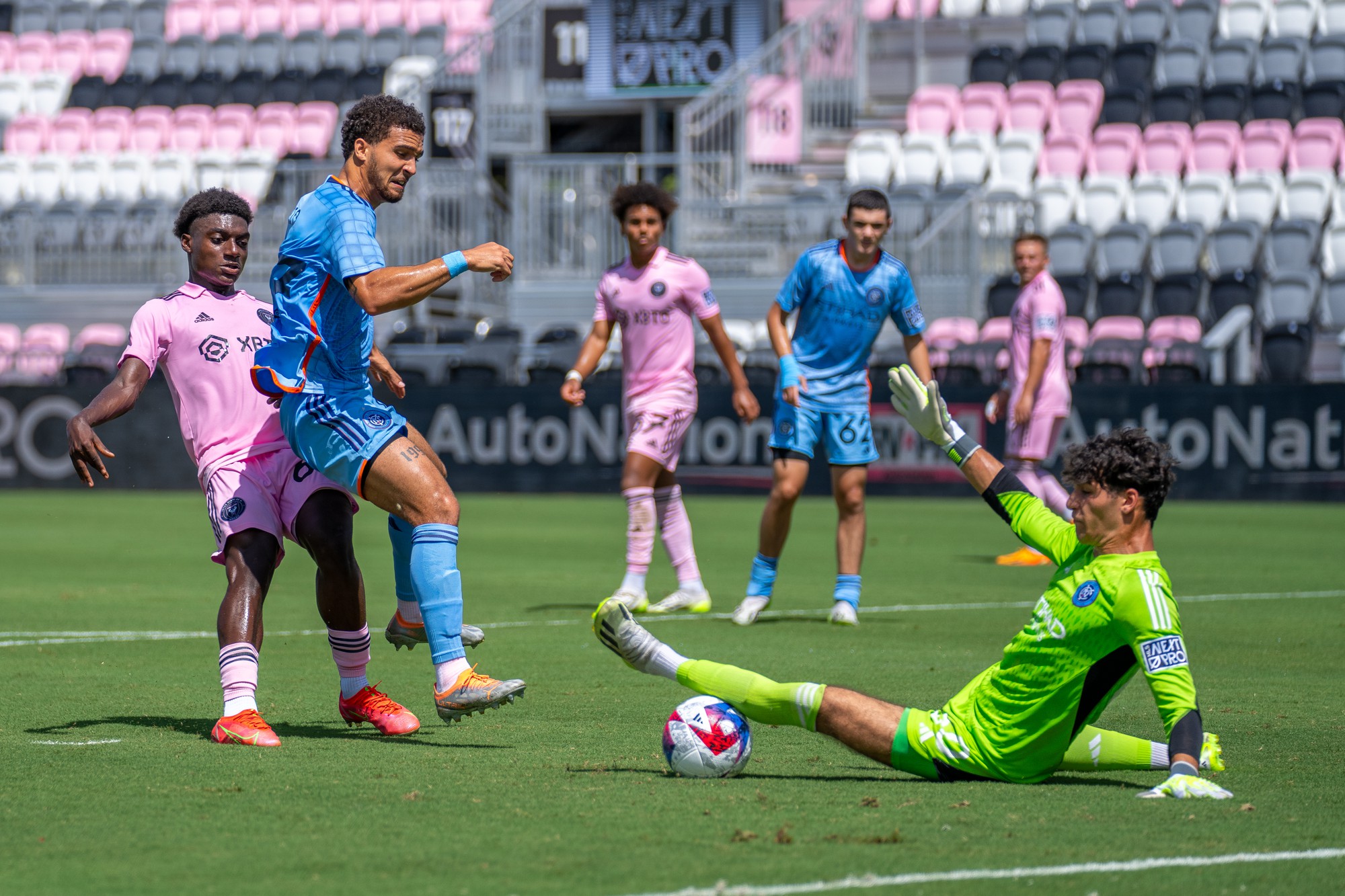
Miami foward Bryan Destin’s shot is saved by New York City goalkeeper Alexander Yagudayev in the first half of Inter Miami II’s match versus New York City FC II at DRV PNK Stadium on Sept. 24, 2023.
Miami midfielder Miles Perkovich fights for the ball in the second half of Inter Miami II’s match versus New York City FC II at DRV PNK Stadium on Sept. 24, 2023.
Miami defender Farid Sir-Sar goes up for the header in the second half of Inter Miami II’s match versus New York City FC II at DRV PNK Stadium on Sept. 24, 2023.
Miami defender Farid Sir-Sar goes up for the header in the second half of Inter Miami II’s match versus New York City FC II at DRV PNK Stadium on Sept. 24, 2023. Photo credit: Jared Lennon
Players collide in the second half of Inter Miami II’s match versus New York City FC II at DRV PNK Stadium on Sept. 24, 2023.
New York City goalkeeper Alexander Yagudayev makes a save in the second half of Inter Miami II’s match versus New York City FC II at DRV PNK Stadium on Sept. 24, 2023.
New York City goalkeeper Alexander Yagudayev makes a save in the second half of Inter Miami II’s match versus New York City FC II at DRV PNK Stadium on Sept. 24, 2023. Photo credit: Jared Lennon
Miami midfielder Alejandro Flores takes a corner kick in the second half of Inter Miami II’s match versus New York City FC II at DRV PNK Stadium on Sept. 24, 2023.
Miami midfielder Alejandro Flores takes a corner kick in the second half of Inter Miami II’s match versus New York City FC II at DRV PNK Stadium on Sept. 24, 2023. Photo credit: Jared Lennon
Players catch their breath after New York City FC II’s 3-2 win over inter Miami FC II at DRV PNK Stadium on Sept. 24, 2023.
Players catch their breath after New York City FC II’s 3-2 win over inter Miami FC II at DRV PNK Stadium on Sept. 24, 2023. Photo credit: Jared Lennon

Inter Miami just inches away from a comeback without Messi, draw with NYCFC 1-1

0

Defender Tomas Aviles became was the unlikely hero for Inter Miami Saturday night, as his goal in extra time pulled Miami to a draw against New York City FC (NYCFC) 1-1 at DRV PNK stadium.

After being awarded a corner kick in the 95th minute, Aviles got his head to the ball and forced it into the right side of the net from about six yards away. It was the 19-year-old Argentinian’s first ever goal for Inter Miami, and it erupted the home crowd into a frenzy of celebration.

The game could have gone much differently if Inter Miami were at full strength. Two Inter Miami’s three former FC Barcelona stars sat out the game as Jordi Alba and superstar Lionel Messi watched from the stands. Messi missed with a reported leg injury, while Alba missed his second straight game nursing a hamstring injury. So far, Inter Miami has 10 wins, one draw, and no losses when Messi takes the field for them, while they only have one win, two draws, and two losses when he isn’t.

Injured Miami forward Lionel Messi watches on in the second half of Inter Miami’s match versus New York City FC at DRV PNK Stadium on Sept. 30, 2023. Inter Miami drew 1-1.
Injured Miami forward Lionel Messi watches on in the second half of Inter Miami’s match versus New York City FC at DRV PNK Stadium on Sept. 30, 2023. Inter Miami drew 1-1. Photo credit: Jared Lennon

From the very beginning of the game, NYCFC had chances to score. They had two free kicks from inside 25 yards before the five-minute mark. Both of the attempts were blocked by the wall.

The early chances set the tone for the first half. NYCFC found themselves on the break many times after pressuring Inter Miami in the middle third of the field and creating Miami turnovers all game.

From their possession came multiple great chances through Inter Miami’s defensive line. City’s starting striker, Algerian Monsef Bakrar, had two shots come from through-ball passes, both happening inside the 18-yard box but going wide of the goal.

Bakrar had his best chance to score in the 25th minute of the game. This time, midfielder Andres Perea had a through ball sent down the far side of the pitch and sent a hards riven cross towards Bakrar. He was slightly too far away from the pass, resulting in his contact with the ball being too weak to go on target. If the shot was on target, Miami goalie Drake Callender would not have gotten to the ball.

However, as the half went on, Miami had more success stringing meaningful passes together. They had their best chance of the half just before the half ended. Inter striker Ecuadorian Leonardo Campana had a ball chipped in from the 18-yard-line towards goal that he got his head onto but was cleared by NYCFC before any Miami player could make a play.

Miami midfielder Benjamin Cremaschi trips in the second half of Inter Miami’s match versus New York City FC at DRV PNK Stadium on Sept. 30, 2023.
Miami midfielder Benjamin Cremaschi trips in the second half of Inter Miami’s match versus New York City FC at DRV PNK Stadium on Sept. 30, 2023. Photo credit: Jared Lennon

The two teams were scoreless at the half. However, NYCFC’s control of the midfield and their constant breakaways made it seem they were the better team up to that point.

But Miami seemed to have a new life after returning from the break. They could force two corner kicks in the first three minutes and have 19-year-old Noah Allen slightly miss a volley from the second corner. About five minutes later, Dixon Arroyo had a chance on goal from about 20 yards out that sailed just above the goal post.

Miami possessed the ball for a hefty majority of the second half, and any time NYCFC had the ball, they found a way to turn it over relatively quickly. By the final whistle, Inter had their total game possession to 64.5 percent.

But possession does not matter; what does is the score. In the 76th minute, when all looked successful for Inter Miami, City’s Santiago Rodriguez broke free from the Miami defense and, from an extreme angle, skied a shot into the roof of the net to suck the life out of DRV PNK stadium and give NYCFC a 1-0 lead. It was the Uruguayan’s fourth goal of the season and his first since May 6.

After the goal, NYCFC sat back and attempted to defend for the final approximately 20 minutes, but it proved to not be the best idea with Martinez’s goal coming with just a short time left. However, Miami had another prime chance to score – this time with one minute left. After receiving the ball about 10 yards away from the goal, midfielder David Ruiz smacked the ball past NYCFC goalie Matthew Freese but hit the crossbar in the process. The ball landed downward but did not cross the line to give Miami the comeback.

With just four games left in their regular season and one game in hand, Miami is just four points away from a spot in the postseason. They still need to jump five teams in point total to do so, one of those teams being NYCFC.

Inter Miami will try to get back to winning ways against the Chicago Fire on Wednesday at Soldier Field. The game will start at 8:30 p.m.

From humble beginnings: Business mogul Nelson Peltz discusses path to success at business school’s Distinguished Leader Lecture Series

On Thursday evening, the University of Miami Patti and Allan Herbert Business School hosted an intimate chat, part of their Distinguished Leaders Lecture Series, that attracted a swarm of undergraduate business students, MBA students, faculty, staff, industry professionals and President Julio Frenk, awaiting to hear the perspective of a prominent business executive speak about breaking into the industry and the secrets to success.

“One man, one woman can make an amazing difference in a company,” said Nelson Peltz, billionaire businessman and founding partner of Trian Fund Management, an asset management firm, to the crowd in the business school’s Storer Auditorium.

Peltz, the evening’s keynote speaker, was introduced by Ann Olazábal, interim dean of the business school, and Stuart Miller, member of the University of Miami’s Board of Trustees and UM Law alumnus.

The talk began with an anecdote from Miller, sharing how he and Peltz became acquainted through the attempted purchase of a company.

“I had a front-row seat to a straight-shooting, hard-hitting, direct conversation, no waste of time, crystal clear, not confusing, sharp focus, targeted, determined approach to a clearly defined target. It was an engagement that, to this day, I’ve never forgotten,” Miller said of his experience with Peltz in that first business negotiation.

Peltz took his first step in business by working alongside his father, at A. Peltz & Sons, shortly after dropping out of the University of Pennsylvania’s Wharton School of Business. Instead of pursuing his passion of teaching skiing in Oregon, Peltz’s father offered him a job. Peltz subsequently built the company value from $2 million to $150 million.

During the night, Peltz also revered the importance of meaningful business relationships and friendships in his success. He was able to work with other financiers, which allowed him to buy control of companies in which he saw potential.

“I was able to work with Michael Milken and others to finance acquisitions for businesses that were not being well–managed,” Peltz said.

The steep learning curve and real-world experience of working in his family’s business taught him everything he knows, allowing Peltz to go from poorly-managed, small companies to fixing the mismanagement of large corporations.

“It’s like going to business school,” said Peltz. “It was my way of learning.”

This trajectory allowed Peltz and his long-term partners to build an asset management company focused on investing in a small number of businesses that could benefit from targeted advice to improve their operations and strategy, with a focus on bottom line accountability.

He has positively influenced companies like Snapple, Heinz, Kraft Foods, DuPont, Procter and Gamble, PepsiCo, Disney and others.

The business titan’s family is a teaching experience for him. With 10 children between two marriages that span two decades, he will spend hours talking with his children, learning about their thoughts, concerns, and opportunities they see. Straight, honest discussion and crafting solutions with long-term impact are core values to Peltz.

When ending the evening’s discussion, Peltz closed with his thoughts on the status of the American dream in the United States, reminiscing on a time where discourse between opposing viewpoints could occur without hostility.

“It breaks my heart,” said Peltz. “This country still has maybe more opportunities than when I was younger. This is the greatest country in the world, but look at all the problems we have, socially and politically.”

“It’s your job, not mine anymore, your job to change that. I am very passionate about leaving a better country than I found to my 10 kids and their kids. You folks are the next generation, you can help solve our problems,” Peltz said.

President Frenk added closing remarks to the event, connecting Peltz’s key points to the University’s own goals.

“We are committed to creating a climate of absolute freedom of inquiry, freedom of expression,” Frenk said. “That way we can discuss ideas and then we can reach each other through our differences, not through our unanimity.”

Nelson Peltz was able to engage an auditorium of participants, particularly students. Carly Litt, a junior finance and real estate student, reflected on Peltz’s talk and learned to ask questions, talk to people and learn.

“The best way to grow is to hear other people’s opinions and the best ways to improve, whether it be in business or in life or in the world is to talk to people,” Litt said.

Peltz offered insight and background into some noteworthy events in business, many of which students study here at UM. “It was an amazing experience to hear him talk about Procter and Gamble because it was a case that I was starting in my marketing class,” Paulina Lutzagar said, a freshman majoring in marketing and sustainable business.

The titan’s impact in the business world transcends generations, as evidenced by the diverse crowd, and continues to provide a lesson to those taking their first steps in the field.

“When we listen to Nelson Peltz and the trials that he’s gone through – the successes and some of the pitfalls and failures – it is a business school lesson unto itself,” said Miller. “If you have an opportunity to learn, as we do here today, hang on to every word, because every engagement with Nelson Peltz is a business school class.”

Review: Starbucks fall drink menu

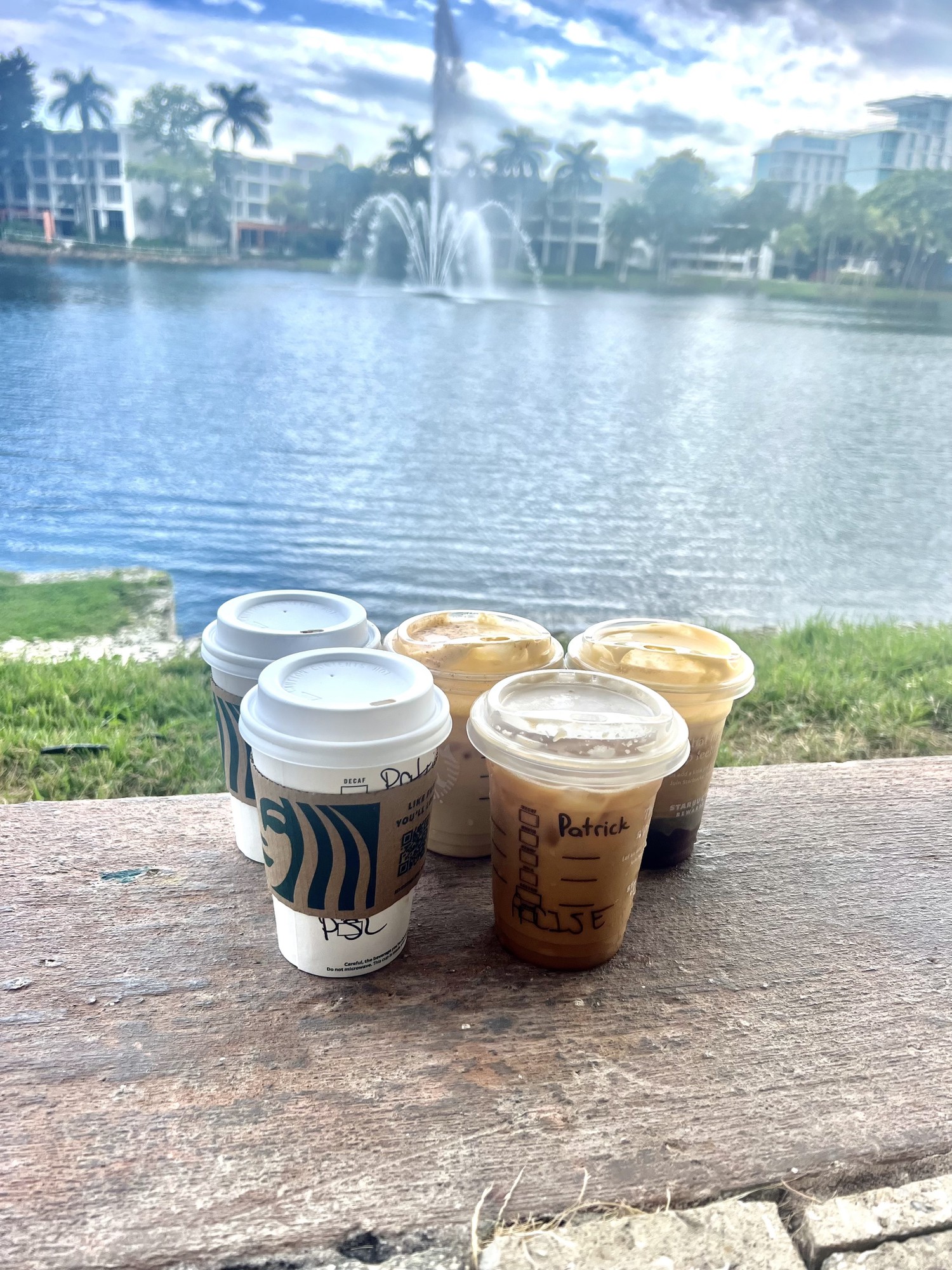
Starbucks fall drinks can be ordered in the Shalala Student Center on campus. Photo Credit: Morgan Fry

As October approaches and the Miami forecast is still consistently in the high 80s, it can be hard to get into the fall spirit. However, students can still enjoy the flavors of the season without the crisp autumn air. Head over to the on-campus Starbucks for a taste of fall in a cup. Here are The Miami Hurricane’s ratings of the 2023 Starbucks fall drink menu items.


Pumpkin Spice Latte

The Pumpkin Spice Latte (PSL) is the drink that started it all for Starbucks lovers. In fact, this is its 20-year anniversary. It’s basically happiness in a cup. The pumpkin pie spice strung throughout the rich milk makes for a decadent treat.

Despite having latte in the name, I wouldn’t order this drink if you’re looking for a strong coffee flavor. It barely tastes like coffee at all, so be mindful if you like to taste your caffeine.

There’s a reason why the PSL has stuck around all of these years. You can order it hot or iced. While it originally started as a hot drink, the iced version is just as delicious and perhaps more realistic for the hot Miami climate.

Rating: 8/10


Apple Crisp Oatmilk Macchiato

If apple cider and coffee had a baby, it would be the Apple Crisp Oatmilk Macchiato. This hot drink brings comforting memories of the chilly months for those who grew up in a colder climate.

The weird thing about this drink is you can taste both the coffee and the apple flavor. Do I think they mesh well together? Not necessarily — I personally wouldn’t order this drink every time I go to Starbucks, but it’s a good option if you want to try something new.

Rating: 6/10


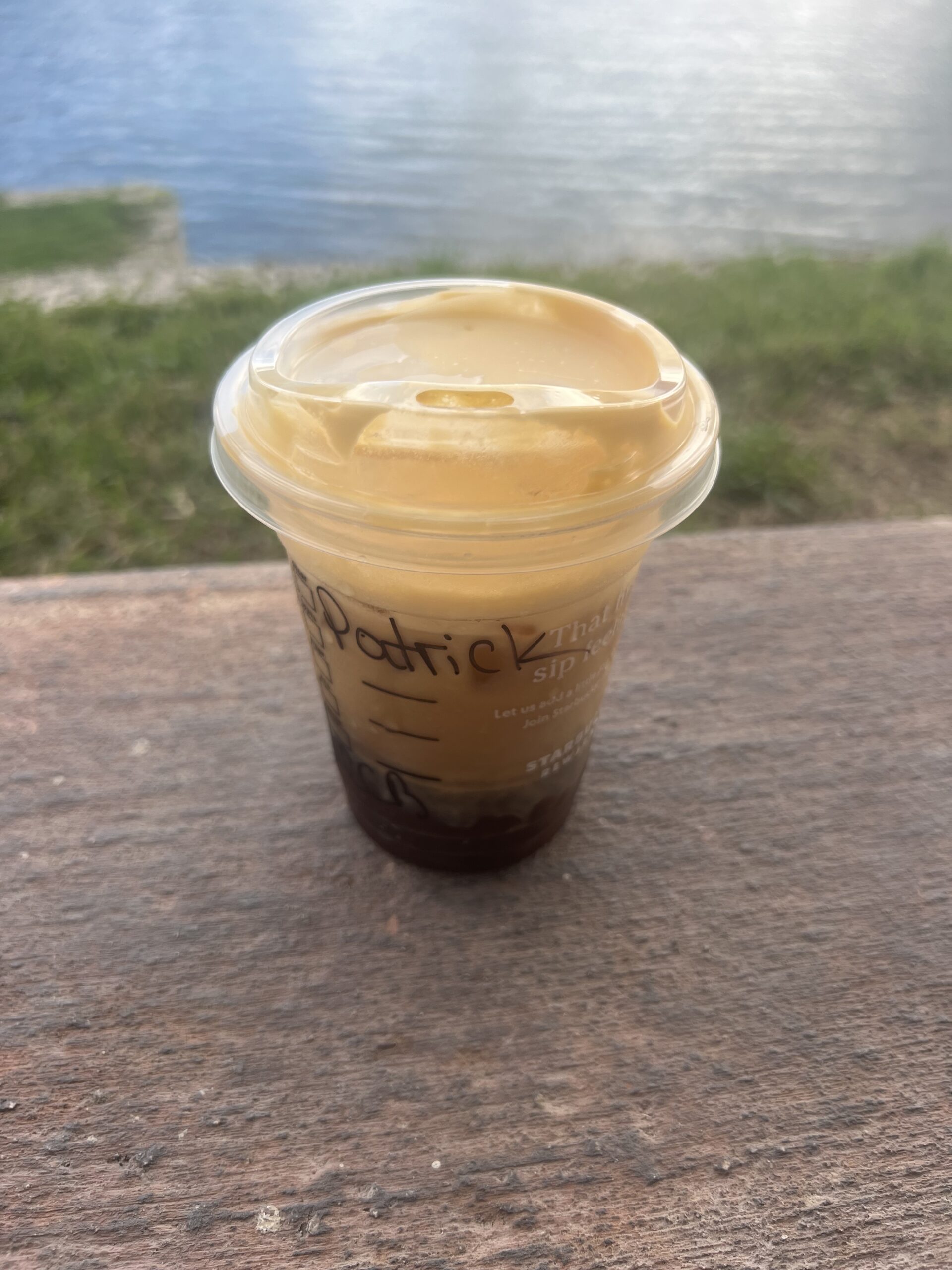
Pumpkin Cream Cold Brew

The Pumpkin Cream Cold Brew is the PSL’s energetic friend. It packs a strong coffee flavor with smooth pumpkin cream cold foam on top.

If you’re a coffee lover looking to get in the fall spirit, this is the drink for you. The dessert-like cold foam on top of Starbucks’ rich cold brew is a heavenly pairing.

I think this is one of the most solid fall drinks. Just beware of the caffeine shakes you might experience after consuming this lovely beverage.

Rating: 9/10


Iced Apple Crisp Shaken Espresso

Though the Iced Apple Crisp Shaken Espresso is new to the Starbucks fall menu, I think it should leave the menu next year.

This drink is absolutely foul and tastes like sour milk. I took one sip and scrunched my face at the pungent taste. The espresso flavor just does not work with the apple. Two bitter flavors combine to create one sharp sip.

While I think the idea is unique, I personally can’t get behind this drink. Maybe you can salvage the drink by adding some caramel drizzle for extra sweetness, but I highly recommend choosing a different drink to get your fall fix.

Rating: 3/10


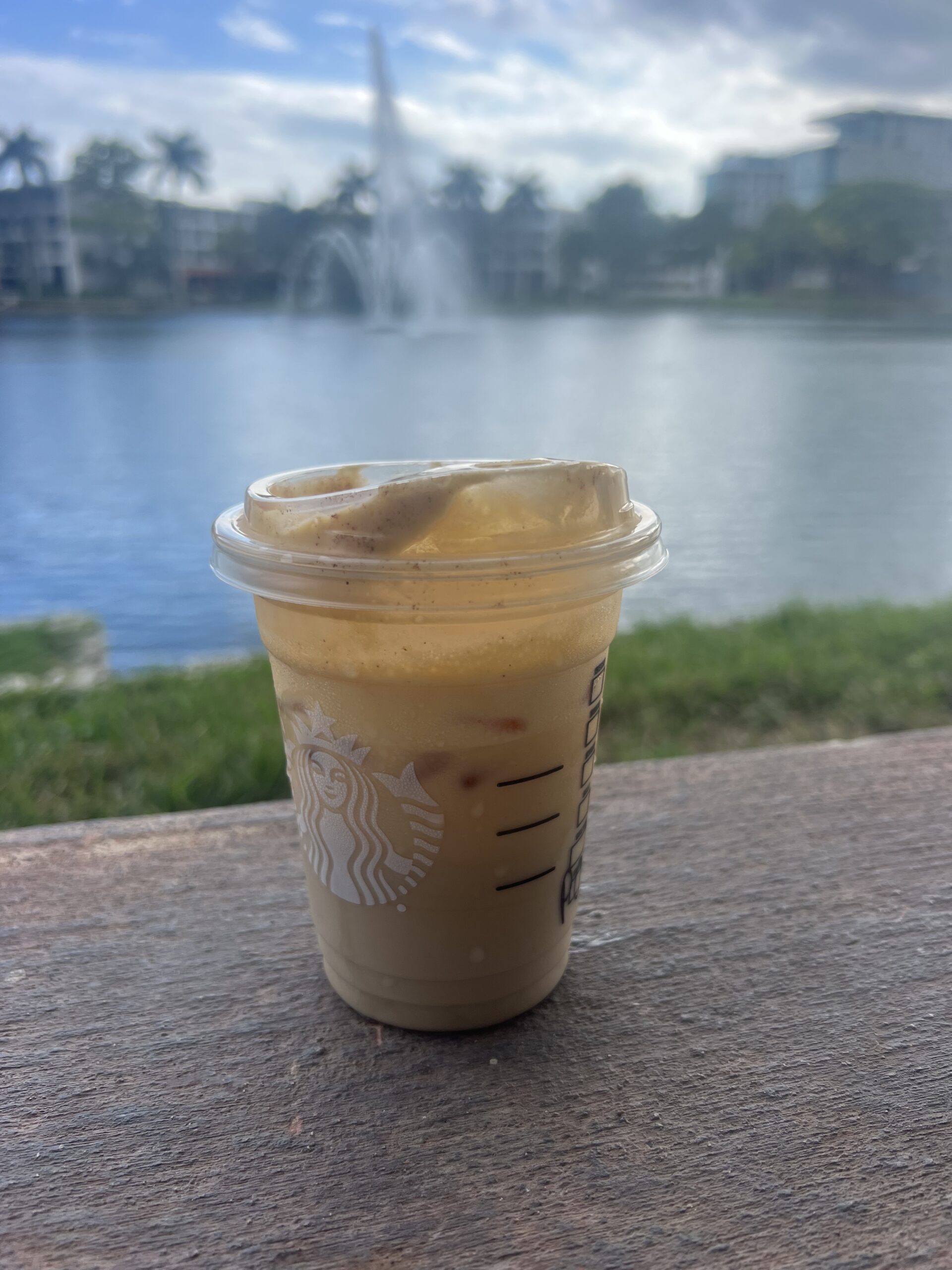
Iced Pumpkin Cream Chai Tea Latte

The Iced Pumpkin Cream Chai Tea Latte is the best drink on the fall menu. While it’s new to the menu this year, avid Starbucks-goers created the concept on the Starbucks Secret Menu last season.

Customers figured out they could ask for the pumpkin cream cold foam from the Pumpkin Cream Cold Brew on top of the beloved iced chai tea latte. Clearly, Starbucks picked up on the trend and made it a headliner for their featured drinks this year.

The spiced chai with that creamy hint of pumpkin on top is top-tier. The only time it’s a bit off is when the baristas don’t fully mix the chai into the milk, but you can just grab a straw and stir it yourself.

Rating: 10/10

The Miami Hurricane would like to send a huge shout out to the on-campus Starbucks workers who help bring joy to students on campus each and every day. Thank you for your hard work!

ACC announces Miami’s 2023-24 men’s basketball schedule

0

The Atlantic Coast Conference (ACC) announced the schedule for the 2023-24 men’s basketball season on Tuesday night. Miami’s conference schedule will feature 20 ACC matchups from Dec. 2. to March 9.

“The Atlantic Coast Conference is annually one of the toughest leagues in America. The opportunity to compete against the best players and programs in the country is among the reasons why many of our players choose to attend Miami,” Hurricane head coach Jim Larrañaga said in a UM release.

Some of the biggest matchups on the slate include one on Jan. 17 against rival Florida State, a road match on Feb. 5 against Virginia, with whom Miami shared the ACC regular season title last year and a home matchup on Feb. 21 against defending ACC tournament champion Duke.

With a revamped squad this year that’s hungrier than ever, Miami looks to build on what was an unprecedented season for the program. In 2022-23, the Hurricanes defeated Pittsburgh in their regular season finale to claim a share of the ACC regular-season championship with Virginia, all while garnering an 11-1 record on home court.

When postseason play rolled around, Miami knocked off the No. 1-seeded Houston Cougars, widely regarded as a championship favorite, to reach the Elite Eight of the NCAA Tournament in back-to-back years for the first time in program history, The team also reached its first-ever Final Four after defeating the No. 2-seeded Texas Longhorns.

Fifth-year senior guard Jordan Miller dunks during the first half of Miami’s Sweet 16 matchup against Houston in the T-Mobile Center in Kansas City, MO on March 24, 2023.
Fifth-year senior guard Jordan Miller dunks during the first half of Miami’s Sweet 16 matchup against Houston in the T-Mobile Center in Kansas City, MO on March 24, 2023. Photo credit: Jared Lennon

“We are excited to, as always, play such a strong slate of conference opponents. Our incredible fan support helped us win a share of the ACC regular season title last year and we look forward to seeing the Watsco Center rocking once again this coming season,” Larrañaga said.

After the departures of program stars Isaiah Wong and Jordan Miller to the NBA Draft, Miami has brought in several new faces poised to make a major impact on the roster. Headlining Miami’s newcomers include Florida State transfer Matthew Cleveland, the third-highest ranked ACC transfer according to 247Sports, along with a handful of freshmen in center Michael Nwoko, forward Paul Djobet and Swiss wing Kyshawn George.

The Hurricanes kick off their 2023-24 regular season vs. NJIT at Watsco Center on Nov. 6.

Here is Miami’s entire 2023-24 ACC schedule:

Dec. 2: vs. Notre Dame

Jan. 3: vs. Clemson

Jan. 6: @ Wake Forest

Jan. 10: vs. Louisville

Jan. 13: @ Virginia Tech

Jan. 17: vs. Florida State

Jan. 20: @ Syracuse

Jan. 24: @ Notre Dame

Jan. 27: vs. Pittsburgh

Jan. 30: @ North Carolina State

Feb. 3: vs. Virginia Tech

Feb. 5: @ Virginia

Feb. 10: vs. North Carolina

Feb. 14: @ Clemson

Feb. 17: @ Boston College

Feb. 21: vs. Duke

Feb. 24: vs. Georgia Tech

Feb. 26: @ North Carolina

Mar. 6: vs. Boston College

Mar. 9: @ Florida State

Sim’s Desserts: Student business serves vegan, low-sugar delights

Thom displays a variety box of confetti, gluten-free strawberry cheesecake, vegan lemon and cinnamon apple cupcakes!
Thom displays a variety box of confetti, gluten-free strawberry cheesecake, vegan lemon and cinnamon apple cupcakes! Photo credit: Instagram @simsdesserts

Traveling from the student dorms to the Wellness Center with baking supplies in hand under the blazing Miami sun is a breeze for second-year health science major Simone Thom.

Thom blossomed as a young entrepreneur in elementary school. As an 8-year-old, she sold slime, candy and rainbow loom bracelets to friends and classmates. By 12-years-old, she got into baking and sold brownies, cake pops, cupcakes and cookies at her middle school.

Sim’s Desserts LLC., officially established in 2017 in Prince George’s County, MD. The business offers fun flavors such as s’mores, red velvet and cookie dough, while catering to those with dietary restrictions such as gluten-free, vegan and low-sugar. Thom values the use of clean products and only bakes with high-quality materials and cage-free eggs.

“I’m a foodie, but I just don’t like how the U.S. processes food. It’s unhealthy and linked to obesity,” Thom said. “There are a lot of problems linked with how sweet things are [made], so just being able to source it back to natural and quality ingredients that aren’t harmful to us is my main reason for why I do what I do.”

But that’s not all Thom stands for. The young entrepreneur is passionate about community service and inspiring the youth to start their own businesses. The company motto — “Great Desserts, Great Impacts” — directly reflects Sim’s Desserts’ mission. Strides she’s taken so far include speaking to youth at Maryland schools like Vansville Elementary, Turner Elementary and Pallotti High School.

During the COVID-19 pandemic, Thom opened her home to teach baking classes and participated in Happy Helpers for the Homeless, a 501(c)(3) volunteer organization, where she baked and handed out her beloved cupcakes.

“There were people who came who lived out in the forest,” Thom said. “It was a very nice, eye-opening experience.”

Partnering with The Thrifty Teacher, a small business in Laurel, MD, Thom showcased her desserts on their birthday packages. She has also baked for olympic snowboarder Meghan Tierney and supplied cupcakes to a DC-based law firm and a Lululemon branch in Maryland.

Thom has also won the YouthBiz Entrepreneurship Competition and been recognized by former Maryland governor Larry Hogan and Craig A. Moore, mayor of Laurel, Maryland.

Sim's Desserts caters for special occassions like birthdays, graduations, weddings, and holidays.
Sim's Desserts caters for special occassions like birthdays, graduations, weddings, and holidays. Photo credit: Instagram @simsdesserts

Despite her massive amount of experience and exposure, she faced a bump in the road when transitioning to the thrilling UM campus.

From printing out flyers and posting them around campus to digital marketing efforts, it was a challenge to get the word out. But through trial and error, she found her balance.

“I’m young. I don’t want to fully occupy myself with my work and then miss out on different things that are a part of the college experience,” Thom said.

Thom makes sure to prioritize school work and limit orders when busy to maintain a work-life balance. Setting boundaries and maintaining her priorities worked for the UM sophomore.

“Early in my business, I was afraid of saying ‘no’ just because I’m a college student, so the broke college lifestyle is very true. So being able to say ‘no’ is something that I taught myself is okay,” Thom said.

Passionate about oncology, as her family has a history with cancer, one of Thom’s dreams is to bring joy to future patients.

“I want to figure out if there’s a way I can create a dessert that can somewhat mask some of the medicine they have to take during the treatment,” Thom said.

Simone created and manages her own website for her business. The pioneering entrepreneur continues to leave a positive mark on her communities.

“Make a profit from what you like,” Thom said.

To support Sim’s Desserts, you can follow the instagram account @simsdesserts and place orders through the website: https://www.simsdesserts.com/.