


Despite stoppage time excitement, Inter Miami CF didn’t pick up the 3 points and drew 1-1 with New York City FC at DRV PNK Stadium on Sept. 30, 2023. Here’s a look back at the match:
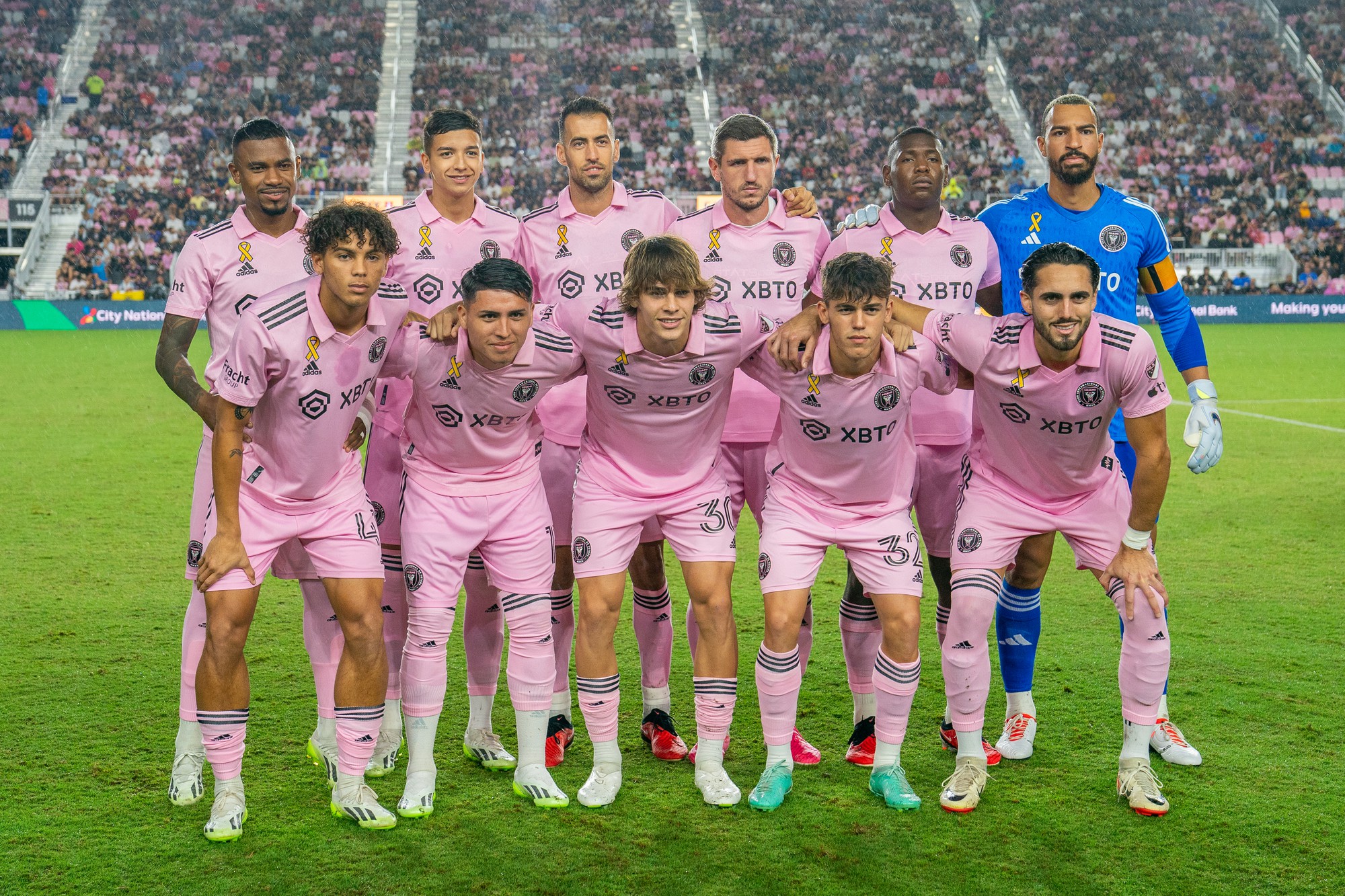









Despite stoppage time excitement, Inter Miami CF didn’t pick up the 3 points and drew 1-1 with New York City FC at DRV PNK Stadium on Sept. 30, 2023. Here’s a look back at the match:

It’s been quite the turnaround season for second-year head coach Mario Cristobal and the Miami Hurricanes. After a disappointing season last year, the ‘Canes have rebounded for a successful start so far this fall. The ‘Canes are already 4-0 before they enter Atlantic Coast Conference (ACC) play.
Miami has a tough test against the 14th-ranked University of North Carolina (UNC) Tar Heels on October 14. If Miami is able to topple the Tar Heels in Chapel Hill, they could be looking at an undefeated record heading into the clash with the fifth-ranked Florida State University (FSU) Seminoles. If they escape Tallahassee with a win, could the ‘Canes find themselves in the College Football Playoff?
Let’s dive into it.
The Hurricanes would have a record of 9-0 with wins against multiple top-25 opponents. They’d surely be ranked in the top-12 after a victory against UNC, and if they are able to hold off Clemson, N.C. State and Virginia before FSU, could be a top-10 team if other programs ranked ahead of them falter. Miami should only have a real problem with UNC and Clemson. While Clemson is not ranked in the top-25 as they’ve been in the past, it is still an immensely talented team that Cristobal and his ‘Canes can’t take lightly. We will see a lot about what kind of team Miami is after they play the UNC Tar Heels. If the ‘Canes get a victory in that game, they’d be a top-12 team in the country.
So let’s say that this happens. The ‘Canes are rolling and they are ranked in the top ten in the country with signature wins over Texas A&M, UNC, and Clemson. There should be an opportunity to topple a top-five team. The only game in which Florida State should be challenged is its October 21 matchup with Duke. The Blue Devils are ranked 19th in the nation and would be a nice win for the Seminoles. Unless FSU gets upset, it will be a top-five team when it comes time to face the ‘Canes.
Imagine Miami is able to win that game. It moves to 10-0 on the season with a plethora of signature wins. Assuming that UM is able to beat Florida State, it should have no issue with Louisville and Boston College to end the year. The ‘Canes would go 12-0 and be 8-0 in ACC play. Then, they’d probably have to battle the Seminoles again in the ACC Championship game. Any way it’s dialed up, the ‘Canes have to beat FSU. They can afford to lose to the Seminoles in ACC play, but if they want a shot at the playoff, they have to win in the ACC Championship game.
What if they do? The ‘Canes go undefeated and are 13-0 to end the year. They would have to be included. Well, the chances of the ‘Canes being undefeated is slim, but if they are able to beat the Seminoles in the ACC Championship game, the chances of being a top-four team are better than some people may think.
Michigan, Ohio State and Penn State all have to play each other. The trio of Big Ten East schools are all ranked in the top six. In all likelihood, only one of those teams ends up in the top four because of the head-to-head records they will have.
A similar scenario will play out in the Pac-12. USC, Oregon and Washington are all ranked in the top-10 and all have to play each other still. All three of those squads have playoff potential, but only one of them will come out on top and be able to reach the playoff. Or maybe they all falter and none of them reach the playoff. Either way, this could create more opportunities for Miami.
The only two remaining teams that could threaten the spots are Georgia and Texas. Both of these are ranked in the top three and Georgia gets the honor of being the top team in the nation. Georgia has an average schedule, and the only challenge they will get will be from one of Ole Miss, Missouri or Tennessee. That trio is all ranked in the top-25 and could pose a threat to Georgia’s number-one spot. The Bulldogs have looked shaky in the past few weeks and could be at risk of losing their spot on top of college football.
If Texas wins this week against Oklahoma in the Red River Showdown, then it can all but guarantee itself a spot in the playoff. There are no other ranked opponents on the Longhorns’ schedule besides Oklahoma that remain. So, for Texas and Georgia, it’s a win-and-they-are-in this type of situation.
More than likely, Georgia and Texas are in. One of the Big Ten schools will get in, but that leaves a spot open for another team. That team could be Miami.
If Miami can continue with the momentum it is building, keep collecting wins, take care of business against teams it should beat, perform in primetime and win the ACC Championship, it could certainly find itself in the College Football Playoff.

Coming into the match with a three-game win streak, Miami volleyball headed into Wednesday night looking to keep their momentum going against in-state rival Florida State (11-6, 5-0 ACC). However, the Seminoles got the best of the Hurricanes, beating their rival in five sets 3-2.
The first set was back and forth, indicating how the rest of the match would play out. Freshman Grace Lopez shined early, logging six kills to put the ‘Canes out in front. Later in the set, a massive block by Redshirt Senior Angela Grieve and Sophomore Cianna Tejada had the packed Knight Sports Complex rocking, leading to an FSU timeout.
After the timeout, FSU managed to cut the deficit to just one, but UM ended up pulling it out by a score of 27-25.
Unfortunately for the ‘Canes, at the beginning of the second set, Graduate Student Abby Casiano went down with an apparent leg injury after diving to try and keep the ball alive. However, she was cheering on the bench for her teammates with a boot on her leg, hopefully a sign of a quick return.
Following the injury to Casiano, FSU took control of the set and managed to win it 25-20 despite a strong comeback effort by the Hurricanes.
Fifth-year Senior Savannah Vach was everywhere in the third set, diving for digs and reaching full extension for one-handed groups. Coming in for Casiano, Graduate Student Janice Leao was also dominant in this set, most notably with a block to put the ‘Canes up 23-22.
UM went on to win the set with the help of Sophomore Flormarie Heredia Colon slamming the door with the team’s last three kills to win the group, 25-22.
The fourth set saw FSU jump out to an early lead, which climbed as high as eight points due to many unforced errors by the ‘Canes. However, Miami responded by cutting the lead to three points, fueled by back-to-back blocks from Vach and Tejada. The comeback did fall short, and the Seminoles took the set, 25-20.
The must-win fifth set did not go as the Hurricanes had planned. FSU quickly leaped to a 7-2 lead, prompting a timeout from Coach Keno. Even after the timeout, it appeared the ‘Canes were out of gas, and Florida State took the set, 15-6, and the match 3-2.
Match leaders for the Hurricanes were Lopez with 23 kills, Vach with five blocks, Vach with 50 assists, and Sophomore Naylani Feliciano with 16 digs.
Next, UM (10-5, 3-2 ACC) will take on North Carolina State (13-2, 3-1 ACC) at home in the Knight Sports Complex on Friday at 7 p.m., looking to gain momentum before a brief two-game road stint.

An undefeated start for Miami football has propelled them to No. 17 in the latest AP Poll Top 25 rankings, and its showing no signs of slowing down.
This week, the squad prepares for its Saturday matchup against Georgia Tech.
The ‘Canes are rested and appearing off a bye week with their latest victory coming in a 41-7 rout of Temple on Sept. 23. That was the last of UM’s non-conference slate. Miami now kicks off their ACC tour, starting with the Yellow Jackets.
Georgia Tech (2-3, 1-1 ACC) comes off defeat after being upset 38-27 at the hands of Bowling Green. This game, in particular, showcased the Yellow Jackets’ defensive struggles, most notably in stopping the run and allowing third-down conversions. These are two facets the ‘Canes (4-0) can exploit.
Miami ranks No. 11 in the country in rushing yards per game, averaging 222.5 per contest. Additionally, UM ranks No. 3 nationwide in yards per carry, with 6.45.
Consider this a nod to newly hired offensive coordinator Shannon Dawson, who has shown the versatility of his scheme. Since coming in with the reputation of utilizing an air-raid style of offense, Dawson has proven his attack is effective on multiple fronts.
A key storyline circulating this week’s duel is the return of ‘Canes All-American safety Kamren Kinchens. The junior was held out of Miami’s previous two games after being carted off against Texas A&M.
This isn’t just another game versus Georgia Tech for Kinchens, it’s an early anniversary.
Last year versus Tech, the defensive back achieved what is arguably the pinnacle of his career as a ‘Cane. He recorded a career-high three interceptions that helped lead UM to a 35-14 win.
When asked about Kinchen’s return, Cristobal spoke highly of the junior defender.
“He’s a game changer in a lot of different ways,” Cristobal said to reporters. “Not only as a football player, as a teammate.”
Quarterback Tyler Van Dyke will also get his first look at Georgia Tech since 2021. Due to a lingering right shoulder injury, the fourth-year junior missed last year’s match versus the Yellow Jackets.
Van Dyke has been outstanding through four games. Pro Football Focus’ metrics have him as the second highest-graded quarterback this season with a grade of 93.3. Most recently, the fourth-year ‘Cane threw for 220 yards and three touchdowns against Temple.
“He has all the confidence in the world right now, especially in the offensive coordinator and everyone around him,” wide receiver Xavier Restrepo said.
With the team ready to play, the final preparation comes from the wardrobe as UM plans to debut its sleek ‘Miami Nights’ uniforms.
“I’d have been mad if we wore them before I came back,” Kinchens said.
Saturday’s kickoff at Hard Rock Stadium is at 8 p.m.

With four games down and four wins under their belt to start the season, the No. 17 Miami Hurricanes enter the bye week on a roll. It’s the ‘Canes’ first 4-0 start since 2017, a season in which the team started 10-0 before ultimately falling to Wisconsin in the Orange Bowl.
With a Saturday night matchup against Georgia Tech on the horizon, Miami will look to carry its winning ways into an eight-game stretch against ACC opponents. Before the team dives into its conference schedule, here are some reasons Miami can keep playing winning football.
Tyler Van Dyke is living up to his billing.
Following a disappointing and injury-ridden 2022 season, questions emerged about quarterback Tyler Van Dyke’s ability to helm an offense. But under new offensive coordinator Shannon Dawson, Van Dyke has re-emerged as one of the best signal callers in the conference.
Through four games, Van Dyke has completed nearly 75 percent of his passes for 1,042 yards, 11 touchdowns, and only one interception. His passing efficiency of 197.81 is second in the nation, behind only University of Southern California quarterback Caleb Williams.
Granted, Van Dyke has not been forced into many difficult passing situations — three of the ‘Canes’ four wins have been by 30 or more points. But the quarterback has looked significantly more comfortable in the pocket, and if he can keep his performance going, he could find his way into the Heisman discussion.
The run game goes a long way
The ‘Canes have been incredibly successful at running the ball this season, averaging 216.7 yards on the ground per game. That’s the 11th-best mark in the nation, and it’s a monumental leap from the team’s 112.5 rush yards per game mark last season.
The boom in rushing production has been led by junior Henry Parish Jr., who has averaged 7.9 yards per carry so far this season. But he isn’t alone: sophomore Donald Chaney Jr. and freshman Ajay Allen have held their own on the ground, combining for 320 yards and four touchdowns.
Conversely, Miami’s opponents have been unable to get anything on the ground all season. The defensive line has stifled the run, which was more evident than ever during the team’s road win against Temple. The Hurricanes held the Owls, whose offensive identity revolves around the run game, to 11 yards on the ground. Overall, Miami is holding opponents to 53 rushing yards per game and 2.3 yards per rush, the second and third-best marks in the country, respectively.
Mario Cristobal’s roster vision is coming to fruition
Though Mario Cristobal’s head coaching tenure with Miami started last year, this season feels like the first proper year under his roster philosophy. Since the start of last season, the team has seen sweeping changes on both sides of the ball, specifically in the trenches. All five starters on the offensive line were brought in under Cristobal’s watch, including five-star right tackle Francis Mauigoa and two former four-star prospects.
Cristobal’s ability to identify talent in the high school ranks and the transfer portal has propelled Miami to a strong start. If the ‘Canes can continue their winning ways, it should be easier for him to infuse the team with talented players.
Miami’s ACC debut against Georgia Tech will take place Saturday at Hard Rock stadium. Kick off is set for 8 p.m.

Artificial intelligence is enabling us to rethink how we integrate information, analyze data and use the resulting insights to improve decision-making. The power of AI is revolutionizing various industries, and environmental science is no exception.
With increasing threats of environmental stressors, AI is emerging as a powerful tool in detecting, mapping and mitigating these effects for the future.
As AI increasingly drives innovation and becomes a facet of everyday life, fears about its capabilities are growing.
It doesn’t help that the media and pundits are stoking those fears, suggesting that AI could take over the world, lead to losses of control and privacy and devalue the importance of humans in the workforce.
According to Business News Daily, 69% of people worry that AI could take over their jobs entirely, while 74% predict that AI will eliminate all forms of human labor. However, its potential to remedy environmental problems can be a beneficial use of the technology.
From monitoring air and water quality to predicting the spread of pollutants, AI is already playing a crucial role in safeguarding our environment and public health.
As 2030 quickly approaches, the agreed deadline for hitting climate targets, the world is on track to achieve only 12 percent of the Sustainable Development Goals (SDGs), with progress plateauing or regressing on over half of the set goals.
“How can we use artificial intelligence – the technology that is revolutionizing the production of knowledge – to actually improve lives; to make the world a little bit safer, a little bit healthier, a little bit more prosperous; to help eliminate poverty and hunger; to promote health and access to quality education; to advance gender equity; to save our planet,” said Secretary of State of the United States Anthony Blinken, at the 78th Session of the United Nations’ General Assembly.
The most prominent applications of AI are currently in detecting, mapping and mitigating environmental toxins and pressures, which can help engineers and scientists gather more accurate data, but its uses are constantly growing and developing.
AI can help automate the process of taking and analyzing samples, and recognizing the presence of specific toxins in water, soil or air, so it can report real-time status. In delicate ecosystems, such as coral reefs and wetlands, including those around Florida, studying the parameters of the environment can alert to harmful conditions and propel action.
AI models can also create analytical maps based on historical or statistical data to understand trends and trajectories regarding toxin levels, weather patterns, human activities and other relevant factors. Those models can also evaluate satellite imagery to identify areas where specific conditions may be present and be trained to recognize patterns or changes, which can be extremely important in forecasting future dangerous weather events, enhancing agricultural productivity to combat hunger, responding to disease outbreaks, and addressing other imminent climate change threats to Earth.
These technologies can be also used to identify the sources and pathways of toxins and optimize mitigation strategies, crucial for effective mitigation and intervention, while monitoring the success of mitigation efforts.
If these practices for AI are deployed effectively and responsibly, they can drive inclusive and sustainable growth for all, which can reduce poverty and inequality, advance environmental sustainability and improve lives around the world.
However, real concerns exist that the developing world is being left behind as AI advances rapidly. If not distributed equitably, the technology has the potential to exacerbate inequality.
Countries must work together to promote access to AI around the world, with a particular focus on developing countries. Industrialized nations should share knowledge that can advance progress toward achieving SDGs, as AI has the potential to advance progress on nearly 80 percent of them.
To succeed in directing AI toward achieving the SDGs, complete support and participation from the multistakeholder community of system developers, governments and organizations, and communities is required.
Meanwhile, the need for AI governance is imperative, and support from federal and state governments as well as corporations is crucial to this transition. As AI’s footprint grows and nations work to manage risks, we must maximize its use for the greater good and deepen cooperation across governments to foster beneficial uses for AI.
The United States is committed to supporting and accelerating efforts on AI development, hoping to foster an environment where AI innovation can continue to flourish. Secretary Blinken mentioned the U.S.’s creation of a blueprint for an AI Bill of Rights and Risk Management Framework at the UNGA, which would guide the future use, design and safeguards for these systems.
The US has announced a $15 million commitment, designated to helping more governments leverage the power of AI to drive global good, focused specifically on the SDGs. Commitments and contributions have been made by other countries and large corporations, such as Google, IBM and Microsoft.
We are at an inflection point, and the decisions we make today will affect the world for decades to come, especially when it comes to AI and climate change. AI has the potential to accelerate progress, an immense responsibility to be taken by governments, the private sector, civil society and individuals that must consider the social, economic and environmental aspects of sustainability.
Lia Mussie is a senior majoring in ecosystem science and policy and political science with minors sustainable business and public health.


French toast and scrambled eggs sat on top of a robot as they made their way from the Denny’s kitchen to my table. I was utterly surprised to be sitting at the Denny’s on S. Dixie Highway when this occurrence took place on a Sunday morning. While this experience felt unusual, these situations may become the norm as artificial intelligence makes its way into the restaurant industry.
Companies have been implementing AI technology into restaurant settings for longer than many may realize. Take, for instance, the first time you went to a restaurant with a self-serve Coca-Cola Freestyle machine.
I remember being in awe of the touch screen that allowed me to click a button and have the drink come out of the same place each time, rather than a traditional fountain system. Unbeknownst to the consumer, the Freestyle machines use AI that provides Coca-Cola with valuable information to maximize their sales.
The machine can track how often a drink is purchased. Coca-Cola could then use that information to supply more or less of that drink in different restaurant locations.
However, AI technology is not only beneficial for companies. Customers can also benefit from the decrease in human error that AI offers.
Many have experienced the inconvenience that arises when a server misunderstands them and consequently inputs an incorrect order. AI technology in restaurants eliminates the chances for these types of errors, thus increasing customer satisfaction.
The Yard House in Merrick Park comes to mind when I think of a high-tech dining experience. Each table at this location has a tablet where guests place their drink and food orders.
While there’s still a chance of the kitchen staff messing up your order, the tablet eliminates the server’s error and also gives you the freedom to order whenever you want, without having to wait for the server to come to your table.
The tablets are also used to pay at the end of your dining experience. With the option to pay by menu item, the technology makes it easier for large groups of college students to pay for individual orders. However, restaurants should be mindful that it’s easier for customers to dine-and-dash, as the server doesn’t need to come back to collect the tab.
AI has even ventured out of the physical restaurant and onto platforms like DoorDash and Uber Eats. When getting your Pura Vida delivered to campus, customers can track their driver to see how far away their avocado toast is. Within the app, AI is analyzing map and traffic data to determine the fastest route for them to get your order to you as quickly as possible.
However, it’s not just Uber using AI for enhanced food delivery. For seven years, companies like Domino’s have successfully executed food delivery via drone.
In November 2016, the global pizza chain launched its first successful drone pizza delivery in Auckland, New Zealand in November 2016. Since then, the company has continued developing this technology. In July 2023, they began offering New Zealand customers in Huntly, also known as Raahui Pookeka, the option to get their hot pie delivered via drone.
As companies continue development and consumers familiarize themselves with the various models, the sky is the limit for dining and take-out experiences. Who knows, in a few years you might be getting your Rat order via drone.

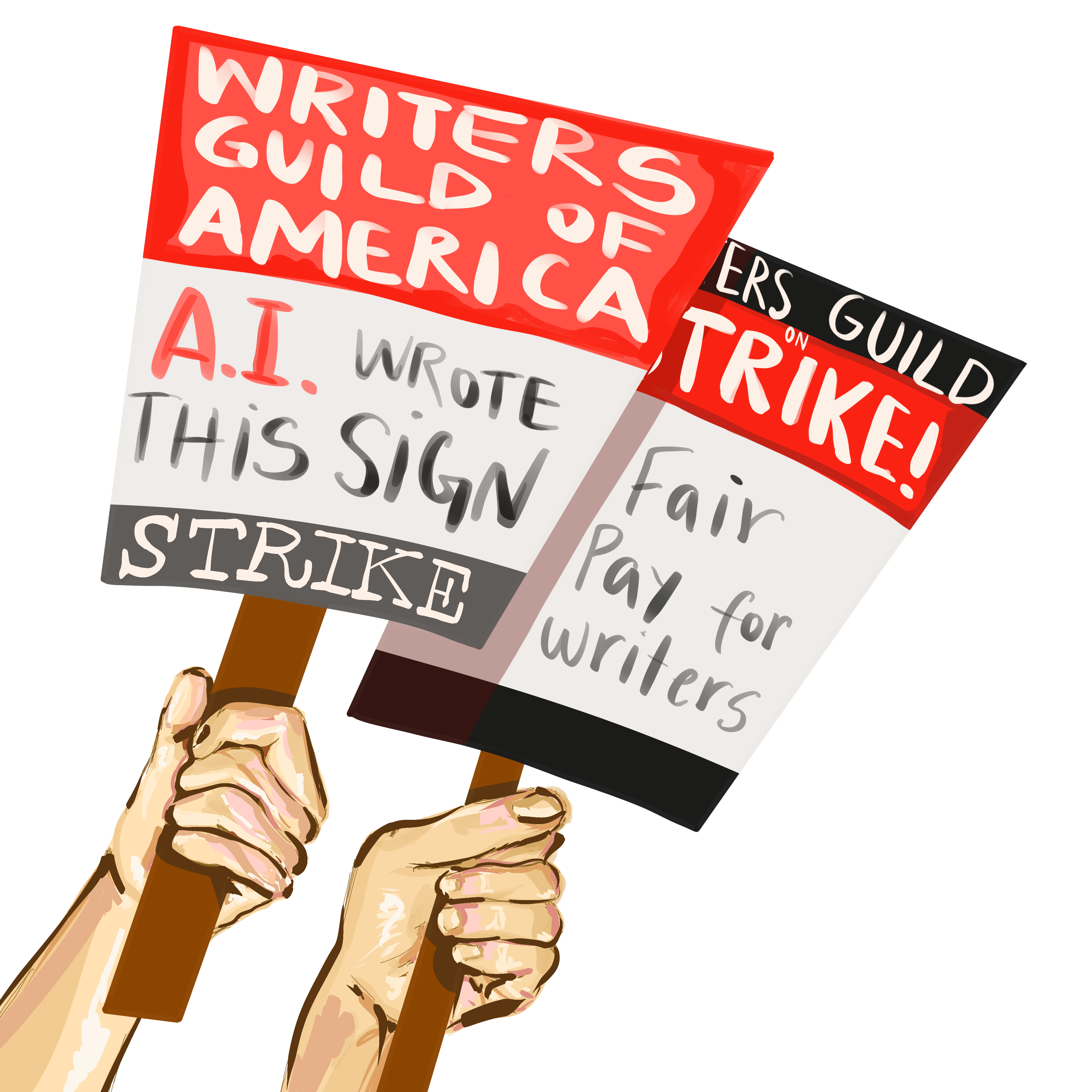
Entertainment industries constantly battle to create the next record-breaking blockbuster — while spending millions in the process. Such industries are using artificial intelligence to decrease costs as the fight roars, putting actors and writers jobs at risk.
If time is money, then Hollywood is still broke. The COVID-19 pandemic made consumer interest exceed active production, making demand greater than supply.
The entertainment industry started its search for an effective way to reduce costs as spending millions on films has become the norm. The corporations chose their target: wages.
Why reduce wages when you can eliminate them? Enter AI.
Entertainment titans like the Warner Brothers and Netflix began financing films as the pandemic started to clear. Writers and actors alike breathed a sigh of relief as the traditionally-risky industry miraculously became one of America’s most stable due to streaming services. However, the bliss was short-lived.
Mass production led to mass employment, and these studios had to provide these additional workers with salaries and health benefits.
AI can instantly generate unique plot lines and compelling characters, a task that may take human writers anywhere from several days to several years. As a result, AI has been increasingly used in writer’s rooms to speed along the writing process.
With AI becoming more capable of crafting artistic pieces, writers and actors fear they will have to battle the technology for credit and employment.
Marvel’s “WandaVision” miniseries entered controversy as its use of AI-generated background actors was revealed. Background actress Alexandria Rubalcaba recalled the instructions she received to create her digital replica.
“Have your hands out. Have your hands in. Look this way. Look that way. Let us see your scared face. Let us see your surprised face,” Rubalcaba said in an interview with NPR. “I fear that AI is eventually going to weed out background actors. They won’t have any use for us anymore.”
Voices of deceased actors like Anthony Bourdain and Andy Warhol have been recreated for projects, sparking a debate over AI ethics.
The Writer’s Guild of America aims to prevent writings by AI from being considered “literary material” — the phrase used in contracts to define scripts a screenwriter produces.
The Alliance of Motion Pictures and Television Producers (AMPTP), the organization writers were striking against, confirmed that AI-generated writing material can’t receive credit, but this decision is a double-edged sword.
Writers began asking the question: if any evidence of AI is found in a script, can it be considered literary material at all?
Some writers have begun using AI as a resource to gain inspiration and information. If AMPTP’s standards don’t change, writers are at risk of losing credit.
The Screen Actors Guild (SAG) exposed the AMPTP’s position on AI after the SAG strike was declared on July 13.
In a statement, SAG accused AMPTP of wanting to “scan a background performer’s image, pay them for half a day’s labor and then use an individual’s likeness for any purpose forever without their consent.”
Despite AMPTP claiming SAG’s statement is a “deliberate distortion,” tensions erupted and actors took to the picket lines to strike alongside writers.
“Let’s replace studio execs with AI!” and “I told ChatGPT to write a picket sign and it sucked” became common phrases on picket signs.
Entertainment titans produced numerous films of high acclaim, but they weren’t satisfied and sought AI for cheaper work. Despite success, the titans sacrificed their workers for more profit. Their self-inflicted fall began as greed consumed them whole.
The outcome of the Hollywood strike could set a precedent for how laborers are protected from AI or robotic replacements in the future.
“I think it’s a conversation now about the culture of big business, and how it treats everybody up and down the ladder in the name of profit,” said Fran Drescher, current president of the SAG.
AI will continue to learn as it becomes more capable of mimicking human activity. Though the WGA reached a deal with the AMPTP on Sep. 24, SAG continues its fight for actor protections.
“Though AI is a tool that can be utilized, it’ll never be as good or creative as people,” said Claire Meder, president of the Cinematic Arts Commission and a third-year student studying marine biology and environmental science. “Using AI overpaid writers just really comes off as cheap and diminishes writer’s hard work.”


Many have come across and laughed at the artificial intelligence (AI) cover of Plankton from Spongebob singing “Shine Bright Like a Diamond” by Rihanna.
But when TikTok user ghostwriter977 trained AI to duplicate and generate a new song that many were fooled to be by Drake and the Weekend, musicians and copyright defenders alike began to express concern over the potential takeover of AI in the music industry.
New AI technology has artificially generated elements of music like vocals, lyrics and production. As AI becomes more advanced, music listeners wonder if machines will replace the authenticity and creativity of human artists.
AI infiltrated the music industry long before many may realize. Applications like Shazam — which use AI to help people quickly identify a song they don’t recognize — have been around since 2002. AI has also changed the way music is promoted, spotting various patterns and trends in vast amounts of data that human advertisers often miss.
Will AI replace artists in the music industry?
AI has played a role in the music industry, but never a creative one. These concerns have led artists to question whether AI will eventually replace them.
Dr. Tom Collins, associate professor of music engineering technology at UM, has always been fascinated by how writing music can be duplicated by AI.
“If I say something like, write 16 measures of music in the style of Alicia Keys, if we’ve listened to a bit of her music, some of us can do that. And so, I was fascinated in how we achieve that, discovering and utilizing certain patterns that might indicate that it is more Alicia Keys than Beethoven,” Collins said in an interview with News@theU.
Collins emphasizes that as AI advances, it will continue to revolutionize the music industry. Though AI may be growing at a seemingly fast pace, the algorithm is still not advanced enough to entirely replace a human being.
AI’s advanced algorithm makes its creations possible, but it only works with preexisting material found within its databases and patterns. Since creating original ideas and concepts is currently impossible for AI, it will take a long time before AI can replace human thinking patterns and creative processes.
Legal issues with AI-generated music
Attempts at legal regulation often follow advancing technology. In 2017, the emergence of deepfakes made many politicians fear that their next big political scandal could be fabricated.
Deepfakes are a type of synthetic media that have been digitally manipulated to replace one person’s likeness convincingly with that of another, making it easy to spread misinformation and confusion.
This technology also threatens individuals in the music industry. The unregulated use of voice duplications may infringe on their copyrights, lower their earning potential or compromise their reputation.
The U.S. Copyright Office stated that it will not register works produced by a machine or AI system, adding that copyright protection does not extend to non-human creators. Wrongful distribution of AI-generated music can lead to copyright infringement, unlawful impersonation or privacy infringement, all of which have serious legal repercussions.
In April 2023, legal issues led to the removal of TikTok user ghostwriter977’s AI-generated track “Heart on my Sleeve,” which featured Drake and The Weeknd despite their lack of involvement. The creator, however, did not face legal consequences.
This case is just one example of the legal policies surrounding AI and copyright laws that are still up for interpretation.
It’s about the artist
At the moment, the duplicative power of AI cannot replace the authenticity and originality consumers crave from the work of a human artist.
Although fans can digitally stream a song over 10,000 times, many are willing to pay excessive amounts to hear their favorite artist sing that exact song live. They are paying to see the artist perform that song, not just to hear it.
While AI-generated music threatens the authenticity of gifted individuals, current legal regulations protect musicians from competing with AI. Though it may be able to replicate great work, AI will never create the original, authentic work that an individual can.

Creativity, confusion and controversy have defined the introductory stages of artificial intelligence integration into our society. When it comes to political campaigns and the upcoming 2024 election, this combination is changing the way politicians sway public opinion.
In June 2023, presidential candidate and Florida governor Ron DeSantis’ campaign used AI to generate images of his opponent, former president Donald Trump, with Anthony Fauci, a premier target of the Republican party base for his response to the COVID-19 pandemic.
The video, posted on X, displayed a collection of images of Trump and Fauci together. Some are real photographs, but three are AI-generated photos of the two embracing.
Lawmakers fear the use of deceiving AI images could potentially cause some voters to steer away from candidates in 2024.
“There are two ways politicians are using it,” said Dr. Yelena Yesha, UM professor and Knight Foundation Endowed Chair of Data Science and AI. “One is biasness, trying to skew information and change the sentiments of populations, and the other is the opposite effect, using blockchain technology that will control misinformation.”
Conversations about regulating the dangers of AI have already begun circulating on Capitol Hill, starting with the U.S. Senate hearing on May 16, 2023. The hearing included Sam Altman, CEO of OpenAI, who expressed concern of potential manipulation of his company’s technology to target voters.
The most notable OpenAI technology is ChatGPT, which has seen the most rapid user consumption rate in internet history, surpassing the success of applications like TikTok and Instagram in its first two months.
The platform initially banned political campaigns from using the chatbot, but its enforcement of the ban has since been limited.
An analysis by The Washington Post found that ChatGPT can bypass its campaign restriction ban when prompted to create a persuasive message that targets a specific voter demographic.
“AI will certainly be used to generate campaign content,” said UM professor of political science Casey Klofstad. “Some will use it to create ‘deepfakes’ to support false narratives. Whether this misinformation will influence voters is an open question.”
Deep fakes, an enhanced form of AI that alters photo and video, has reached the political mainstream. Following President Biden’s re-election announcement last April, the Republican National Committee (RNC) released a fully AI-generated ad depicting a fictional and dystopian society if Biden is re-elected in 2024.
Congress has furthered its efforts in establishing boundaries for AI, with Senate Majority Leader Chuck Shumer (D-NY) recently leading a closed-door meeting on Sept. 13 with high-profile tech leaders, including Elon Musk and Mark Zuckerberg.
The goal of this meeting was to gather information on how prominent big tech platforms could enforce oversight within the use of AI. Senate sessions on the matter will continue throughout the fall, with Schumer hopeful for bipartisan support and legislation across Congress.
“I would be reluctant to see the government take a heavy hand in regulating AI, but policy could be tailored more narrowly to incentivize AI developers to inform consumers about the source and validity of AI-generated content,” Klofstad said.
The extent to which the federal government can have major influence over regulating AI is unclear as artificial intelligence continues to develop.
“It should be regulated, but it should not to the point where the progress can be slowed down by regulatory processes,” Yesha said. “If you have too much regulation, it may at a certain point decelerate science and the adoption of innovation.”
A significant reason for AI regulation efforts stems from the anticipation of foreign influence in our elections. Russian-led misinformation campaigns played a part in the 2016 election, and elected officials foresee advancement of foreign meddling in tandem with AI’s improvement.
“At a certain point, as AI becomes more developed, if it falls in the wrong hands of totalitarian regimes or autocratic governments, it can have a negative effect on our homeland.” Yesha said.
However, AI’s applications do provide numerous benefits for political campaigns.
A prominent benefit of AI in the political arena is its messaging capabilities. With a chatbot’s ability to instantly regurgitate personalized messages when fed consumer data, essentially taking over the work of lower-level campaign staff, the ability to garner donor support is vastly expanded.
“Campaigns have always adapted to new modes of communication, from the printing press, to electronic mailing lists, to websites, text messaging and social media.” Klofstad said. “I expect AI will not be different in this regard.”

ChatGPT is a natural language processing tool driven by artificial intelligence (AI). It allows users to have human-like conversations with a chatbot, answers questions and assists with tasks like composing emails, essays and resumes.
I put this AI powerhouse to the test and asked ChatGPT to plan a day for me in Miami. After following its suggestions, I experienced a long day full of culture, food and entertainment.
Morning
The first item ChatGPT had on our agenda was a morning on South Beach. ChatGPT recommended making time to relax on the sandy shores, take a dip in the ocean and enjoy a relaxing yoga session.
I started my day at 5 a.m. to witness the golden sunrise peak over the horizon. I then unfurled my mat for a self-guided beachfront yoga session with the gentle water sounds in the background.
After living in Miami for over three years, the novelty of South Beach has worn off. It is a frequently packed and quintessential tourist spot, but the morning quiet and lack of visitors made for an enjoyable experience.
AI then said to grab breakfast, giving me options of cafecito and pastelitos or an acai bowl or avocado toast. Because I don’t drink coffee, I made my way to Pura Vida, a restaurant that serves healthy dining options in a beachy setting.
After eating my PB Lover acai bowl, AI suggested a stroll through the Art Deco Historical District. It was still relatively empty as I perused Ocean Drive, Collins Avenue and Lincoln Road, admiring the pastel art deco buildings and colorful artwork and murals that line the streets. It’s a fairly pedestrian-friendly area known for its shopping and dining.
Lunch
After heading home to clean up, AI recommended brunch at Greenstreet Café, a place I frequent which serves classic American cuisine in Coconut Grove. I ordered cinnamon roll pancakes, which came highly recommended from the server. No matter how many times I visit, I always have a great experience.
Afternoon
Next, I ventured to Little Havana — Miami’s historic Cuban neighborhood — to window-shop, explore the colorful streets and soak up the Latin street art and music.
ChatGPT recommended a visit to the Domino Park, where large groups of people were playing chess and domino games. It then directed me to the Wynwood Walls, a renowned outdoor street art gallery, and I bought a ticket to stroll through the murals, something I don’t usually do.
Wynwood is one of my favorite neighborhoods in Miami, and is a recommendation I share with many. While the walls are appealing, the entire Wynwood area holds unique murals that don’t require a ticket, which many wouldn’t know unless they have previously visited.
The Wynwood Marketplace was my next stop, an outdoor venue that hosts food trucks, artisan shops and events. An employee recommended I visit the Pink Paloma truck, where I ordered barbacoa tacos to enjoy while browsing the vendors and shops.
Late Afternoon
For a late-afternoon cultural excursion, AI suggested I check out the Perez Art Museum. This was my first time at this museum, and its waterfront views and picturesque art curation made for a scenic afternoon.
I wish that the itinerary included more time to spend here, but I only had 45 minutes to see as much as I could.
I then walked to Bayfront Park, which provided the perfect combination of city and water views. The featured giant ferris wheel of Bayside Marketplace provided views of Ferris Island and Virginia Key. I typically only go to Bayfront for a run along the water, but newer residents and visitors favor this area of downtown.
ChatGPT mentioned a happy hour at a rooftop or waterfront bar, so I decided to visit Monty’s Raw Bar in Coconut Grove for drinks and appetizers while watching the boats on the harbor. The timing of happy hour made for prime viewing of the sunset.
Evening
After going home to change again, some friends and I headed back up to Little Havana to check out the notable Versailles Restaurant for a Cuban dinner. I had never heard nor visited this iconic landmark of the Little Havana community.
Nightlife
ChatGPT recommended staying in Wynwood because of its lively nightlife scene. We started at the trendy food hall 1-800-Lucky and enjoyed the DJ sets, a cocktail and soft-shell crab bao buns before heading to the open-air Brick nightclub for dancing and R&B music.
ChatGPT also recommended late-night bites, including food trucks and popular late-night eateries like “La Sandwicherie” and “Pizza Rustica,” but my wallet and I were exhausted and full from this packed day, so we headed back to Coral Gables and called it a night.
Final Thoughts
ChatGPT did better than I thought. I had no idea what to expect when asking the generator to plan my day, but it fulfilled my request and delivered a busy day of Miami sightseeing and exploration. However, I prefer to leave room for spontaneity and adventure, which this packed itinerary didn’t allot time for.
Its responses tended to lean towards generic recommendations often found in a Miami guide book rather than local spots that are less frequented by tourists. As a result, some excursions were overpriced and crowded.
Understanding that ChatGPT pulls from sources that are a couple years old, some of its recommended restaurants were not open and some details were inaccurate. Some of the items on the itinerary were not the most feasible, highlighting AI’s limitations.
Miami’s record traffic during peak hours made getting from destination to destination treacherous. AI overlooked details like starting far north and traveling south to avoid traffic.
At the end of its response, ChatGPT said, “Remember to plan your day according to your interests and preferences. Miami has a diverse range of activities, so you can tailor your day to suit your tastes, whether you’re interested in art, culture, beach relaxation or nightlife.”

Earning over $175 million in research grants this past year, the University of Miami’s medical research programs are turning to artificial intelligence to transform the healthcare field.
According to The Centre of Economic Policy Research, implementing this technology could potentially lead to savings that range from $200 to $360 billion annually. These increased savings promise to improve labor efficiency and reduce healthcare spending, while elevating the quality of care received by patients.
AI works by emulating behaviors of human intelligence through specialized machine systems developed by computer science. Primarily employed for drug discovery and rediscovery, AI is especially useful in predicting chemical structures to help create or enhance existing medications for several diseases.
“Concerning the pandemic, the biggest use of AI and machine learning from my understanding is to tease out COVID’s biological secrets and identify the few molecules which has ended COVID among the millions and reduced the time to market drugs,” said Head of Innovation and Emerging Technology at GlaxoSmithkline, Subroto Mukherjee.
As mentioned by Mukherjee, the use of AI in the development of new medications and vaccines is contributing to more effective responses to several viruses, with its most important trial having played out during the global pandemic.
This same technology is being used by research students at UM to push the boundaries of what is possible in pharmacology.
“One of the overall issues in the field of pharmacology is the amount of time it takes and the robust pipeline only to realize a drug doesn’t work,” said Ph.D. student Joey Shulz, who is part of the molecular, cell and developmental biology graduate program. “I use AI to guide the chemist and biologist on which drugs are, or are not, likely to work in order to expedite drug discovery.”
According to Shulz, incorporating AI in the process of drug development can allow researchers to cut the timeline of what would conventionally be a 10-15 year process by several months.
Shulz is currently engaged in three ongoing projects focused on repurposing medication and leverages AI as a tool to design treatments that mitigate the effects of illnesses and enhance treatments that already exist.
The primary objective of Shulz’s current project, which involves researching treatments for HIV, is to improve the effectiveness of pre-existing antiviral therapies.
Antiretroviral therapy (ART) is the most commonly used method to combat effects of this disease. Often, patients have a strict regimen involving several medications and must closely follow their doctor’s instruction to avoid developing drug-resistant strains of the virus.
Shulz’s research seeks to combat these mutations and develop more effective and resilient drugs for HIV treatment, especially with the help of AI.
This new technology aids in this process by utilizing predictive analysis of large datasets, including in areas such as patient history, clinical information and pre-existing drugs.
With the ability to make more informed decisions regarding the effectiveness of various treatments, predictive analysis allows for the creation of medications that are better tailored to individual patients.
“Metaphorically speaking, I am taking a key and seeing how well it fits into the lock,” said Shulz. “I can then use that lock to mimic the key, but instead it’s a brand new novel compound.”
Implementing predictive analysis in research with the help of AI, he is able to compare his work against an entire database, leveraging it as a resource to guide him in the creation of new drugs or repurposing existing drugs for his projects.
Predictive analysis can then recognize certain patterns or faults in the data that a student may not be able to see, making it much more effective for researchers in the production of new pharmaceuticals.
As AI continues to grow and evolve, technology will be able to then predict these diseases before they even appear, allowing the technology to occupy more significant roles in medicine in the future. Dedicated to the advancement of a proactive healthcare system powered by AI, Schulz and fellow medical students’ research at the University has the potential to elevate the quality of life for many by simplifying the treatment process.
“One thing I love about AI in what I do is that I have the opportunity to help so many people in need,” said Shulz.
As the UM’s Miller School of Medicine continues to harness the capabilities of artificial intelligence in medicine, students like Shulz are preparing to transform healthcare practices and innovate the process of drug discovery in a digitally-empowered world.