


Zach and Liam dive deep into what you can expect for this week’s game against Louisville. They break down Louisville’s offense and defense and how they stack up against the Hurricanes. They wrap up the show by giving predictions for the game.
TMH Staff Predictions for Friday night Miami-Louisville matchup

Sebastian Font, Co-Sports Editor
Miami versus Louisville never fails to disappoint, with the last two matchups combining for 166 points in total.
The Hurricanes come into this matchup as the No.2 team in the nation, while Louisville currently boasts a 12-game streak of scoring over 25 points.
But even with offensive weapons such as WR Chris Bell and RB Isaac Brown, the Cardinals streak will come to an end Friday night at Hard Rock.
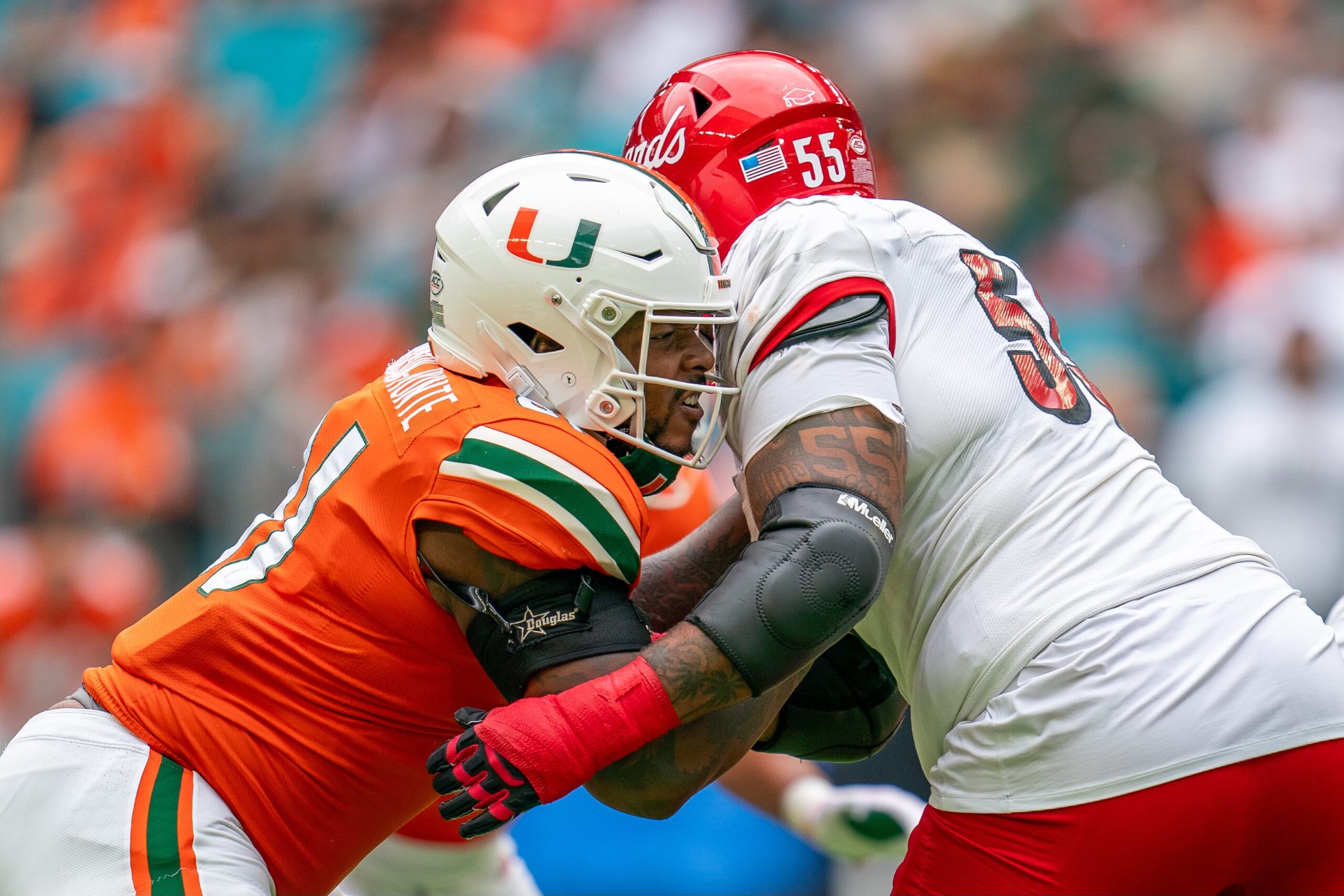
Louisville’s offensive line group has consistently been one of the worst in the country, and now have to face arguably the best defensive line in the country in Miami. Expect Rueben Bain Jr. and Akheem Mesidor to consistently get after the quarterback.
On the offensive side expect Miami to return to the run game and enforce their will through the trenches under the Friday night lights.
Final Score: Miami 37, Louisville 20
Zach Cohen, Senior Staff Writer
The No. 2 Miami Hurricanes are coming off another bye week and so is its opponent, the Louisville Cardinals.
With both teams rested, it’s an even playing field and has the potential to be a contested battle.
It was a 52-45 affair in last year’s game between the two squads but the big difference now is the Hurricanes defense.
Look for Miami’s defensive line to get to Louisville quarterback Miller Moss quickly as he is not a mobile quarterback and will stay in the pocket.
Louisville does have a good rushing defense and it will be vital to get Mark Fletcher Jr and the running backs going. This goes on par with having the offensive line block and allow the running backs room to run.
Like always, if Miami’s two top receivers in Malachi Toney and CJ Daniels have a good game, the Hurricanes will improve to 6-0.
Final Score: Miami 35, Louisville 21
Omar Pinto, Contributing Writer
After a three-week span in which they only played one game, the Hurricanes should be as healthy as ever as they host a Louisville team which appears sneaky good on paper.
The Cardinals are 4-1 on the season, with their only loss coming to No.18 Virginia in overtime. Their quarterback, former USC Trojan Miller Moss, has big-game experience and certainly won’t go down easily against the ‘Canes.
However, Louisville’s wins have come against Eastern Kentucky, James Madison, Pitt, and Bowling Green – not the toughest of competition.
Miami’s stars, rested up, will be locked and loaded for this one, as the ‘Canes have Heisman frontrunners Carson Beck and Ruben Bain Jr., ready to wreak havoc. At the end of the day, Louisville is a decent squad, but Miami is ranked No. 2 for a reason. Expect wide outs C.J. Daniels and Malachi Toney to have a field day on Louisville’s secondary this week. Miami takes it handily at home under the lights.
Final Score: Miami 42, Louisville 20
Olivia Attalla, Contributing Writer
It’s another battle in the ACC where the Miami Hurricanes take on the Louisville Cardinals on Friday night at Hard Rock Stadium.
Miami is coming off a bye after a huge 28-22 win over FSU and remains undefeated at No.2 in the AP Poll. Meanwhile, Louisville is coming off a bye as well following a 30-27 loss against No.18 Virginia in overtime.
’Canes QB Carson Beck and his offensive line have been unstoppable this season, while Louisville QB Miller Moss will need his offensive line to step it up against the mighty Miami Hurricanes defensive line.
This will be another great game in the Miami-Louisville series, and one that Miami will come out victorious.
Final Score: Miami 35, Louisville 22
Oliver Innes, Contributing Writer
Miami has pieces that give them the edge.
Their pass rush, in particular, is a legitimate defense that frequently causes quarterbacks to struggle. Louisville, on the other hand, has recently suffered a defeat, and their running style has been inconsistent.
Miami will dominate third downs, control the trenches and better manage the clock.
Even though Louisville can create plays through the air, Miami should be prepared and battle-tested because of their more demanding schedule thus far. Taking everything into account, Miami should win, albeit not by the overwhelming amount many suggest.
Final Score: Miami 31, Louisville 20
Bad Bunny fans at the University of Miami are ready for Super Bowl LX

Bad Bunny will perform in San Francisco to millions as the 2026 LX Super Bowl Apple Music Halftime Show performer.
The Puerto Rican artist is one of the most streamed Spotify artists in the world. His most recent album, “DeBÍ TiRAR MáS FOToS,” proved he’s on top of his game.
His recent 30-night sold out residency concert series in Puerto Rico and upcoming world tour gave and will give people a taste of what he’ll bring to the Super Bowl.
The 31 year old, Grammy-Award winning artist , got the news from Jay-Z when he was working out.
“I didn’t need more pre-workout,” Bad Bunny said in an interview with USA Today, ”It was very special. It was so special.”
Bad Bunny is the first Puerto Rican born artist to take the leading role at a Halftime Show. This is his first time headlining at a Super Bowl, but it is not his first appearance. He was invited to perform alongside Jennifer Lopez and Shakira for the Pepsi Super Bowl LIV Halftime show at Miami in 2020.
Puerto Rican University of Miami students were stoked with the news.
“Having Bad Bunny perform at the superbowl halftime show is an honor.,” Veronica Niebla, Biology major said. “As a Puerto Rican, it fills my heart with pride and joy to see one of our most influential artists reach goals that only a handful of artists have and will.”
“Well, as a Puerto Rican I’m obviously excited. I went to his residency over the summer and I absolutely loved it, so I can’t wait to see how he brings a production of that size to a global stage.” Alejandra Font, Public Relations Major and Marketing minor.
You can watch Super Bowl LX and Bad Bunny’s performance on Sun, Feb 8, 2026 on the NFL app, Tubi, Fubo, Hulu + Live TV and YouTube TV.
University of Miami student “Palola” debuts at New York’s Fashion Week

Paola “Palola” Prato Martinez, a young Venezuelan born singer, songwriter and senior at the University of Miami majoring in music and communications made her New York Fashion Week debut for Idol Jose Group’s runway.
“I create music to make people feel seen, to feel loved,” Martinez said.
She performed for the show “Everyone is Fashion” by designer Idolfredo Hernandez. Hernandez found out that Martinez was from Venezuela and reached out to Martinez’s dad asking about if she would like to perform at Hernandez’s show.
They wanted to give light to new and upcoming artists from their home country.
“He got a hold of my dad and it happened,” Palola said. “I got the opportunity to sing and to see a different side of the industry.”
Palola mentions how it is not easy to perform, especially on how everything is a mental preparation process to avoid overthinking and do her best, regardless she is proud of what she put out there.
“I got the opportunity to actually present my music and present myself alongside one of my friends who studied at the University of Miami with me, Joe Colwell,” said Martinez.
“He’s also a singer and a songwriter, and we’ve known each other for a while now, so I felt very comfortable being beside him.”
She started to see fashion from a whole different perspective and that it is something she is open to doing at another point in her life.
“Fashion is great,” Martinez said. “I would love to work in it in the near future again.”
To represent the University of Miami is an honor, but for Palola is much more than that.
“I knew that whatever I was putting out there came from within and I was giving it my 100%, and that even though it is a big responsibility to represent the University, or even a country,” Martinez. “I was there for a reason and that my music is my way of showing people empathy and vulnerability and I feel like everybody needs that.”
Music has the power of helping people find answers and give new perspectives into the world, and that’s Palola’s mission.
Palola’s best advice for new artists who want to join the scene is to have patience, empathy and dedication.
“You just have to prepare yourself every day. You have to practice a lot when it comes to music. You have to sacrifice a lot, but it pays off. Patience is key.”
You can find her music on all streaming platforms as Palola and follow her journey on social media as @palola_music.
Considering studying abroad? Watch ‘The Twisted Tale of Amanda Knox’ before you go

20-year-old college student Amanda Knox was wrongfully arrested for the murder of her roommate, Meredith Kercher, in 2007. The two were studying abroad in Perugia, Italy, when Kercher was sexually assaulted and brutally murdered in their shared home.
“The Twisted Tale of Amanda Knox,” a true-story drama series on Hulu, follows Amanda’s journey throughout this unimaginable situation. Not only is the show about her multiple court trials and almost four years imprisoned, but it’s also about her struggle to regain her identity and live her life after all of the trauma she faced.
While almost half of the show is in Italian, it’s easy to follow along with the subtitles as the plot of the story keeps your eyes glued to the screen.
You may think this is simply a story about a girl who was wrongfully convicted, it is far more complicated than that.
This series dives into the issues of the justice system, culture clashes, the power of the media, and the struggle of reclaiming freedom when it’s wrongfully taken away.However, unless you are a big fan of suspenseful true-stories, this show can seem pretty slow paced.
During the first episode, the plot seems to be moving very fast but as you get towards the middle of the show, it slows down drastically. It’s not that the episodes are boring, but the producers simply spent a great deal of time going into all of the details of what Amanda endured.
As far as the characters and acting go, I was unsure at first when I saw that Grace Van Patten was cast as Amanda Knox. With every episode, she exceeded my expectations.
I had only seen her in “Tell Me Lies” and wasn’t sure how she was going to play a character completely different from this other one that I was used to, but she outdid herself.
Grace takes the watcher on an emotional journey as she transitions from portraying a normal 20-year-old study abroad student, to a petrified, broken young woman caught in an international nightmare.
The show effectively uses bilingual scripts to illustrate how the language barrier worsened Amanda’s plight. If you think it’s difficult to follow along with the subtitles translating Italian to English, imagine Amanda trying to keep up with this situation in real life.
Amanda’s narration can be excessive though. While it is helpful that the viewer is given an exclusive look into her inner thoughts, it could be more alluring to figure out some elements naturally.
Overall, if you have been tired of the recent, somewhat unrealistic dramas like “My Life With The Walter Boys” or “The Summer I Turned Pretty,” I would recommend watching this show to switch up your usual rotation.
Although it’s not a particularly lighthearted story, it’s compelling to see how easily an innocent person’s life can be drastically changed by both the media and the justice system.
Rating: 4/5
’12 Angry Jurors’ proves less is more in riveting UM production

“12 Angry Jurors” at the Ring Theater was a moving drama that brought raw intensity to a classic story. The cast’s chemistry and powerful performances made the confined setting feel electric. It was an unforgettable production that pulled the audience straight into the jury room.
The story of “12 Angry Jurors” comes from the 1957 film “12 Angry Men.” Known as a timeless story that broke several rules of filmmaking, the film just shows 12 characters talking in a room to come to a verdict for a murder trial.
The film and play present questions like: Can we ever be truly unbiased? Does majority opinion really lead to the best outcome? How do our prejudices influence choices we make in the present? The cast of this play did a fantastic job of highlighting the uncertainty of these answers.
The play follows 12 jurors tasked with deciding the fate of a 19-year old accused of murdering his father. The case at first appears straightforward, but biases are uncovered as the jurors confront evidence and their own morals.
The setup was deceptively simple — twelve jurors, one table, a water dispenser, and a case that seemed open and shut. But as the story unfolded, minimalism became its greatest strength. There is something about the confinement of this space that really enhanced the tension between the cast.
Unlike the film, which used clever camera shots to hold the audience’s attention, “12 Angry Jurors” relied on the actors’ subtle movements and forced the audience to hang onto every word.
Watching people talking for 80 minutes in one room should have been boring, but instead I was fascinated by each juror. Without flashy camera cuts or cinematic tricks, the actors had to carry the full weight of the story — and they did, beautifully.
Even though the characters have no names, I walked away remembering each of them. The actors’ reveal their character’s personality with small choices — where they sat, their facial expressions, even what they did with their hands.
From watching the film, I knew each role would be challenging in its own way, with Juror #3 being the most difficult. The character’s internal battle from a broken parent-child relationship causes her rage to slowly build throughout the show, a complex emotional arc for any actor to pull off. But from the second she walked in, Jordan Tisdale (Juror #3) immediately set herself apart from the rest, treating the fellow jurors with a vicious, biting attitude.
I found myself picking one actor and observing them at different moments, and each time they impressed me with new details that made them unique.
Gabby Parker as Juror #7 was all snarky expressions and restless gestures, chewing gum and twirling her hair while Neri Frank as Juror #2 captured awkward energy with nervous quirks. No one broke character.
Every juror contributes to the sense of conflict, making it clear who is the protagonist, antagonist, or something in between. The lighting choices make this even more powerful.
At the climax, the stage glows red on Tisdale, while green light shines over the rest. It truly is a visually striking moment.
Tisdale’s large, loud outbursts of anger are a perfect portrayal of the original character. During confrontational peaks of the show, her emotion reveals something boiling beneath the surface of Juror #3.
No one could look away when she was in some intense explosion of utter rage. I was absolutely floored by the heat of action, and everyone was on edge during her final moment on stage.
Ari Sussman similarly has to capture a challenging character as Juror #8, who has the majority of intense moments throughout the film. Sussman truly adapts these feelings on stage, beginning as the only juror with any doubt of the defendant’s guilt.
Her character forces the audience and fellow jurors to question everything- the justice system, their own values and their gut instincts. Every choice she made on stage felt true to the character.
Juror #4, played by Ainsley Nelson, put all her trust in logic. Nelson embodied this character, staying true to the facts of the case over feelings. Her character was enjoyable to watch because of her confidence and class in the way she spoke about her reasonings.
I was able to understand her and hang on to each word with certainty, and it was a huge moment in the show when she finally sided with the doubters.
Simon Grogan as Juror #10 was excellent at projecting the prejudice attached to the case. He truly showed an internal conflict between holding in his bias and wanting to blow up on everyone.
His ignorant remarks and frustration with other jurors served as a contrast to the rational deliberations of Juror #4, eventually unifying everyone as his tirades became so extreme that everyone literally turned their backs on him.
That moment was powerful, and showed the group moving toward a more fair discussion of the defendant.
Parker balanced comedy and willful ignorance as Juror #7. Constantly expressing the desire to wrap up the verdict and leave, she was frustrating, yet relatable. The eye rolls were on point.
As Juror #12, Jessi Kaplan’s consistent address of her career in advertising kept the audience laughing. Her superficiality reflected the movie’s portrayal of Juror #12, but with a playful energy that made everyone chuckle.
Neri Frank’s Juror #2 played such a contrasting personality to the other jurors, helping to lighten the mood from dramatic moments not just through comedy but also through his endearing introverted nature.
The actors did an incredible job of not making one point seem better than the other. At different points, the argument for guilt and innocence both felt convincing. The audience had to experience the tension of not knowing for sure, just like the characters.
The verdict: “12 Angry Jurors” had a fresh take on the original film that was shown through intense emotional characterizations and creative lighting choices. This show’s energy had so much life. It was a great experience that you have to see.
Halloween Horror Nights’ has thrills and chills, but is it worth the bills?

Universal Resort’s annual Halloween Horror Nights opened on Aug. 29 with 10 new houses opening this year, including “Terrifier” and “Jason Un1iv3rse.”
Halloween Horror Nights is a special hours event hosted in the Universal Studios park. The location of the event is conveniently located to suit guests for park hopping, dining reservations, or staying at a Universal resort.
The event starts at 6:30p.m until 2:00a.m. daily, with tickets costing around $100, depending on the selected dates. This fee does not include food, express passes, or multi-passes.
With a hefty price tag on a limited time event, customers worry about the value of your purchase. But Universal provides quality, entertainment and theming that could make this purchase worthwhile.
Each house is themed to their respective stories. Each guest enters into long, continuous hallways decorated to the context of the outlining horror stories, such as abandoned farms, opened graves or even public restrooms.
Meanwhile, scare actors roam scaring guests dressed as characters for each house, getting loud, frightened screams out of most. The theming of these houses are done with meticulous detail and order, with easter eggs for anyone able to keep their eyes open!
Scare Zones are also scattered throughout the park for guests to walk through. These zones have specific themes, but focus mainly on the scare actors walking through them. Many Universal rides, such as “Revenge of the Mummy” and “Harry Potter and the Escape from Gringotts” remain open for guests to ride anytime.
That being said, lines are a consistent hassle. Some guests have to wait almost three hours to enter houses. Food is typically an issue for guests as well. Costs are high at sit down restaurants and themed food booths provide little options.
This year, guests were particularly content with the chosen themes for the houses and their execution.
“The Terrifier house was the best house this year, the actors were at the top of their game. They were dressed in extremely realistic gory costumes, popping out from left and right,” UM student Lia Rollheiser said.
Personally, I believe this has been one of the best years in a while. I have been coming since 2016 and the theming this year blew me away.
Halloween Horror Nights provides a thrilling adventure for everyone to enjoy. It has recuperated immensely in quality and production since COVID-19 to mark one of their best years yet. It is an exciting event during Halloween season that every Floridian must check out.
Rating: 8/10
OPINION: The glorification of killers in media
Nyema dives into the latest season of Monsters on Ed Gein and unpacks the bigger issue with true crime storytelling today. From Ryan Murphy’s glamorized killers to the misleading portrayals of real people like Jeffrey Dahmer and the Menendez brothers, Nyema calls out how Hollywood often distorts truth for entertainment. She breaks down what this season got right, what most shows get wrong, and why responsible storytelling matters when real lives and victims’ stories are at stake.
Miami and Louisville Set to Duel in Key ACC Matchup: What to Know About the Cardinals

The Louisville Cardinal’s Derek DeBurger previews Cardinal football before they face off against the No.2 Miami Hurricanes

In spite of a 4-1 start to the season, the eyes of the Louisville fanbase are drifting towards basketball season.
Before suffering their first loss in overtime to then-No. 24 Virginia, the Cards looked less impressive than their talent would indicate in all four of their wins.
Miller Moss has looked like his USC-self, but injuries have ravaged the backfield and the offensive line has looked woeful.
There are a lot of question marks as the Cards get ready to hit the road to play the No. 2 Miami Hurricanes for the right to hold Howard Schnellenberger’s boots.
Louisville X-factor of the week:
LT Trevonte Sylvester
It might be strange to say an offensive lineman who has barely seen the field in 2025 is the key to success for the Cards, but it’s true.
The returning blindside blocker got hurt in fall camps, then got sick and lost a lot of weight on an already slim frame for an O-lineman.
He’s been eased back slowly, but when he saw the field against Pitt and Virginia, the O-line was noticeably better.
The group has bigger problems than just one guy, but that one guy masks a lot of the stink.
Miller Moss has been lethal when given time to throw, and Isaac Brown is one of the best rushers in the country when he doesn’t have to break tackles in the backfield.
If Sylvester can play meaningful snap Friday, it opens up a lot of options for a maniacal Jef Brohm.
Louisville’s key matchups:
Louisville’s O-line vs. Miami’s front seven
Louisville will not be able to stop Rueben Bain Jr. or Akheem Mesidor, regardless of who’s healthy.
But they might be able to slow them down.
Against Clemson a season ago, the Cards implemented the chop block into their game plan to shrink the deficit between their O-line and Clemson’s front seven. I am all but expecting to see that same strategy employed against the Hurricanes.
Brohm has also worked spread looks into the offense to take some of the pressure off of Moss, going with a more pass-happy approach like his days at Purdue. But the big uglies need to get some sort of push up front to avoid being one dimensional.
Caullin Lacy vs. Miami’s special teams
Brohm said in his media availability Monday, to pull off an upset you have to be aggressive and takes shots.
Lacy just might be that shot.
He has the ability to act as a game changer in the return game, having taken back three special teams touchdowns in his Louisville-career.
Two of those were punt returns of 75 yards and 93 yards this season. And against Virginia, he was a horse collar tackle away from breaking another.
What’s the best way stop Bain from living in Louisville’s backfield? Score a punt return touchdown. What’s the best way to negate a score from Mark Fletcher Jr.?
Go end zone to end zone on a kickoff.
Louisville vs. Miami football: a quick history
- Miami leads the all-time series 12-4-1.
- Since the inception of the Howard Schnellenberger Trophy, the series is tied 1-1.
- Louisville last won in Coral Gables in 2023 with a 38-31 victory.
- Louisville first beat Miami in 2006 31-7 after a contentious pregame confrontation between the two teams.
- The Cards have one Heisman winner in Lamar Jackson (2016) to Miami’s two in Vinny Testaverde (1986) and Gino Torretta (1992).
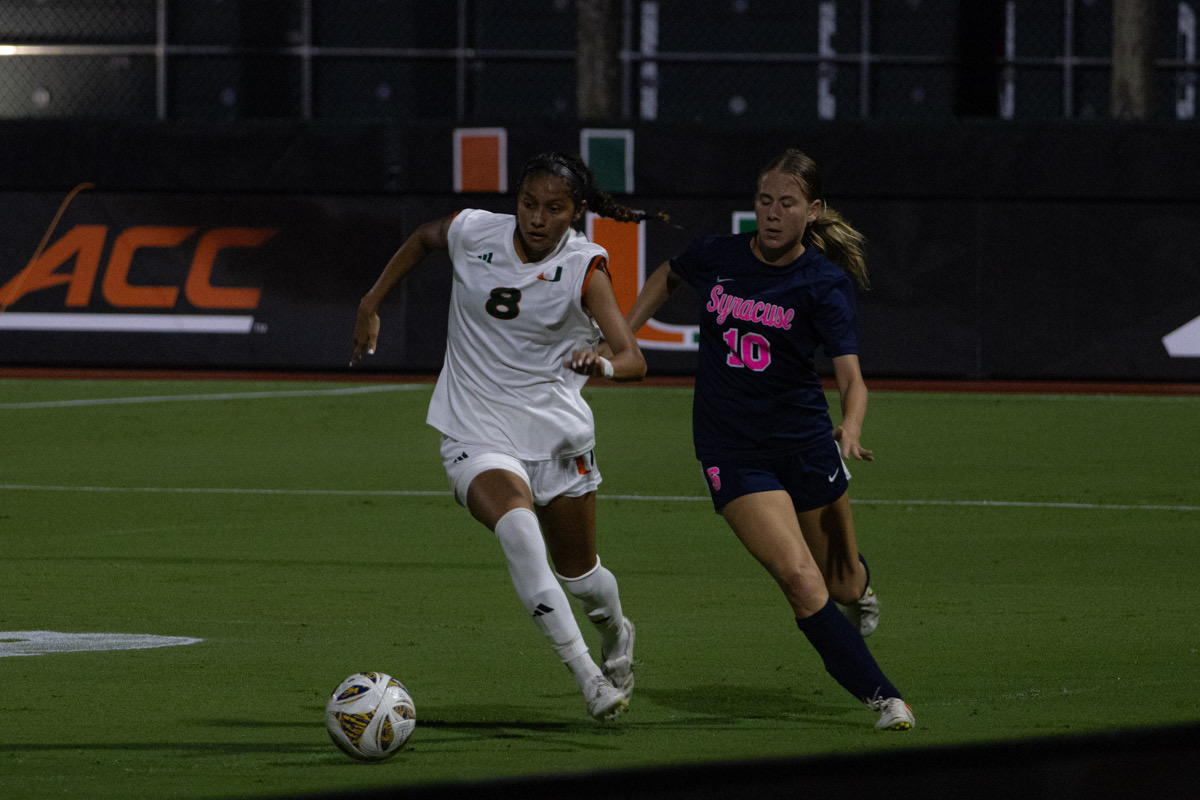
Gorfin: How Miami WSOC can counteract California to end poor run of form

Miami women’s soccer remain winless in the ACC following a disappointing 1-0 loss to Syracuse last Saturday. A lack of conviction in front of goal resulted in the Hurricanes failing to score from their 16 shots. Meanwhile, consecutive ball-playing mistakes from Miami resulted in Syracuse finding the net in the 77th minute, a goal which would ultimately decide this close affair.
Yet, the ‘Canes must look onwards and upwards to their next fixture as they face UC Berkeley (4-1-3) this Thursday at Cobb Stadium. Miami is no longer competing to establish itself as a competitive league side. Nevertheless, there would be some valuable consolation in achieving a result against a California side that has some real talent.
The Golden Bears possess a very strong spine of experienced seniors, namely goalkeeper No. 1 Teagan Wy, defensive midfielder No. 17 Alex Klos, and center forward No. 19 Lumi Kostmayer.
Wy has been ever-present in the US national system since U14 level and played every minute of the US’s 2024 U20 Women’s World Cup campaign, where they finished third. The same year, she was named to the all-ACC second team, only missing out on the first XI to Cal’s other goalkeeper, Karlie Lema. Furthermore, Wy is coming off consecutive strong performances against No. 1 Virginia and Virginia Tech, having made 15 saves across these two fixtures. As a result, Miami must improve upon their clinicality to find the back of the net versus California.
Klos is the lynchpin of the Golden Bears’ setup. In her junior year, she played all 21 matches, and this season has only become more important. Cal channel all of its first phase build-up through Klos, who breaks the lines neatly as a single pivot. However, when Klos is pinned by an opposing midfielder, Cal start relying on long balls to progress up the pitch, resulting in 50/50s and second balls for the defending team to capitalize on.
Clemson executed this strategy relatively well against California, helping them to punch above their weight for a 2-2 draw against the Golden Bears. Miami could replicate this move by instructing its 10, Teegan Melenhorst, to mark Klos out-of-possession. While Melenhorst would still be a primary offensive outlet, having her adopt this role would not be too much of an ask, and would maintain her position high up the pitch for when Miami break.
Stanford transfer, Kostmayer, occupies a very transitional No. 9 role. Her hold-up-play and physicality helps give Cal an outlet up top, which in turn allows Kostmayer to play in her wingers, Elhom Khursand and Soleil Dimry, or play on her own. Her clinicality tops off these build-up qualities, as Kostmayer has found the net five times so far this season. Head coach Ken Masuhr and Miami could counteract this threat by having centre-half Emilie Simpson mark Kostmayer, with Sam Marella picking up flick-ons or loose touches from California’s No. 19.
California’s numerous strengths illustrate that the best chance Miami have of scraping a result will be through counteracting and minimising the opposition’s qualities. This philosophy translates to the Hurricanes’ potential formation. California’s head coach, Neil McGuire, utilizes a 4-3-3 with a single pivot and two 8s. Miami deploying a 4-2-3-1 would positionally match California out-of-possession and help achieve the aim of limiting Klos.
This 4-2-3-1 would potentially look like:
Defense – No. 0 Bredek, No. 14 Maxwell, No. 4 Marella, No. 2 Simpson, No. 25 Kaye
Midfield – No. 13 Nicholson, No. 8 Alarcon, No. 12 Melenhorst
Attack – No. 15 Serlenga, No. 22 Severns, #7 Hood
Crosby Nicholson and Ciara Alarcon, who would make up this hypothetical double pivot, combined for seven shots from midfield last game, further demonstrating that Miami’s most prominent threat comes from the middle of the park.
Yet, by focusing on limiting California’s strengths, Miami can help raise their floor defensively, platforming themselves for potential success this Thursday at 7 p.m.
‘Canes women’s swim and dive start season at the Eagle Invitational

Following a 13th place finish in the 2025 NCAA Championship, the Miami Hurricanes women’s swimming and diving team opened their 2025-26 season on Friday at the Eagle Invitational in Florida Gulf Coast, Fla.
The three programs of FGCU, Tampa, and Miami all competed at a high level but it was the Eagles that claimed victory. FGCU garnered 2,527.25 points, while Tampa finished second at 2,342 points and the ‘Canes finished third at 1,814.75 points.
The Hurricanes swimming team held a three-day rally events from the 200,400, and 800 yards freestyle relays. Ashlyn Massey, who is a former NCAA qualifier, won the 200 yard butterfly at only 1:59.44 seconds. Redshirt senior Savannah Barr won the 200 yards freestyle at 1.49.55 and tied for the first in the 50 yards freestyle 23.34.
In their Hurricane debuts, Phoebe Mayo, Isabelle Videment, Brooke Murphy, Ines Mahoudi, and Sophie Lenze all took second. Junior Leah Tregila and senior Sarah Sensenbrenner both took second in 100 and 200-yard backstroke, respectively.
The Miami hurricanes swim and diving team will not return to the water until Oct. 24 for a two-day meet at Rutgers against the home standing Scarlet Knights and Arkansas Razerbacks. The team continues to practice daily on campus and getting ready for a great start of the season with hope to rank in the first top 10 teams in NCAA.
Nova Festival survivor and UM students commemorate two years since Oct. 7

More than 130 students and staff joined together in reflection and remembrance at UM Hillel to commemorate the anniversary of the Oct. 7 attacks.
Nova Festival survivor Rotem Asner and UM student Eitan Pritzker, a former IDF lone soldier, shared their experiences from that day with those in attendance.
“I always say that today is my birthday because this is exactly what I get — this is a gift. I get my life again,” said Asner, UM Hillel’s Israel Fellow.
Asner, who is from the south of Israel about 30 minutes away from the Gaza border, studied to be a physical education instructor. After the attack, she decided to pivot and come to UM Hillel as an Israel Fellow.
“It was after that I decided to do something more meaningful,” she said. “I’m so happy to be here today.”
While sharing her story, Asner recalled arriving to the Nova Festival with her friends, setting up their campsite, and going in to dance.
“I remember that Sharon, my best friend, she saw something in the sky,” said Asner. “She said she can’t even explain what happened. She just saw thousands of rockets.”
From there, Asner’s group got into their car and attempted to drive, only to see the chaos of thousands of other partygoers evacuating. When they got out of the car to walk, she recalled hoards of people running, suddenly understanding the gravity of the situation.
“Everyone just started running, and I just stopped, and I saw two terrorists come my way with two guns,” Asner said. “And it was very nonchalant because they know what they’re going to do. They come to kill us just because we are Jewish.”
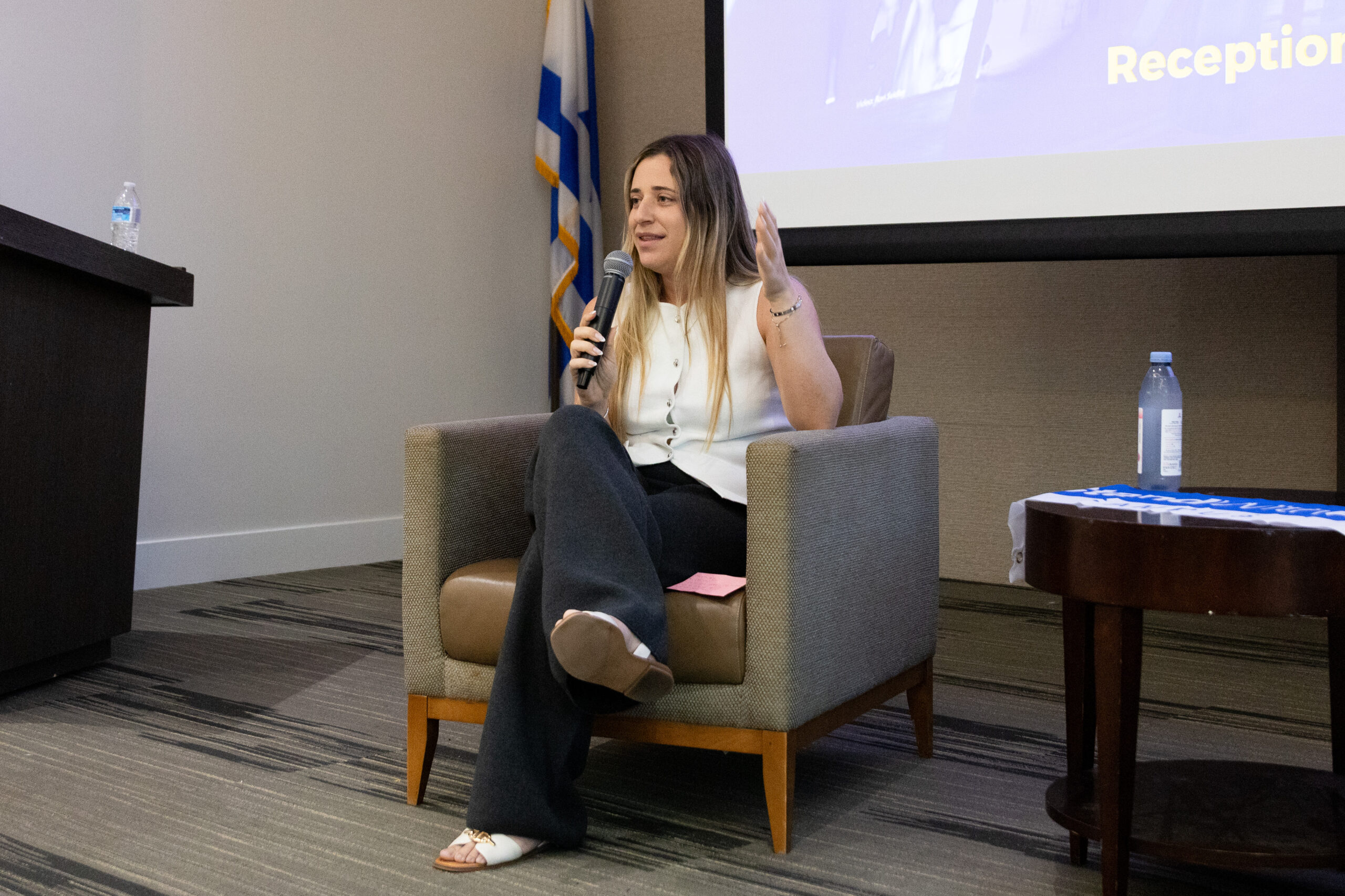
Freshman Rachel Katoni said hearing these personal accounts made her reflect on the fragility of life.
“Hearing from individuals who survived such horrific events made me reflect on how fragile life is and how quickly these ordinary moments can turn into chaos,” said Katoni. “As a college student, it resonated with me as I was imagining people around my age experiencing something so devastating,”
After trying to run, Asner found herself in a car of other festival-goers, having been separated from her friends, and they decided to drive out from a different road, with no clear indicator of a safe exit.
“This is the decision that saved my life.” Asner said. “It’s you take a right to the terrorist, or you take a left. You don’t know where is the terrorist because every place in this area, it’s with terrorists. We took the left side. I don’t know why. God helped me. I really, really believe this.”
Her faith shows in how she speaks of her new perspective of life, especially after having lost several close friends.
“I’m a person with a faith. So don’t think too much. If you want to do something, go and do that. And if you just want to say something for someone, don’t think too much, because the life is so short,” said Asner.
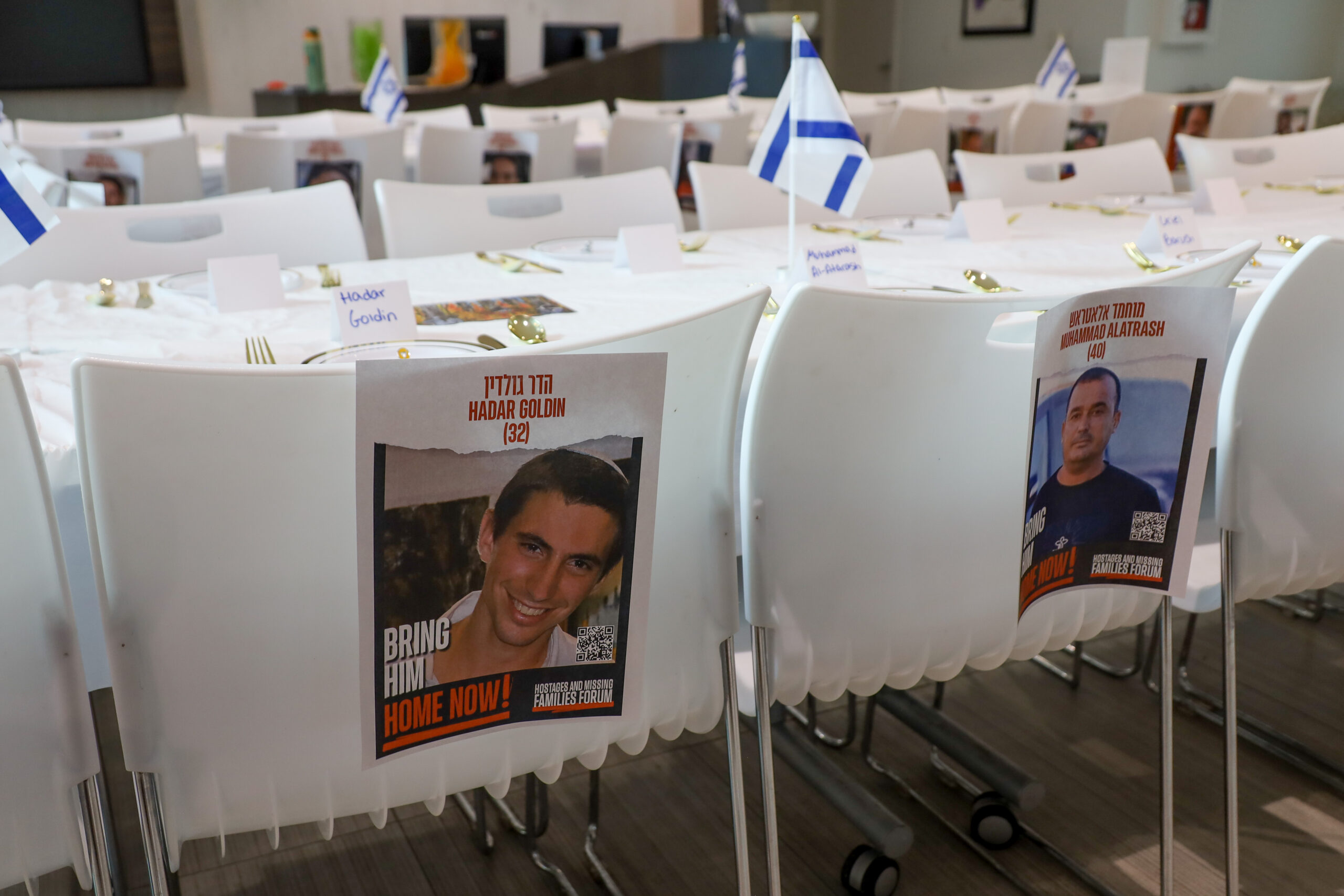
Luke Cohen, UM junior, reflected on his time in Israel this past summer, having visited the Nova site and met several individuals directly affected by Oct. 7. “I could picture the places we went, all the smiling faces, the happiness, and the excitement that were taken away in moments,” he said.
Cohen also spoke to the importance of relying on one another to find strength in community.
“They are here today and telling these stories because they leaned on their communities and their communities leaned back,” he said. “We have an opportunity to take these messages and share them with our communities to both strengthen them and live with hope that each day will be better than the last.”
Also speaking was Eitan Pritzker, a UM student from Atlanta who enlisted in the IDF as a lone soldier prior to Oct. 7. He reflected on his time in training and the bonds he fostered with his platoon of both Jews and Druze.
Pritzker drafted into the IDF in 2022 as a lone soldier — someone who does not have family in Israel. He learned Hebrew for three months as part of the lone soldier process. Following training, Pritzker served in the Search and Brigade unit. Their team responds to disasters around the globe.
“It’s essentially our job to save lives,” said Pritzker. “If there’s an earthquake anywhere in the world, Israel sends a team, and that’s us,” he said.
A year into his service, he had the opportunity to visit his family in the United States. On October 7, 2023, he received a call describing what was unfolding across the world. His base, Zikim, was under attack.
“Hamas soldiers got into the base. So at this point, most of the commanders are dead. You have a bunch of trainees in a base with nothing, they don’t know what to do. And so one of the soldiers decides to take another five with them, and they go and confront the Hamas soldiers,” said Pritzker. “These are people eighteen, nineteen years old, four months in the army, and they kill the three Hamas soldiers. It’s an incredible story.”
After returning to Israel on one of the first flights back, his service continued.
Pritzker explained that the goal of his service was “just trying to keep the peace” between Israeli civilians and Palestinian civilians. He was on guard in the West Bank and other fronts and used intelligence from spies to identify Hamas members.
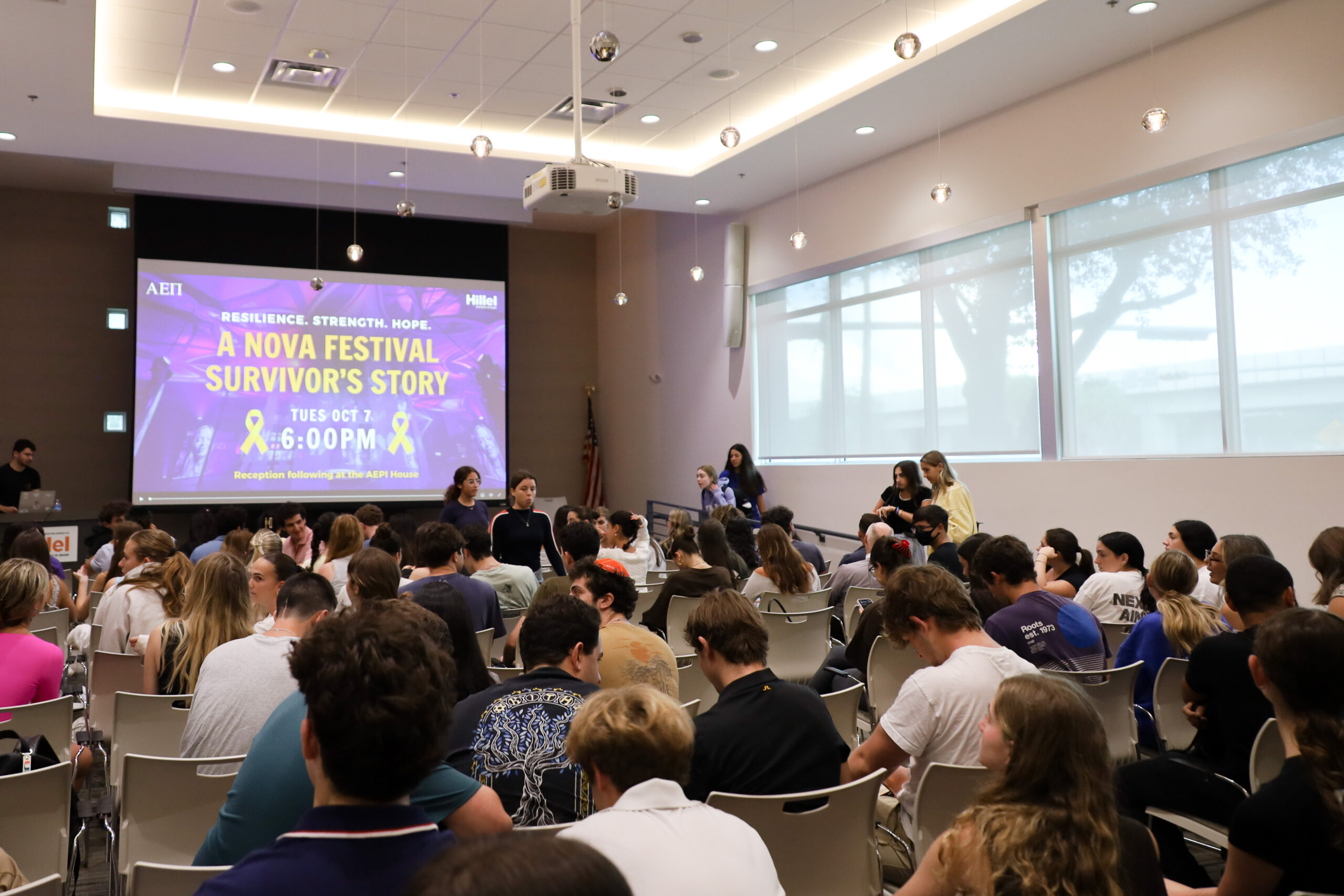
Asner and Pritzker answered questions from the audience about the media controversy surrounding the war, where they get their strength to serve from and what makes them feel tied to Israel.
Ultimately their messages were of resilience, pride and strength.
“I will be unapologetically pro-Israel forever. I’m happy to share my experiences. I am very strong about my Judaism. That’s why I joined. And it doesn’t bother me. And it shouldn’t bother any of you,” said Pritzker.
At the end of the event everyone rose to sing Hatikvah, the Israeli national anthem, whose lyrics speak to the hope of the Jewish homeland — a hope of thousands of years that has not been lost.
Jayla Taub, UM senior said that the responsibility falls on students to continue sharing these stories out to the larger community.
“We are the ones who need to be speaking up, remembering, and sharing our voices and our light,” said Taub. “Events like these allow for us students to learn more from people’s personal experiences, and to get together and really feel support from a community that we are a part of.”
Asner hoped students left Hillel feeling empowered to take on the responsibility of bearing witness to these tragedies.
“Everyone here needs to share the story of the survivors and of Oct. 7, all the people, because this is the history of Israel, ” said Asner. “All of us, we have something to connect with. This is Israel.”