


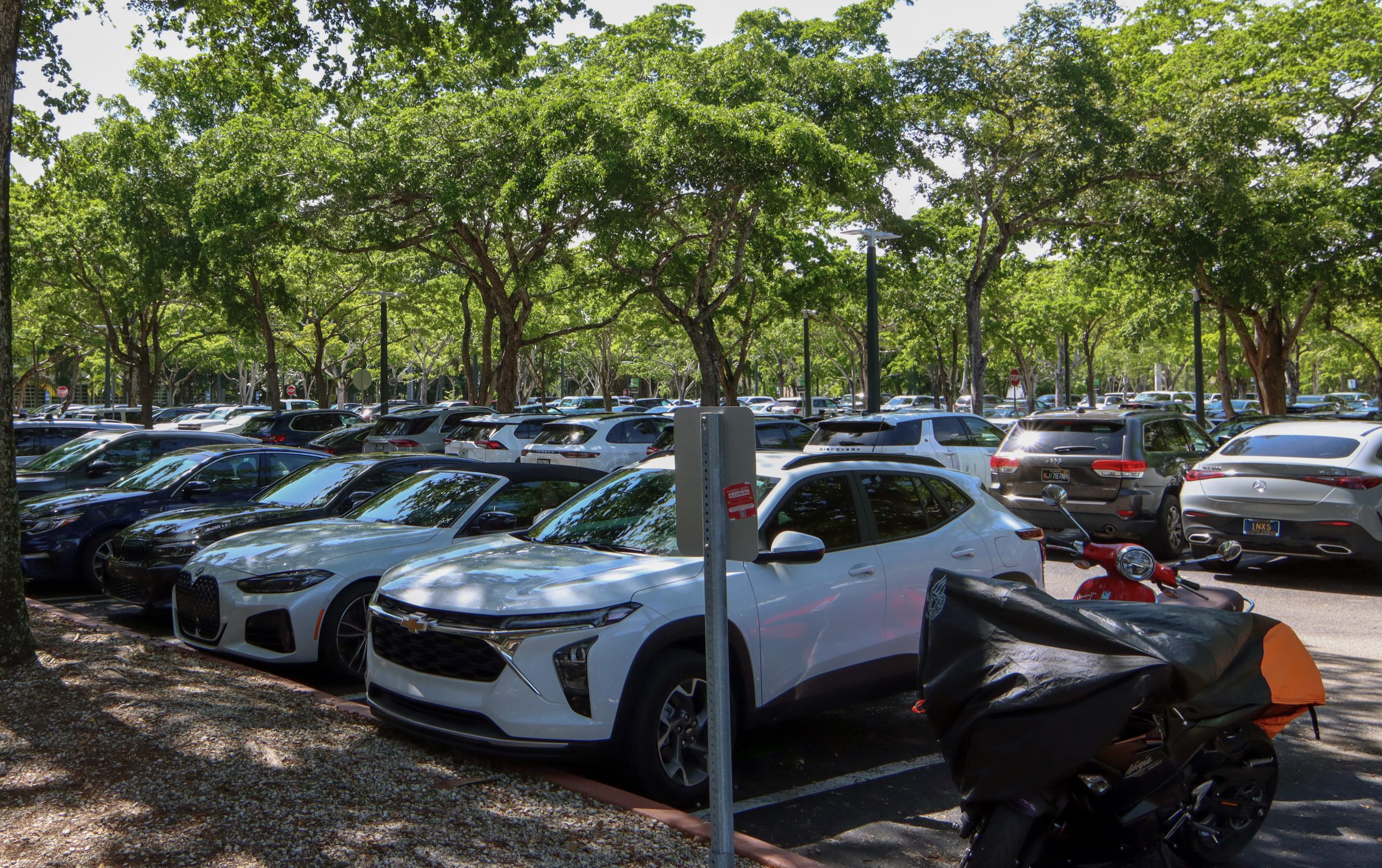
New cameras and technology are being installed across campus parking lots and garages, bringing another change to campus parking amid a semester of construction, parking restrictions and student concerns over vehicle safety.
In October, the University announced its “Parking Reimagined” initiative, which is part of the larger Vision & Blueprint 2030 outlining the school’s goals for the next four years.
The goal of the parking initiative is to improve safety and the overall parking experience for students, faculty and staff.
The Office of Parking and Transportation shared that these new cameras will use enhanced AI technology to track parking capacity. That information will then be fed to digital signs at parking entrances that will display available spaces for each location.
Over the years, students have frequently reported scratches, hit-and-run incidents and concerns about inadequate camera coverage in campus parking facilities.
One student reported discovering scratches on her vehicle in the Red Lot without a note identifying the responsible driver. Although she contacted police to file a report, she said authorities could not determine who caused the damage.
The report also highlighted limitations of existing surveillance cameras, which did not always capture identifiable license plates or faces of drivers involved in parking incidents.
The new technology also aims to support parking compliance by helping to identify vehicles parked in unauthorized areas or violating campus parking rules.
However, the addition of more camera technology has also raised questions about its potential role in parking enforcement.
Zach Duncan, a senior at UM, expressed support for using cameras to improve parking enforcement, arguing that students who park without valid permits should be held accountable.
Duncan also suggested that the technology could make parking operations more efficient, but emphasized the importance of preventing its misuse.
“Surveillance is great for safety and I generally don’t see it as a bad thing, but I also don’t think it should be abused,” he said.
Duncan expressed particular concern about transparency, saying they were unaware of the new cameras until being contacted for this article.
“I think people should know when they are being recorded,” he said.
When asked what information they would want from the University, the student pointed to the cameras’ intended purpose and how long recorded footage would be stored. They suggested that footage ideally be deleted within 24 hours and that the university establish clear policies to prevent misuse.
UM already uses license plate recognition technology to verify parking permits. However, it remains unclear whether the newly installed cameras will expand those capabilities or introduce additional parking enforcement measures.
Ultimately, while the new cameras aim to make parking safer and easier, questions remain about how UM will use the technology and whether students will have a say in how they are monitored.