Home Blog Page 108

Abortion through a philosophical lens: moral

0

The overturn of Roe v. Wade in 2022 sparked arguments among pro-choice and pro-life advocates. There’s no shortage of loud opinions to be heard — whether from politicians, priests or just about everyone. But, if we set aside personal beliefs and political motivations, we can look toward philosophers as a starting point to find that abortion is completely ethical. 

Thomson’s defense of abortion

American philosopher Judith Jarvis Thomson argued that abortion is acceptable in her essay,  “A Defense of Abortion.” Using persuasive techniques and logic, she draws an argument for abortion as she invites readers to dive into an ethical thought experiment known as “the famous violinist.”

The woman in the thought experiment was drugged and kidnapped by the society of music lovers, and she is now tethered to a world-famous violinist with a fatal kidney disease. A doctor then explains that the subject’s healthy kidney can heal the violinist, but only if both people remain attached to one another for about 40 weeks. 

“We’re sorry the Society of Music Lovers did this to you — we would never have permitted it if we had known,” the doctor explains. “Granted you have a right to decide what happens in and to your body, but a person’s right to life outweighs your right to decide what happens in and to your body. So you cannot be unplugged from him.” 

First consider how absurd it would be to link a healthy living person to an unhealthy person for such a duration of time — particularly when realizing the first person wasn’t given a choice in the matter. While the doctor acknowledges that the way this came to be is wrong, he also explains that the second person’s right to live is more important than the first person’s right to comfort.

We need more than a rape exception

Thomson’s experiment is an allusion to children conceived in cases of rape. The standard objection to abortion argues that if someone behaves irresponsibly, like by having unprotected sex, then they are required to deal with the consequences. If we took Thomson’s argument out of the context of her full essay, it’d be fair to say that only in cases where the pregnancy was a direct result of a sexual assault would abortion be permissible.

But a rape exception isn’t enough, because to say a woman must first be violated in order to have control of her own body completely eliminates the vitality of autonomy. Autonomy, according to Immanuel Kant, often regarded as the “father of modern philosophy,” is  “therefore the ground of the dignity of human nature and of every rational nature.” 

Kant was not speaking directly about abortion, but his ideas have been used in countless explorations of moral obligations regarding pregnancy. Simply put, stating a woman must be violated in order to have control over her own body completely eliminates the vitality of autonomy. As Kant argues, autonomy is not a secondary consideration. It is the entire foundation of the human condition. To minimize our autonomy is to minimize our humanity.  

Consider the mother’s wellbeing

Finally, Thomson challenges readers with a second thought experiment. Imagine a mother is an occupant of a tiny house with a rapidly growing child that will ultimately “crush” her. This experiment acts as a metaphor for the physical and mental effects parenting a child can have on the mother. When keeping a child can result in severe psychological damage — or in rare cases like pregnancy-induced sepsis, death — the primary priority must be to consider the welfare of the mother. 

Philosopher John Locke influenced Thomas Jefferson to write the phrase “life, liberty and the pursuit of happiness” as unalienable rights in the preamble to the Declaration of Independence.  In cases where granting life to another might eliminate a mother’s fundamental rights, terminating a pregnancy constitutes no ethical violation.  

Rescue a Reef celebrates 10 years of uniting citizens and science

0

In 2014, Dr. Diego Lirman founded Rescue a Reef, the marine conservation program within UM’s Rosenstiel School of Marine, Atmospheric and Earth Science. After 10 years, Rescue a Reef has outplanted 3,985 corals, removed 353.5 lbs of trash and reached thousands of people.

Dr. Lirman created the Rescue a Reef project to combat the depletion of Florida’s coral reef tract, a shallow formation near the coast and the worsening of coral bleaching. 90% of Florida’s corals have been bleached, which means their essential sugars and proteins have been removed. After losing their color, corals become sensitive to disease or starvation, leading to their death.

Originally, Rescue a Reef’s team was just four people: Dr. Diego Lirman, Stephanie Schopmeyer — the lab manager — and two graduate students, Dr. Ford Drury and Dalton James Hesley. 

But managing research, event planning and restoration efforts put a lot of pressure on the four-person group.

“It required all of us at that point to be pretty versatile. We had to be scientists, we had to be restoration practitioners, but we also had to be community engagers,” Hesley said. “We had to be science communicators.”

10 years later, Hesley now oversees the restoration program and assists with ongoing lab research. The Rescue a Reef team has continued to grow, employing 17 people in all areas, but its focus is on the community at large. 

The heart of Rescue a Reef’s mission is turning community members into “citizen scientists.”

“We want to build a bridge between science and society, specifically around corals, because we know that they’re hard to access,” Hesley said. “They’re hard to see and appreciate and understand. And so through our programming and projects like that, we hope we can help.”

To encourage citizen involvement, Rescue a Reef takes groups on offshore expeditions to their gardens. There, they take care of a community of corals through the Community Coral Garden Project. Two years ago Rescue a Reef opened the formerly private gardens to the public. 

“In our case, divers and snorkelers are able to come on the boat with us, meet our team, hear about our work and then actually help hands-on,” Hesley said. “the public is helping with research.”

On land, Rescue a Reef has organized 19 events in the last decade, reaching 4,991 community members.

Rescue a Reef’s participation in the 100 Yards of Hope project, where the NFL sponsored the outplanting of 100 corals to celebrate its 100th season, was one of its biggest crowd engagement events. Some members of Rescue a Reef were featured in the “100 Yards of Hope” documentary. 

Besides outplanting, Rescue a Reef offers programs for those too young to dive.

 H2O, Hopeful, Healthy Oceans, is a project that combines teaching children about oceanography with creative activities. The project takes place at the Rosenstiel Campus or in partnered schools’ classrooms. Rescue a Reef team members give a brief lesson on corals and then ask students to create art inspired by them.

“Our lab director and the Rescue Program founder, Dr. Lirman, loves art. And so he had always had this vision of combining art and science,” Hesley said. “We wanted to engage classrooms and communities, specifically youth, in marine science, in ocean environments, to inspire, to create some creativity through art.”

During the spring semester, the artwork is exhibited at UM’s Lakeside Expo Center.

“It has really been breathtaking, inspiring to see all the beauty that these kids still see in our oceans and it gives us a lot of optimism and motivation to continue fighting for their future,” Dalton said.

For those who have outgrown H2O meetings, there are plenty of events to look forward to.

The UM Scuba club hosts joint expeditions with Rescue a Reef that are open to those who are 18 years or older with a scuba license. If you can’t scuba dive, the club helps members earn their licenses. You can even snorkel on expeditions.

“We probably average two to three [expeditions] each month, with a number of those being open to the public, meaning any single person can sign up. All they have to do is see the announcement and add their name,” Hesley said.

Hesley and the rest of the Rescue a Reef team are excited for the decades to follow. 

“This is an organization that we’re obviously very proud of and appreciative of all the support that ‘Canes have shown us over the years, hopefully for the next 10 to come as well,” Hesley said

Nearly empty UM food pantry leaves students hungry

0

Shelves at the University of Miami Canes Community Food Pantry were nearly empty on Thursday, Sept. 4, and not a single staff member was in the pantry. 

The pantry was created by the Student Government Environment & Conservation Organization in 2021 to provide resources for students who may face  food insecurity and divert waste from grocery stores. Today, the food pantry, located in Lakeside Village room 1054, relies on donations from Good Samaritan Meals and the UM community. The hours are Monday to Thursday from 3 p.m. to 7 p.m and Friday from 11 a.m. to 2 p.m.  

According to Temple University, 3.9 million undergraduates in the U.S. experience food insecurity. Frontiers in Public Health reported that college students who experience food insecurity often have challenges that are significant enough to reduce their likelihood of graduating by 42%.  

Several frustrated students waited inside in the pantry, some for several hours, uncertain whether anyone would come to assist them. At closing time, students were met with the lights going down and the door automatically locking at 7 p.m. while their hunger continued. 

“I’m not surprised. I used to come last year. I would leave with soda, ramen noodles and sometimes bread,” said Dewan Tauhid Rahman, a graduate student at UM. “There were no vegetables or meat.” 

According to the Canes Community Food Pantry website and multiple emails to graduate students, the pantry should have resumed regular operations on Aug. 19, the first day of class. 

The University of Miami Division of Student Affairs responded with a statement to The Miami Hurricane that the pantry is not currently entirely operational, contradicting the website.

“At this time, the Canes Community Food Pantry is not fully operational, as the Division of Student Affairs is in the final stages of hiring student employees to help stock, maintain, and accept donations for the pantry,” the University Division of Student Affairs said. “Typically, the pantry receives about 40 visitors each week with a large increase in visitors during midterm and final exams.” 

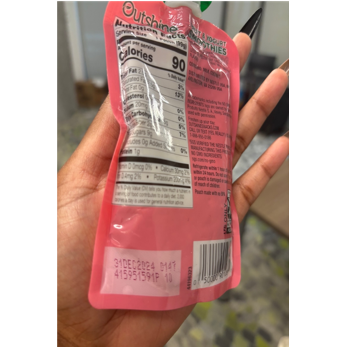
In addition to staffing issues and the lack of food, some of the food in the pantry was past the expiration date. Some examples are an Outshine brand smoothie that was dated Dec. 2024 and even a container of unidentified brown, separated food.    

An Outshine smoothie pouch with a “best by” date of December 2024 found in the ‘Canes Community Food Pantry on Thursday, Sept. 4. // Contributed photo


Masters student Jennifer Lee says that walking into the pantry, the University’s priorities felt misplaced.

“You cannot advertise stuff like this and have absolutely nothing and no one in here. It frustrates me,” Lee said. “When I walked to get here, I passed the nail and hair beauty salon, like, ok, that’s nice, but like, why is that a priority over literal food? Then this place isn’t welcoming, it looks like a closet compared to everything else at this campus.”

Not having access to a fully-stocked pantry isn’t just an issue at UM. Nearly one in 11 people around the world goes to bed hungry each night, according to World Hunger Facts. 

“I was just about to [fill out] the food stamps application, now I’m even more worried after seeing [the pantry],” said Lee. 

Despite students waiting in an almost bare, unstaffed pantry for hours, The University of Miami said in a statement to The Hurricane that student attendants are in the pantry most of the time and stock the pantry weekly.

“The pantry is stocked weekly by student employees thanks to philanthropic support from generous University of Miami alumni and friends, as well as donations from student organizations and local charities. During most operating hours, a student attendant is in the pantry. Safe food consumption rules are posted throughout the pantry,” The University Division of Student Affairs said.


UM student groups host events in remembrance of 9/11

0

University of Miami students and organizations honored the memory of the lives lost on Sept. 11, 2001, 24 years after the terrorist attacks on the World Trade Center in New York City. 

Student organizations, including UM College Republicans, Hillel and ROTC, each had their own unique remembrance of 9/11. 

Hillel, a Jewish organization on campus, organized a volunteering event. Students and faculty of Hillel assembled gift bags filled with various snacks and candies and later handed them out to the UM police and Coral Gables fire stations. 

“We have a volunteering initiative,” said Sabrina Shapsis, a sophomore and intern of service at Hillel. “We’re packing snacks and food into bags with notes thanking people who provide service, so the UM police and the fire department, in commemoration of 9/11.”

The UM College Republicans also hosted an event in remembrance of 9/11. On Sept. 10, at 8:30 p.m., Students gathered around the U statue to hear remarks from the executive board before placing American flags in the area behind the statue. 

“By planting 2,977 flags, we honor each individual whose life was taken on 9/11,” said Joey Insinna, an executive board member of the UM College Republicans. “We ensure that even 24 years later, our campus community pauses to reflect, remember, and never forget.”

On Sept. 6, ROTC students led a 9.11-mile “Ruck to Remember,” a memorial run dedicated to the victims of 9/11. A group of more than 150 people completed this run while carrying 35-pound rucksacks.

In an interview with Local 10 News, Ricardo Cisneros, ROTC member and assistant professor at UM, said that “Paying tribute to the service members, carrying the weight,” got him through the ruck. “People say never forget. But as time passes we have to keep on remembering why we do what we do.”

Events at the University of Miami echoed remembrance ceremonies across the country, from reading the names at the 9/11 memorial in New York City to a presidential speech at the Pentagon. 

Pride crosswalk removals draw criticism across Florida

0

Following a federal directive to remove “political” or “non-uniform” road art, the Florida Department of Transportation painted over Delray Beach’s pride-themed intersection. This crosswalk is the most recent of several state-wide pavement markings to be painted over.

The removal follows a series of anti-LGBTQ+ reforms by Governor Ron Desantis in tandem with President Donald Trump. Three weeks ago, an Orlando rainbow crosswalk was painted over by FDOT officials in the late hours of Aug. 21. 

The FDOT said its primary goal was to ensure “roadways are not utilized for social, political or ideological interests” as part of an overall initiative “to ensure the safety and consistency of public roadways and transportation systems.”

The Orlando crosswalk, created in 2017, honored the victims of the 2016 Pulse nightclub shooting that resulted in 49 fatalities and 53 injuries.

“This callous action of hastily removing part of a memorial to what was at the time our nation’s largest mass shooting, without any supporting safety data or discussion, is a cruel political act,” said Orlando Mayor Buddy Dyer in a social media statement. “While this crosswalk has been removed, our community’s commitment to honoring the 49 can never be erased.”

Athena Pacanins, a senior studying modern artist development and entrepreneurship at UM, is a Miami native who emphasized the importance of the crosswalk art for the greater queer community. Pacanins identifies as bisexual and voiced that the removal of these crosswalks feels like “going backwards.”

Many Orlando residents agreed; the following day, members of Florida’s queer community gathered to “re-paint” the memorial with colored chalk and continued to “repaint”  each time the rain washed their efforts away. Using black paint, transportation officials repainted the crosswalk on Aug. 25. Additionally, Orlando police are now patrolling the scene. 

“Queer people will never be erased, no matter how hard you try,” said Pacanins. “If you start a fight, expect to be met with an even bigger fight.”

Gen Z leads shift from drinking to wellness culture

0

Gen Z is showing a significant decrease in alcohol consumption with health and wellness on the rise.

According to EatingWell, a new study recently linked drinking to cancer, liver damage and mental health issues like anxiety, depression and psychosis. 

Another study by the Washington Post found that “heavy drinkers had 133 percent higher odds of developing vascular brain lesions than those who never drank.” 

People, especially Gen Z, are beginning to recognize these dangers on a more serious level. 

“People are being more present in their health and actively trying to find ways to feel, look, and be their best,” said graduate student Allison St.Clair, who is studying health equity and human rights at UM. “So when you assess all life factors, you have to take into account alcohol, if you drink, and people are realizing it really isn’t doing them well,” 

Data on alcohol consumption over the past two decades has shown that the number of 18 to 34 year-olds who drink has decreased from 72% to 62%. Alcohol abstinence among college students rose from 20% in 2002 to 28% in 2018. 

“I like to know where my senses are. I like to go out and have fun but never lose my senses,” says Emma Balleste, a broadcast journalism major at UM. “I love that I can have beautiful moments with my friends and family and not need to resort to drinking.”

Recent 2024 data according to the National Survey on Drug Use and Health shows that roughly 50% of full-time college students abstained from alcohol in the past month. Based on early 2025 data, this trend seems to align with an increasing number of sober adults.

Organizations, schools and online influencers continue to work to educate students about the dangers of alcohol abuse. 

At the University of Miami, admitted students are required to take a compliance course upon admission that uses student-driven narratives to promote alcohol prevention education. This course covers topics like short and long-term effects, benefits of abstaining and tools to begin a sober journey. 

Jessica Valdes, a broadcast journalism major at the UM says, “I still have really funny moments that a lot of people say they have while being under the influence. If I’m still having a good time, I don’t see how being drunk or drinking could add to my experiences.”

The Sandler Center for Alcohol and Other Drug Education is a program on campus that focuses on promoting a healthy lifestyle. They look to educate students about the negative consequences of drug and alcohol use.

“The Sandler Center provides alcohol and other drug education through our outreach and training and harm reduction tools through our safety kit program such as drink covers, substance testing strips, and Narcan, all free to students,” said Jordan Coello, Assistant Dean of Students and Director of the Sandler Center for Alcohol and Other Drug Education.

Reasons for the decrease

Young adults are beginning to adopt a healthier lifestyle. They are beginning workout routines, eating on a diet and avoiding putting harmful toxins into their bodies, like alcohol.

Gen Z has started to notice the benefits of excluding alcohol from their diets as well. Improved sleep, lower cholesterol, reduced blood pressure, increased energy, improved liver function and weight loss are all things Gen Z is aiming for. 

“I chose to not drink for health reasons, potential risks to my liver and just no desire to in general,” says Dylan Reiss, a finance major at UM.

This ties into increased education regarding alcohol and drugs. Before recent studies and funded programs aimed towards middle-school aged students, people were unaware about how detrimental the consequences of alcohol usage could really be. 

Mental health has also been a much bigger topic of conversation over the past years, and people struggling with mental health are more likely to seek help in their community instead of turning to harmful coping methods.

Alternatively, people could be trading in alcohol consumption for cannabis use instead. Cannabis has now become legalized in 24 states for recreational use and many who use it may argue it is “less risky” compared to alcohol.

There has also been a new surge of alcohol alternatives in the US. 

Non-alcoholic spirits and wines have become popular with the creation of brands like Ritual Zero Proof, Seedlip and Free Spirits. Wellness focused drinks like adaptogen-infused drinks, wellness shots and kombucha are also becoming more popular.

Overall, Gen Z has shifted towards a culture of wellness without drinking that should have a positive impact.

Rainbow chalk art spotted on stairs at UM’s Cox Science Building

0

The steps of the UM’s Cox Science Building received an unexpected decoration on Monday, Sept. 8. Bright, rainbow-colored chalk markings appeared overnight, sparking curiosity and conversation among students.

The Miami Hurricane reached out to multiple campus organizations including SpectrUM, Black Leaders for the Queer Community and The LGBTQ Student Center, inquiring about the artist or the meaning behind the work. Currently, no group or individual has publicly embraced ownership and the artist is still unknown.

Lorenzo Cavallino, a sophomore studying industrial engineering, offered his interpretation of the rainbow steps.

“I’ve seen the steps. It’s artistic, I think it’s pleasant to look at. I’m not sure what it’s supposed to mean exactly,” said Cavallino.“I feel like there’s some reason behind it, but we can’t know what the artist intended.”

In recent months, Florida has seen a wave of political legislation aimed at restricting LGBTQ+ rights, including bills that are designed to limit discussions of gender identity and sexuality in schools, as well as proposed policies that affect healthcare for transgender individuals. This comes alongside state-level decisions to erase LGBTQ+ visibility in public spaces, such as the removal of rainbow crosswalks in several Florida cities earlier this year: Fort Lauderdale, Miami Beach, Orlando, West Palm Beach, Delray Beach, Boynton Beach, Pensacola and Key West.

Taveion Neisman, a senior at UM, suggested the art could be interpreted as a form of peaceful protest in light of these events. 

“I believe it’s a beautiful testament to the fact that no matter what political legislation that is passed in government, LGBTQ+ individuals have and will continue to exist,” said Neisman. “The LGBTQ+ community has taken too many steps forward to just blatantly accept a step back in recent legislation. It’s a beacon for resilience and determination to create a world where people can love each other both openly and publicly.”

As of Thursday, Sept. 11, the drawing remains intact, continuing to attract students and the UM community to the Cox steps. 

Balaj Raza contributed to the reporting of this article.

Safe sex, no stress: UM’s free resources for students

Free condoms, lubricants, STD prevention, testing and counseling are all  services are offered to  University of Miami students, yet many walk past them without ever knowing they exist.

Through the Student Health Service, the Wellness Center and student-led initiatives, UM has built a network of sexual health resources designed to protect students and open up conversations around safe sex. 

The University’s approach is twofold — make contraception and testing easy to access while breaking down the stigma that stops students from seeking resources  in the first place. 

Free external condoms are available in many locations around campus such as the Student Health Service waiting area and exam rooms, the front desks of all campus housing buildings and the bathrooms in the Rathskeller, making protection as simple as picking it up between classes. 

For many, privacy makes a difference. Olivia Attalla, a graduate student at UM, says that privacy helps avoid the stigma that can come with being seen purchasing certain products.

“If you are young and people see you stopping to get that, you feel judged. Even if your teacher walks by,” Attalla said.

With the Safer Sex Express program, students can discreetly order the supplies online through a form and pick them up on campus once ready. 

“[The form] is nice because it is free and you get everything you need,” Attalla said, who noted that the online form makes the process feel like “grocery shopping.”

Safer Sex Express provides a wide range of supplies, from different types of condoms to lubricants and dental dams. A full list can be found on the University of Miami website.

For students who want services beyond supplies, the University of Miami Health System offers Promote2Prevent, which provides free and confidential STD testing, counseling and education for young people across Miami-Dade.

The university is working toward a healthier, stigma-free campus and encouraging students to protect themselves. This allows students to keep their sex less stressful, and a lot safer, one condom at a time.

Substance Awareness Club teaches students it’s cool to be sober

0

UM senior Luke Bell founded the Substance Awareness Club, an endeavor that had been in the works for nearly a year, following his own struggles with substance abuse. After taking a year off of school to seek treatment he is hoping to help others struggling with similar issues. 

“I knew that I had some problems in that addiction field that were unravelling my life and making things kind of a living hell,” Bell said.

Through mentorship and rehabilitation, Bell got back on his feet and took charge of his life. The SAC has already hosted some impactful events in its short time as a club. This school year, Bell is looking to bring his experience to spaces where substances are typically normalized.

“A tailgate at the stadium, club meetings and a trivia night with the Rat,” Bell said. “It would be a lot of fun to rent out a venue, but have it be a sober hangout, where you don’t feel the necessity to drink.”

SAC is also working to partner with Verse, an alcohol alternative beverage company that was founded by UM alumni. 

On Substance Awareness Day, Aug. 31, the SAC hosted an event in collaboration with F Fentanyl, another anti-substance student organization, to teach students about the dangers of the deadly drug and how to administer Narcan. 

Narcan is a brand name for naloxone, a medication used to reverse the effects of an opioid overdose like fentanyl. At Ultra Music festival this year, the Substance Awareness Club passed out Narcan to festivalgoers.

“Showing people how to use Narcan is huge,” Bell said. 

Bell described distributing the Narcan and fentanyl testing strips in the pouring rain, but felt that it was worth it to save someone else’s life. 

“It was well worth it because you think about whether or not you really saved lives, and it’s the thought that counts,” Bell said. 

Along with being the club founder, he is also a mentor and considers himself an “older brother” to students who are looking to become sober. This summer, a worried father reached out to Bell concerning his son’s alcohol habits. Bell connected with the student to mentor him. 

“I talked to this kid, fired him up and told him ‘you definitely don’t need alcohol to have fun.’”

Along with his on campus mentorship, Bell wants to reach a larger audience of people who are ready to get sober. Through fundraising, the SAC is looking to make recovery resources more accessible, especially for those who may not currently have the financial means. 

“Another goal is to raise money for people who can’t afford rehab, and take that money and have it act as a scholarship fund. 

Bell hopes the Substance Awareness Club can continue to inspire others and offer the support he once needed himself. He explained that during his struggles with addiction, a community like this could have made a difference. 

“We take everyone, we’re an all inclusive club,” he said. “Sobriety has no boundaries in that sense, it’s just about wanting to learn.”

Bell wants others to be as excited about sobriety as he is.

“[Sobriety] is this whole thing that I’m stoked about. It’s like getting on a wave or hitting a golf club. It looks good on everyone, you just gotta put it on and wear it.”

Access is prevention: Make safe-sex easier

0

You’re in your dorm and about to have sex, but you don’t have a condom. Now you’re faced with choices. You could travel as many as nine floors to the monitored front desk hoping there’s a condom, or continue with unprotected sex. You could not have sex at all. 

These should not have to be the only choices. By redistributing and expanding the location of condom dispensers to every floor, sex at UM can become a more safe and private act that students can shamelessly have. 

A majority of students want condoms on campus, but according to a study by the American Sexually Transmitted Diseases Association, 20% feel embarrassed to get them and even more students feel embarrassed to keep condoms with them. 

Embarrassment is natural, but students who are embarrassed to high levels should reflect on whether he or she should even have sex. Condoms do make sex safer, but their accessibility does not necessarily mean every student should be having sex simply because the barrier to reaching a condom has been eliminated. Embarrassed students should not feel obligated to have unprotected sex solely because of their fear of stigma associated with sex. 

At UM, the primary source for condoms is on the first floor of every residential college,  typically monitored by at least one employee. Because of this direct line of contact, students may be embarrassed by both getting a condom, and the lack of anonymity when grabbing one.

Nobody is accusing HRL staff of silently judging anyone who grabs a condom. But why create this feeling of embarrassment when it can easily be eliminated?

Redistributing condoms results in less anxiety and provides students with a seamless way of getting them.

A study by the Jacobs Institute of Women’s Health showed that of the 212 participants, 69% recently participated in unprotected sex, with one of the most common reasons being not planning to have sex or running out of contraception.

The residential colleges are by no means as small as 212 people. Pearson and Mahoney hold about 700 students respectively across seven floors, Ibis holds about 450 across nine floors and Coral holds about 420 across 10 floors. 

For those on higher floors, that 69% who have unprotected sex is likely to be even higher when deciding to take a trip to the front desk.

To test how inconvenient this trip would be, I timed myself taking both the stairs and elevator in Mahoney from floor seven to the condom dispenser. It took me 2 minutes and 48 seconds to take the elevator and 3 minutes and 38 seconds to walk. 

When I arrived at the condom dispenser, it was empty.

While I wasn’t planning on having sex during my mini-experiment, those who take this trip with that purpose now have to ask an employee for a condom or turn back around empty handed. Next time, they might not even bother making the trip at all. 

This problem disappears if UM adds a condom dispenser to each floor. They should also supply  condoms to RAs to make sure that the dispensers are constantly filled. 

Even though the front desk is the primary way to get condoms, it’s not the only way. 

UM offers a Safer Sex Express program that allows students to order free external condoms, internal condoms, dental dams and lubricants. While the process typically takes about two days, students collect their orders inside private lockers, maintaining their anonymity. 

According to the University of Miami, other condom locations include “at Student Health Service in the Lennar Foundation Medical Center, at the Herbert Wellness Center, the Donna E. Shalala Student Center and at Whitten University Center.” These are all locations that are not quickly accessible right before having sex.

Despite making safe sex more accessible, relocating condoms will not eliminate unprotected sex. People should be able to choose how they have sex. But contraceptives do not exist to stop unprotected sex; they exist for those who choose to use them. If relocating them increases the likelihood that someone will be safer, then UM should make this change. 

No. 4 Miami, Florida clash as College Gameday visits UM

0

With ESPN’s “College Gameday” arriving on campus, Miami fans are set to flood Hard Rock Stadium in orange and green Saturday night when the Hurricanes host the Florida Gators.

Coming off a lopsided victory against then No.18 ranked South Florida, No. 4 Miami (3-0) welcomes its in-state rival in hopes of going into the bye week undefeated.

The Florida Gators (1-2, 0-1 SEC) on the other hand, is entering this game desperate for a win. After an upset loss at home against USF two weeks ago, UF came into this past weekend with hopes of reclaiming its season by knocking off No. 3 LSU.

That game ended in a disappointing 20-10 loss where sophomore quarterback DJ Lagway threw five interceptions.

“I know there’ll be a lot of dialogue and narrative about DJ,” said Florida head coach Billy Napier. “He’ll take complete ownership of the things that he can do better. We all understand that.”

With both teams aware of their own, as well as the opposition’s situation, this weekend is set up for a fiery matchup between two historic rivals.

With last year’s 41-17 victory for the ‘Canes in the Swamp, Florida looks to return the favor as they make the trip down to South Florida.

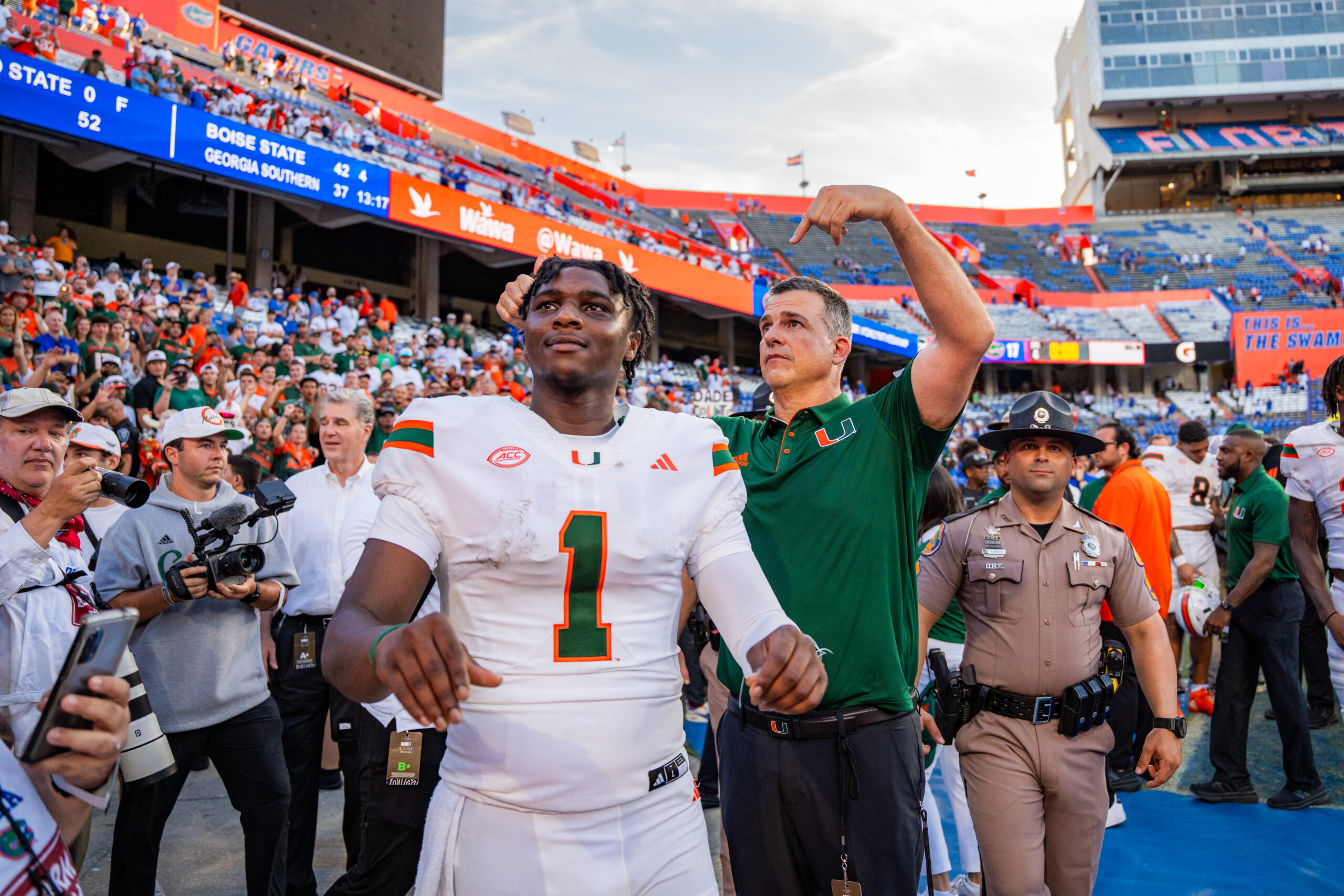
Head coach Mario Cristobal introduces senior quarterback Cam Ward to Miami Hurricanes fans after beating the University of Florida Gators at Ben Hill Griffin Stadium on August 31, 2024.

Florida is likely game planning for two things: Miami’s dual threat offense and dominant defensive line.

As Mark Fletcher Jr. has established an aggressive run game with Jordan Lyle and CharMar Brown getting their share of touches, Miami quarterback Carson Beck slowly climbs the Heisman ladder as he nears 1,000 passing yards on the season.

Defensively, Miami is reliant on its big men up front, Reuben Bain Jr. and Akheem Mesidor. The duo are leading the team in total tackles and sacks and their relentless rush takes pressure off of an improved, but but not perfect secondary.

Florida, on the other hand, has displayed a lack of confidence in their last two games. Despite the UF defense holding LSU to just one offensive touchdown, its offense has been stifled by opponents, scoring only two touchdowns in its last two losses.

Yet, Miami head coach Mario Cristobal and the Hurricanes are not taking the Gators lightly.

“It’s very clear they’re an extremely talented team,” Cristobal said about the Gators, “They’re well coached. They play hard, and for us a great opportunity.”

Regardless of record and recent play, both teams have a bitter history between one another, guaranteeing an electric environment for College Gameday.

The Hurricanes and the Gators will play their 58th matchup against each other this week at Hard Rock Stadium. Saturday’s kickoff in Miami Gardens is set for 7:30 p.m. and will air on ABC.

The slow death of Barnes and Noble

0

The Barnes and Noble that has been thriving for more than thirty years in the Kendall area is set to close for good at the end of the month. 

A new store is set to open in the same relative area soon, but the direction the Barnes and Noble corporation plans to take poses a threat to all bookstores. Barnes and Noble should be protected more against the increasingly digitalized world and should maintain their traditional bookstore atmosphere. 

The new store will likely have some drastic changes, including a new logo and completely modernized store format. 

“I felt at home there, and that can’t be said for all stores,” said Jose Cardenas, a freshman at Florida International University and a Miami local. 

With nearly 10,000 people signing an online petition in hopes of saving this bookstore, disappointment does not begin to express their sentiments. But who is to blame? Online retailers, most notably Amazon, are where most of the evidence is pointing. 

As of 2023, Amazon sold the majority of the books that were bought in the United States. This is due to a few good reasons. 

Online sources for books are extremely helpful and provide more information that may not always be available at traditional bookstores. Retailers like Amazon offer competitive prices and other incentives, like free shipping, that are not available at bookstores. 

But this does not take away the importance of supporting bookstores. Not only do they provide peaceful study spots or an aesthetic place to get a coffee, but also they’re vital to the  local economy and future generations of authors. 

The traditional atmosphere of a bookstore is also something that should be preserved. By modernizing, Barnes and Noble is tarnishing their impact in the area. Wooden bookshelves, warm lighting and carpet flooring are all nostalgic components that will be eliminated in the new Barnes and Noble. 

“There’s a huge disconnect now between comfort and functionality,” said Cardenas. “Instead of being welcomed into a cozy bookstore, I feel like I’m just being sold a product.”

Cardenas also noted that the newer stores feel “empty” in comparison to the “visually appealing” and “warm atmosphere” of the prior Barnes and Noble. 

When compared to the smaller chain of local bookstores Books and Books, the dull qualities of the modernized Barnes and Noble are even more evident. The difference between the two in solely ambiance is like night and day.

With the modernization of Barnes and Noble, traditional bookstores like the iconic south Florida chain need to be preserved and supported. Without local support, who knows how long it will take until these bookstores are completely dominated by  online retailers like Amazon?

Traditional bookstores like Barnes and Noble used to be a place where kids and adults could go to unwind after a long day. Now, with the extinction of these bookstores, an essential piece of human life is being lost. To preserve our humanity and promise it to future generations, we must ensure the protection of such bookstores for years to come.