
College football has spent years looking for the perfect way to crown a national champion.
From two to four to 12 teams, nothing has satisfied decision-makers.
On Nov. 9, College Football Playoff and ESPN officially agreed to expand the postseason to 24 teams, doubling the field just three years after the 12-team format debuted.
The decision is another step towards diluting the significance of a regular season that once set college football apart, pushing the sport closer to a professional-style postseason nobody asked for.
“We’re aware of the fan sentiment, and that many fans aren’t in favor of expansion,” CFP Executive Director Rich Clark said. “That was certainly weighed into the decision and it was considered. But ultimately, we just need to make a spectacular Playoff.”
For decades, college football’s appeal was simple: Every Saturday mattered. One loss could derail a national championship pursuit. A rivalry game could make or break a season. An upset could change the national landscape.
Unlike professional sports, where teams can absorb multiple losses and still compete for a championship, college football’s unforgiving regular season made every matchup feel consequential.
Now, with twice as many teams entering the postseason, more programs will have a chance to recover from losses that once ended their championship hopes.
Last season showed how much a single selection can matter when Miami earned the final at-large spot in the 12-team playoff over 10-2 Notre Dame.
Under a 24-team format, the debate could shift from which two-loss team deserves the final spot to whether an 8-4 Iowa or 9-3 Georgia Tech belongs in the field.
Week 10 of the current season offered another example of what is at stake. No. 11 Notre Dame beat No. 1 Miami, No. 2 Georgia defeated No. 10 Ole Miss, No. 3 Utah beat No. 9 BYU and No. 5 Alabama beat No. 14 LSU. Each result carried significant playoff implications.
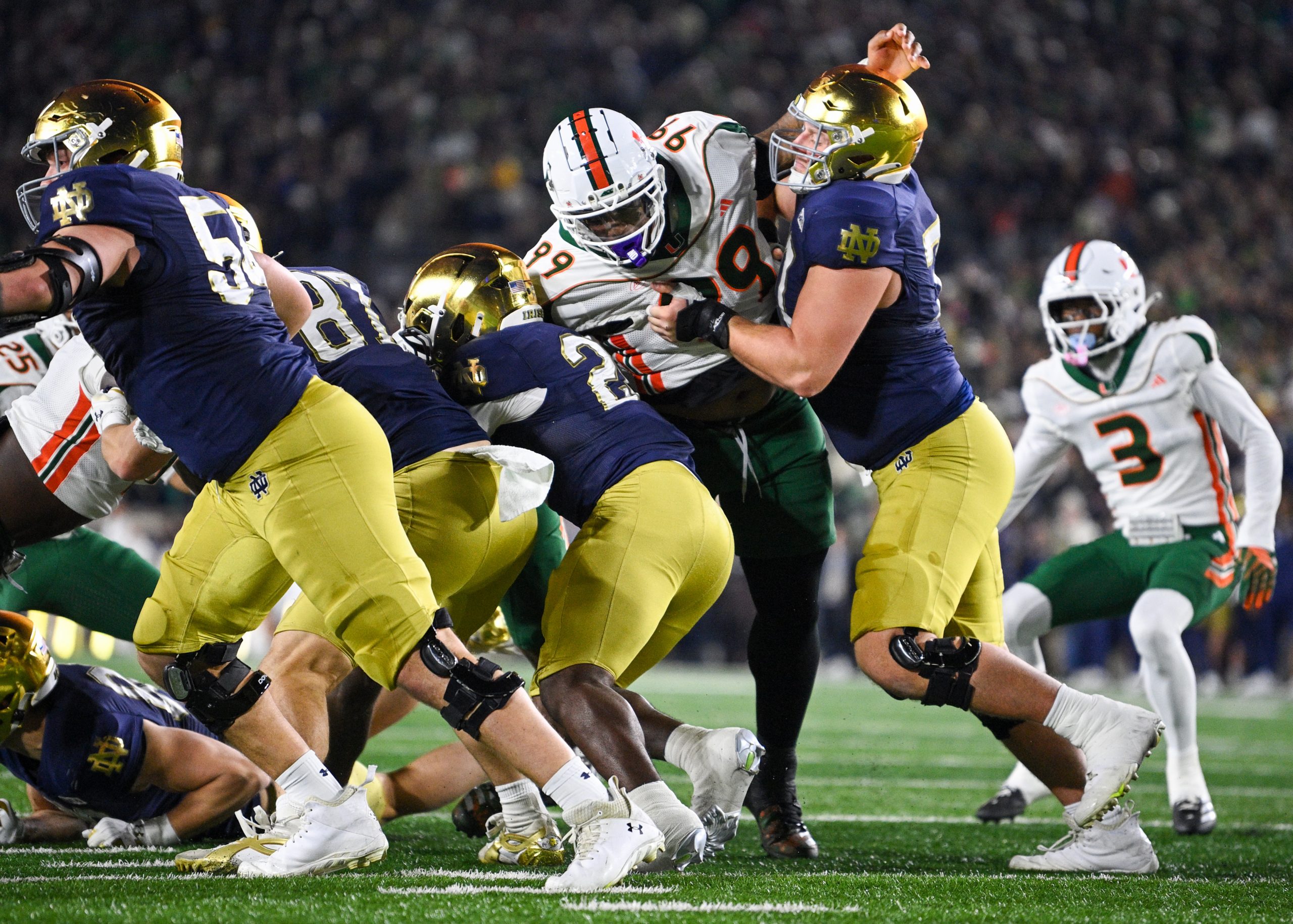
In a 24-team format, those losses would not carry the same weight.
“We’re therefore lowering the stakes for about 30 extra games per year — featuring really good teams, no less,” ESPN writer Bill Connelly said. “We’re replacing that with higher stakes for lesser teams.”
Expansion does have its benefits. The biggest selling point is the opportunity to host more playoff games on campus. Under the new format, 16 of the 23 playoff games will be played at the higher-seeded team’s stadium, compared with four under the current format.
The first rounds of the 2024 and 2025 playoffs showed the atmosphere of home-field advantage that campus games can provide. More teams will also have a chance to compete for a national championship, keeping more fan bases invested late into the season.
But how many teams realistically have a chance to win a national championship?
In most seasons, there aren’t even 12 teams capable of winning it all, let alone 24. Expanding the field doesn’t create more championship-caliber teams, but rather puts what would be a bowl game under the CFP branding to generate artificial hype around a game between two mediocre teams.
“There’s not 24 teams in the country that can win a national championship,” former Alabama head coach Nick Saban said on the New Heights podcast. “It’s about the money.”
The financial incentives are hard to ignore. ESPN agreed to pay an additional $1.7 billion over five years for the expanded playoff, adding 12 games to its broadcast schedule. More games mean more television windows, more advertising opportunities and more postseason content to sell.
ESPN also holds media rights to the SEC, ACC and a significant portion of the Big 12. The network has a financial interest in the conference whose teams compete in the playoff.
College football is a business, but that doesn’t mean every financial decision is good for the sport. Expanding the postseason may create more games to broadcast, but it risks diminishing the regular season that makes those games matter.
This sport doesn’t need 24 teams to produce memorable moments or crown a deserving national champion. It needs to preserve what has made the sport special for generations.
Every Saturday should matter, and expanding the playoff puts that at risk.