


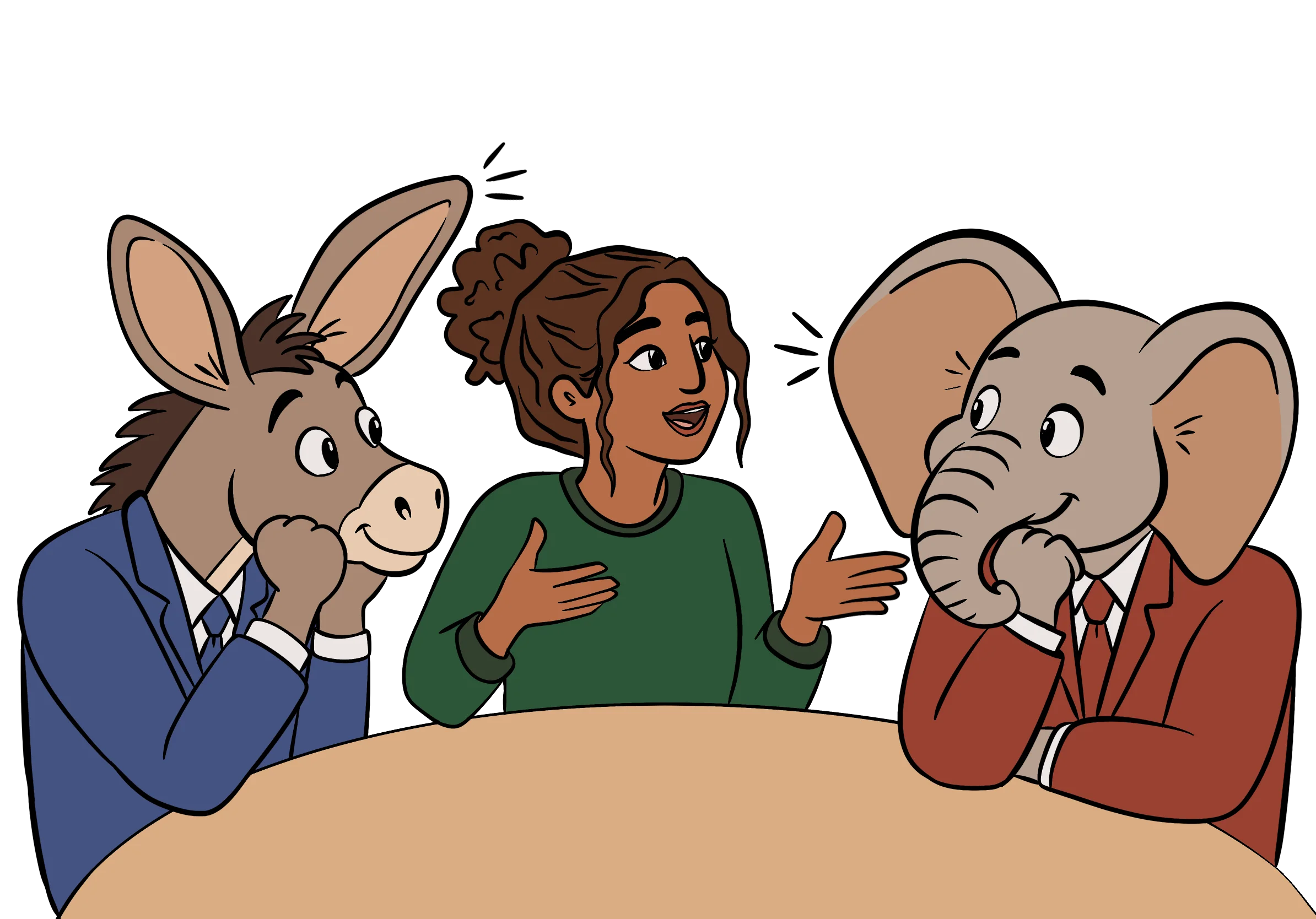
Every election seems to bring hope for one political party and fear for the other. Americans have grown so distrustful of opposing political beliefs that losing an election can create a sense of impending “doom,” as if the country is on the verge of falling apart.
One election does not determine America’s future. Political disagreement should not leave voters feeling hopeless.
The 2026 midterm elections brought renewed optimism to Democrats, particularly among young voters. 66% of college-enrolled young voters supported Democratic candidates, compared with 29% who voted Republican, according to Tufts University’s Center for Information & Research on Civic Learning and Engagement.
But, this “blue wave” does not necessarily mean America is becoming more progressive.
When both sides view the opposition as a threat rather than a difference of opinion, elections become less about choosing leaders and more about fearing the consequences of losing.
Some young Democrats believe party leadership has failed to address urgent issues, pushing them toward more progressive candidates. Yet even within the Democratic Party, members disagree about how far left the party should move.
Republicans have used the rise of progressive politicians and members of the Democratic Socialists of America to warn voters about the country’s political direction. The fear that America will suddenly be “run by socialists” shows how easily political disagreements turn into worst-case scenarios.
The general distrust also discourages political participation. Many young Americans question whether their voters matter, especially in states that consistently favor one party. Why participate if the outcome already seems decided?
But those voters miss the point: Political power is never permanent. Every two years, congressional elections give Americans another opportunity to influence the country’s direction. If voters dislike how their representatives govern, they can vote for someone else.
But meaningful participation requires more than showing up at the polls.
65% of Gen Z teenagers share their parents’ political affiliation, according to a 2024 Public Religion Research Institute study. Social media also shapes political opinions, often encouraging emotional reactions without explaining the full context behind political issues.
Although family and social media can introduce students to politics, neither should replace independent research. Students should question inherited beliefs, understand candidates’ policies and engage in conversations with people who disagree with them.
After all, we cannot expect politicians to work across party lines if we refuse to do the same.
Young voters argue that neither party delivers meaningful change, making elections feel like an endless cycle of empty promises. A 2026 Harvard Youth Poll found that only 26% of young Americans approved of congressional Democrats, compared to 25% for Republicans. This frustration with both parties is understandable, but political progress rarely happens overnight.
The country’s problems did not emerge after one election, and they will not disappear after the next election. Losing an election does not mean losing the opportunity to shape the country’s future.
Americans should look beyond red and blue.
The United States may not be as hopeless as our generation believes, but we’ll never know if we don’t start questioning, start listening and stop allowing political division to speak louder than our own beliefs.