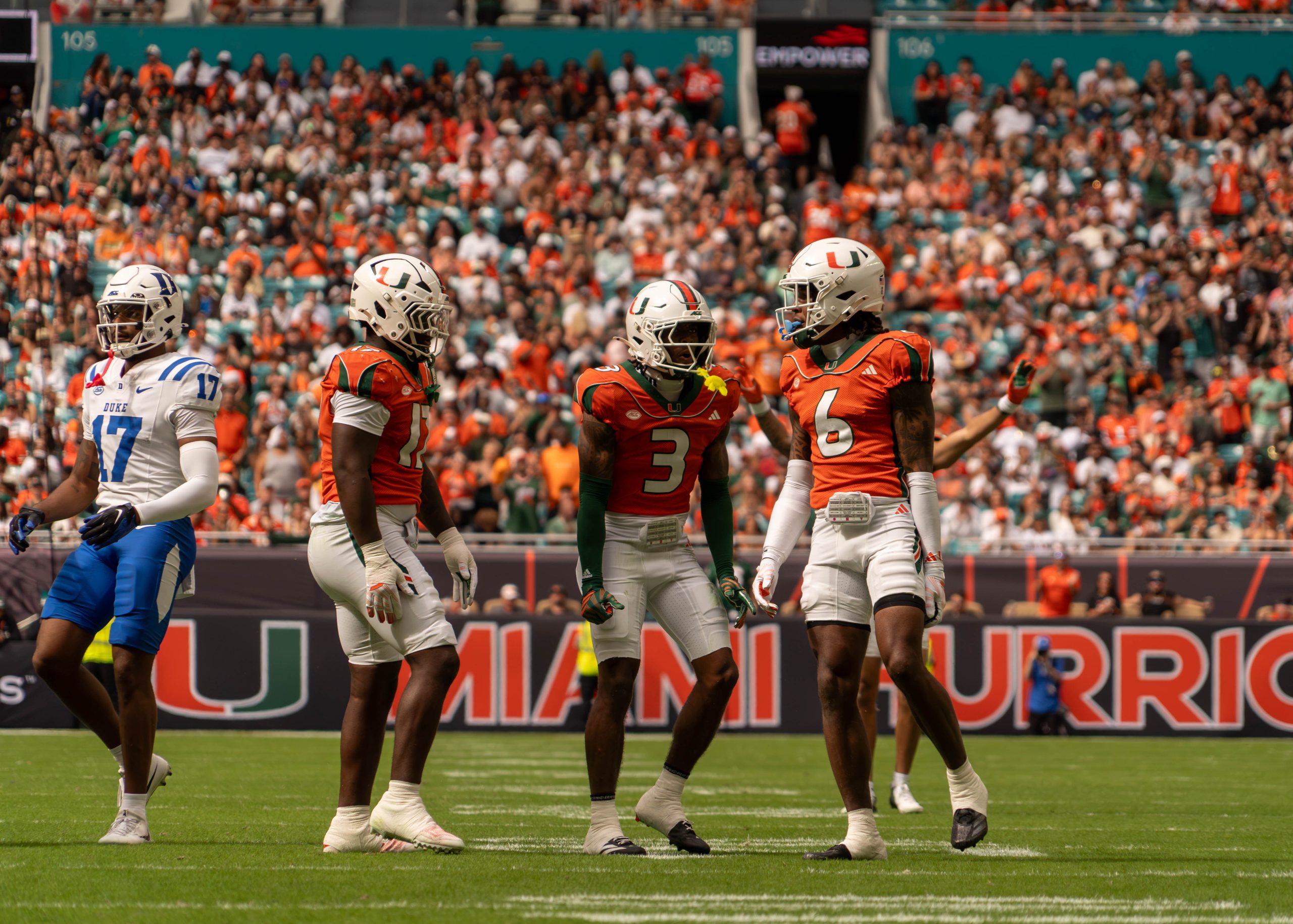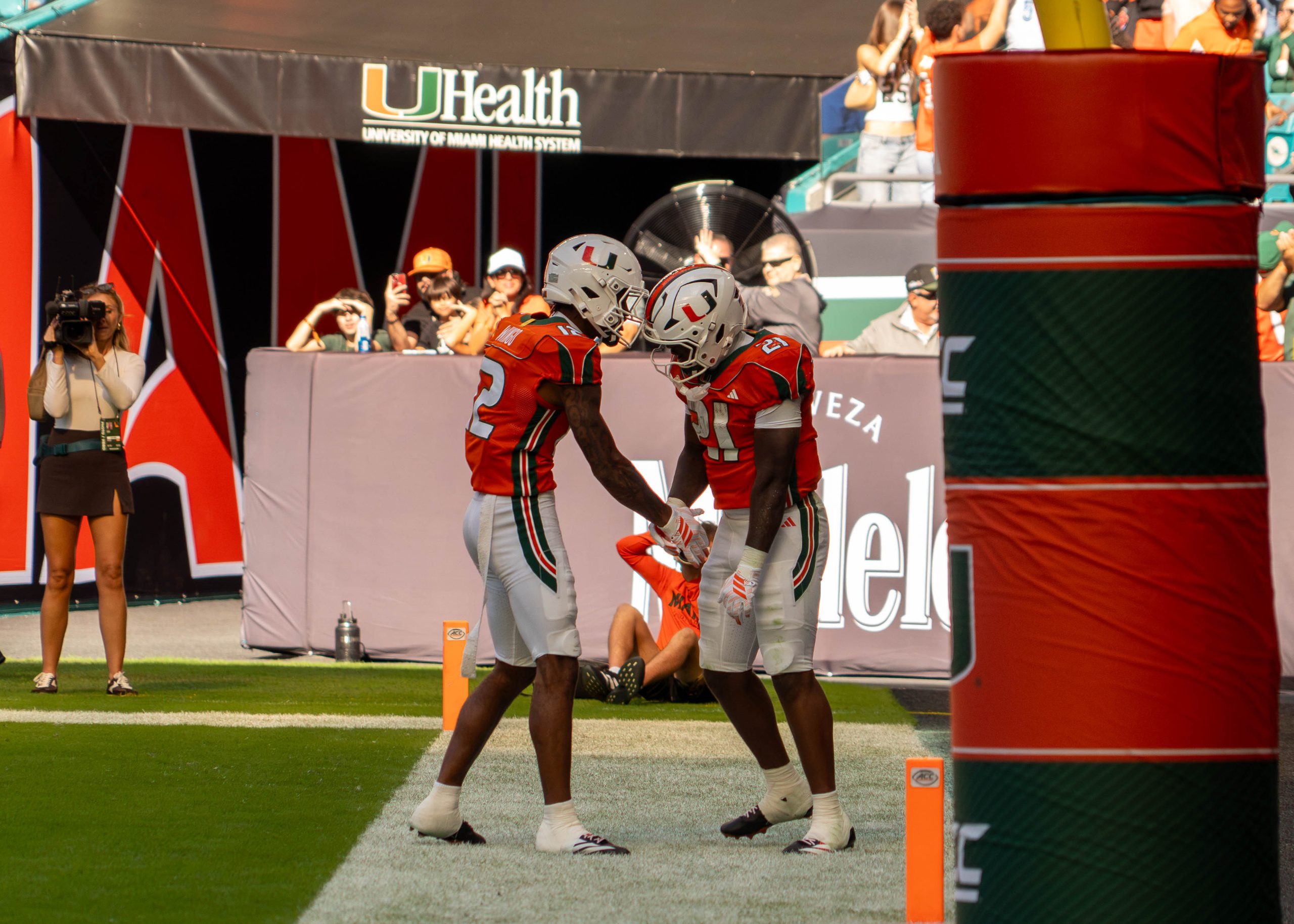
No 7. Miami bounced back from its loss to Notre Dame with a 36-25 Homecoming victory over Duke, improving to 9-1 and remaining undefeated in ACC play.
Despite piling up 532 yards of offense, the Canes still have areas to address, from another slow start to missed scoring opportunities and trouble containing Duke’s explosive playmakers.
Javian Mallory is becoming more than a backup
Injuries have tested Miami’s running back depth throughout the season, but they have also opened the door for younger players to make an impact.
That opportunity became even more important Saturday when starting running back Mark Fletcher Jr. suffered an injury in the first half and did not return.
But freshman Javian Mallory proved Miami’s ground game could still deliver.
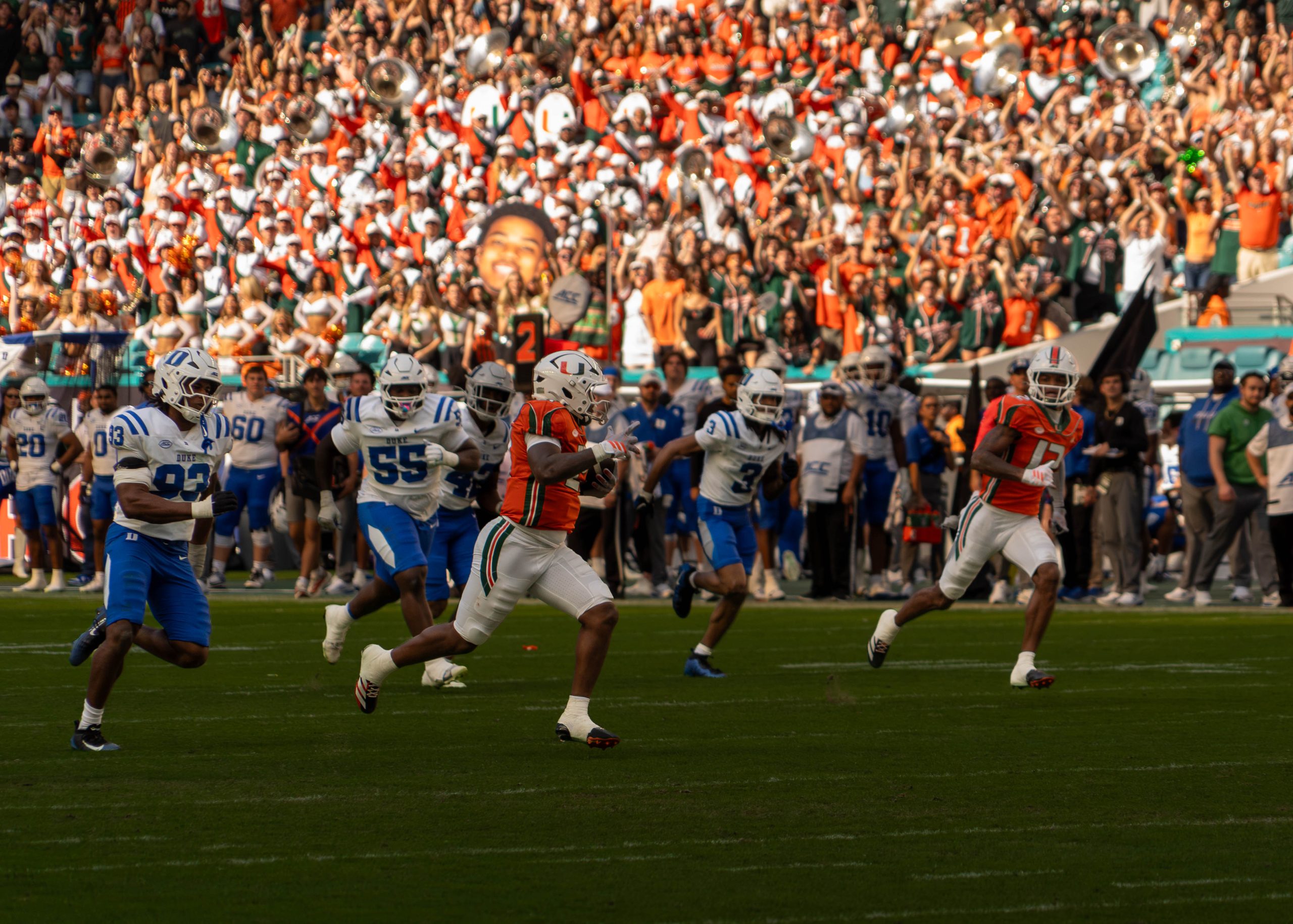
The true freshman finished with 150 yards from scrimmage and three touchdowns, rushing for 71 yards and two scores while adding 79 receiving yards.
His biggest play came in the third quarter, when he turned a screen pass from quarterback Darian Mensah into a 63-yard touchdown, extending Miami’s lead to 22-10.
And when Duke cut the deficit to five points, Mallory answered with two fourth-quarter rushing touchdowns, including a 39-yard run that helped ice the game for the Canes.
Mallory’s role has steadily grown throughout the season as injuries have created opportunities in Miami’s backfield.
Rather than simply filling in for injured teammates, Mallory has developed into a player Miami can turn to for explosive plays in crucial moments averaging 6.9 yards a carry.
Cooper Barkate is stepping up in Malachi Toney’s absence
For the second consecutive game, Miami took the field without one of its biggest offensive weapons, wide receiver Malachi Toney.
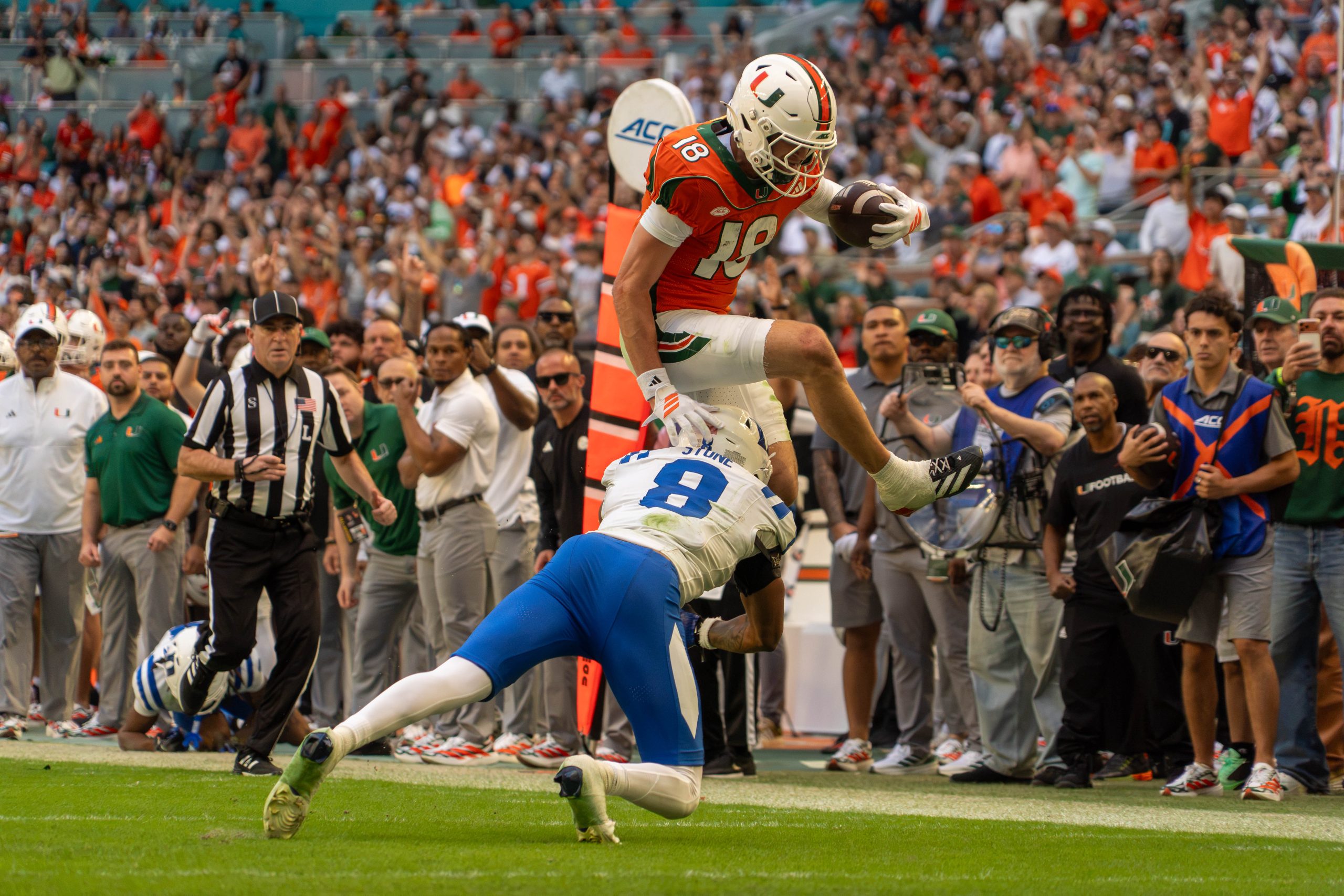
The redshirt senior led the Hurricanes again with eight receptions for 134 yards.
Barkate’s 40-yard reception helped set up Fletcher’s touchdown in the second quarter. He also caught three passes for 43 yards during Miami’s crucial fourth-quarter touchdown drive, helping the Canes extend their lead to 29-17.
The performance carried added significance for Barkate and Mensah, who were facing their former team. The two previously played together at Duke before transferring to Miami, where Barkate notched 1,106 yards last season.
That familiarity has helped Miami maintain its passing production even with Toney sidelined.
Barkate knew Miami would have to be patient against a Duke defense that forced offenses to put together longer, sustained drives.
“We know their defense and their ‘bend don’t break’ type of defense,” Barkate said. “They like to play outside leverage and eliminate all explosive plays.”
Barkate’s emergence gives Mensah another reliable target while Toney remains sidelined.
Miami’s offense round its rhythm, but familiar issues remain
For the second straight week, Miami struggled to establish an offensive rhythm early.
The Canes punted on their first two possessions and were held scoreless in the opening quarter. Penalties only made matters worse, with Miami committing 10 for 67 yards, compared with Duke’s four for 18.
“Early on, we had a lot of self-inflicted wounds,” head coach Mario Cristobal said after the game. “Penalties putting us behind and off schedule.”
Although Miami eventually found success moving the ball, finishing with 532 yards of total offense, converting those yards into touchdowns remained a challenge.
The Hurricanes scored on all four of their red-zone trips, but only two ended in touchdowns.
Late in the second quarter, Miami reached Duke’s 8-yard line before settling for a 26-yard field goal. Then, on the opening possession of the second half, the Canes advanced to the 6-yard line but again came away with just three points.
The struggles were reminiscent of last week’s loss to Notre Dame, when Miami reached the 1-yard line in the second quarter but failed to score a touchdown on three consecutive plays, settling for a 19-yard field goal.
Against Duke, the Hurricanes again struggled to finish drives near the goal line, raising concerns about their ability to capitalize on scoring opportunities against tougher opponents.
But unlike against the Fighting Irish, Miami eventually found a way to pull away.
After their first two punts, the Canes scored on seven consecutive possessions, including four touchdowns.
Cristobal credited the offensive line and running game for helping the Hurricanes take control late.
“We thought that we found ourselves getting some better push, getting downhill, and then our guys started breaking some big runs and taking over the game,” he said.
Miami showed it can make adjustments and wear down an opponent, but relying on late-game execution to overcome slow starts remains risky.
Ultimately, Miami got what it needed Saturday: a bounce-back win that kept its undefeated ACC record intact.
With Virginia Tech next on the schedule and Miami’s postseason aspirations still alive, the Hurricanes will need to build on their late-game execution rather than depend on it to overcome early mistakes.