


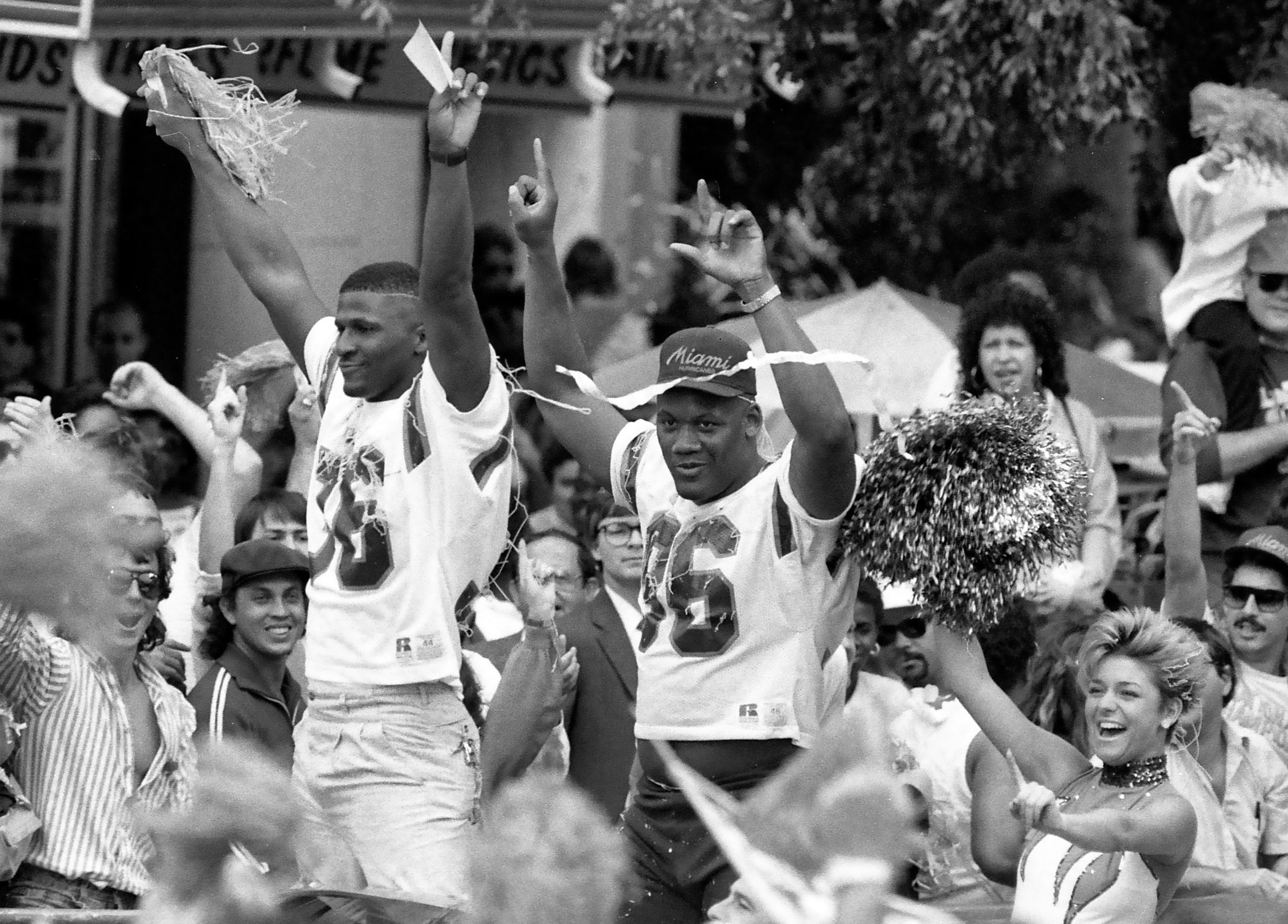
The ghosts of 1988 await Miami in South Bend.
The last time Miami was No. 1 — and played Notre Dame when it was No. 4 — the Hurricanes lost in a heartbreaking 31-30 upset on Oct. 15, 1988.
With just over seven minutes remaining in the fourth quarter, Miami quarterback Steve Walsh found running back Cleveland Gary, who lunged toward the goal line.
What would follow would be one of the most controversial rulings for Miami football — and one of its fans’ darkest days — further fueling a rivalry almost vampiric in its vitality and longevity.
Officials ruled the play a fumble, awarding Notre Dame possession at its own 1-yard line. But whether Gary had already crossed the goal line — or was down before the ball came loose — remains a rough point of contention nearly four decades later.
Yet, even facing this hurdle, the Hurricanes weren’t finished fighting.
With 45 seconds on the clock, as the Canes trailed the Fighting Irish 31-24, Miami quarterback Steve Walsh threw a 10-yard touchdown pass to wide receiver Andre Brown, bringing the score to tight 31-30. Head Coach Jimmy Johnson opted for his offensive cavalry to go for a two-point conversion to edge out the Fighting Irish.
Off the snap, Walsh looked for Leonard Conley, but the ball was swatted out of his hands by Notre Dame safety Pat Terrell.
The pass fell incomplete, preserving Notre Dame’s one-point advantage and sealing Miami’s fate.
And the Canes left South Bend with their heads hanging low.
That was 38 years ago.
On Nov. 7, the Hurricanes, now freshly anointed and topping the summit of college football, have a chance to rewrite history — and defend their place as the best team in the country.
Notre Dame, just as it did nearly four decades ago, likely wants to cut them down to a more digestible size.
And if history is any indication, both teams have their work cut out for them.
In 1988, Miami arrived in South Bend undefeated, riding a 36-game regular-season winning streak and having won 20 consecutive road contests.
Despite outgaining Notre Dame 481-331 in total offensive yards, the Hurricanes committed seven turnovers, allowing the Fighting Irish to capitalize on mistakes that ultimately decided the game.
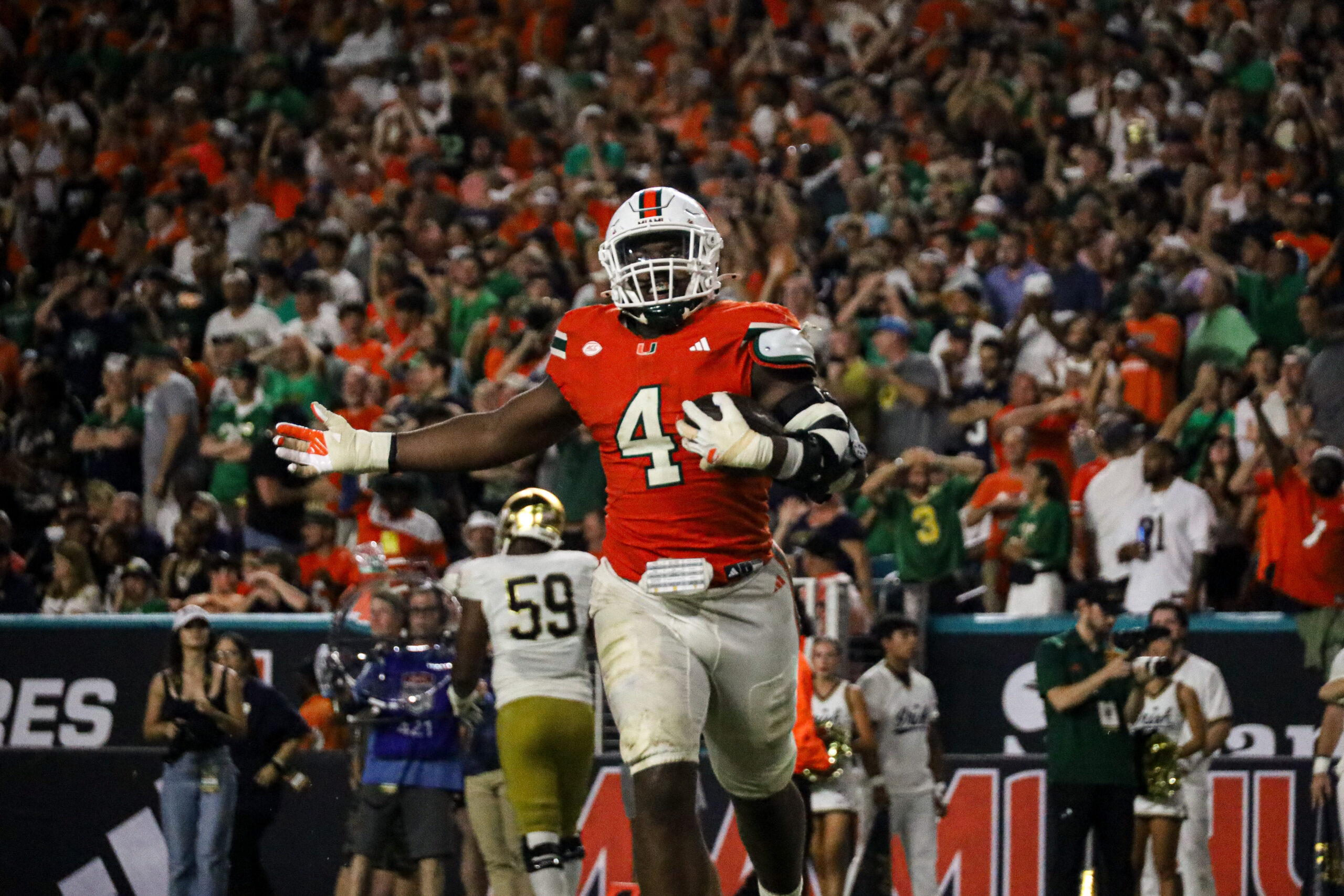
Now, Miami returns with an unblemished 8-0 record and the nation’s highest-scoring offense, averaging 47.6 points and 534.9 yards per contest.
The Hurricanes rank fourth nationally in passing offense, averaging 332.4 yards through the air. They also convert 54.5% of their third-down opportunities, ranking second nationally — a potential advantage against a Notre Dame defense allowing opponents to convert 38.4% of theirs.
But as Miami learned in 1988, offensive firepower doesn’t always guarantee victory.
Notre Dame, however, has built its own case as one of college football’s most formidable teams.
This time, the Fighting Irish enter 7-1, boasting the nation’s top-ranked defense in total yards allowed, surrendering just 236.1 yards and 13.4 points per game.
And perhaps most ominously for Miami, Notre Dame ranks third nationally in turnover margin at plus-14 — a statistic that echoes the Hurricanes’ downfall nearly four decades ago.
The matchup presents a particularly daunting challenge for Miami’s passing attack. While the Hurricanes average more than 330 yards through the air, Notre Dame allows just 150.8 passing yards per contest, ranking sixth nationally.
But the Fighting Irish have more recent history to avenge, too.
In last season’s opener, then-No. 10 Miami stunned No. 6 Notre Dame in a 27-24 thriller at Hard Rock Stadium.
The Hurricanes held a 21-7 lead entering the fourth quarter before Notre Dame mounted a comeback, tying the game with just over three minutes remaining.
But Miami kicker Carter Davis had other plans.
His 47-yard field goal with 1:04 remaining restored Miami’s lead, and the Hurricanes’ defense held firm to seal the victory.
Now, Notre Dame has an opportunity to return the favor on its home turf.
And while the Hurricanes’ offense has made a habit of overwhelming opponents, the Fighting Irish have made one of suffocating them.
A lot has changed since 1988, though the Catholics versus Convicts rivalry still rings true.
Kickoff is set for 7:30 p.m. in South Bend.
And if one thing is certain, regardless of who comes out on top, no love will be lost when these powerhouses go head to head.
After all, some scores take decades to settle.
Editor’s note: For an opposing perspective on this topic, read this article by The Observer, the student newspaper of Notre Dame.