


The Protect College Sports Act will head to the House of Representatives after the 2026 midterm elections after passing in the U.S. Senate on Sept. 28.
The PCSA is a bipartisan bill focused on controversial issues in collegiate athletics like NIL, the transfer portal and federal protections for student-athletes. So far, it has generated plenty of debate on its content and purpose.
When the House returns from recess on Nov. 9, students of universities potentially most impacted — like the University of Miami — should know the most important aspects and issues the bill will address.
Employment and eligibility
Under the current bill, student-athletes can compete for five seasons over five years and can only transfer once without losing eligibility.
The PSCA remains intentionally neutral on whether college athletes are deemed employees, a clause that was necessary for the bill to pass the Senate.
Both sides of the aisle disagree on this topic, with PCSA Co-Author Senator Maria Cantwell (D-Wash.) remaining adamant that the bill cannot shut the door on student-athletes being considered university employees.
In past meetings, some House Republicans have refused to sign the bill unless it bans college students from being considered employees. One of those Republicans, House Majority Leader Steve Scalise, opposed the PCSA because it didn’t explicitly say college athletes could not be employees of their respective schools.
If student-athletes were classified as employees, college sports would change fundamentally, granting them the right to form labor unions and access to minimum wage, overtime pay and other employee benefits.
On the other hand, making student athletes employees could also force universities to cut non-revenue sports — which have already taken a hit due to NIL — to manage budgets and comply with Title IX regulations. Although the PCSA requires universities to allocate money to non-revenue sports, questions remain about whether those protections would be enough to prevent further cuts.
Conference realignment
The PCSA would also increase the cap for Power 4 conferences — ACC, SEC, Big Ten and Big 12 — to 20 teams.
The original bill capped the number at 19, but schools in Florida and the Carolinas lobbied their senators to raise the cap.
“Increasing the conference cap to 20 was important to our Florida universities and their programs,” Florida Senator Ashley Moody said.
If a school chooses to leave a conference, universities are forced to compete as an independent for at least three years before joining a different Power 4 conference. The three-year waiting period expires six years after the PCSA passes.
The provision is intended to protect conferences like the ACC from the same fate the Pac-12 suffered when UCLA, USC, Oregon and Washington announced they were leaving for the Big Ten in 2023.
Their departures triggered a mass exodus of the remaining schools, and the Pac-12 never recovered fully from losing 10 of its 12 members, destroying its more than 100-year history as the “conference of champions.”
The ACC now risks repeating history.

Miami’s stance
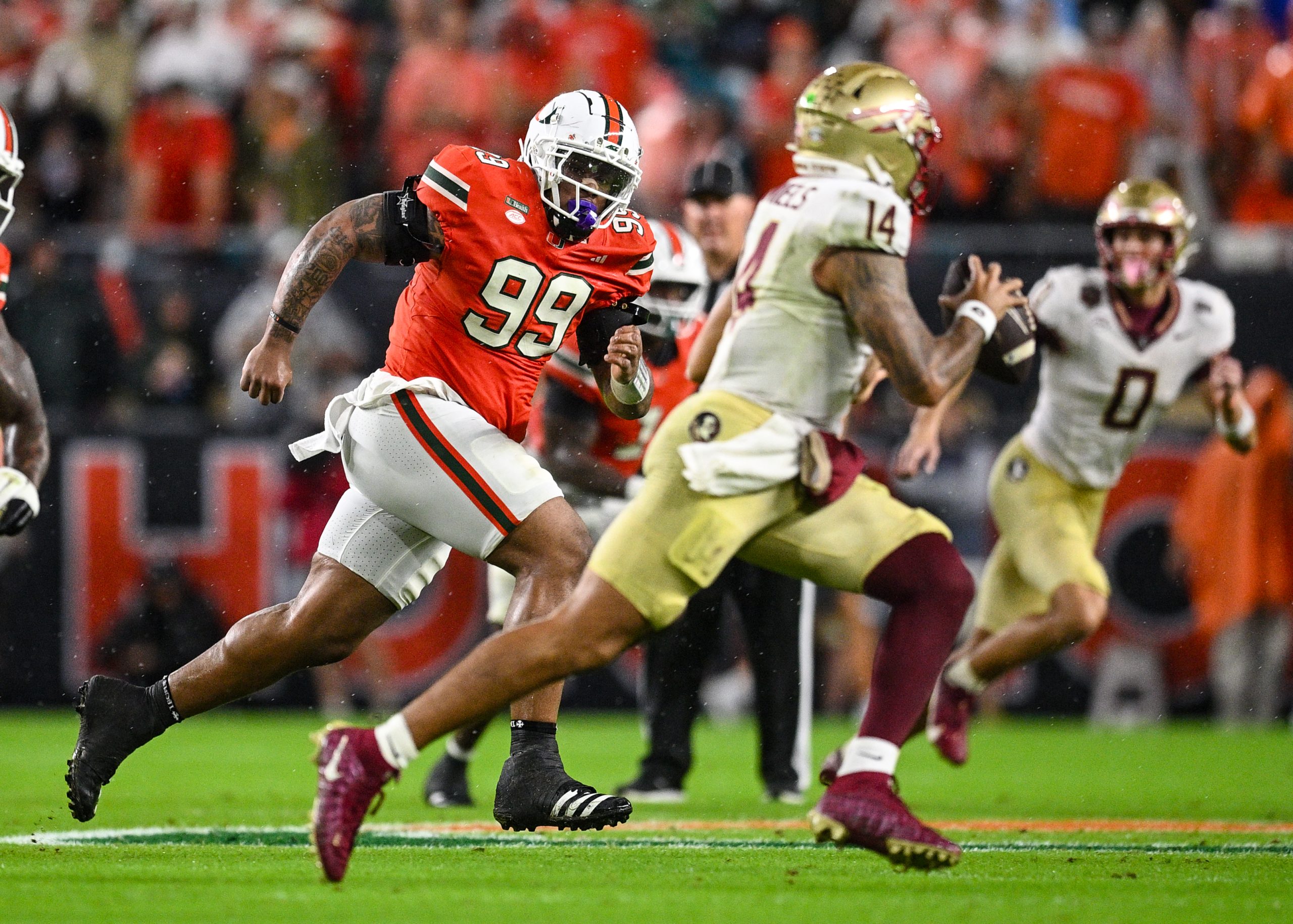
Schools like Miami, Florida State, Clemson and North Carolina are chomping at the bit to leave the conference and are looking to the PSCA for that opportunity.
“You cannot lock us into a conference,” Miami President Joe Echevarria said in an interview with Yahoo Sports.
Echevarria and other ACC schools are looking to leave the conference over its 20-year, $4.8 billion media rights deal with ESPN, seeking more lucrative contracts like those of the Big Ten and SEC.
According to Echeverria, the Big Ten and SEC distribute $25 million more annually to their members than the ACC, and that number will only increase when the two conferences renegotiate their media rights deals in 2030.
On Oct. 2, university leaders from Miami, Florida State, Clemson and North Carolina sent a joint letter to House Speaker Mike Johnson asking to revise the bill to remove the three-year waiting period altogether and to increase the conference cap to 22 teams.
While joining the Big Ten or SEC seems to be the goal, these schools could also remain independent if they leave the ACC. Echevarria floated the idea and didn’t rule it out.
“If we have to go independent, I like our chances because we are a national brand,” he said. “I wouldn’t like to do that because scheduling [other sports] is really tough.”
While the House fights over the provisions in the Protect College Sports Act, it’s also racing against time.
The House has 20 legislative days left, with Dec. 17 as the last day in session until a new Congress enters in January.
If the PCSA does not pass by the new year, lawmakers will likely have to restart the legislative process, delaying the bill even further.
The House of Representatives will determine what the future of college sports could look like for the foreseeable future, and it will begin deliberations on Nov. 9.
