


Although ranked third in College Football rankings, The University of Miami is ranked one of the lowest schools in free expression. With harsh limits of free speech, the last time University of Miami had a large-scale political event on campus was 10 years ago.
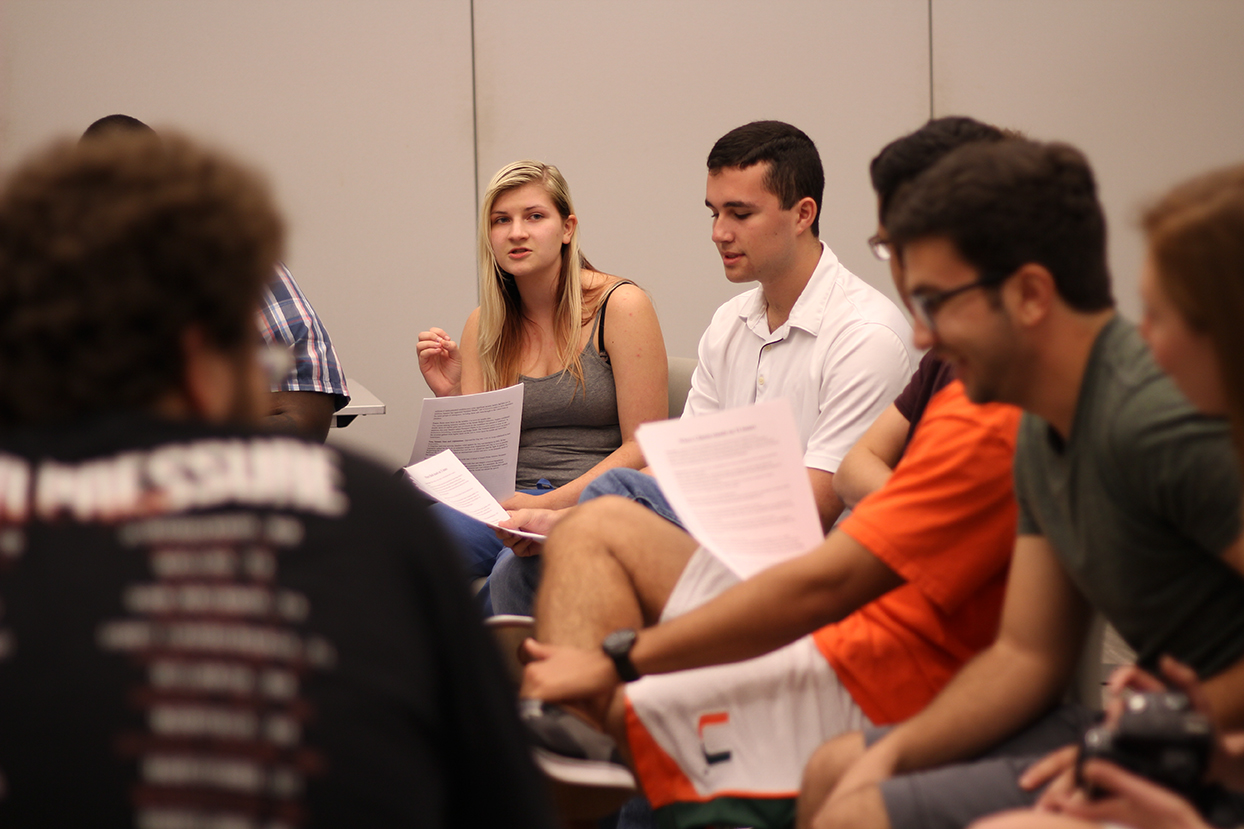
Now, students are taking it upon themselves to reignite that political discourse. On October 14, the Hanley Democracy Center and UM Debate will be hosting a student Midterm Debate featuring speakers from the UM College Republicans) and UDems.
While this is a good start, the University needs to start fostering these kinds of student discussions more. Over the past few years, the administration has gradually distanced the University from political expression, including closing election watch parties in 2024 and limiting protests on campus.
The school’s demonstration guidelines are lengthy: Four business-day pre-approval rules for demonstrations with a cap of a two hour demonstration, costly security fees and strict advertising standards.
These guidelines are a striking disappointment for any higher education establishment. However, UM used to be central to student voices. In 2016, UM hosted the national republican debate at the Watsco center. Julio Frenk, University of Miami’s president at the time, was in attendance.
“Democracy is more than an ideal — it is a rigorous and participatory exercise of our rights and duties,” Frenk said to the audience in 2016.
UM seems to have lost this rigor over the years.
Going back even further, it’s also hard to forget former President Donna Shalala, the namesake of our student center on campus. Before serving her time as president of UM, Shalala was a highly esteemed leader in politics. Shalala served as Secretary of Health and Human Services under President Bill Clinton for eight years, co-chairing the Commission on Care for Returning Wounded Warriors under President George W. Bush, and later serving in the U.S. House of Representatives.
Under Shalala’s administration, UM positioned itself at the center of American political life, hosting the 2004 Bush-Kerry presidential debate and the 2007 Univision candidate forums.
UM is not legally bound by first amendment obligations as a private university. But being allowed to restrict speech doesn’t mean a university should censor its students from speaking out about politics. University of Chicago is a private university, yet is at the top of free speech rankings.
“I believe debate is a crucial part of our Republican form of government, especially at a crucial part of life like college,” said Lazaro Chavez, President of UMCRS. “Our clubs are the futures of both parties, one way or another, and it’s important that something as simple as answering questions and debating be seen. It shows that dialogue can still happen … even in these divided times.”
It’s not only in universities where debate is crucial. In Florida elections, governor candidate David Jolly declined to debate his opponent, Byron Donalds. Meanwhile, incumbent Senator Ashley Moody also refuses to debate her opponent Angie Nixon on top of ducking interviews.
“Debate is an opportunity to learn about the issues that will inform how we vote in the midterm elections,” said Tess Goldberg, President of UDems. “Being an informed voter means understanding what’s at stake and thinking critically about the policies and priorities we’re voting for.”
The University’s censorship shouldn’t be affecting students’ capability of debating. In a debate in my Legal Environment of Business class, a classmate turned to me and said, “I’ve always learned to stay away from politics if I want friends.”
To be so far removed from the news and politics is a scary thought, especially for young Americans. It is time to stop shying away from politics.
“Students should come to this panel because it’s important to learn about the 2026 elections,” said Dr. Gregory Koger, political science professor and advisor for the Hanley Democracy Center. “But it’s also important to see civil political conversations in practice.”
By stepping up to host this midterm debate, students are reminding the administration of what UM used to stand for. Every student should show up Wednesday and prove that political discourse is no longer dead at the U.