


“The current formatting of episodic scripted productions is a direct response to the post-COVID attitude of networks and producers” said University of Miami documentary graduate student Eden Mcclave. “They only invest in what can be guaranteed to hold viewers’ attention.”
We’ve all waited two years for a new season of an eight-episode series, only to binge it all in one day and feel empty afterward, when the realization hits that it’ll be another two years before you reunite with your favorite characters.
“As a thoughtful viewer, this style provides a narrower window for me to connect with characters and emotionally or intellectually buy into the narrative,” said Mcclave.
The age of streaming services has taught younger audiences what they can handle. According to Decision Lab, a Vietnam-based statistical-data website, our attention spans are shorter. We prefer watching shows in one sitting and the episode has to move quickly.
“The average attention span of this generation is a meager eight seconds, four seconds shorter than Millennials before them,” the study said.
But at what point do we lose what makes television what it is? Have we already lost it?
Professor Betsy Mateu teaches TV writing at the University of Miami, but before that, she was a television literary agent for a large company in New York City.
“Movies center on stories, whereas television centers on characters,” she said. When you watch a movie, you expect a story to start and finish within a few hours.
With TV shows, however, Mateu says, “We invite these characters into our lives for 10 hours, 20 hours or perhaps more.”
Plots that steadily progress across the entire season, cliffhangers, slow-burn romances and true character development are a lost art when there aren’t enough episodes to create impact.
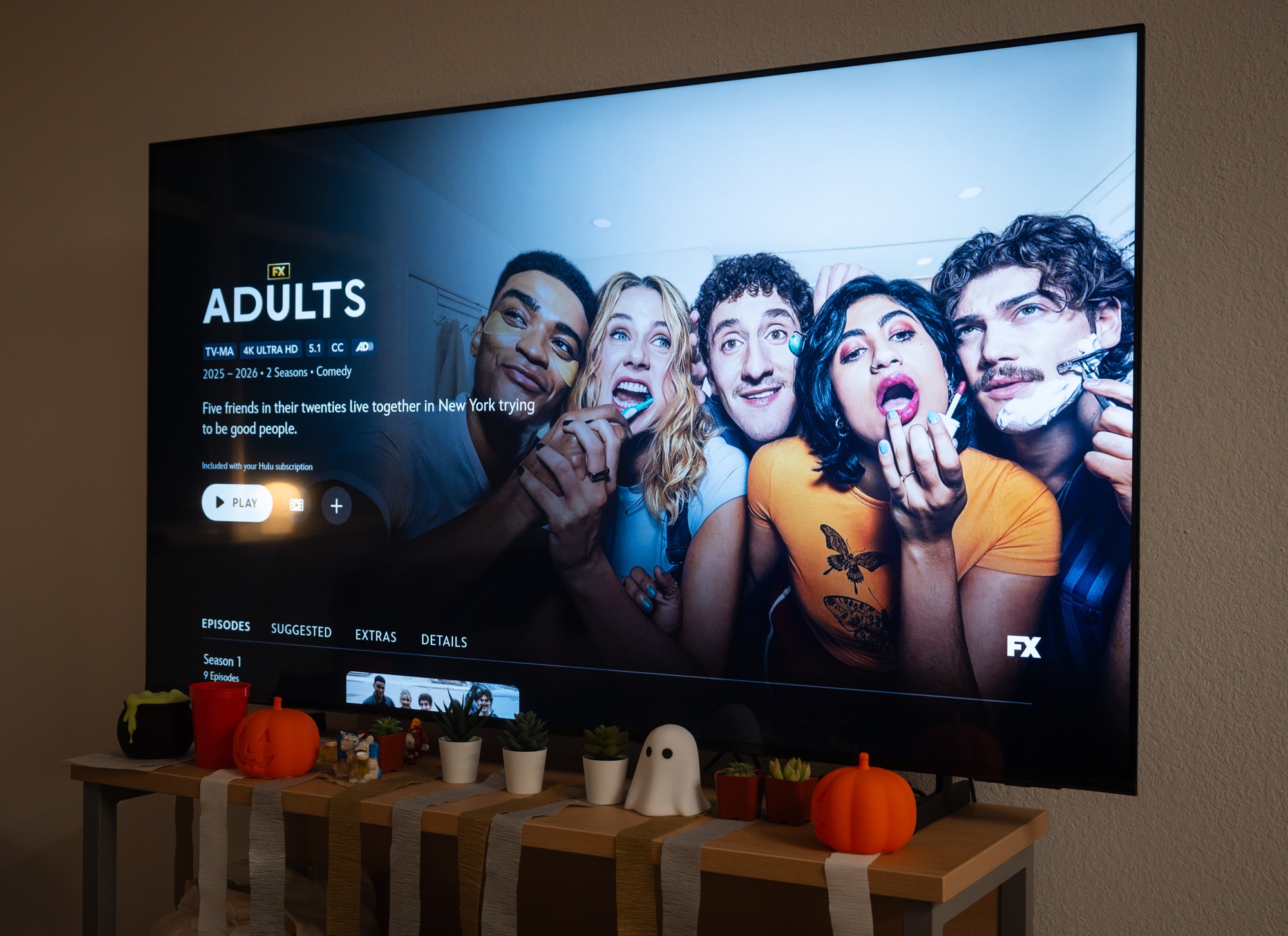
“Adults” is a show that many viewers, including UM sophomore Kalia Bell, agree would benefit from the “obsolete” format of television: 20-episode seasons and weekly releases — even if those releases are on streaming services. The recent release of its second season only solidified its fans’ opinions.
Bell believes that “intriguing characters are what make a sitcom so fun to watch, but it’s not as easy to root for characters with less time to evolve.”
It’s a comfort show, comparable to still-popular, ensemble-cast domestic sitcoms like “Friends” and “New Girl.” Though both aired on network TV before streaming became the standard, “Adults” is meant to be consumed the same way.
This issue became apparent this season, as many plots that could have taken multiple seasons or more episodes to develop rushed to conclusion. The episodes were 20 minutes long, and there were eight total. Fitting in single-episode storylines, character arcs and romantic developments was asking too much.
The entire season had a total runtime of two hours and 56 minutes. For comparison, “Friends,” the ensemble show of the previous generation, averaged nine hours per season.
Bell said, “I love the storylines in ‘Adults,’ but I hope the shorter seasons aren’t causing any plots or relationships to be rushed.”
“I do think audiences would respond similarly to how they did in the past.” She noted that “Adults” isn’t the only series applicable to this concern. “Streaming television has a lot of benefits, but I think a weekly show creates a sense of community and consistent engagement.”
Professor Mateu agreed with Bell.
“I prefer episodes that drop once a week. I love the anticipation of waiting,” she said. “I enjoy the buildup and the discussion that leads to a heightened excitement.”
In the week that follows an episode’s release, there’s time to discuss and theorize with other viewers. It’s a chance to absorb, analyze and, most importantly, sit with the content you’ve just consumed.
A show like “Abbott Elementary” airs once a week on ABC and releases on Disney Plus the next day. It’s proof that if audiences are given shows in the network TV format, they will tune in to something worth watching.
Since 57% of “Abbott Elementary’s total audience is attributed to streaming platform users, Gen Z are significant contributors to their viewership, despite a format that doesn’t cater to shorter attention spans.
If TV show creators stopped conforming to what they think will appeal to younger audiences and focused on telling their characters’ stories in the time needed, audiences of all ages would be watching.
“While quality over quantity can definitely be a good thing, I think 20 episode seasons are something audiences would love to see again,” said Bell.
Sometimes there’s quality in the quantity.