College sports are a uniquely American tradition, blending loyalty and passion unmatched by any other amateur sports league.
But now, college sports face the opposite of their original amateur concept: professionalization.
As the NIL market explodes and athletic programs modernize, fans wonder if the product they’re consuming still has that simple charm.
Professionalizing college sports doesn’t kill the essence of college sports, but lifts up the players and culture that makes the games enjoyable by introducing fair compensation and innovative practices.
These ongoing changes in the collegiate landscape are a correction of the path the NCAA and its member institutions were on.
One of the most glaring examples of college sports’ exploitative nature comes from USC running back Reggie Bush, the 2005 Heisman winner who was forced to forfeit his award after the NCAA discovered he received “impermissible benefits.”
Those “benefits” — travel expenses and a home funded by prospective agents — now seem comical in an era where players flaunt their university-bought cars and NIL-funded apartments.
While Bush was being punished, both USC and the NCAA continued to profit off his name and likeness, securing millions of dollars through jersey sales and licensing deals.
It took until 2021 to “green light” direct compensation, when the Supreme Court ruled the NCAA’s cap on student-athlete earnings violated antitrust laws in NCAA v. Alston.
This movement has only intensified in recent years, cemented by the 2025 House v. NCAA settlement, which ordered a $2.8 billion payment to former student-athletes.
This power shift has defined a new era of college sports.
Student-athletes now have a voice and true leverage for the product they create after decades of mistreatment, Bush’s Heisman award was even reinstated in 2024.
Darren Heitner, a top sports attorney and UM adjunct professor, has routinely been at the forefront in collegiate athlete representation. Recently, he represented Miami quarterback Darian Mensah in his efforts to leave Duke, as well as those attempting to regain college eligibility like Dae’Quan Wright.
“Athletes can finally get paid for the value they create,” Heitner said. “They have mobility and the product at the top of football and basketball is more talented than it has ever been.”
Former Hurricanes standout wide receiver Ahmmon Richards (2016-18) joked about his envy for the new era.
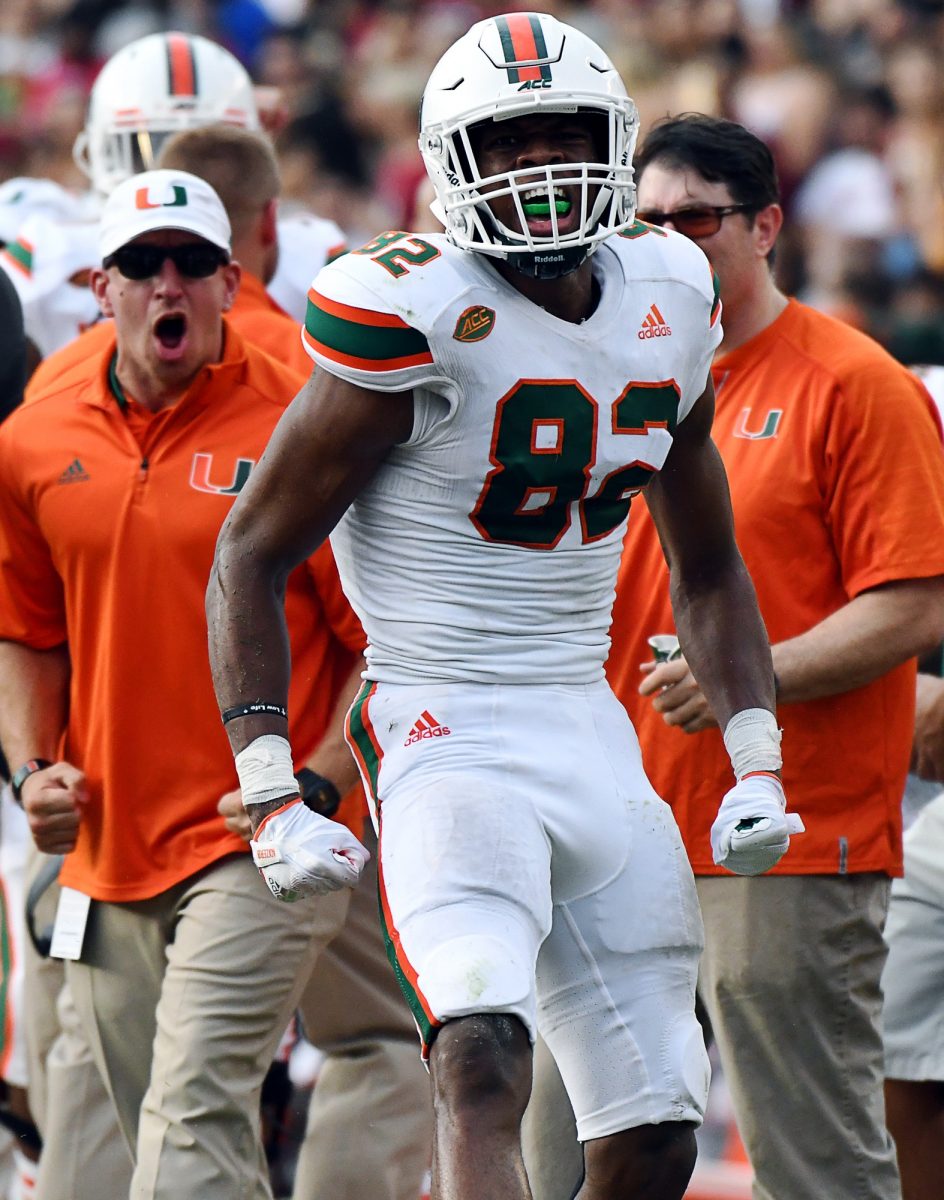
“It’s almost laughable, man,” Richards said. “I’m glad these guys are getting compensated but I did all that for a big ol’ $0.”
Before superstar wideout Malachi Toney smashed Miami’s record books last season, Richards held the program honors of most receptions and receiving yards as a freshman.
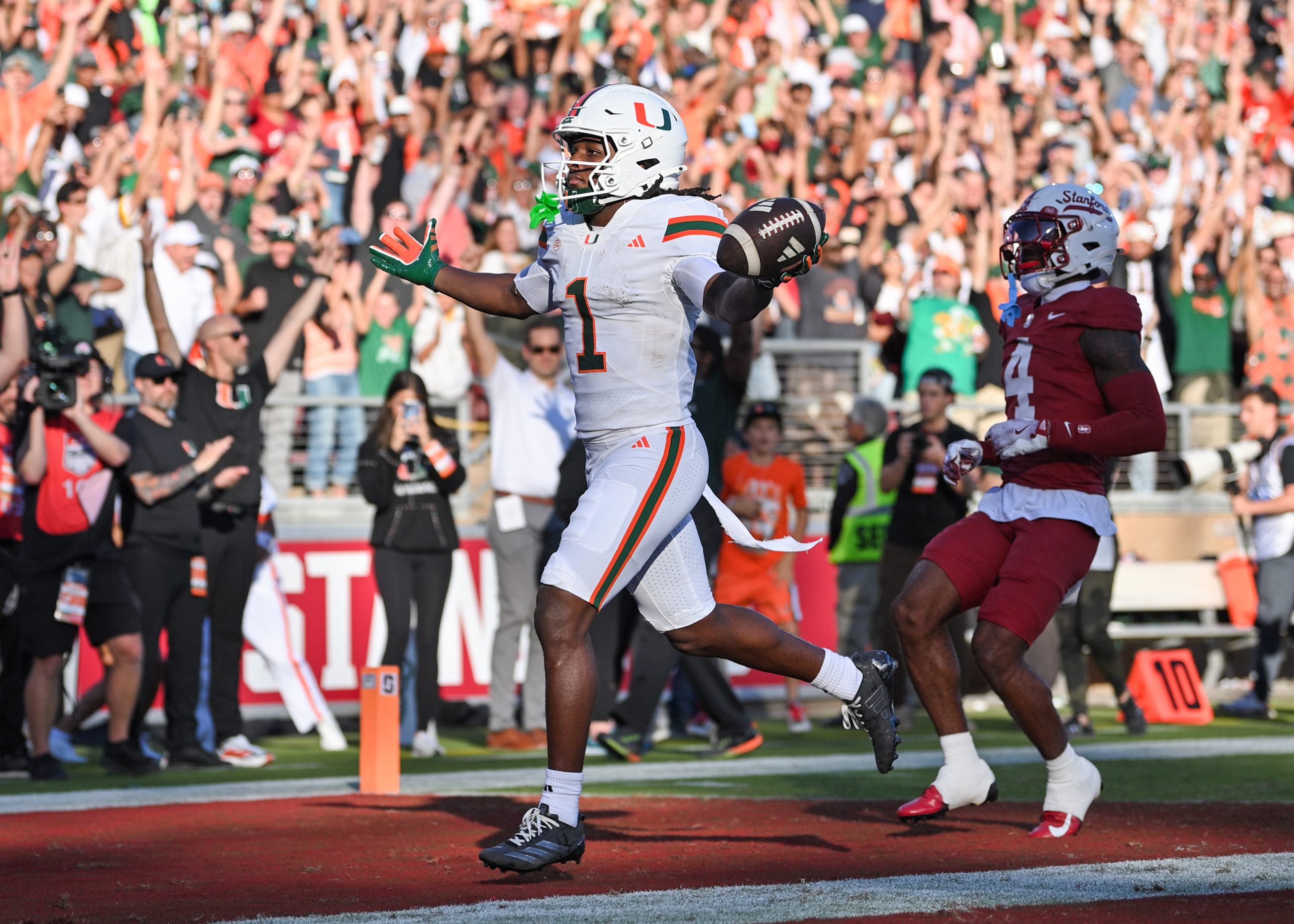
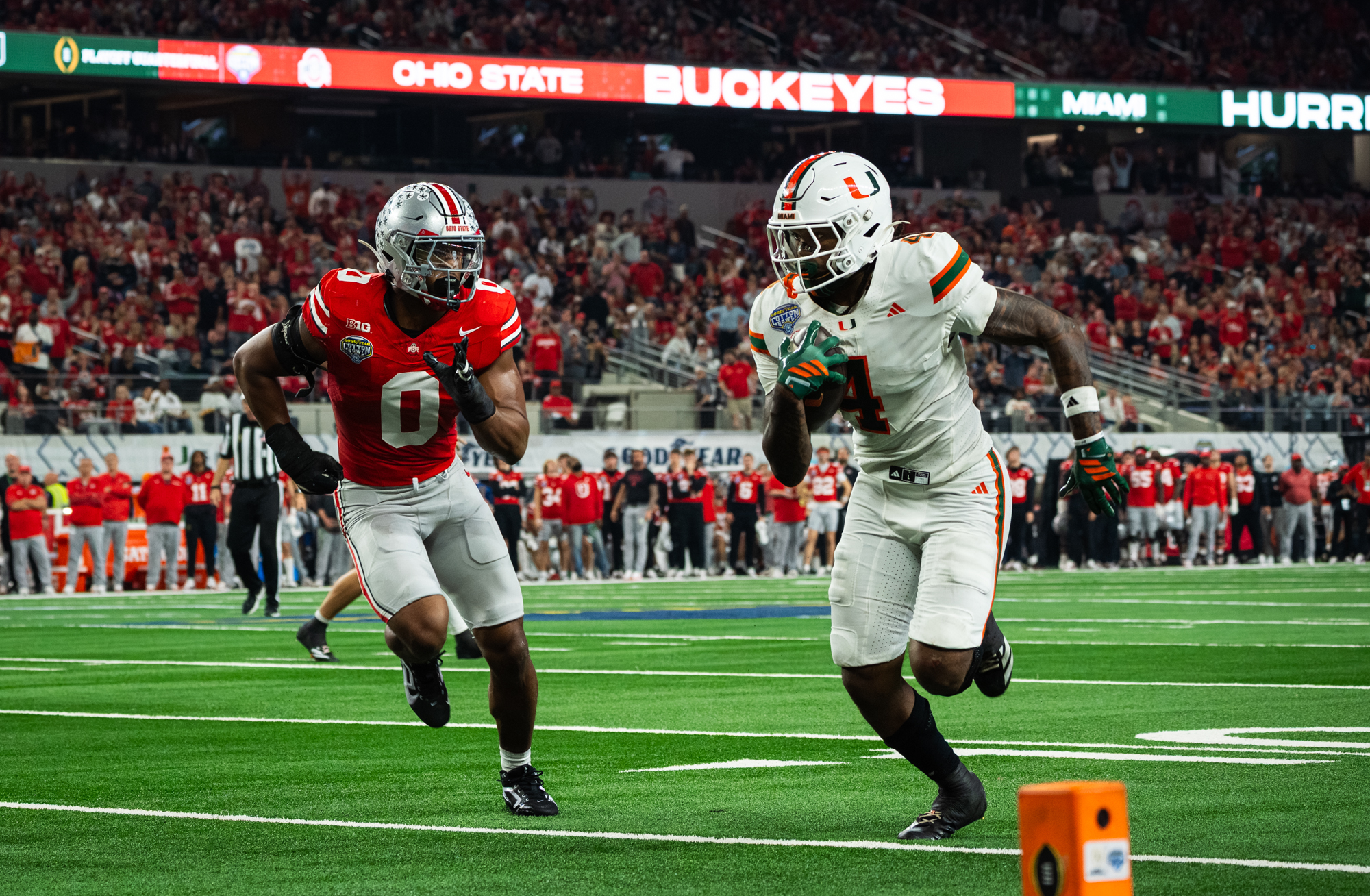
Comparatively, Toney’s NIL valuation currently exceeds $2 million, showcasing the rapid change collegiate sports has undergone.
Richards, who suffered a career-ending neck injury in 2018, notes how the “compensation era” would’ve assisted in the next stage of his life and now does so for current athletes.
While he landed on his feet as a business owner and media personality, he remarked that players in his era often used to “tread water” after their sports careers ended, but now have a direct path outside the playing field.
“With the financial advantage athletes have now, these guys can kickstart their ideas into business opportunities,” Richards said.
That’s what gets lost in the wild numbers being thrown around. At its core, NIL and professionalization isn’t just limited to dollar signs.
“Athletes used to be stuck with whatever school they signed with and whatever the NCAA allowed them to receive,” Heitner said. “Players can now monetize their own value and leave if a program does not deliver on playing time, development or compensation — that leverage is real.”
Former First Round Management agent and UM alumnus Peter Ariz connects that leverage to the competitiveness of recent collegiate seasons.
“I think that has opened up the possibilities for a lot of schools across the country to compete depending on what they choose to put their money into,” Ariz said.
This competitive balance showed up in the previous college football season with tighter margins of victory, more evenly distributed talent and a reshuffling of traditional powerhouses.
Heitner called the label of balance “generous,” but did concede the new NIL model can help athletic programs, particularly Olympic sports, which can now receive much-needed direct sponsorship.
“That money does fund facilities, staff and some Olympic and women’s sports that would otherwise be cut,” Heitner said.
And it’s not just the players and programs who benefit, fans see investments handed back to them.
UM Athletics Chief Revenue Officer Jesse Marks detailed how added funding and partnerships within athletic programs give universities the margins to give back to their supporters.
“With the evolution of NIL, we have new opportunities to create partnerships that go beyond traditional sponsorship assets and deliver measurable value for everyone involved,” Marks said.
This season, UM Athletics has launched “Canes for South Florida,” an innovative ticketing partnership with South Florida’s hardest workers including first responders and healthcare workers.
These philanthropic efforts are enabled by the sheer success many programs like Miami are seeing in this new era.
Just because collegiate sports have changed doesn’t mean their essence is lost.
Families still huddle around the TV, fans still storm the field after upsets and social media is still filled with rivals throwing insults at one another over the smallest issues.
The joy of watching aspiring athletes has always been the main pull of college sports — professionalization gives student-athletes their fair share of the operation and streamlines it.