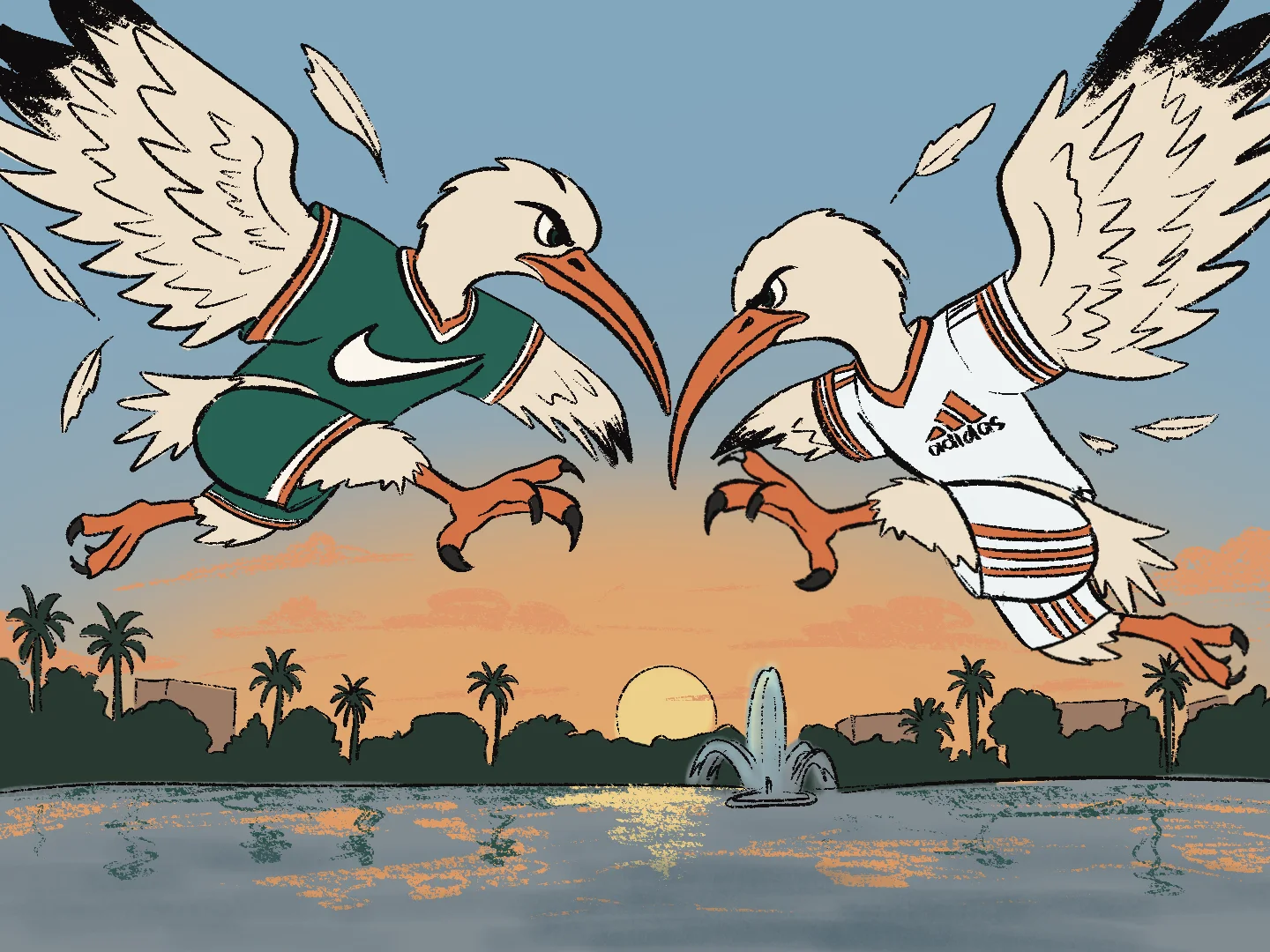
The University of Miami’s return to Nike as the program’s athletic apparel sponsor shocked the collegiate sports world last month.
The move will end a 12-year relationship with Adidas come July in favor of reigniting a partnership with Nike, signing a deal worth more than $200 million over 10 years.
Miami became the first university to sign an all-sport apparel deal with Nike, spending 28 years as partners before UM signed with Adidas in 2015.
While Miami and Nike represented a historic partnership during four national championships, Adidas was banking on the future. The Three Stripes brand invested in South Florida through endorsements with star talents and outfitting all 41 schools in Miami-Dade County.
Miami will reunite with Nike in 2027, but will the partnership be more beneficial than the one with Adidas?
The case for Nike
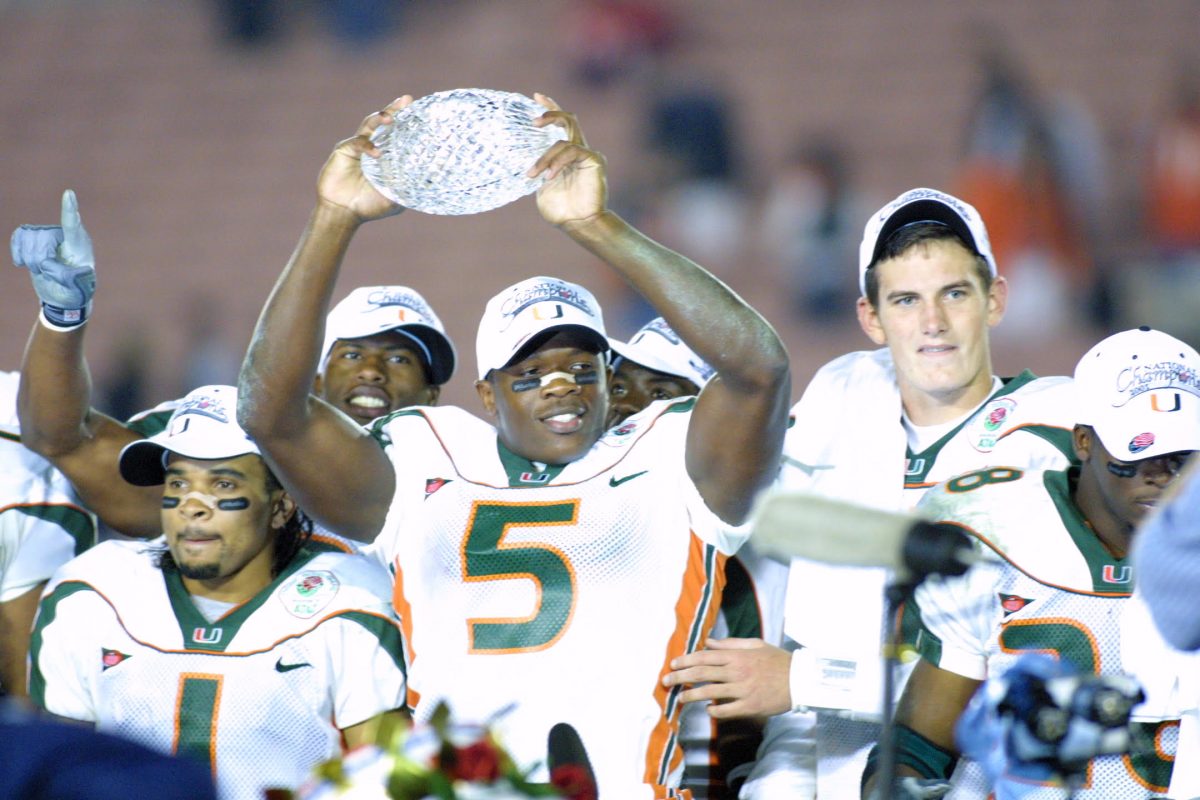
When fans think of the legacy of the U, they often point to Miami’s dominant periods in the late 1980s and early 2000s — both outfitted by Nike.
Miami Athletics is rising to national prominence once again and by signing this deal, it’s saying the U is back.
Now, UM’s era of dominance has returned and Nike gets to be the uniform behind it.
Putting Miami back in Nike gear ties the program’s historic past directly to its promising future.
“I am so excited,” said freshman Finn Frato-Sweeney. “Seeing the Nike logo makes me want to wear a jersey way more.”
But this deal isn’t just for the Canes. Nike needs Miami, too.
On Sept. 21, 2026, Nike was removed from the S&P 100 index for the first time in 18 years, and its stock is down nearly 50% compared to last year. The footwear giant knows change has to happen and has already locked in some of the biggest college football brands, including Texas and Ohio State, and now, Miami.
The NIL market is more competitive than ever, and Nike keeps Miami ahead of the game.
Roughly two-thirds of the deal will be given to the University in cash, and Nike will incorporate Miami into its innovative “Blue Ribbon Elite” program — which puts student-athletes in direct collaboration with the brand.
Nike is one of the greatest sports brands of all time, but it needs innovation. Attaching itself to these legendary programs is how it starts rebuilding.
Wearing the swoosh is like watching the glory days come back to life, which is why Nike brings more than just cash to the table.
It brings an identity that every fan can get behind.
The case for Adidas
To understand why a continuation with Adidas would’ve made more sense, you have to put it in perspective: Why did Miami leave Nike in 2015?
After years of poor on-field performances, Nike didn’t treat the program with the same respect it once did during its peak. The brand entered negotiations for several million less than competitors and didn’t outline a prioritized marketing or apparel plan.
So when Adidas offered a $80 million, 12-year deal that made UM the flagship program for the brand’s collegiate division, it was a no-brainer to make the switch.
Before Miami’s groundbreaking move, Nike held a monopoly on the collegiate apparel industry — a monopoly that began when UM signed the brand’s first all-sports apparel contract in 1987.
Other schools followed the path Miami set, with programs such as Penn State ending its 30-year relationship with Nike for a lucrative $300 million apparel deal with Adidas.
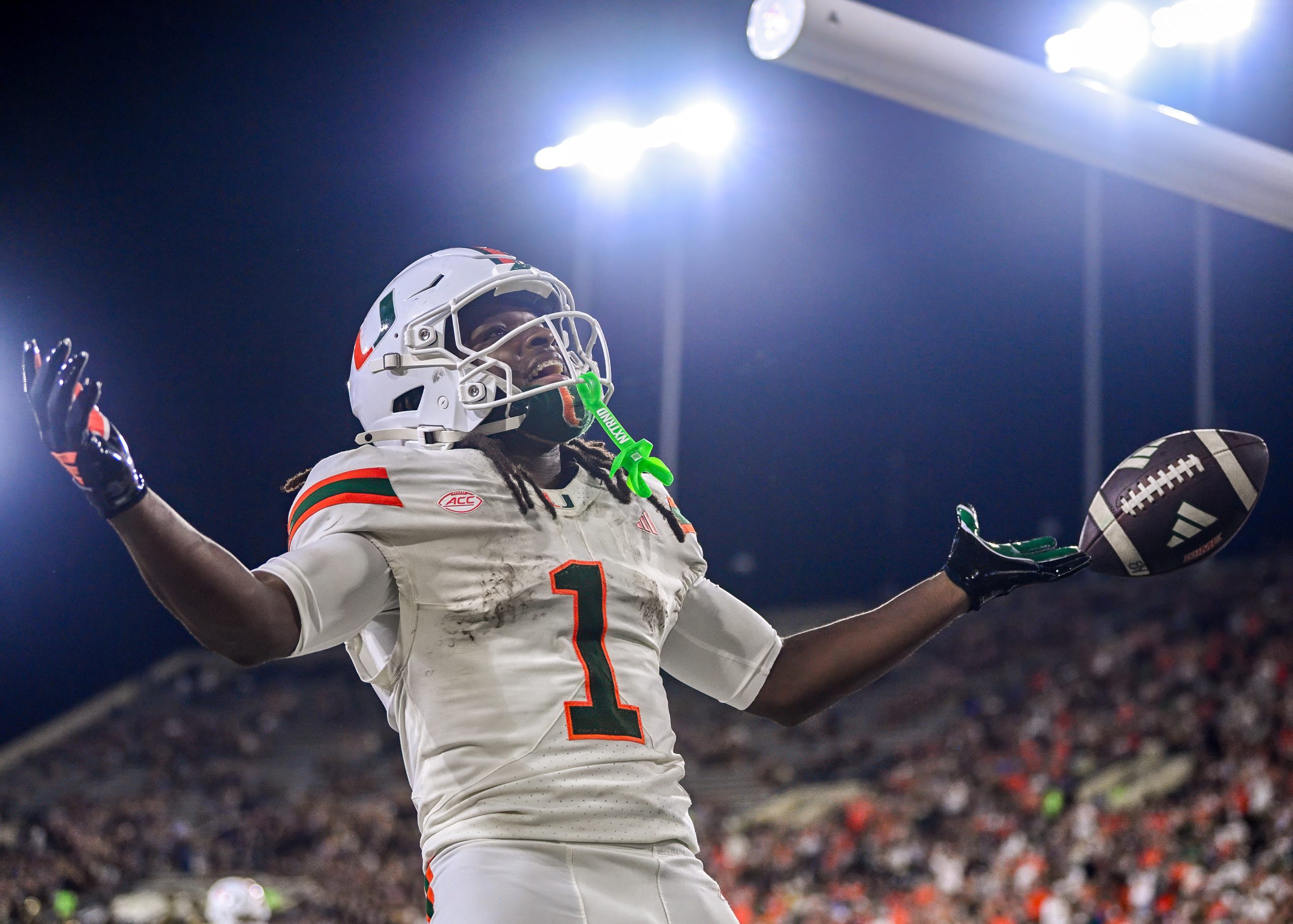
Although Adidas was unwilling to match Nike’s offer in this round of negotiations, the stripes brought more than just money to the table.
Over the last decade, Adidas has invested heavily in grassroots programs in South Florida.
For example, Adidas partnered with all 41 Miami-Dade High School football teams, helping Miami resonate with young talent before they even set foot on campus.
Miami-Dade Public Schools superintendent Jose Dotres praised the Adidas partnership as “a transformative impact on our high school athletes.”
Having local stars grow up in an Adidas environment only boosted the University’s recruiting pitch when trying to keep talent home.
While the new Nike deal roughly doubles UM’s previous partnership money-wise, the stripes enabled Miami to reposition itself as a collegiate powerhouse.
Adidas deserved the courtesy to reap those benefits.