


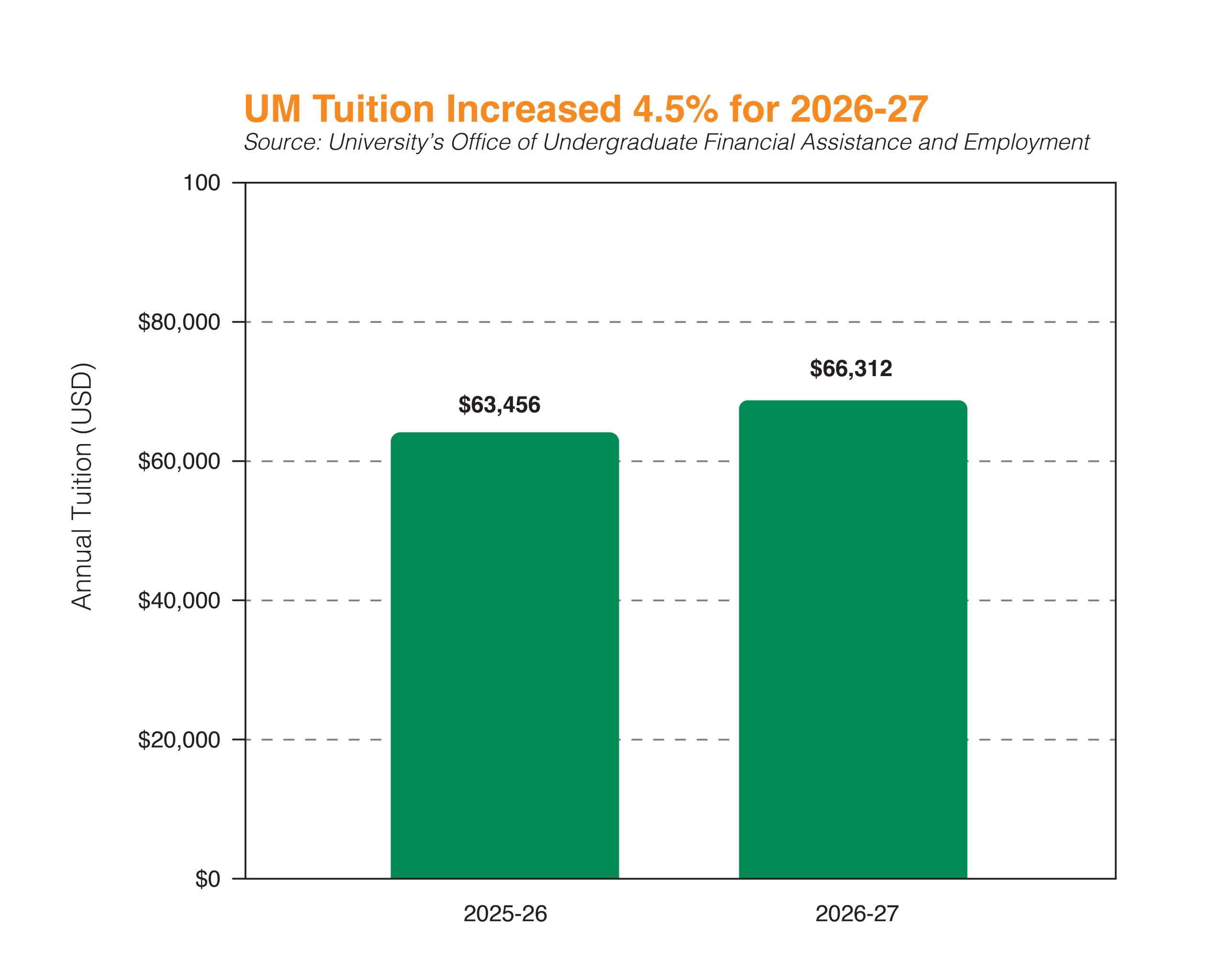
Tuition at the University of Miami increased from $63,456 to $66,312 this year. However, the total cost of attendance for on-campus students increased by just $754, going from $98,118 to $98,872 due to decreases in transportation, personal and book expenses.
UM’s cost of attendance is misleading, and the recalculation of expenses hides the real increase in price, risking students’ financial aid.
To determine financial need, UM calculates the expected family contribution based on the Free Application for Federal Student Aid and College Scholarship Service Profile information, then subtracts that amount from the cost of attendance.
Therefore, if the cost of attendance rises only slightly, a similar amount of financial aid will be awarded, despite the nearly $3,000 increase in tuition.
“When I came here, I basically had a full ride. I’ve definitely had to pay more over the years,” says a UM junior who wishes to remain unnamed.
The yearly cost of attendance exceeds $100,000 at 16 colleges and universities across the country. It’s very possible that UM doesn’t want to be number 17. It’s also possible that there is a method for calculating discretionary expenses that truly yields lower estimates.
In any case, UM should be honest when giving an estimated cost of attendance.
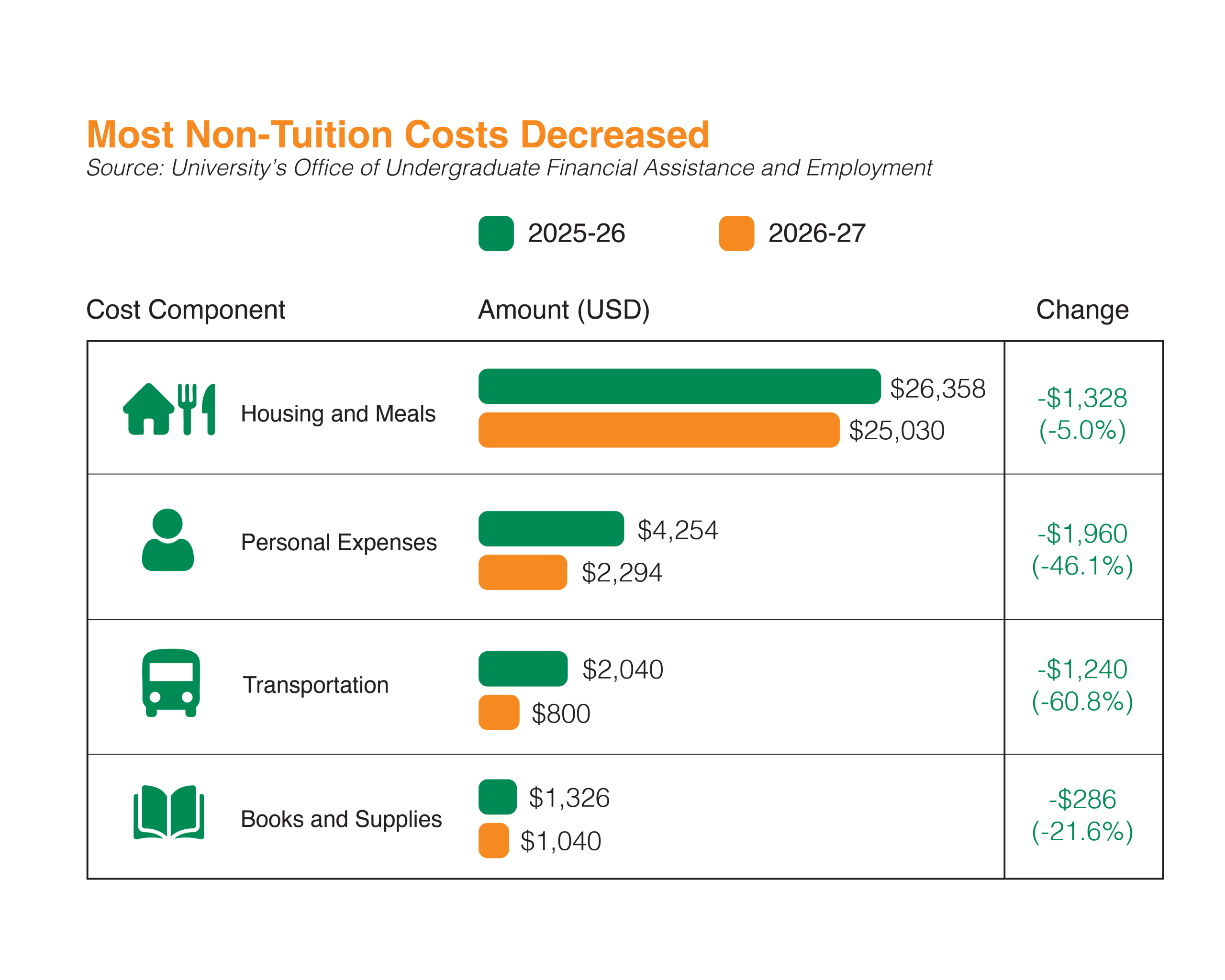
Transportation costs fell from $2,040 to $800, a decrease of 60.8%. According to UM’s website, “transportation costs are based on an average cost of students getting to and from campus,” noting that the estimate is for “domestic students living in the 48 contiguous states.”
With gas prices in the US up 28.95% and airfare costs up 26.5% from last year, it’s hard to fathom how the cost of getting to and from campus would decrease or be cut by more than half from the previous year. These expenses are indirect costs, meaning they are not paid to UM, but still affect students’ total budgets.
Personal expenses went from $4,254 to $2,294, a 46.1% decrease. This change also does not seem grounded in reality.
A recent New York Times article reported that, for the first time, the cost of living in Miami is higher than in New York City. According to the U.S. Bureau of Economic Analysis, Miami is now the second most expensive U.S. metropolitan area, after San Francisco.
Books decreased from $1,326 to $1,040, a 21.6% decrease. Students can enroll in the Canes Course Pack, which provides the required class materials for $445 per semester.
The Hurricane previously published an article regarding the change in costs, stating that the University did not respond to The Hurricane’s questions about why these costs are so much lower than last year.
The information provided by UM regarding the cost of attendance for the 2026-2027 school year is deceptive. Although the cost of attendance did not increase by much, tuition still jumped 4.5% and not explicitly showing this is misleading. Current and prospective students deserve accurate, transparent information.
Unless students are actually paying significantly less this year for transportation, personal expenses and books — as the new cost of attendance suggests — students are absorbing this bulk of the tuition increase.