


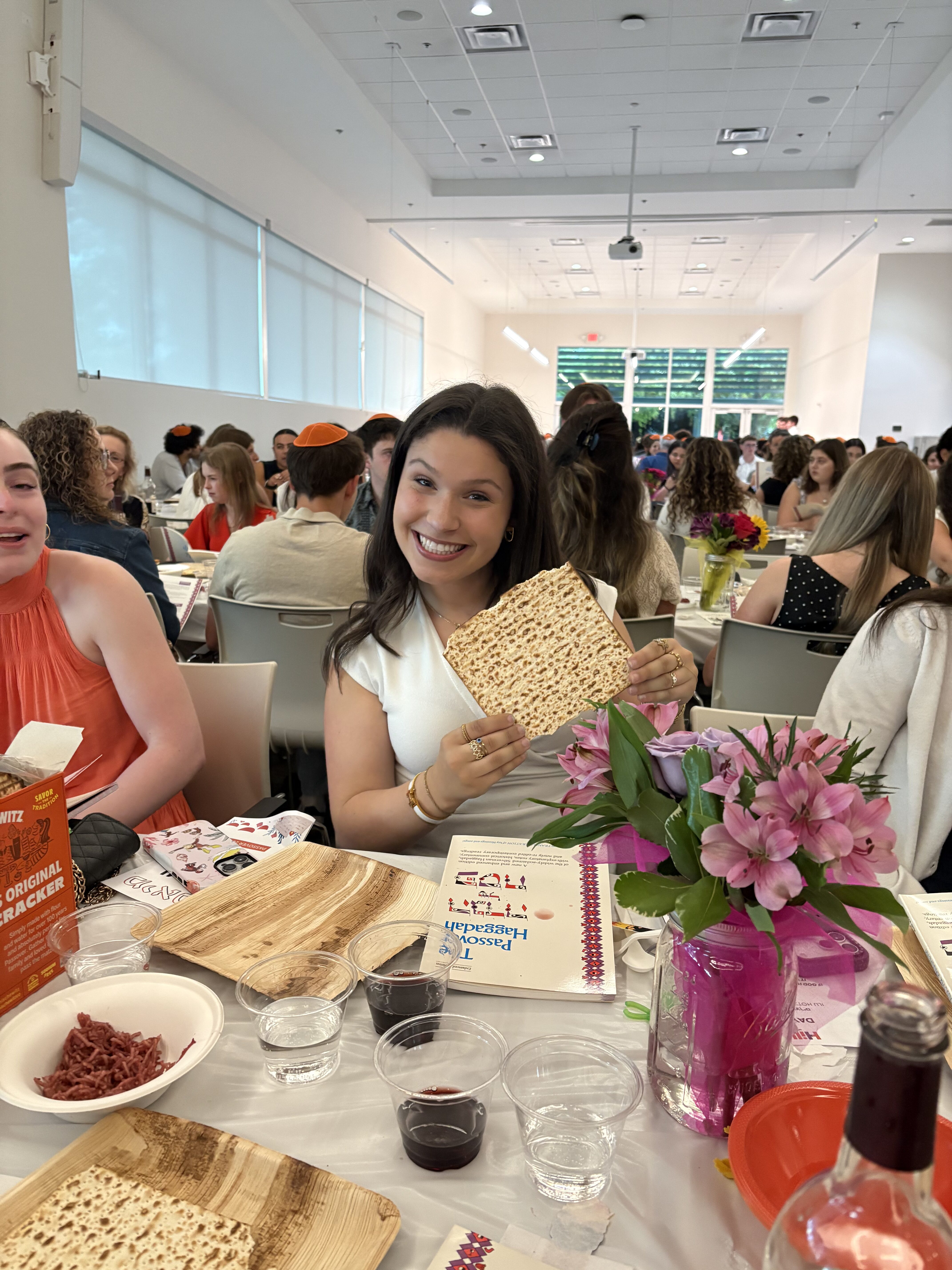
“Why is this night different from all other nights,” the first of Passover’s Four Questions asks.
The Haggadah booklet, a guide to the holiday, rests on every plate at the table and lists the answers: matzah, maror, dipping and reclining.
But, Passover is about more than what takes place at the table; it’s about the people who take a seat. It’s the ones who show up and keep the tradition alive that make the holiday truly special.
Passover is a springtime, week-long celebration in the Jewish religion. For the first two nights of the holiday, the biblical story of the Israelites’ exodus from Egypt is retold through a variety of traditions at the Seder, from washing hands in silence, to drinking four glasses of wine, to chanting “Dayenu!”
200 people sat down at University of Miami Hillel’s Passover Seder on the evening of April 2, the largest turnout at UM Hillel yet.
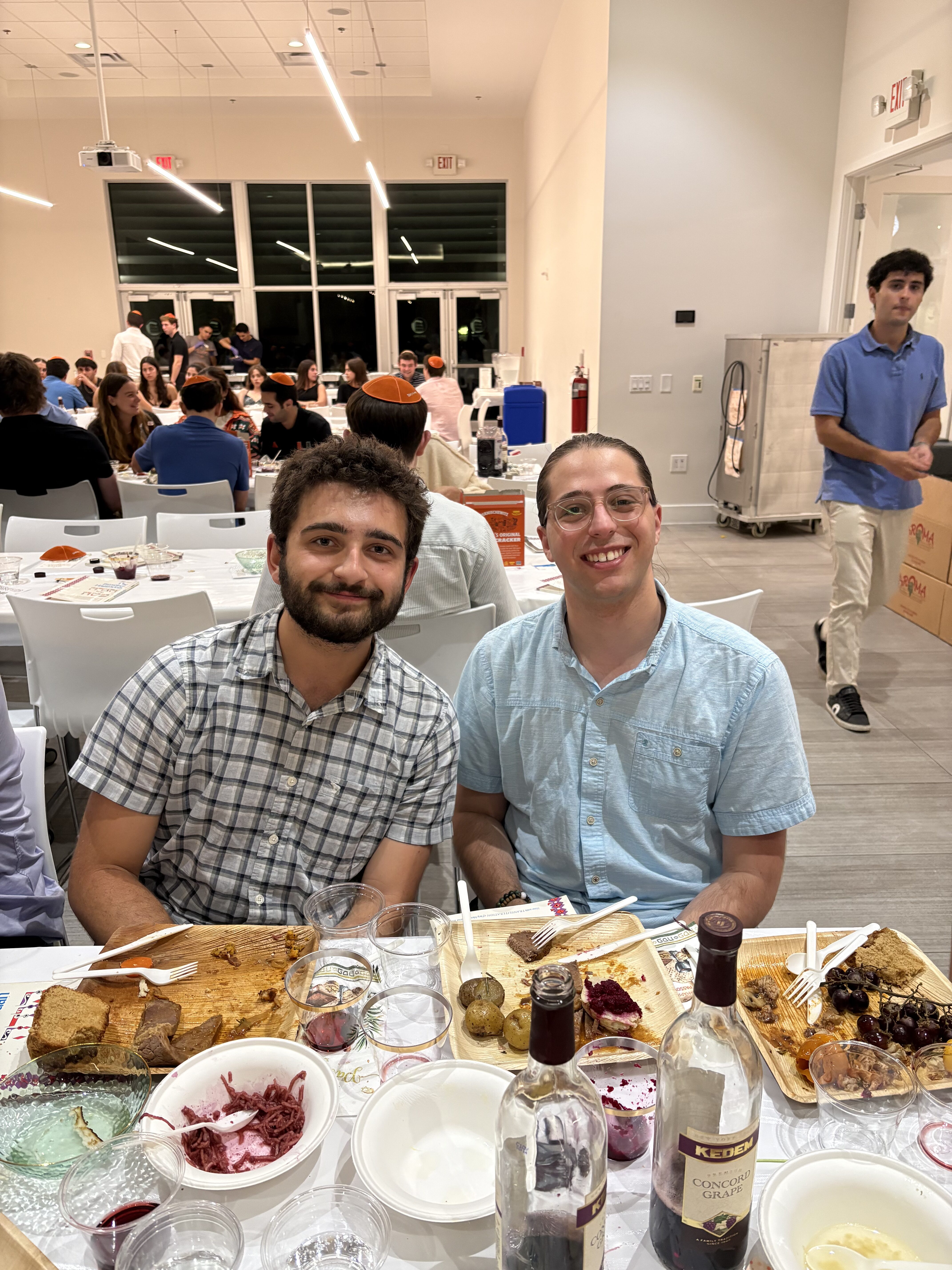
At the event, Rabbi Jason Cook spoke fondly of the community that has been built at Hillel. He called attention to the lack of empty seats throughout the endless rows of tables with boxes of matzah, charoset dishes and a shank bone — all symbols used to tell the story of the holiday.
Rabbi Cook told students brief stories about the holiday’s origins, placing greater emphasis on the prayers, rituals and, of course, the food — steaming platters of brisket, chicken, gefilte fish, vegetables and desserts.
Passover is usually a time for Jewish families to celebrate together. However, for college students, it’s not always possible with the holiday taking place in the thick of the spring semester.
Freshman Orli Schwartz, the chair of student life at UM Hillel, highlighted the value of campus seders.
“Seders are really important to keep alive at UM because college is one of the first times people have to decide for themselves what Judaism looks like in their lives.” Schwartz said.
When home, students typically go to the Seder because that is just what their family does.
“At school, people make the choice to come,” Schwartz said. “Some people come because they miss home, some come because their friends are going, and some come because they are looking for a Jewish community.”
To Schwartz and many other students, that’s what it’s all about.
“I love walking around the tables and catching up with people,” Rocio Pelaez, a UM sophomore and Hillel member, said. “It always takes me so long to leave because I want to make sure I say hi to all of my friends.” Pelaez said.
Sophomore Sam Reisch is another leader and Hillel member who attended UM’s Seder this year. He compares his celebration at home to his newfound one in Miami.
“In a religious sense, my Passover Seder is very similar to the one at Hillel: we ask The Four Questions, hear from the four children [the representations of different types of people’s willingness to learn], and the Seder plate looks almost identical,” he said.
Though at its core it’s still the same holiday, “the main difference is the setting,” Reisch said.
Although being away from home can be hard for many Jewish students during the holiday, opportunities like these allow a chance for students to form closer connections.
“Although I miss the close intimacy of a small family gathering, being with a couple of hundred other Jews gives me a better sense of community and belonging,” Reisch said.
Shifting from celebrating at home to UM is overall an enjoyable experience for many students due to Hillel’s care for the University’s Jewish students, but there are still some difficulties.
Reisch recognizes the struggles of keeping Kosher for Passover — avoiding foods considered “chametz” like wheat, barley, oats, spelt or rye for the week.
“I remember only seeing a box of Matzah [unleavened bread] in the dining hall my freshman year,” he said. “If there were Kosher for Passover items being served, I was not aware of them.”
Hillel sees students’ struggles and offers free lunch to those seeking Kosher options during the week of Passover.
“It’s hard not to see the amount of effort Hillel puts in,” Reisch said.
Jewish people make up 0.2% of the world population, according to Pew Research Center. As a religion that values traditions year-round, building a community is vital, but as a small part of the population, it can be difficult.
“Whatever brings people [to Hillel], it matters that there is a place for them,” Schwartz said. “I think having a Seder at UM gives people that place.”
During holidays like Passover, Judaism at the University of Miami is not just welcomed — it’s celebrated at Hillel.
Rabbi Cook traditionally concluded the 2026 Seder with a classic saying; “Next year in Jerusalem,” The phrase promises hope for a year well-spent, before sending students off for Passover until 2027’s seder.