


In middle school, I was “the woke friend.”
I believed corporations were evil, and that there was no point in trying to be better for the environment because my individual actions didn’t matter in the grand scheme of things. I heard the term “there’s no ethical consumption under capitalism,” and ran with it.
Over time, I realized that the mindset was less about me standing up against capitalism and more like an easy way to absolve myself of any responsibility to be better.
While it’s true that corporations like ExxonMobil, Shell, BP and Chevron drive large-scale environmental harm, using corrupt oil companies as an excuse to completely opt out of personal responsibility is ineffective in making any positive change at all. It allows us to acknowledge the problem without ever having to fix our behavior.
That mindset doesn’t just come from “the friend who’s too woke,” it shows up on college campuses, too.
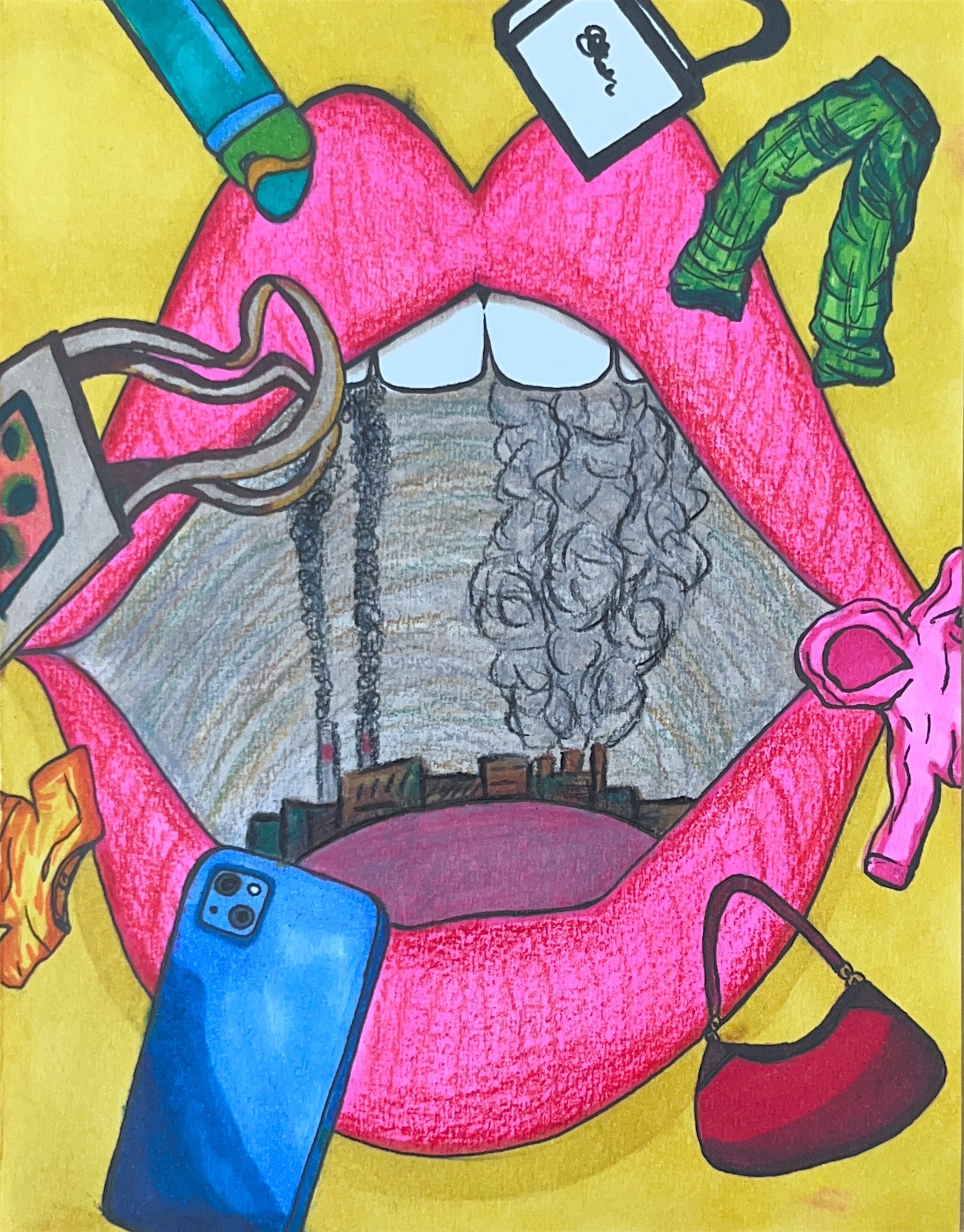
The truth is, many college students are overconsumers. Do we all really need the newest trending shoulder bag or water bottle every season?
We don’t need a hundred-dollar Shein haul before a night out at a music festival or every piece of free merchandise that is distributed on campus, no matter how cute the graphic is. Both actions contribute not only to overconsumption, but also to your personal carbon footprint.
I’m guilty of this behavior, too.
I can never turn down a free tote bag. I tell myself it’s okay because I’ll use them for groceries, but I don’t think my collection of more than 15 tote bags is necessary at all.
Dr. Nkosi Muse, an environmental fellow at the Harvard University Center for the Environment who got his PhD in environmental science and policy at UM, argues that the phrase “there’s no ethical consumption under capitalism” lacks necessary nuance.
While capitalism is inherently exploitative of both people and the environment, many of the goods we rely on to survive are produced within that same system.
“Should we consider a single mother buying chicken from a low-cost supermarket unethical?” Muse asks. “I don’t think that is necessarily fair — especially when more sustainable brands are less affordable, due to the extra measures that must be taken to profit while also remaining in ‘harmony’ with the environment.”
He’s right. Not all consumption is a moral failure. The responsibility for the state of our planet should not fall solely on people doing what they need to do to get by.
However, there’s a difference between not having many options and choosing convenience when options do exist. Recognizing that the system is flawed shouldn’t mean ignoring how we participate in it.
The next time you’re about to buy the newest drop of the sweatshirt everyone is wearing, ask yourself: Do you actually need it, or is it just an unnecessary purchase to keep up with a passing trend?
Small choices like these might not seem important on their own, but when enough people make them, they add up. They affect what gets bought, what gets produced and what companies prioritize.
This isn’t about expecting everyone to make perfect decisions. As Muse points out, many people don’t have the ability to prioritize sustainability in every situation. In those cases, consumption is about necessity, not excess.
“Ultimately it is a systemic political issue, in which we cannot penalize those who must do what they have to do to survive in a capitalistic society, but rather hold corporations that exploit and politicians/policymakers who allow exploitation accountable,” Muse said.
Real change requires both awareness of the system and a willingness to adjust our own behavior when we can. Corporations and policymakers need to be held accountable for large-scale impact, but individuals still play a role in the habits and culture that support that system.
For students who feel overwhelmed by the climate crisis, the answer is not to be perfect — but it isn’t to give up either. It’s to stay informed, pay attention to your choices and make adjustments where realistically possible.