


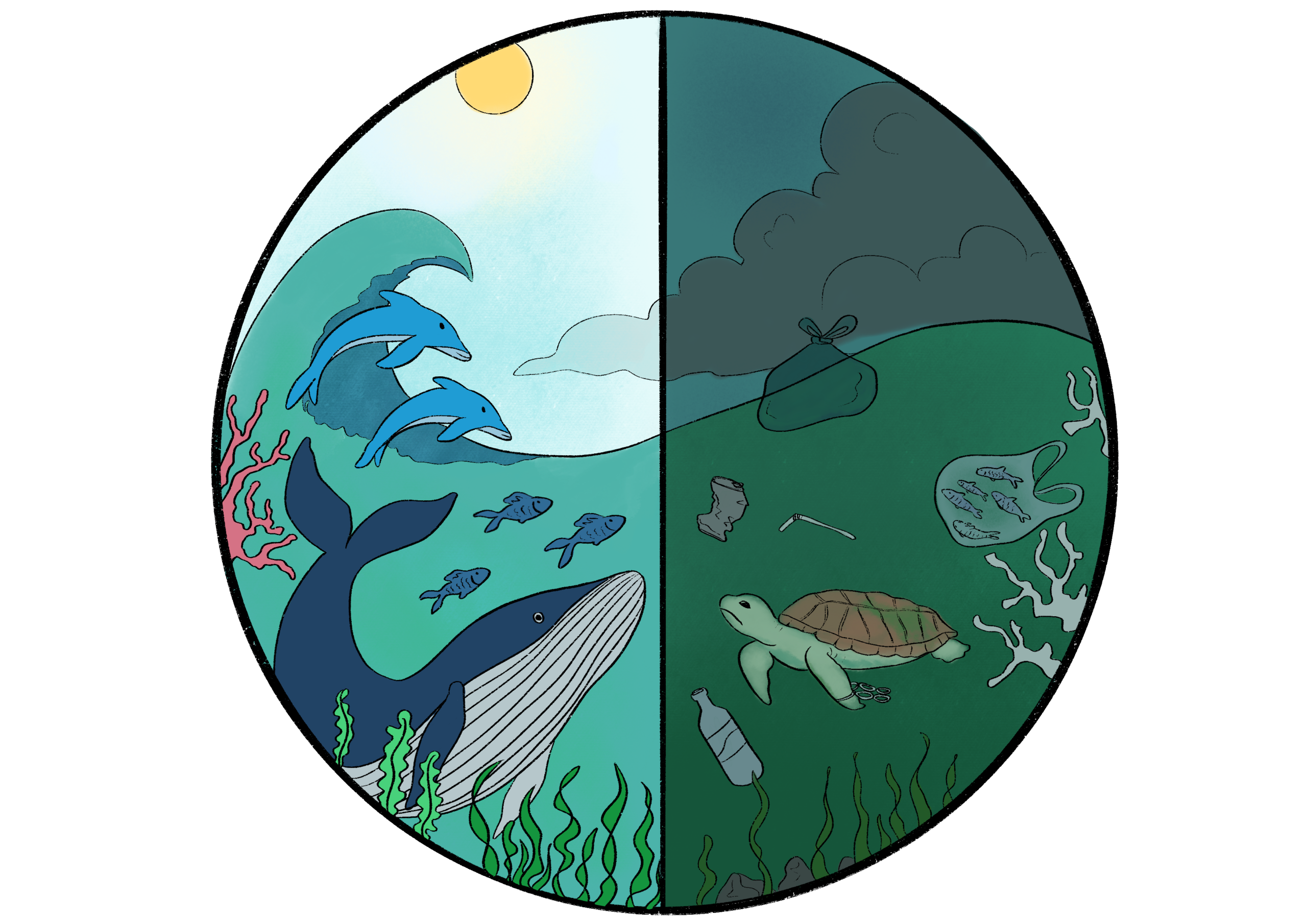
“Protect our oceans” has become a global rallying cry, but the debate over how to actually do it is reaching a boiling point.
For decades, humans’ relationship with the sea has been defined by what we can take from it. Between overfishing and physical destruction of coral reefs, the coastline has suffered a quiet, steady decline. We aren’t looking at a “wild” ocean anymore; we are looking at one that is struggling to stay alive.
Ecotourism, a term coined in the early 1980s, refers to “supporting conservation efforts in part by leveraging nature for leisure and directing revenue back to the ecosystem,” and is seen as a solution to dying reefs.
However, there are arguments that tourists are better off staying away from the water and leaving the ocean alone entirely.
As environmental anthropologist Amanda Stronza warns in a Discover magazine article, we have a “double-edged sword” in our hands. In other words, ocean conservationists and advocates must weigh whether ecotourism does more good than harm to the environment.
The blueprint for restoration
When managed correctly, tourists can be a powerful tool for environmental conservation and economic recovery.
Society can either leave the ocean to the mercy of industrial forces or harness those forces for conservation. Ecotourism transforms the human presence from a source of harm into a tool for repair, providing the only stable financial shield for marine habitats.
The greatest benefit of the ecotourism industry is its ability to make a living ecosystem more valuable than a dead one. A 2025 study titled “Global economic impact of scuba dive tourism” by Dr. Schuhbauer found that scuba dive tourism alone generates billions in economic impact worldwide. This isn’t just profit — it’s protection.
For many coastal communities, the choice isn’t between tourism and a pristine wilderness; it is between ecotourism and extraction. When a local community earns a living through whale watching, they gain a vested interest in stopping illegal poaching.
In Costa Rica, researcher An Nguyen found that this created a “poacher-to-protector” pipeline that funded the very parks that protect leatherback sea turtles.
Beyond protecting what remains, we are entering the era of the “Restoration Economy.” Modern ecotourism provides the labor and funding for seagrass replanting and coral gardening — activities that turn travelers into advocates. The industry creates a global political constituency for the sea.
As supporters see it, an empty beach is a beach vulnerable to developers. Ecotourism is the “pragmatism of hope,” using human curiosity to fund the planet’s survival.
The cost beneath the surface
Despite restoration efforts and economic benefits, the mere presence of humans, regardless of their intentions, introduces biological stressors that an already fragile ecosystem cannot handle.
Humanity has arrived at the water’s edge with a dangerous posture: a camera in one hand and a marketing brochure in the other. We cannot buy a healthy ocean one snorkel tour at a time. This is not conservation; it is a “pay-to-play” burial of the deep.
Research from the Scripps Institution of Oceanography reveals a darker reality. In hubs like Baja California Sur, many operations are simply conventional tourism with better marketing. These crowds impose a “biological tax” that the ocean cannot afford, causing chronic stress on wildlife and disorienting hatchlings with light pollution. We aren’t saving these species; we are managing their decline for a front-row seat.
Then there is the “carbon paradox.” These high-traffic sites often require long-haul flights. This creates a contradiction: travelers claim to protect a reef in the morning while their flight’s carbon emissions accelerate the ocean acidification that bleaches that same reef by evening. We are saving the local view while burning the global sky.
Furthermore, the infrastructure built for resorts, such as docks and seawalls, creates a “coastal squeeze.” As sea levels rise, these barriers prevent marshes and mangroves from migrating inland, crushing natural nurseries between the rising tide and a concrete shore.
Tourists should not gamble with the ocean’s life support. Tying conservation to tourism makes the sea’s survival dependent on a fickle travel market.
The bottom line
While those arguing for marine ecotourism see a restorative force, the other suggests the most eco-friendly thing a tourist can do is stay on shore. True sustainability may not be found in a managed interaction, but in the choice to leave the ocean alone.
Ultimately, the future of our seas depends on whether we view the water as a resource to be visited or a sanctuary to be respected.
Writer’s note: This article is inspired by the Oceans Debates, a tournament hosted by UM’s Debate Team every year in the spring. Protecting our environment is important, and as neighbors to our oceans, we should be obligated to advocate for solutions and policies that further protect it.