


A 9:30 a.m. class doesn’t mean a 9 a.m. alarm for many University of Miami students. For commuters, it can mean waking up hours early just to sit in traffic.
“[It can] take me an hour to get to school, and I don’t even live that far,” said Ro Pelez, a commuter student at UM. “Traffic is actually really annoying, and it does affect my schedule … it seems to be getting worse.”
Students are feeling the consequences of a city built around cars through longer commutes, denser traffic and rising environmental costs. While the immediate impact is the inconvenience of traffic, the long-term effects are far greater as population growth and development continue to increase emissions and strain the environment.
Transportation remains the leading source of greenhouse gas emissions in Miami-Dade County. When more residents move into new developments, the city becomes more densely populated, worker’s commutes lengthen and greenhouse emissions fill the air.
Urban planner Ali Lewis said that growth without corresponding shifts in transportation and land-use planning can pose long-term climate challenges for cities.
“Car-dependent growth increases Vehicle Miles Traveled, which directly increases emissions,” Lewis said. “As cities grow, those patterns become harder to undo.”
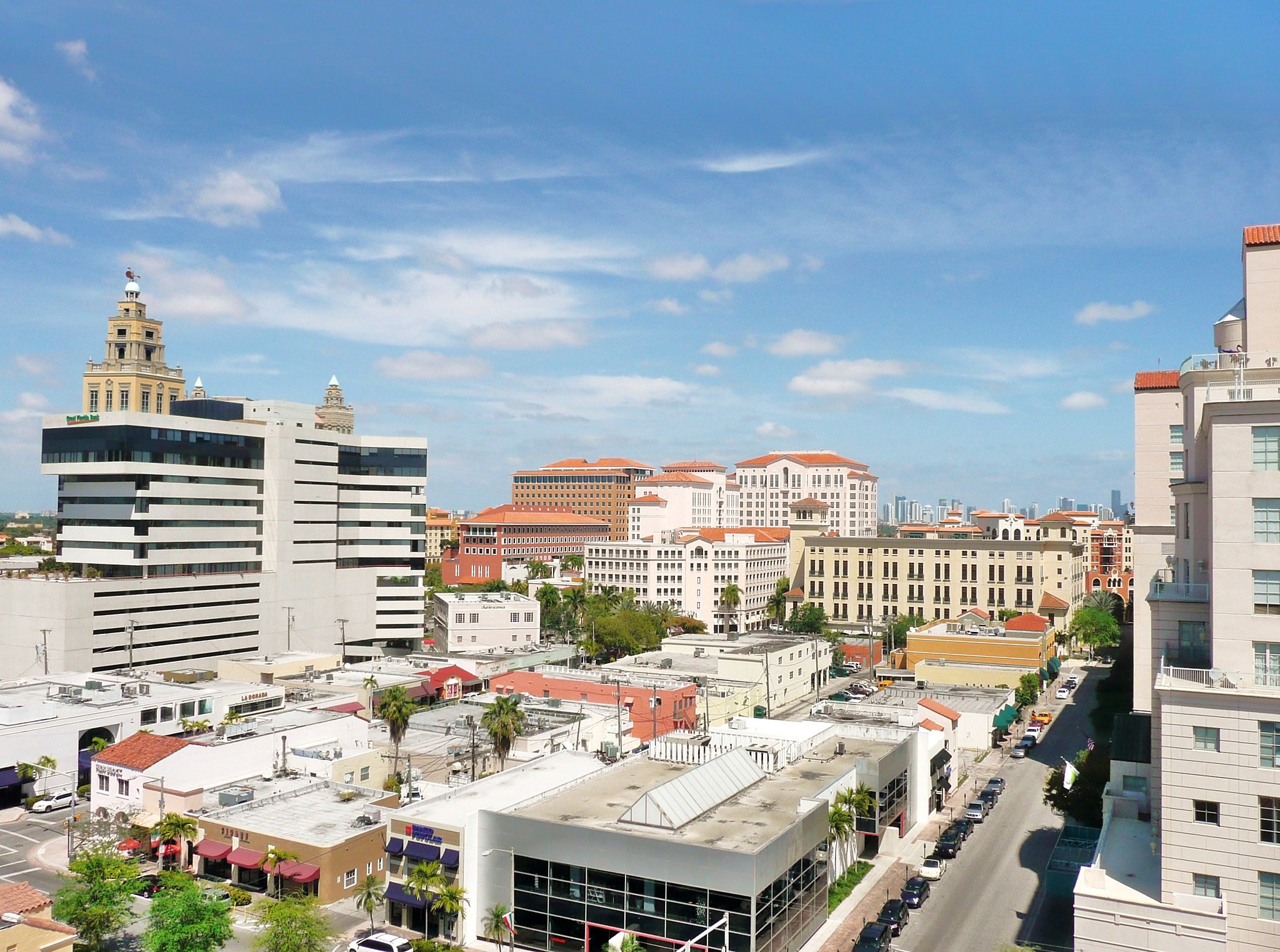
Bordered by the Atlantic Ocean and Biscayne Bay, Miami has limited room to expand transportation infrastructure, funneling more traffic into tight roads.
Still, these challenges are not unique to Miami. Researchers often point to cities like Los Angeles, which experienced rapid postwar growth centered on highways and low-density development. Over time, that model produced severe congestion, air pollution and limited access to green space, which are difficult and costly to reverse.
Experts say that the heavy reliance on cars not only brings more traffic, but impacts how people move through the environment.
“When we are in our cars, we miss out on the three aspects of life that have been well-established through research to be the most closely associated with health, longevity and well-being: social interaction, physical activity and greenness,” said Joanna Lombard, a professor at the University of Miami School of Architecture.
Miami ranks high on the list of urban heat islands by Climate Central. With limited access to green space, neighborhoods with fewer trees and parks tend to experience higher temperatures, creating the “concrete jungle” effect many cities experience.
As heat intensifies, residents are more likely to rely on cars rather than walking for even short trips, reinforcing a cycle of car dependence and emissions. Lombard said that car-based commutes bring people away from healthy human interaction.
“Our car-based trajectory from work to home and back does not allow for the kinds of casual interactions that happen naturally when we are walking, and it turns out that those interactions are important to our health,” Lombard said. “We might spend our whole day without ever getting near or even seeing a tree.”
Lombard added that her research has found that greater proximity to trees is associated with lower rates of many conditions like Alzheimer’s disease, heart disease, diabetes and depression.
As Miami continues to grow, Lewis said the city is approaching a critical turning point on how the city will develop moving forward.
“The question is whether growth continues to reinforce car dependence, or whether it’s used as an opportunity to redesign how people move and live,” Lewis said.
Miami-Dade’s Climate Action Strategy aims to cut carbon emissions in half by 2030, expand renewable energy and protect green and blue spaces across the city.
“While the effects of climate change might still seem theoretical for many communities around the globe, in Miami-Dade County, we already clearly see the impact of rising seas, extreme heat and sunny day flooding,” Miami-Dade County Mayor Daniella Levine Cava said in the climate plan. “Now in our 11th hour with the clock rapidly ticking, we must take action immediately.”
While county leaders emphasize the urgency of addressing climate change, Lombard said adds that the path forward lies in how the city itself is designed. She said that climate-conscious development does not require stopping growth altogether, but rethinking it to include environmental solutions.
“We [can] integrate more of what is needed for daily life into our built environment and create places where [social interaction, physical activity and greenness] are just a natural part of every day,” Lombard said. “The default option would change from isolation and distance to community and proximity.”