


Who among us hasn’t felt at one point or another that we have no idea what we’re doing? That we’ve been thrown in the deep end?
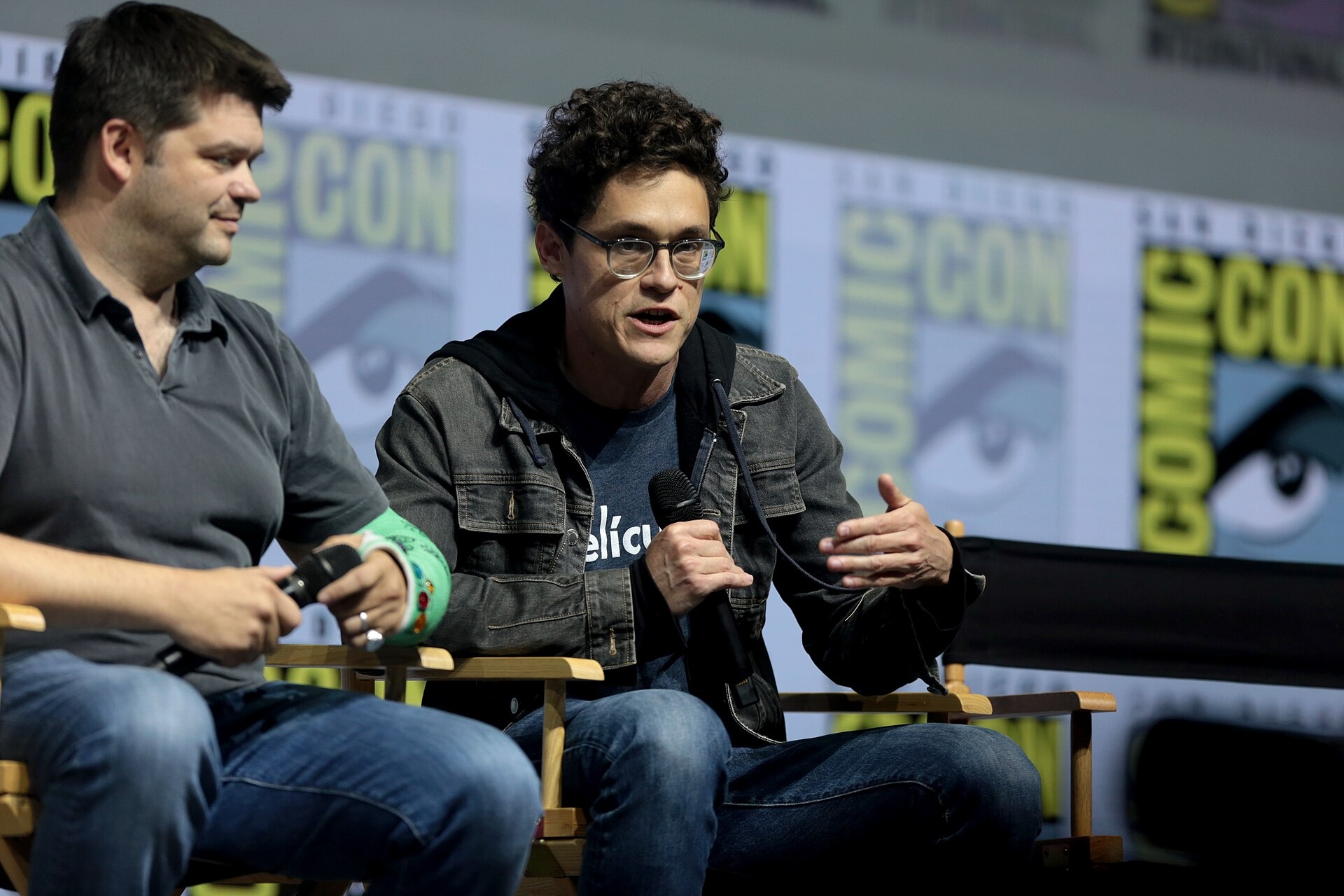
The protagonist of “Project Hail Mary” (2026), Dr. Ryland Grace can, certainly relate. The protagonist of directors Phil Lord and Christopher Miller’s latest film is a middle school teacher and former microbiologist who wakes up on a spaceship in a different solar system with no idea who he is or how he got there.
Adapting Andy Weir’s latest novel to the big screen was a tall order for Lord and Miller. At 478 pages, the novel takes its time telling Dr. Grace’s story. The directors had a lot of material to condense into just two and a half hours.
Lord and Miller rose to the challenge. “Project Hail Mary” (2026) is a gorgeous film that is at once exciting and moving, a reminder of the best in people — human or otherwise— in the worst of circumstances.
The opening of the film is hilarious and terrifying, a perfect example of how screenwriter Drew Goddard’s script excellently adapts Andy Weir’s signature blend of drama, humor and science. A very shaggy Grace, played by Ryan Gosling, awakens from a coma disoriented, babbling and tripping over himself as he regains the ability to speak and walk.
Once Dr. Grace reaches the control room and realizes his situation, his despair is palpable.
For much of the film Grace is the only human onscreen. A one-man show could have very easily become tiring, but Ryan Gosling’s performance was out of this world (pun intended). One moment he has the audience laughing their asses off and ten minutes later he’ll have them bawling their eyes out.
With a score of 95% from Rotten Tomatoes, “Project Hail Mary” has become the highest rated film inRyan Gosling’s filmography.
Grace undoubtedly has the largest role in the film, but he is not entirely alone. “Project Hail Mary” is a story told in pieces, interspersing the present with flashbacks representing Grace’s slowly returning memories. Through this back and forth the audience is introduced to the other characters.
Bit by bit, Grace remembers that he is a member of Project Hail Mary, an international effort to save humanity from a global ice age caused by the mysterious alien microorganism Astrophage which feeds on stars ’— including the sun’s — energy.
Initially contacted by the unshakeable head of Project Hail Mary Eva Stratt (Sandra Hüller), Grace made major breakthroughs studying Astrophage and accidentally became her second in command.
As a last ditch effort to save the Earth, Stratt and her team determined that three astronauts must be sent on a suicide mission to the distant Tau Ceti solar system to discover why that star has survived Astrophage and send their findings back to Earth.
A stalwart leader, Stratt does what must be done no matter the cost. Even so, it is clear that her difficult decisions weigh heavily on her. Hüller brings an emotional depth to Stratt that makes her one of the film’s most memorable characters.
The chemistry between Hüller and Gosling in their respective roles is excellent. Stratt is distant where Grace is friendly; she is stern where he is scatterbrained. The relationship between the characters is unbalanced, more boss-employee than true friends or colleagues.
Stratt is not Grace’s only companion. As the Hail Mary arrives at Tau Ceti in the present, Dr. Grace quickly learns that we are not alone in the universe.
Grace meets an alien from the 40 Eridani solar system. He creatively names the five-legged Eridian “Rocky,” after his rock-like appearance. As they learn to communicate, Grace and Rocky realize they are there for the same reason and resolve to help each other save their respective planets.
Rocky was an important part of the movie to get right. He is beloved by fans of the novel, and Lord and Miller wanted Gosling, who would have many scenes with the alien, to have someone real as a scene partner rather than a motion-capture tennis ball.
James Ortiz knocks it out of the park as Rocky’s voice and primary puppeteer, bringing humor and heart to the Eridian.
Rocky is just one example of this film’s dedication to practical effects. “Project Hail Mary” uses no green or blue screen whatsoever, and is easily one of the most visually stunning sci-fi movies of the decade.
A full-size rotating set was built for the scenes with Ryland Grace inside the ship. Most of the scenes of outer space were done by computer.
One of the most beautiful scenes occurs when Grace exits the ship in his space suit to collect samples of the planet Adrian’s (named after Rocky’s Eridian partner) atmosphere. From inside the ship Rocky turns on the petrovascope, a device that makes Astrophage visible to the naked eye.
The shot was accomplished by putting Gosling inside a chicken-wire cage strung with infrared lights and equipping the camera with an infrared light filter. The result is a breathtaking sea of twinkling red.
Gorgeous as the film is, none of the stellar cinematography and effects would be as impactful without Daniel Pemberton’s original score. The choir-heavy score evokes a deep sense of humanity even as the main character is perhaps one of the loneliest humans there is.
The soundtrack of the movie is also incredibly effective. Every needle drop — most memorably Stratt’s rare moment of vulnerability singing karaoke to Harry Styles’ “Sign of the Times”— was perfectly chosen.
As far as adapting the novel, the film glosses over many of the scientific elements rather quickly, and many supporting characters were also cut from the story or watered down for the sake of its runtime.But these are ultimately minor faults.
Lord and Miller clearly love this story, and they did it justice in their adaptation, bringing to the story all the strengths of the film medium. “Project Hail Mary” is at its heart a story of love for friends and for life (human or otherwise) itself.