


Content creators continue to play a growing role in how younger generations receive political information, raising questions about the influence they hold over their audiences.
For many young voters, political news appears in TikTok trends, Instagram stories and posts from their favorite influencers.
Dr. Nicolette Alayon, an independent researcher and consultant whose research examines trust in institutions, media and public figures, said social media has changed what it means to be part of a community.
“Generally, people form political opinions from their community — meaning their friends and family,” Alayon said. “Now with social media, communities have shifted to not only be in person but also online.”
Unlike traditional politicians or news anchors, influencers build audiences through personal experiences and everyday routines, creating familiarity with followers.
That influence extends beyond entertainment. A 2024 Pew Research Center study found that 72% of young adults who regularly get news from influencers said those creators helped them better understand current events and civic issues, highlighting the growing role of online personalities in political conversations.
Alayon points to parasocial relationships, the one-sided connections audiences develop with public figures, as a reason why these messages carry weight.
“Now with social media, influencers play the role of a friend, shaping the way their audiences think about many subjects including politics,” Alayon said.
Research suggests that this sense of familiarity can make influencers more persuasive. A 2024 study published in Psychology & Marketing and examined findings from 53 studies found that trustworthiness and credibility play a major role in how audiences respond to influencers. When followers view creators as trustworthy, they may be more receptive to the messages they share.
Lauren Barnwell, a UM student and social media personality with more than 500K TikTok followers, faces challenges navigating the influence that comes with her platform.
Although her content focuses on lifestyle and entertainment, Barnwell said she does not shy away from sharing her views on important issues, even when those topics fall outside her usual content.
“[The] TikTok algorithm tends not to push posts that aren’t your usual content and for me that gets really frustrating,” Barnwell said.
She often uses reposts and comments to communicate her positions, even when she does not address an issue directly.
Having a large audience also comes with a sense of responsibility, particularly during an important election season, Barnwell said.
“To a degree, I feel like it is the duty of people with a platform to speak for those whose voices aren’t heard,” Barnwell explained. “But there is this line of keeping entertainment entertainment and we shouldn’t be relying on influencers for political commentary.”
But are influencers actually changing people’s political opinions or are they just strengthening beliefs their followers already hold?
Casey Klofstad, a UM political science professor whose research examines human decision-making, said public figures often reinforce the views their audiences already hold.
“Typically, these opinion leaders already share our preferences so rather than persuade, they reinforce what we already believe,” Klofstad said.
Still, online influence can extend beyond likes and comments.
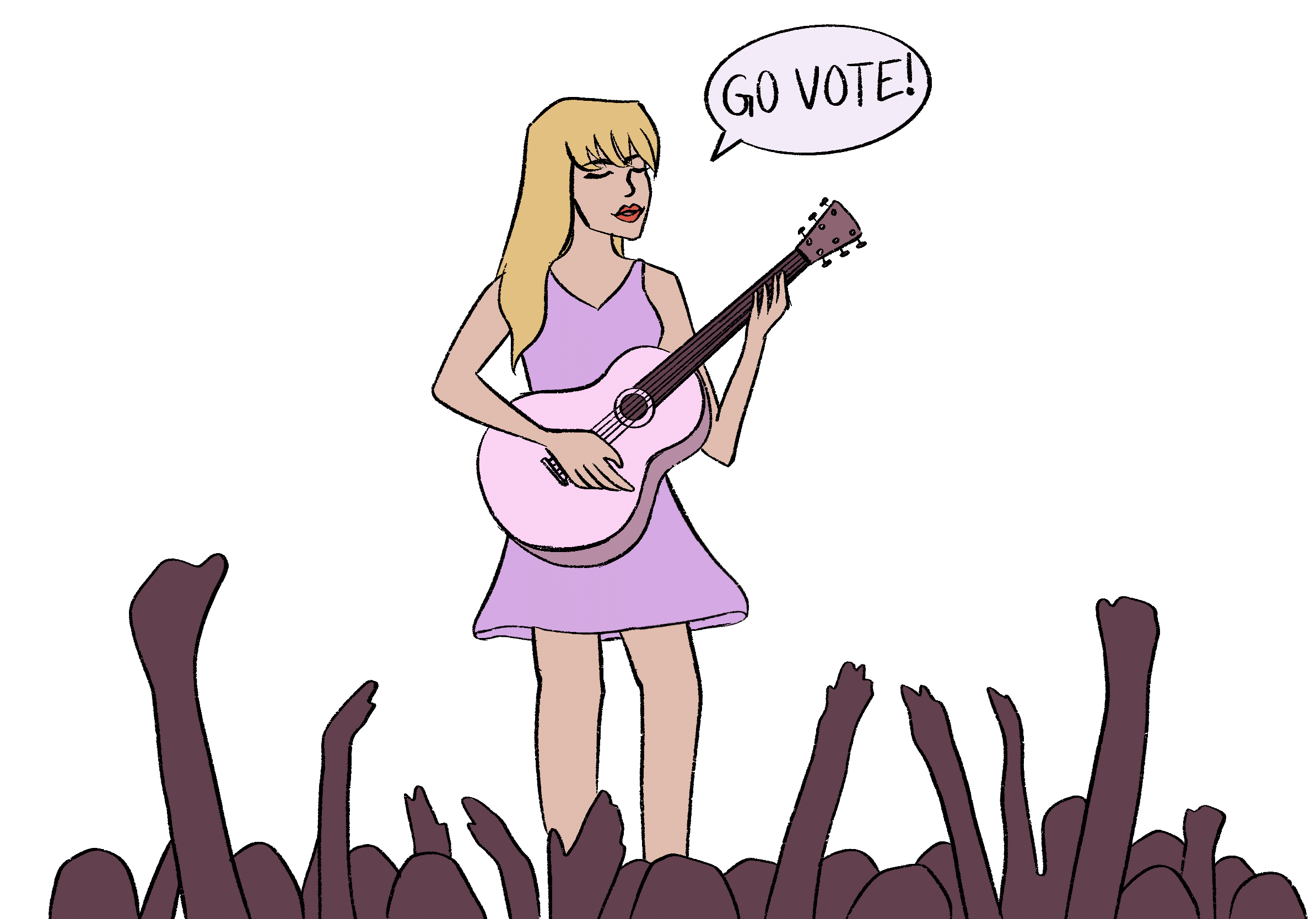
Beyond social media influencers, major celebrities have also used their platform to promote political engagement. In 2023, Taylor Swift encouraged followers to register to vote and Vote.org reported more than 35,000 new registrations that day.
Celebrity involvement in political messaging has also extended beyond elections. zSinger Olivia Rodrigo joined President Joe Biden at the White House in 2021 to promote COVID-19 vaccinations among young Americans.
However, increased political visibility raises concerns about misinformation and audiences’ responsibility to evaluate what they encounter online.
Barnwell believes creators should recognize their influence but also thinks followers need to form their independent opinions.
“Anyone who has a following has a degree of influence that they need to be conscious of,” Barnwell said. “But at the same time, people need to do their own research and figure out their beliefs for themselves.”
Alayon similarly emphasizes the importance of credible information sources rather than expecting influencers to become political experts.
“The focus should be on restoring trust in the institutions that are meant to educate and inform the public so people do not have to rely on influencers,” Alayon said.
In the wake of the midterm elections, political conversations will continue unfolding beside everyday content. Whether influencers change minds, reinforce beliefs or encourage participation, their role in how young voters experience elections is becoming increasingly difficult to ignore.