


University of Miami President Joe Echevarria is putting all his cards on the table when it comes to the future of Miami Athletics.
In a candid interview with Ross Dellenger of Yahoo Sports, Echevarria went into great detail on the changing landscape of college athletics — namely realignment amid the prospective Protect College Sports Act.
Miami has long been projected to leave the ACC, with its media rights deal and decision-making power dwarfed by the SEC and Big 10.
Echevarria put this disparity simply.
“The fact is that we won about every game you could win last year and maxed out in revenue in our current [ACC] sharing model,” he said. “And we made the same amount of money as other institutions [in the Big Ten and SEC] whose football programs operate at different levels of investment and performance.”
As a former businessman and Deloitte CEO, Echevarria has led the University from a business perspective since his return to his alma mater in 2024 as the seventh president in school history.
While he noted UM is a “proud member of the ACC,” he recognizes the disadvantages the University faces as a result.
On top of roughly $25 million more annually through conference revenue share, the Big 10 and SEC have demonstrated the power to reshape collegiate athletics. Recently, the pair was cited as a driving force behind plans to expand the College Football Playoff to 24 teams.
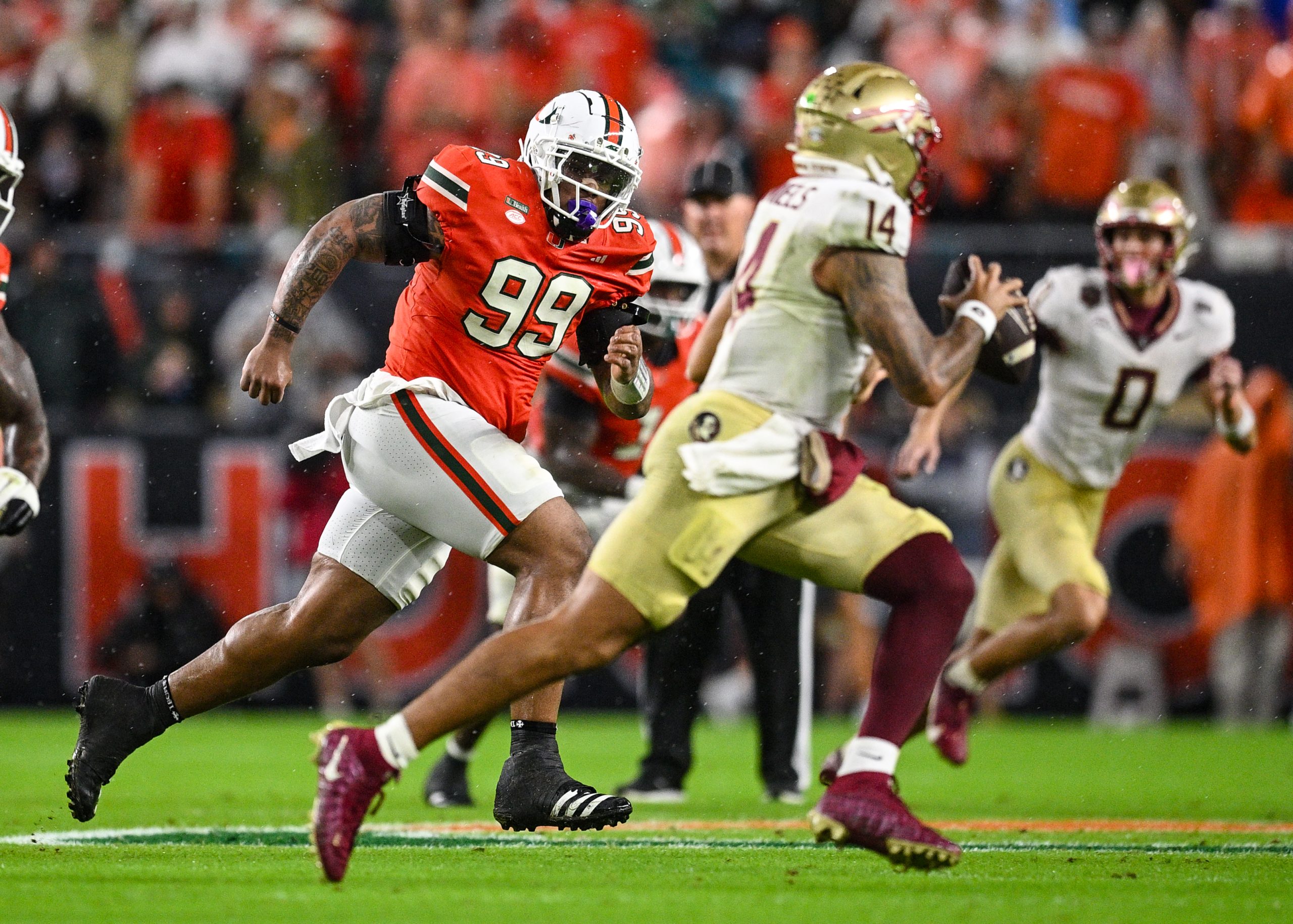
Miami wants a seat at the table moving forward, but faces challenges to do so through the PCSA.
The University of Miami has publicly opposed this bill alongside fellow ACC schools like Clemson, FSU and North Carolina.
Currently as the bill stands, any university wishing to change power conferences must remain independent for three years. This limitation to conference mobility piles on to the financial cost of exiting the ACC, with exit fees well more than $100 million for the next three years.
A conference shakeup is expected in 2030, as the price to leave the ACC falls to $75 million. Schools in the Carolinas, Florida and Virginia are all weighing their options.
Under the current proposal in the PCSA, the conference cap increases to 20 teams, allowing two more spots in the Big Ten and four in the SEC. Should Miami leave the ACC, the door is also open for UM to remain as an independent.
President Echevarria noted the challenge this could bring, but also demonstrated confidence in the event the PCSA passes and limits conference mobility.
“If we have to go independent, I like our chances because we are a national brand,” he said. “I wouldn’t like to do that because scheduling [other sports] is really tough.”
Currently, the Hurricanes are locked into a media rights deal with the ACC until 2036. In the event of going independent, the University would have to fend for itself in a media partnership with options such as Amazon — something Echevarria did not shut down in his interview.
One thing is for certain, the University of Miami will not be pushed around as the new era of college sports comes in.
“You cannot lock us into a conference,” he said.
With the Hurricanes currently ranked No.1 for football, No.14 for men’s basketball team and historically boasting an assortment of national championship athletic programs, the University of Miami is set to be one of the crucial dominos in conference realignment.