


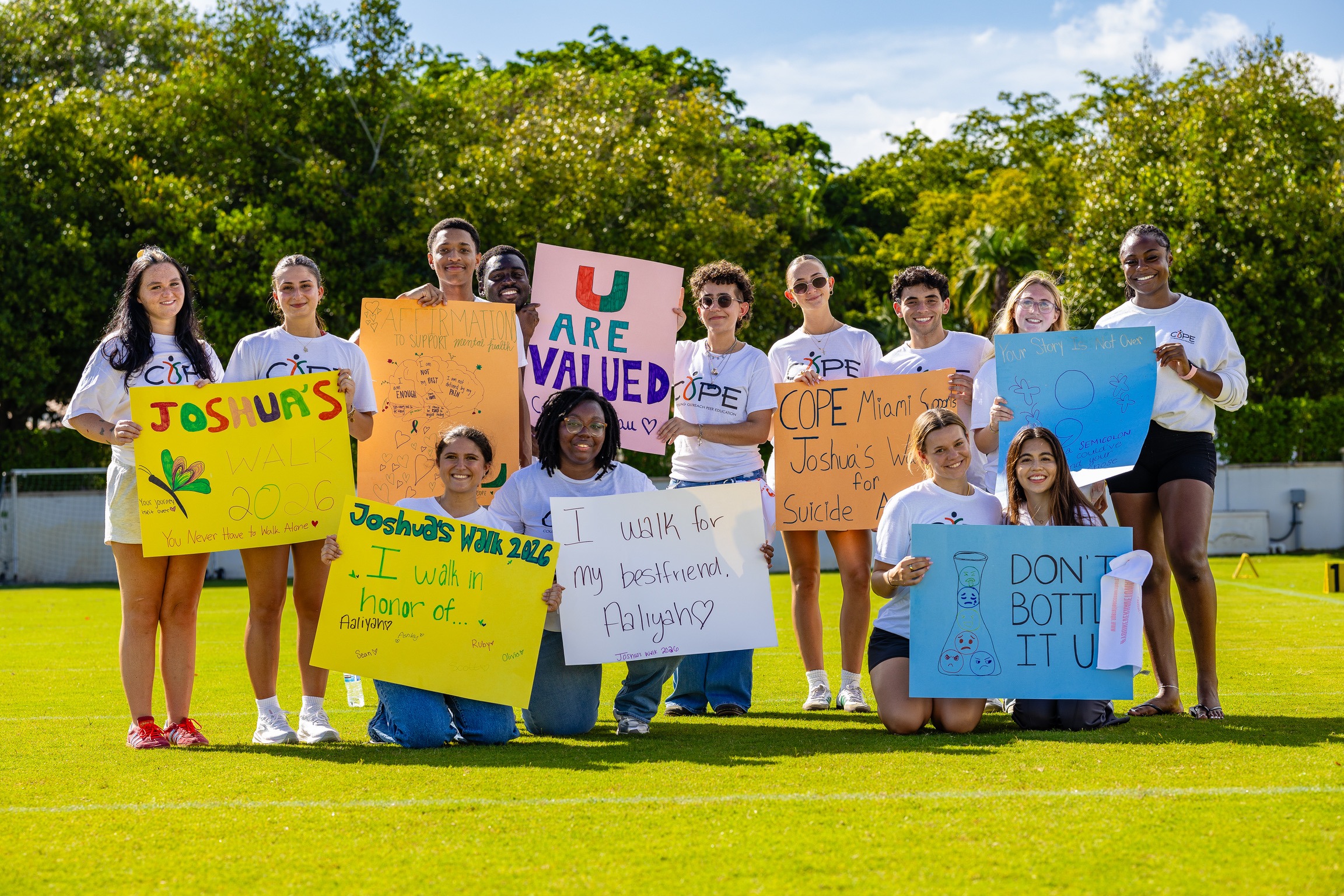
During Halloween celebrations and late nights, student leaders from Counseling Outreach Peer Education are encouraging their fellow classmates to prioritize something that can easily get overlooked: each other.
COPE, a group of undergraduate peer educators advised by UM’s Counseling Center, works to promote mental health awareness, connect students with campus resources and encourage conversations about issues affecting student well-being.
For Bella Feijoo, a senior and COPE chair, and Ella Hallen, a junior and vice chair of external relations, Halloween presents an opportunity to remind students that having fun and looking out for friends should go hand in hand.
Feijoo emphasized the importance of checking in throughout the night, staying together and recognizing when a friend might be uncomfortable or vulnerable.
“Buddy system has always been the number one thing in my head,” Feijoo said. “Never let your friend go somewhere alone.”
But being a good friend is not always about preventing an emergency. Sometimes, it means recognizing when someone simply wants to leave.
Hallen encouraged students to pay attention to their friends’ comfort levels, particularly in social situations involving alcohol with unfamiliar people or overwhelming environments. She suggested establishing a code word beforehand so friends can communicate when they want to step away without having to explain themselves.
“If your friend is just nervous or anxious to be out and at any point, like, they want to go home … go with them,” Hallen said.
For Feijoo, this responsibility extends beyond Halloween.
“If you want a village, you have to be a villager,” she said.
To Feijoo, this phrase emphasizes that a supportive community requires students to offer the same care and understanding they hope to receive from others.
The organization’s work also addresses broader issues, including sexual assault awareness, consent and the stigma surroundingo mental health.
Through national initiatives like the Clothesline Project, which displays shirts carrying messages about experiences of abuse and assault, and school events like Raise the Flag, survivors can share their stories. COPE works to make difficult conversations visible on campus.
Feijoo recalled watching students share deeply personal experiences through poetry, music and other forms of expression at Raise the Flag.
“To give them a space to talk about that and feel safe enough to say that on campus in front of a group of people is so special,” Feijoo said.
Beyond awareness events, COPE connects students with Counseling Center services, including individual and group therapy, relaxation spaces and other wellness resources.
Feijoo said one of the biggest misconceptions among college students is that their struggles must reach a certain level of severity before they deserve professional support.
“It’s really important to look at mental health the same way you look at your physical health,” Feijoo said.
Hallen believes meaningful support can begin with something as simple as sitting beside someone who appears overwhelmed, without pressuring them to explain what is wrong.
Just saying “I’m here,” can make someone feel supported, Hallen said.
As Halloween approaches, COPE’s message is not to avoid celebrating but to remember that safety is a shared responsibility. Whether that means walking a friend home, respecting someone’s boundaries or recognizing when they need support, small decisions can make a lasting difference.
As Hallen puts it, “Any impact, no matter how big or small, is still an impact.”