



Redesigning a room doesn’t have to start with flipping through furniture catalogs or scrolling through Pinterest for inspiration. For two University of Miami students, it started with a photograph and a few clicks, and has now grown into an app with more than one million downloads.
Arshroop Saini, a junior studying innovation, technology and design at the University of Miami, and Jeffrey Escobar, a Miami local who graduated with a degree in computer engineering from Johns Hopkins University, co-founded House AI.
The idea began when Saini’s father asked him to find a way to use artificial intelligence to redesign his office.
While experimenting with existing interior design tools, Saini noticed a common limitation.
“I just found a lot of problems existed in the app market itself,” Saini said. “One of the biggest things was you cannot buy the products within the app.”
According to Saini, House AI allows users to upload a photo of a room and receive an AI-generated redesign based on their preferences. After uploading an image, users complete a short questionnaire selecting their preferred colors, aesthetics and design style, such as minimalist or Art Deco.
Saini said the company used its own, trained AI models to generate redesigned spaces. The resulting images also feature furniture and decor that users can select to purchase directly through the app.
According to House AI’s website, the platform has surpassed one million downloads and reached users in more than 175 countries.
Its shopping feature connects users with more than 330 retailers and boutiques, allowing them to browse products featured in their generated designs.
The shopping feature was central to Saini’s vision for the company. Rather than simply offering inspiration, he wanted to create a platform that would allow users to turn those ideas into reality.
“Even if you go on a few websites, like Pinterest, for example, you definitely can see someone else’s living room, but you cannot visualize your own room in that space,” Saini said.
Escobar, House AI’s co-founder and chief technology officer, shared a similar perspective in an August interview published to his own website.
“A beautiful picture of a room you can’t build is a tease. It makes people feel worse, not better,” Escobar said.
The company hopes to eventually expand beyond its current retail partnerships by developing its own furniture line based on trends and preferences reflected in app usage. It also plans to make products from retailers such as Target, Walmart and IKEA available through one platform, eventually handling everything from shipping to returns.
Saini described the company’s long-term vision as becoming the “Amazon for interior design,” allowing users to find, purchase and receive everything they need for a designed space.
The app’s audience extends beyond college students. Saini said its largest demographic is women ages 25 to 55, followed by teenagers and college students.
Building the company while attending UM has also required balancing coursework with the demands of running a growing business.
Saini said he and Escobar spent much of their winter break developing the app before dedicating several months of the summer to expanding it. During that time, they traveled between San Francisco, New York and Miami, connecting with other app founders and working on the business. Some of their workdays lasted up to 18 hours.
Looking ahead, Saini hopes to expand House AI’s partnerships with both major retailers and smaller businesses that may not have the resources or online presence to reach a large audience.
The founders also expressed their openness to the possibility of House AI being acquired by a major furniture retailer or interior design company within the upcoming years.
“We are just trying to close the entire loop of interior design,” Saini said.
For now, the goal remains expanding the platform and making the interior design process more accessible.
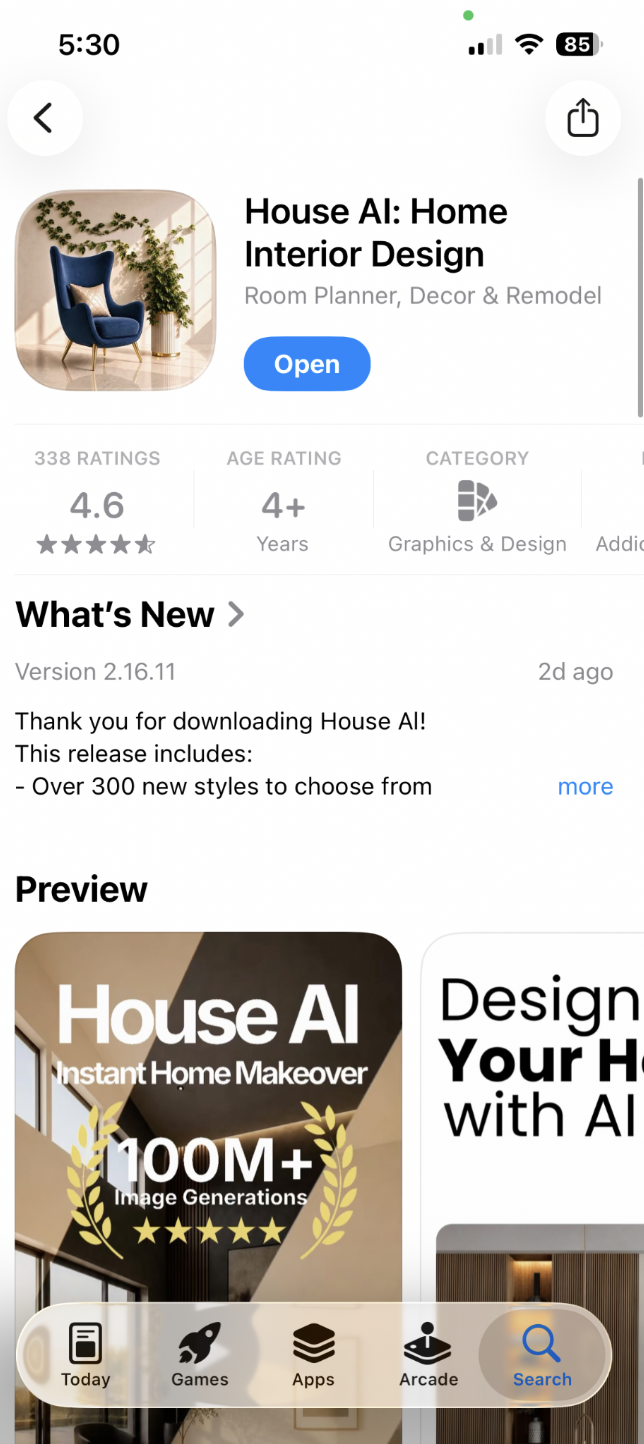
House AI as shown on the Apple App Store.