American alpine skier and former gold medalist Lindsey Vonn tore her anterior cruciate ligament in a World Cup crash just a week before the 2026 Milan Cortina Olympics.
Two months later, WNBA guard Nika Mühl tore her right ACL playing for Croatia — her second ACL tear in less than two years.
Women athletes are responsible for an estimated 38,000 to 100,000 ACL tears every year, according to the University of Alabama at Birmingham.
As women’s sports grow in viewership and earning opportunities, there is a greater focus on how female athletes tear knee ligaments, tendons and cartilage far more often than men. Women are three to six times more likely to tear an ACL than men.
Female athletes deserve the same investments in physical training that men have had for decades.
It’s not that women are “weaker,” they’re just more susceptible to these injuries than their male counterparts.
Anatomical differences — like wider hips — can affect knee alignment, and fluctuating progesterone during the menstrual cycle is related to how well an athlete recovers between workouts.
However, anatomy isn’t the only factor. Adriana Logan, the University of Miami’s associate women’s basketball athletic trainer, says that strength training — a crucial part of preventing injury — isn’t built into young female athletes’ workouts the way it is for boys.
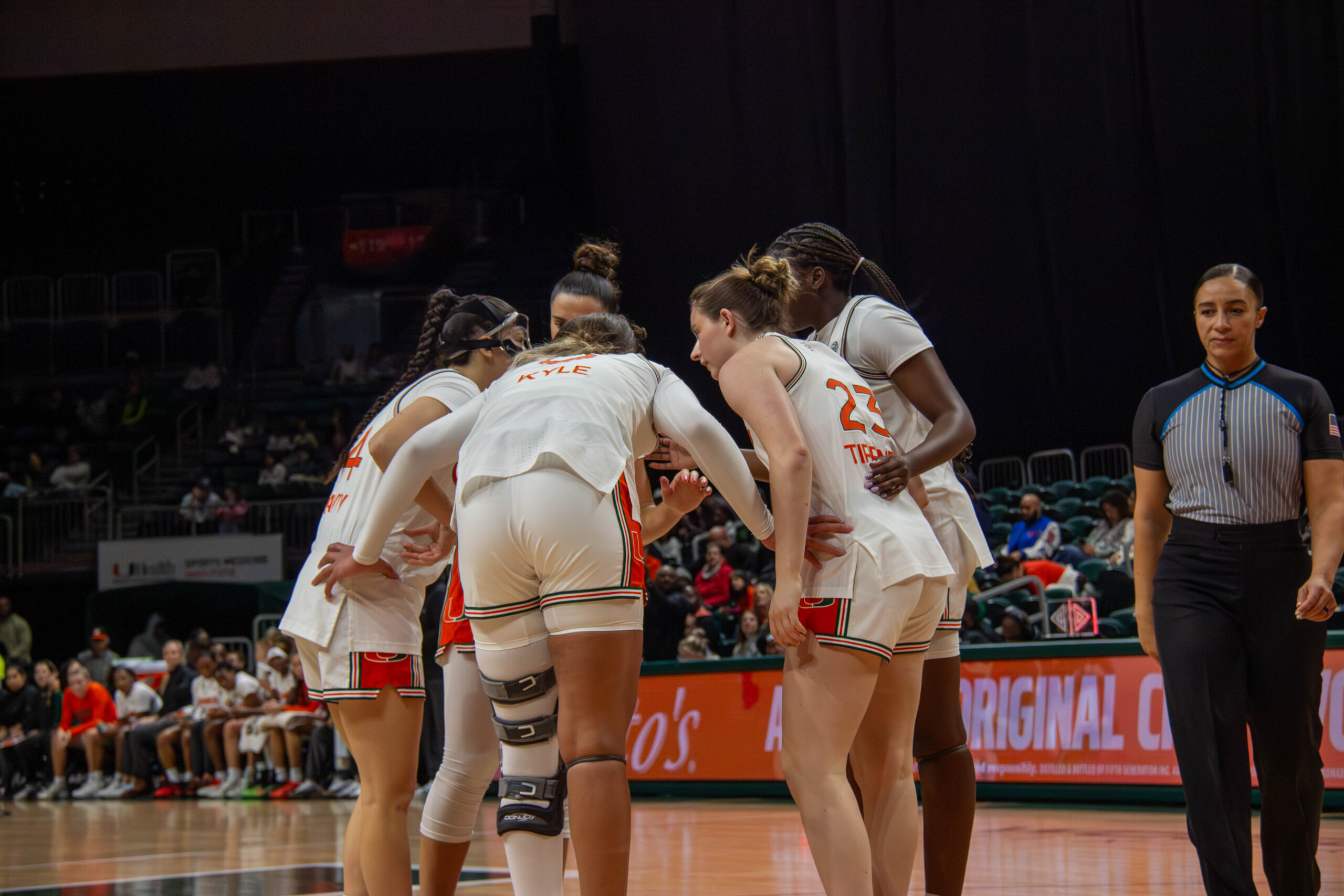
Strength itself protects against injury. Stronger muscles absorb more force from landing and cutting, taking pressure off the ligaments that would otherwise do that work alone.
Male teams start weight lifting as early as middle school, while for many girls it’s treated as optional rather than a required part of practice.
“That’s a big environmental inequity,” Logan said.
Gender training differences like that are often overlooked, partly because they remain understudied.
Even in soccer, one of the more heavily studied sports, less than 25% of injury-prevention research focuses on female athletes.
This male-focused research becomes a problem as handing a woman the same prevention program built for a man doesn’t automatically work.
“[When] a program is developed from male athletes and then applied to female athletes, there may be problems,” said Tommy Otley, UM’s lead physical therapist and sports scientist for basketball.
“It has to be ecologically relevant to the population it’s used in,” he said. “It has to be demonstrated to have an effect on that population to be helpful.”
The problem isn’t just that injury-prevention programs were designed around male athletes. It’s that the field keeps reaching for anatomy as the explanation, when the more addressable issue is how differently boys and girls are trained from childhood.
A woman can’t change her hip width or knee alignment, but she can build strength. Meanwhile, the things that can be changed, like whether a girl gets put in a weight room at 14 instead of 18, get treated as an afterthought.
Otley sees it play out on the court.
Athletes are taught to land “stably,” he said, but more often than not, the athlete simply isn’t strong enough.
Build the strength, and a lot of the landing mechanics take care of themselves.
That’s what women’s sports should invest in: strength that gives an athlete a fighting chance, not a diagnosis she can’t do anything about.
Women’s sports are having a cultural and commercial moment but none of that matters if girls still aren’t getting the same investment in building strength that boys have always had.
Female athletes work just as hard as their male counterparts. They deserve training built around what they can actually control, not an explanation built around what they can’t.