


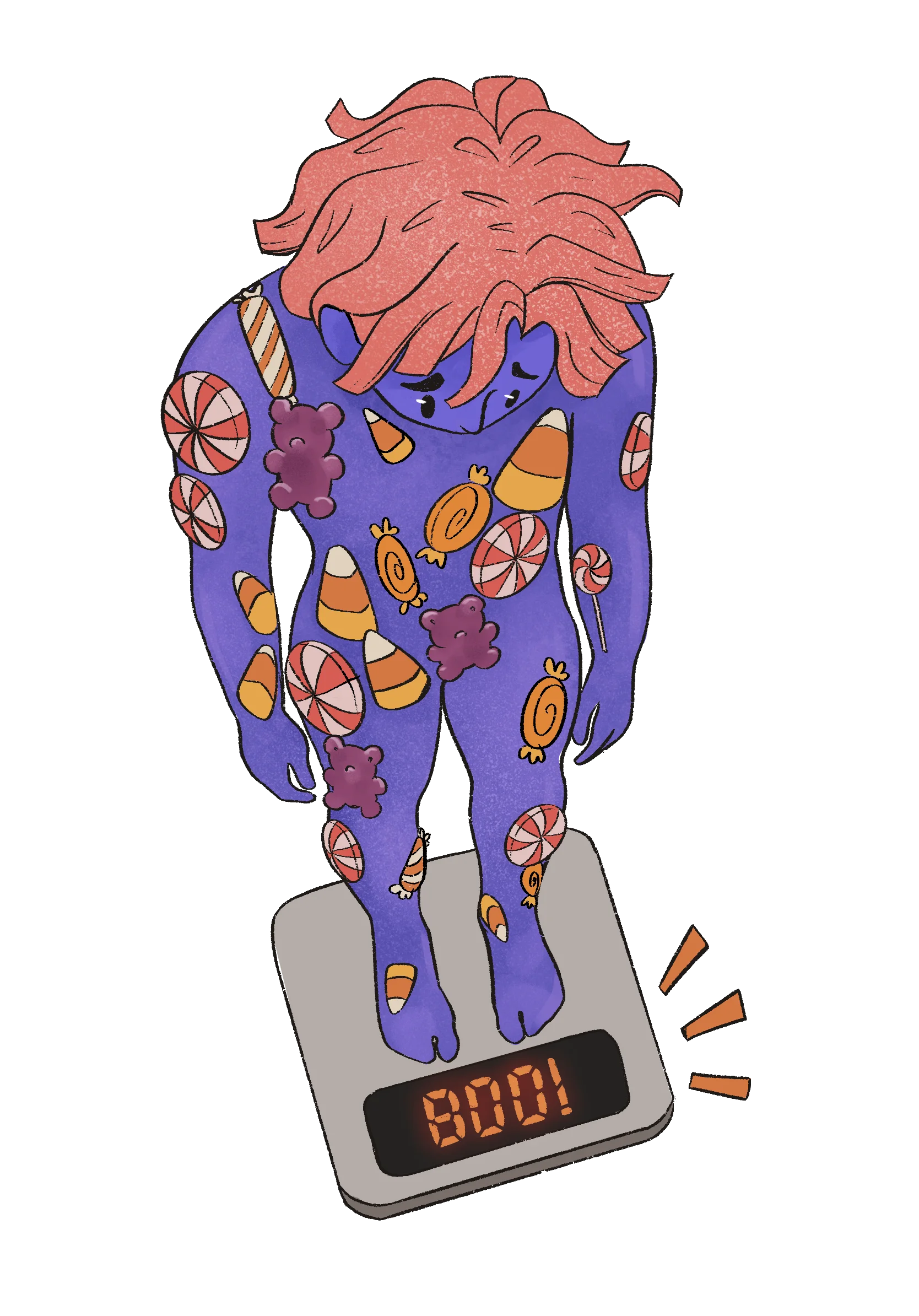
Nothing tells the truth like little kids, tipsy adults and tight-fitting Halloween costumes. Or at least, that’s how it feels when a costume becomes a verdict on whether our bodies look good enough.
As kids, the question was, “What am I going to be for Halloween?” Now, in college, the question is, “How am I going to look in my costume?”
A costume sits in an online shopping cart for a month, and then when it arrives, it doesn’t fit. Students spend weeks dieting and vigorously working out, all in the pursuit of the ideal “Halloween body.”
Dressing up for Halloween should not mean treating your body as something that needs to be fixed. When fitting into a costume becomes a reason to restrict food or push exercise to extremes, the pressure to look the part comes at the expense of feeling healthy.
Unlike in childhood, Halloween in college is more than just a holiday for playing dress-up and eating candy. College Halloween evolved into “Halloweekend” where students go out in revealing costumes for multiple nights in a row — and yes, the body has become part of the costume.
Because of this, phrases like the “Halloween cut” or “Halloween body” have been floating around the internet, with TikToks documenting daily workouts until Halloween or attempts to stay committed to weight-loss goals centered around the holiday.
People tie target weights to the costumes they want to wear, then rush the process through calorie restriction and intense exercise. This is different from setting an ordinary, gradual fitness goal: people feel pressured to reach a certain weight or look a certain way by Halloween.
“It’s an artificially created deadline that can undermine self-esteem if the goal isn’t reached,” said Michael Adamse, a clinical psychologist based in Boca Raton with more than 40 years of experience.
No one should feel like they need to change their body before they can wear a costume they were excited about in the first place. The pressure can start before a costume even arrives, with students scouring TikTok for Halloween inspiration, comparing themselves to the people wearing the costumes and feeling pressured to look the same.
A 2026 study published in a journal called “Body Image” found that young adult women shown TikTok “fitspiration” videos reported greater appearance comparison, appearance concerns and urges to check their appearance than those shown other content.
Students on campus are feeling this pressure, and around this time of year, it translates directly into changes in eating and exercise habits.
“I find myself being more restrictive, conscious of what I’m eating and tend to exercise more,” said a senior psychology major.
This pressure shows how a single weekend can turn into a deadline for eating and exercise habits.
“The state of my physique determines my costume — if I’m feeling ‘heavier,’ I wear something that’s more covered … and when I’m feeling thinner, I like to expose my stomach,” she explained.
The student said conversations around this time of year often revolve around the pressure to look thin enough to wear a certain costume.
“‘If I don’t lose the weight, I won’t be wearing it,’” she recalled hearing from other students her age.
When comments like these become part of the culture surrounding Halloween, changing your body can start to feel as routine as choosing the costume itself.
“[These goals] may reinforce all-or-nothing thinking and make confidence or participation feel dependent on achieving an appearance goal … greater concern arises when restriction or exercise becomes rigid or compulsive,” said Alesha Cid-Vega, a clinical psychology PhD student and instructor at the University of Miami.
Cid-Vega asked for The Hurricane to disclose that she is not a licensed psychologist or medical provider. Her comments are research-based and do not constitute clinical or medical advice.
A costume should fit a person, rather than the person changing themself to fit into a costume, but some use it as motivation.
“I choose to wear revealing costumes in order to motivate me to eat healthier [and] work out more [for] Halloween,” said a sophomore marketing major.
Others describe smaller changes, but the motivation is still shaped by the amount of skin they plan to show.
“Probably seven days before, I am a little more mindful of what I eat just because the Halloween costumes are typically less coverage than what you would wear on a regular day,” said junior Nicole Janghani.
Wearing a revealing costume can make students feel like they need to adjust their eating habits beforehand, even without a specific weight-loss goal.
That is what makes the “Halloween body” mentality so easy to normalize. Its harm is not always obvious: sometimes it can look like eating a little less, exercising more or deciding a costume can only be worn after losing five pounds.
But whether the change is dramatic or subtle, no one should have to change their body to feel entitled to wear a costume. The costume should fit the body — not the other way around.