


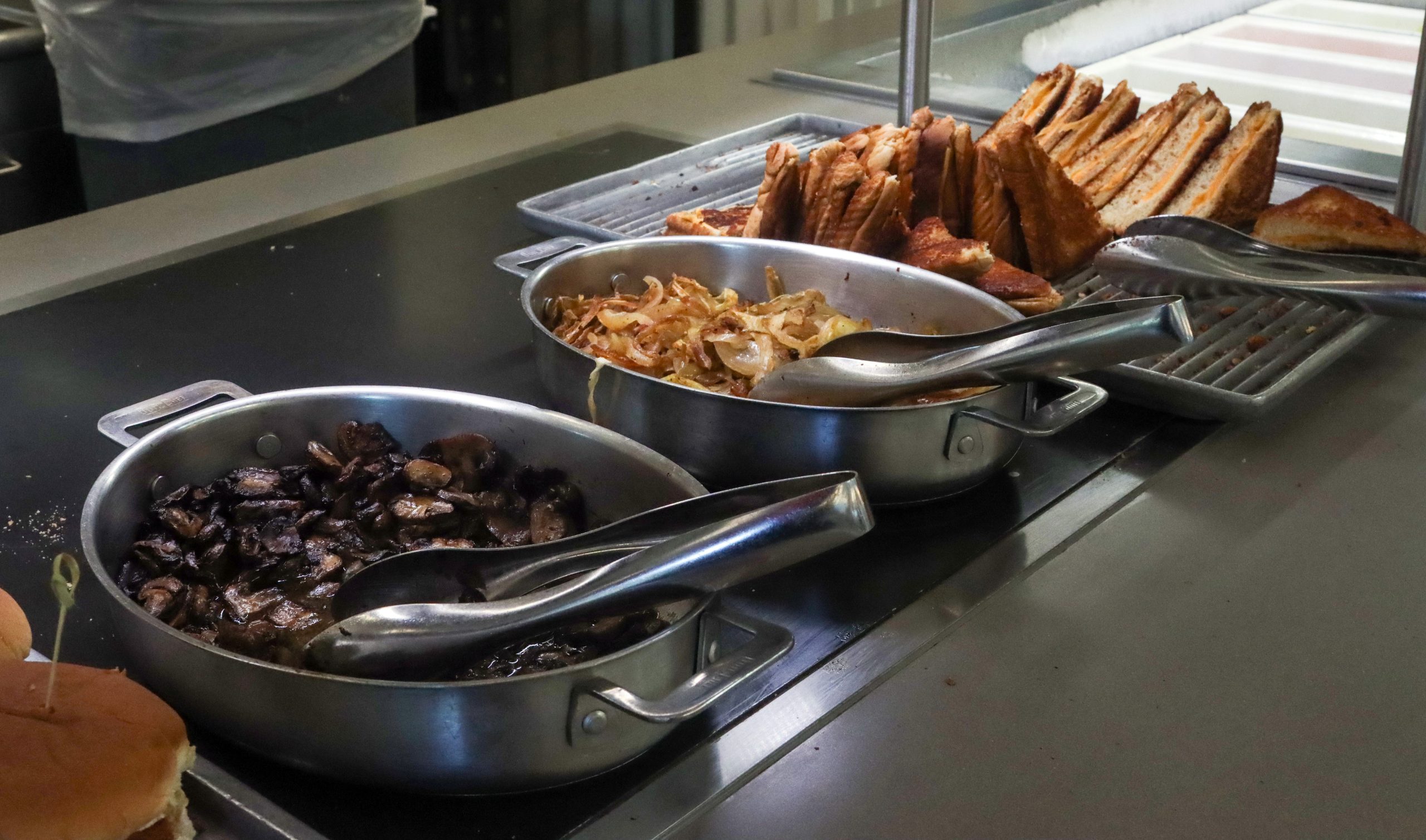
Centennial Village opened in 2024 with its own dining hall after the University of Miami demolished Stanford Residential College.
UM now caters to different tastes and dietary restrictions, offering a variety of meals that provide nutritional support at the Mahoney-Pearson and Centennial Village dining halls.
The addition of an on-campus dietitian allows students to schedule appointments to discuss ways to utilize the dining halls while accommodating for their food allergies and other limitations. Students can also tour the dining halls with the dietitian, who will guide them toward appropriate meals based on their goals or preferences.
More information could be provided by the school’s nutritionist, pending her response for an interview.
UM’s dining halls also offer students the opportunity to stay healthy, versatile and well-nourished while far from home.
But, students didn’t always feel like the dining hall provided adequate nutrition.
In a 1996 edition of The Miami Hurricane, an article explored students’ opinions and complaints about UM dining hall food.
Some students claimed there was a “lack of variety of food,” and some were disappointed with the quality of food at the university. A few specific grievances mentioned “bugs in food” and “no low-fat mayonnaise in the residence halls.”
These issues seem to have improved over the years, as 2017 alumna Trish Vega stated she had no issues with the dining hall food during her time studying at the University.
The dining halls then, which were Mahoney Pearson and Hecht, had rotating meal options. On the health side, Vega says it was adequate but not great.
“I don’t think [the food] was unhealthy,” said Vega. “There were options to be healthy, but if I was being super health conscious and wanted more variety on the healthier side, I would choose elsewhere.”
Now, students have plant-based sections that cater to vegetarians or vegans but are available to everyone.
Various cuisines, ranging from Italian to Asian foods, are also served on a rotating basis. For students unsure what foods contain certain allergens, like gluten or dairy, the dining halls display signs that clearly and succinctly list a recipe’s ingredients, which are also on their website.
Maria Jose Araque, an on-campus sophomore, frequents the dining halls, choosing Mahoney-Pearson for lunch and dinner and Centennial for breakfast. She thinks the food in UM’s dining halls is of good quality and can be nutritious.
“I’ve had friends from other Florida schools come [to UM] and they’re like, ‘This is nothing compared to what we had in FSU or UF. This is really good and very healthy,’” said Araque.
Araque also noticed that the dining halls have been more creative with their options this year and that the food tastes more home-cooked.
UM’s dining halls and quality of food have definitely improved over the years, from support for dietary restrictions to a large variety in the cuisine. Nonetheless, the dining experience at UM doesn’t stop at the dining halls.
With selections like the Hurricane Food Court, Corner Deli, Pura Vida, Starbucks, SoCal Taco Co. and various food trucks, UM encourages students to step outside their comfort zone and to be bolder by venturing outside the usual dining facilities.