


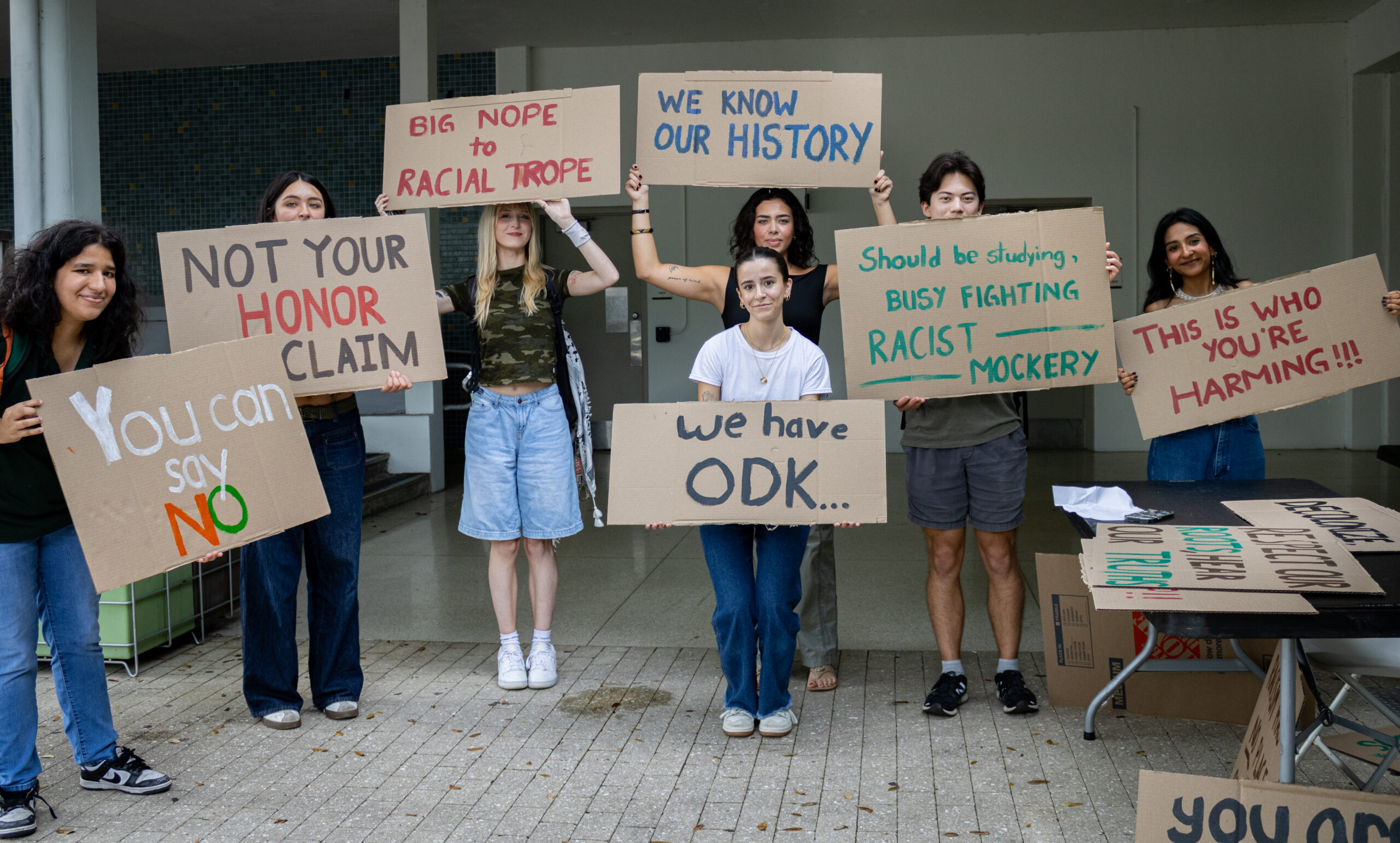
The University of Miami received an F for free speech in the 2027 College Free Speech Rankings. This year was the University’s lowest score yet — 51.4 — but UM has received a failing grade in free speech since the rankings began seven years ago.
The Foundation for Individual Rights and Expression, or FIRE, lowered UM’s score from 51.6 last year.
Out of the 261 U.S. colleges and universities on the list, UM ranked No. 253. The data came from a variety of sources, including student surveys, campus policies and speech-related controversies.
Sean Stevens, chief researcher at FIRE, said student survey components make up the majority of a school’s possible score, while university policies can add or subtract points. Speech-related controversies can also affect a university’s score.
Last year, FIRE surveyed 340 UM students and ranked the University at No. 229.
Fernando Sepulveda Sagaseta, the president of Student Government, emphasized that the University is open to conversations about this score.
“Student Government believes in freedom of expression and supports any students who want to have conversations with University administration about this issue,” Sepulveda Sagaseta said.
Not only did UM’s overall grade decline, but some individual categories also dropped.
Disruptive Conduct, which measures “how students perceive and accept campus speech limits,” according to FIRE, dropped to a C+. Self-Censorship, which measures how often students find themselves limiting their speech, decreased to a D-.
FIRE does not provide previous individual category scores, only the relative change from the year prior.
Stevens said UM fell from 123 places in the Disruptive Conduct category after ranking in the top 50 last year, indicating increased student acceptance of non-peaceful forms of protest. He said declines in Disruptive Conduct and Self-Censorship contributed to UM’s lower overall score.
This year, the highest grade FIRE gave was a B-. Only two universities — both private — received that score: The University of Chicago and Claremont McKenna College.
49% of UM students said they have limited their speech, or self-censored, at least once or twice a month.
FIRE defines self-censorship as refraining from sharing certain views out of fear of social, professional, legal or violent consequences. Those consequences can come from the University or other sources, including social pressure.
The survey also found that 59% of UM students were very or somewhat uncomfortable publicly disagreeing with a professor on a controversial political topic, while 48% said the same about expressing disagreement during an in-class discussion.
Anastasia Krafczek, a sophomore majoring in sports administration and broadcast journalism, said, “During my time in college, there’ve been several events in the world that other schools speak out against or protest, but I rarely see that at UM.”
Some categories improved from last year, but most still received failing or barely passing grades. Comfort Expressing Ideas received a D, Openness a C and Administrative Support an F.
Another category on the site is Speech Controversies, which is “A campus incident where a student, professor or speaker faces backlash or pressure for speech that’s protected by the First Amendment or academic freedom.”
Stevens said the controversy involving Dr. Michelle Bravo, a former neurologist at UM’s Miller School of Medicine, also contributed to the University’s decline.
The reported controversy fell under the Scholars Under Fire category. FIRE says the incident occurred following public backlash over comments Bravo made on social media after Charlie Kirk’s assassination.
Dr. Bravo no longer works for the institution and told The Hurricane that she resigned.
FIRE also provides a “Spotlight Rating” that resembles a traffic light. The rating evaluates university policies governing student expression. UM currently has a red-light rating, meaning FIRE has identified at least one policy that it says “clearly and substantially” restricts freedom of speech.
Stevens said UM’s red-light policy rating is one reason the University has received a poor speech climate grade for several years.
For instance, if UM adopted The Chicago Statement for Free Speech, that outlines principles of free speech and academic freedom, its score would increase by three points.
Similarly, if UM adopted institutional neutrality, its score would increase by three points.
According to FIRE, institutional neutrality is “the idea that colleges and universities should not, as institutions, take positions on social and political issues unless those issues ‘threaten the very mission of the university and its values of free inquiry.’”
Stevens said FIRE recommends that UM reform policies it classifies as red or yellow lights, adopt the Chicago Statement and take an official position of institutional neutrality. He said those changes would provide an immediate boost to UM’s overall score, while improvements in student survey responses could take longer.
The overall speech climate, which contributes to the Spotlight Ranking, affects the score the most. If UM improved, its score could increase anywhere from five to 15 points.
If all of these aspects improved, UM’s overall score would at least receive a passing grade of C.
Many students feel UM doesn’t have a neutral agenda.
“The University of Miami is extremely hesitant to allow speech that jeopardizes its financial interests,” said one student who anonymously responded to FIRE. “Protest rules have been altered to be extremely repressive, not allowing protests without permission from the University and requiring police officers — and a payment to support them.”
It also found that 30% of UM students said they would never feel comfortable “expressing an unpopular political opinion to [their] fellow students on a social media account tied to [their] name.”
“I could not tell you how many students have come to me in agreement or in admiration of the ability to speak up, but they fear their personal, academic, professional and social lives will be negatively affected,” said Riley Richards, the secretary of UM College Republicans.
The Miami Hurricane reached out to the University of Miami Young and College Democrats and did not receive a response.
However, in contrast to what these results seem to indicate, 82% of UM students answered no when asked if freedom of speech is a difficult topic to discuss.
Despite these results, one unnamed member of the Class of 2025 who responded to FIRE said free speech issues exist even off campus.
“In totality, it is impossible to express your true feelings about anything nowadays anywhere due to feeling judged or being canceled,” he said.
The University did not respond to The Hurricane’s repeated requests for comment.