


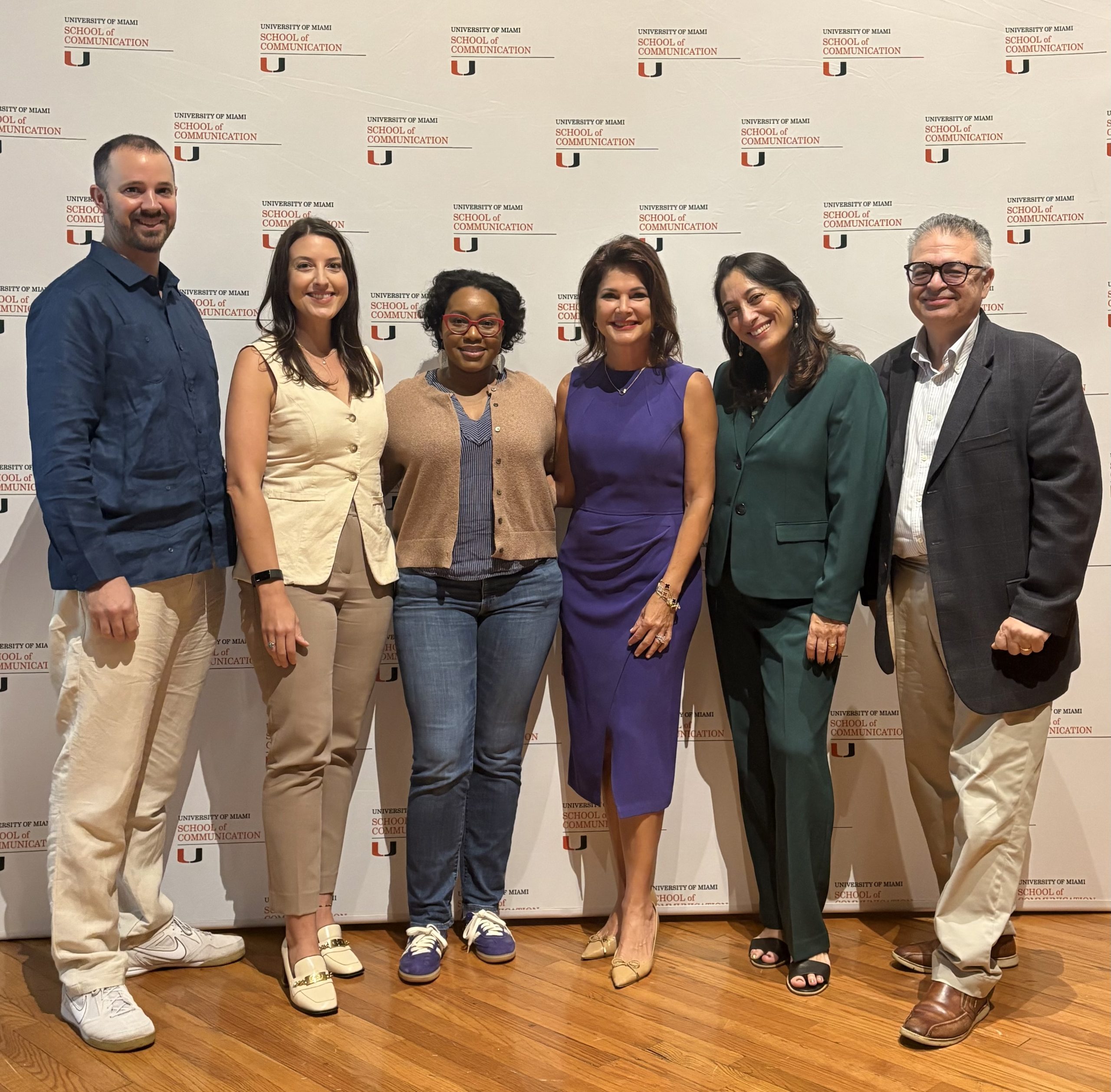
The University of Miami School of Communication, in collaboration with Community Wire, a student driven newsroom that publishes local Miami-Dade stories, hosted an election panel on Oct. 6 featuring Miami journalists, Rasia Habersham, Kimberly Leonard, Jackie Nespral and Daniel Rivero at the Crosford Cinema.
Moderated by UM Professor Irene Prusher, the panelists discussed Florida’s gubernatorial race, congressional races in South Florida and the role of artificial intelligence in journalism.
The conversation touched on immigration, the Trump administration, the war in Iran and young voters as panelists discussed what is at stake in the 2026 elections and how the results could affect future elections.
Florida has not had a Democratic governor in over 25 years. The race between Democrat David Jolly and Republican Bryon Donalds could potentially shift that pattern.
In South Florida, a closely watched congressional race is unfolding between Republican Maria Elvira Salazar and Democrat Elliot Rodriguez.
“South Florida is such an important part of this race, it is going to be critical,” said Nespral, a NBC6 Anchor. “It comes down to who goes out to vote [and] the results of this particular race can be key for later elections.”
The panelists also discussed the lack of a televised debate between Donalds and Jolly during the 2026 election. Habersham, a race and cultural reporter for The Miami Herald said the absence of a debate could limit access to information for voters who have difficulty keeping up with campaigns because of scheduling disruptions or disabilities.
“More information is always better. I am disappointed in the no governor debates,” said Leonard, a political writer for POLITICO and author. “Democracy loses out. We all lose out.”
Panelists said social media could be one factor contributing to politicians’ reluctance to participate in debates. As social media platforms have become a major way to campaign to reach voters, comments made during debates can quickly be clipped and distributed to large audiences.
Politicians may be hesitant to debate when they know a single mistake or comment can be taken out of context and spread online, panelists said.
“Fear is one clip on social media that goes viral,” said Rivero, an investigative reporter for WLRN, author and radio show and podcast host.
“[They are] scared they are going to make a mistake and use it against them,” said Nespral.
The conversation later shifted to questions from undergraduate and graduate students asking about AI and its role in the newsroom.
As layoffs continue across new organizations, panelists discussed how AI is changing journalism and the future of local news.
Habersham said the decline of traditional newsrooms could contribute to the growth of smaller, more targeted news organizations
“I think you will see with the layoffs in media outlets is the increase in hyper vocal medium and return to micro-newsrooms,” said Habersham.
Hyper vocal medium refers to journalism focused on small geographic areas, such as individual neighborhoods, town or city blocks. Mirco-newsrooms operate on a smaller scale, often with small teams focused on producing local coverage.
The discussion emphasized the importance of politics and current events for student journalists entering the industry. Panelists highlighted how events at the local, national and global levels can shape both the stories journalists cover and the future of the news industry.