


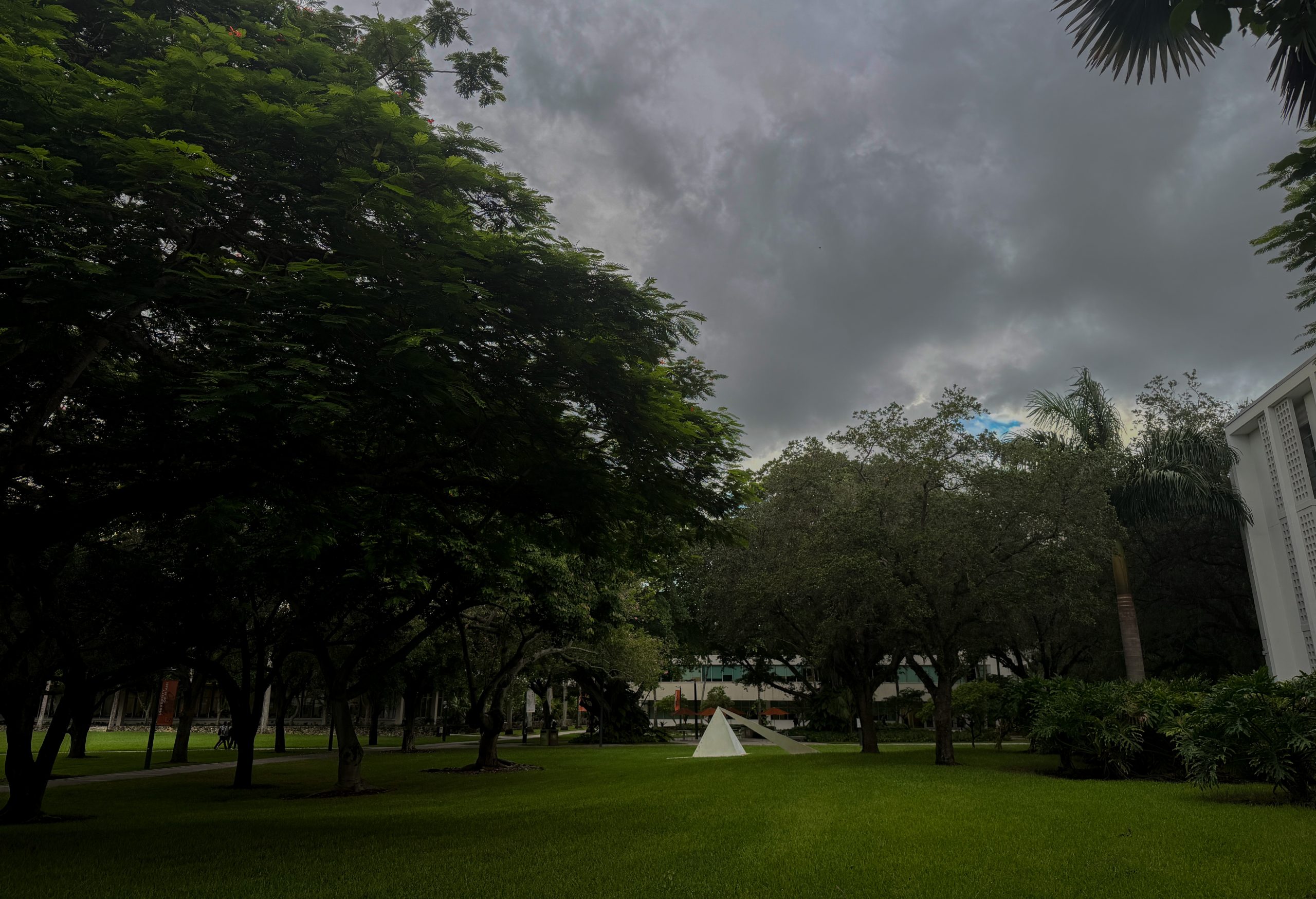
South Florida ended summer 2026 with record heat and unusually dry conditions, according to the National Weather Service. Now, as the University of Miami enters the peak months of hurricane season, students continue to face extreme temperatures, sudden thunderstorms and the possibility of tropical storms.
NOAA’s updated outlook predicts a below-normal 2026 Atlantic hurricane season, with seven to 13 named storms, two to six hurricanes and up to two major hurricanes. However, a quieter overall season does not mean South Florida is protected from a destructive landfall, especially with hurricane season continuing through Nov. 30.
Dangerous weather on UM’s campuses is not limited to tropical storms or hurricanes. Students regularly walk to class through high heat indexes and fast-moving thunderstorms that can become dangerous within minutes.
The concern has led some students to question whether the University’s current severe weather guidance goes far enough.
“When the campus and surrounding roads start flooding, requiring students to come to class feels like an unnecessary risk,” said sophomore Gaby Shaw. “If we already have the option to use Zoom, classes should move online until conditions are safer.”
UM’s lightning prediction system operates on the Coral Gables and Marine campuses. When lightning is predicted within 2.5 miles, one long siren and flashing strobe lights warn people to move inside. Three short sirens signal that it is safe to return outdoors.
“I’ve heard the sirens on campus, but I didn’t know that the different patterns had separate meanings,” Sky Apirian said. “UM has never directly explained the difference to me or why knowing each signal is important.”
UM also uses its Emergency Notification Network, a system used to distribute urgent information through email, text messages and phone calls. Alerts may also appear on UM’s websites and official social media accounts.
Students must register their cellphone number through CaneLink to receive emergency text messages. The system can alert the University community about severe weather, campus closures and other events that may threaten public safety.
When a tropical storm or hurricane threatens South Florida, the University states it will notify students about class cancellations, campus closures and possible evacuations through Storm Alert emails and ENN messages. UM aims to decide whether to close or evacuate the Coral Gables campus approximately 72 hours before tropical-storm-force winds are expected.
The University also instructs students to create an evacuation plan before a storm and know where they will go if the campus closes. Students who cannot leave the area may stay in a local hurricane shelter, where they should be prepared to sleep on the floor of a common area. Food and water will be provided, but bringing a sleeping bag, pillow, snacks and prescription medications is recommended.
Students should keep their emergency contacts and evacuation information updated through CaneLink. If an evacuation is ordered, they should not return to campus until the University announces that it is safe.
UM tested these procedures during a hurricane-response exercise involving all three campuses in June 2025. The exercise examined whether University departments could communicate and coordinate during a major storm.
Anthony Graziano, a Miami resident and parent of a UM student, said he feels confident in the University’s ability to respond to severe weather. However, he acknowledged that he is not familiar with the details of UM’s lightning warnings or evacuation procedures.
“So while I don’t know the exact plan, I’m certain it’s extensive,” Graziano said.
Graziano said his daughter has lived in Miami for most of her life and understands the importance of staying hydrated, preparing for hurricane season and seeking shelter during storms. Still, he suggested that UM offer voluntary emergency-management training to help students understand how to respond.
“Having people prepared, making good decisions and knowing where to go or stay during an emergency is a major part of organizational safety,” Graziano said.
As severe weather continues to affect South Florida, UM’s preparedness depends on more than having warning systems in place.
Students and parents must also understand the procedures and how to respond before conditions become dangerous. Greater awareness and training could help close the gap between trusting that a plan exists and knowing what to do when it is needed.