


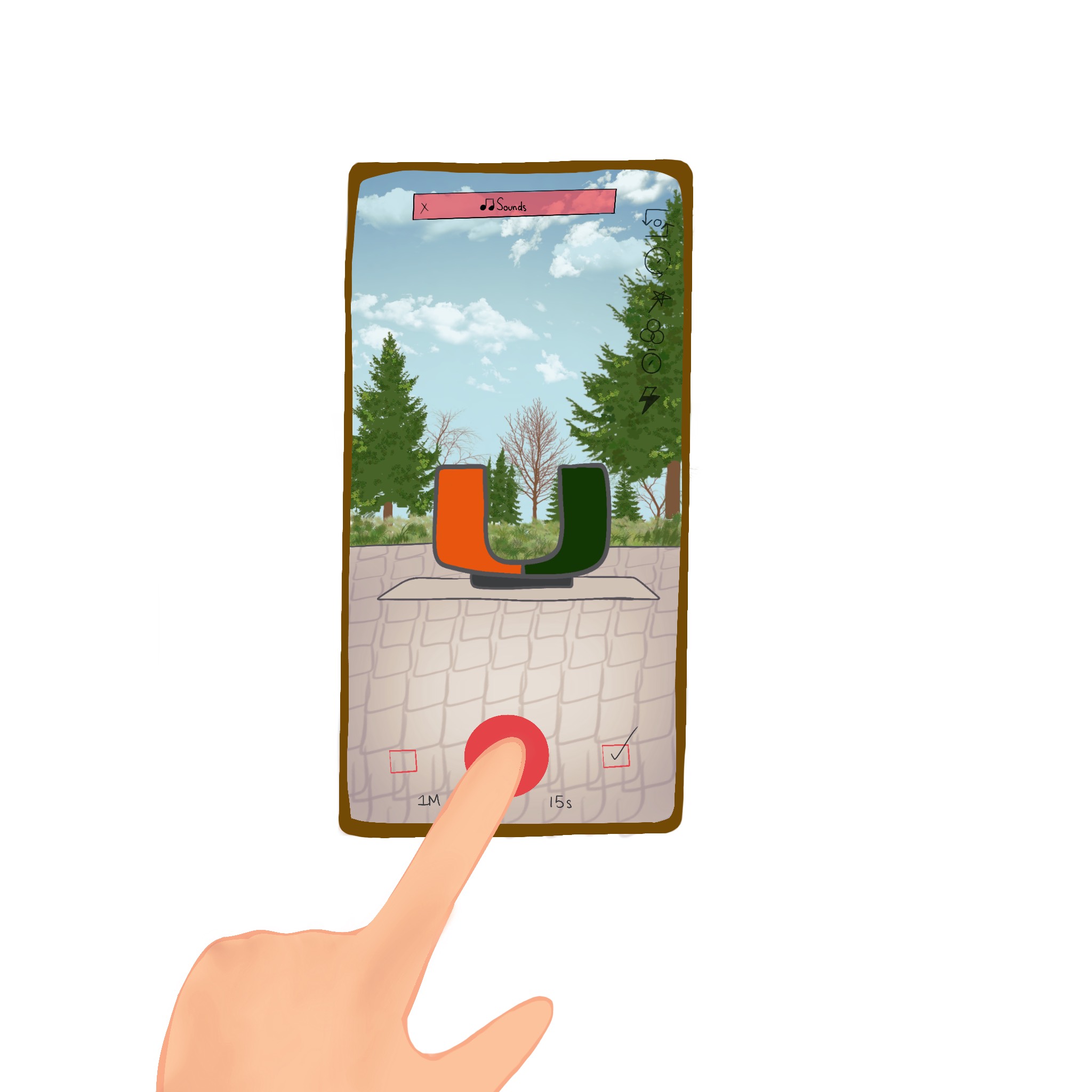
The list of influencers who attend, or have graduated from, the University of Miami only seems to grow each semester. The U is a magnet for content, but popularity can come at the expense of its reputation.
In addition to the nearly $100,000 it costs to attend UM for a year, students also pay for the reputation and prestige of the degree they will earn. In the professional world, a university’s reputation can weigh heavily on hiring decisions.
Although social media content can devalue UM by highlighting some students’ materialistic, party-focused lifestyles, content creators are not automatically bad press. Unfortunately, the most polarizing figures are often the ones who blow up online.
Last year, social media feuds between UM students became mainstream. Arguments ended up in the Washington Post and the New York Post and were even aired as Peacock microdramas, each giving a blow-by-blow of the content-creator chaos. Students’ online comments have portrayed them as being out of touch, petty and embarrassing.
For prospective students and parents, such arguments may create the false impression that campus life is toxic.
“I just wish we wouldn’t be confused with an online persona anymore,” said George Dragulin, a sophomore at UM. “The U is so much more than an influencer’s 15-second TikTok.”
One of the most famous genres of short-form content is the “Get Ready With Me.”
At UM, students’ GRWMs revolve around getting ready for clubbing or partying. This could leave a negative impression on parents and students, reinforcing the idea that UM is not academically focused while promoting what some may consider shallow lifestyle values.
“There is little substance to their content if all they promote is party culture,” said Ara Bolarinwa, a sophomore at UM.
With influencers all over campus, an increasing number of students also report harassment linked to Meta smart glasses. These devices are the newest craze on social media: sunglasses that are both an accessory and a recording device.
Off-campus influencers who are aware of the University’s popularity deliberately come to campus to ask questions intended to embarrass students while filming on Meta glasses without consent, or to harass them. This includes live-streaming events on campus.
All of this creates the impression of an unsafe campus, where students’ comfort is not prioritized.
“I didn’t know what my footage was being used for … the magnitude of it really freaked me out,” a sophomore who wishes to remain unnamed said about being filmed without consent.
However, content creators are not a PR nightmare by default. They could easily be considered a marketing tool for UM — and a very effective one, at that.
Success stories like Alix Earle serve as a testament to the quality of UM’s education. The accomplished businesswoman and content creator is not only a walking advertisement for the Business School, but she also gives back to her alma mater through the Alix Earle scholarship.
Founded in June 2023, it eases the financial burden on aspiring entrepreneurs. Social media played a huge role in her success, and now she is using that success to empower ambitious students.
A few decades ago, making money from social media posts seemed borderline impossible; nowadays it is a tangible reality that approximately 60% of children strive for, according to research conducted by the University of Wisconsin.
An increasing number of people trust social media for news, fitness and wellness advice and a sense of connection. Goldman Sachs’ research predicts that in 2027, the influencer industry will be worth half a trillion dollars.
The School of Communication just introduced a minor in strategic social media communication, focusing on mastering social media strategy. Along with it, the Academic Bulletin now includes a major in digital storytelling and content creation for students looking to work in “news, sports, content creation and media storytelling positions.”
These are strides the University is making to keep up with the ever-changing demands of the job market, and UM influencers are simply a product of those changing times.
Christian Yeagley, a sophomore at UM, is working on a new reality show called “Miami Influence: The Reality Series.” The series will focus on student influencers and their lives in a bustling city such as Miami. With more than 500 applicants already, there seems to be no shortage of ambitious influencers in Miami.
“Influencers are here to stay on campus, but branding ourselves as an ‘influencer school’ may be a step in the wrong direction,” said Parker Osth, a fifth-year architecture student. “Regardless of the individual influencers, the culture serves to portray an unrealistic and uniform flashy lifestyle for UM students to measure themselves against. What current influencer content neglects is the diverse paths and personalities outside of that lifestyle that make UM such a uniquely special community.”
At this point, influencers are a core part of the University’s image, just as Sebastian the Ibis and the colors green and orange are. UM does not need fewer influencers.
Instead, our campus would benefit from no longer confusing influence with representation. Viewers need to critically analyze the content and images that some influencers post and determine whether that content accurately represents the entire University.