


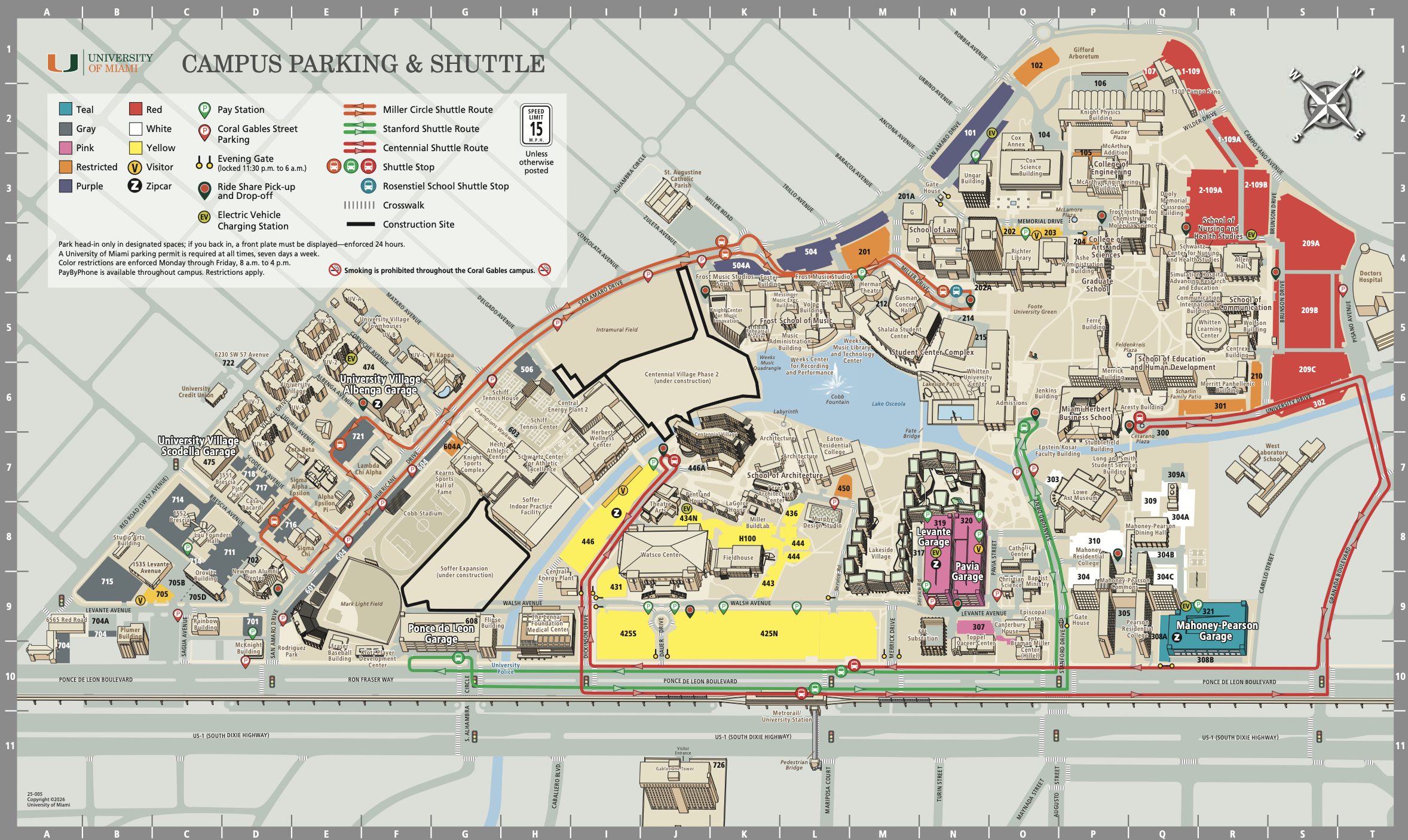
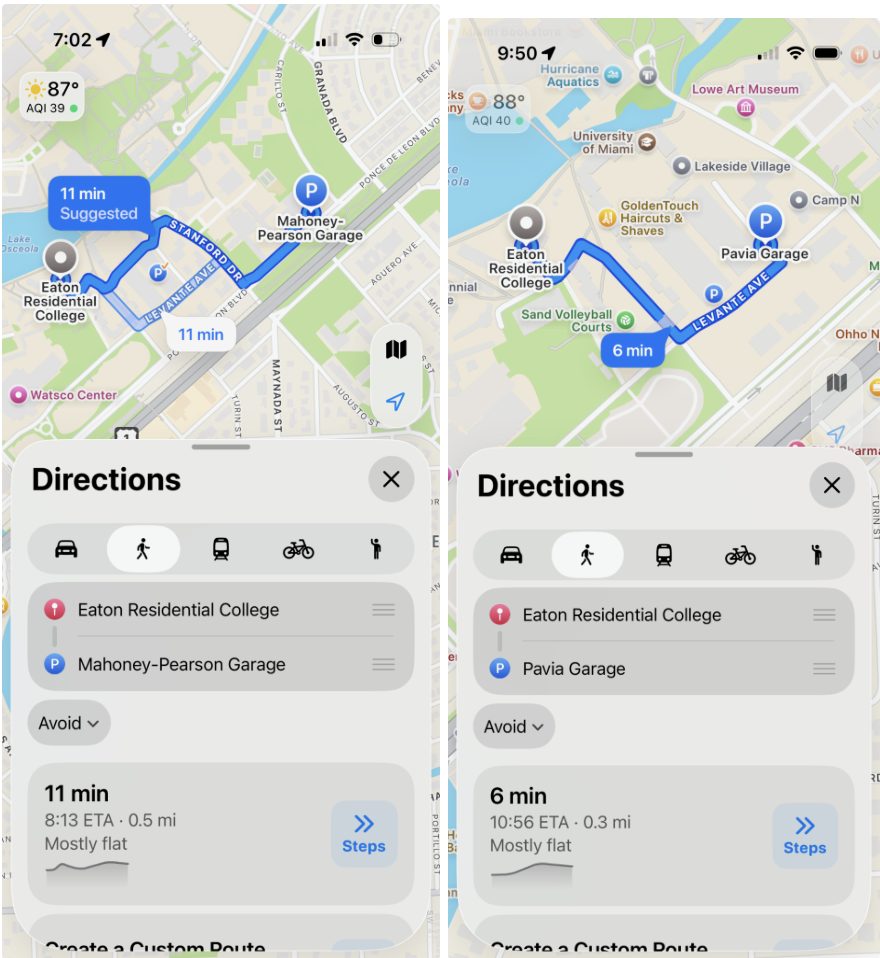
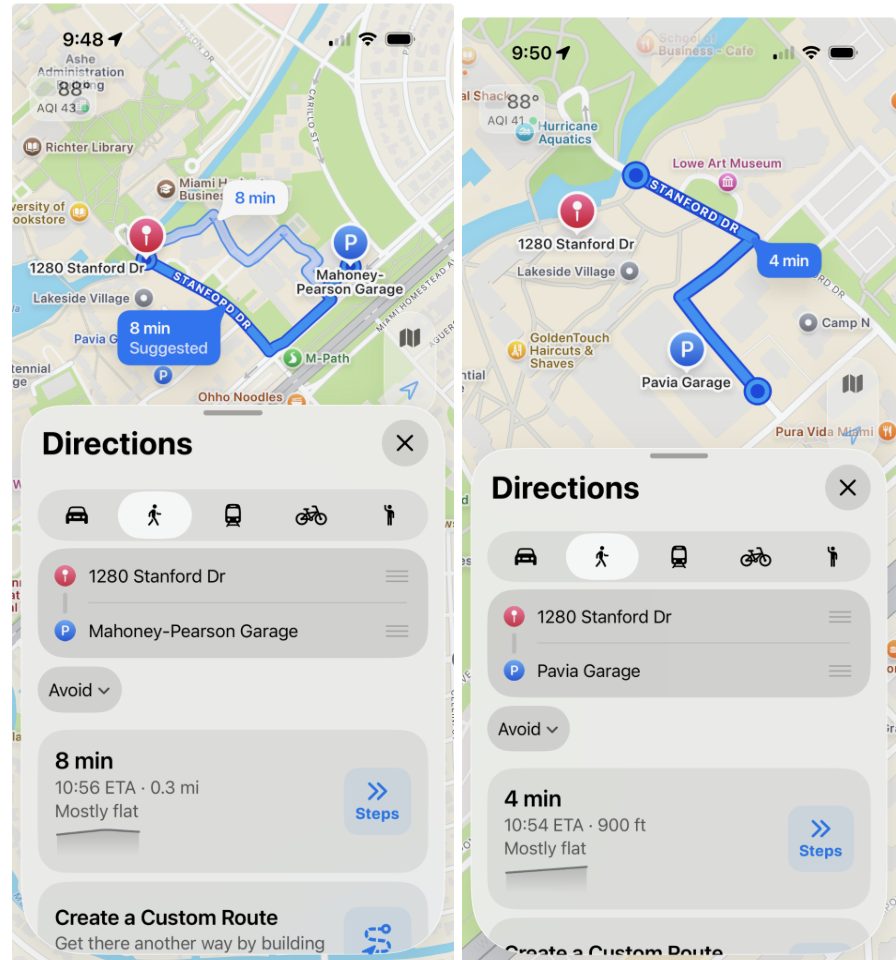
Students living in Lakeside Village, Centennial Village and Eaton Residential College will only be allowed to park in the Mahoney-Pearson Garage for the upcoming year, forcing students to walk farther to their cars and compete for more limited spaces.
The Pavia/Levante Garage (Pink zone), the Albenga Garage (Blue zone) and the White zone — the surface parking around Mahoney-Pearson — will be closed for resident student parking. For students who frequently need to travel off campus, such as someone with an off-campus job, these restrictions will pose a major inconvenience.
These changes will be in effect on the first day of classes, August 17, 2026, and commuter students will remain unaffected. Throughout the construction, Pavia and Levante Garages will remain open for Pink permit holders. The University Village Garages – Albenga and Scodella – will remain open for UV permit holders.
“This change is necessary due to ongoing campus construction and the loss of parking capacity, including the White lots,” read the email sent by the University of Miami Office of Parking Transportation on July 23. In a clarification to The Hurricane, Parking Transportation stated that White lots will be entirely closed — even to non-resident students — “until further notice.”
Given that the Mahoney-Pearson Garage is nearly 100,000 square feet — or approximately 34% — smaller than Pavia, it is unclear how the garage is going to accommodate everyone. However, resident students with a Pink permit were previously allowed to park on certain floors of the Pavia Garage, so the square footage difference may not be entirely resident student parking.
In a statement to The Hurricane, the University wrote that the garage “has sufficient capacity to accommodate resident parking needs while remaining near the residential communities it serves.”
However, the University declined to directly answer questions about how many parking spaces are in each lot, or how many spaces students will lose due to construction.
“Because resident student vehicles typically remain parked for extended periods, the Mahoney-Pearson Garage is well-suited for dedicated residential parking while preserving flexibility in other high-demand parking areas across campus,” said the University.
According to the University’s email sent on July 8, student parking passes for resident and returning commuter students went on sale on July 14 and July 28, respectively. New commuter students will be able to purchase parking passes beginning on July 30.
“I think what UMiami did with parking is a huge inconvenience to students,” said sophomore resident student Hannah Salles. “I can’t imagine how they’re going to fit us all in one parking garage. It was already inconvenient to find a spot last year.”
Students can access their parking account and apply for a parking permit here. At the time of publishing, the Red lot was already sold out.
Before campus parking permits went on sale, not all emails from Parking and Transportation said that Eaton students would be impacted by the construction. However, based on the statement the University provided to The Hurricane, it appears that Eaton residents will face the same restrictions.
None of the emails from the University mention THesis residents, who have not yet received any parking information, according to a student assigned to THesis. However, students living in THesis are considered resident students and will also be limited to the Mahoney-Pearson Garage when parking on campus.
In addition to parking lot changes, there will be a new feature on the UMiami app that allows students to see real-time parking availability across all open lots on campus. This feature will go live on August 15.
In a separate email from the University, a third change to campus parking and transportation was also mentioned.
Effective August 1, motorized micromobility devices such as e-scooters, e-bikes and e-skateboards “will not be permitted to be operated, parked, stored or charged on the Coral Gables campus.”
There will be designated micromobility parking will be located on the perimeters of campus for students who require them.
This article was updated at 4:49 p.m. Eastern on Thursday, July 30, to clarify information as per the University of Miami Office of Parking Transportation’s request.