


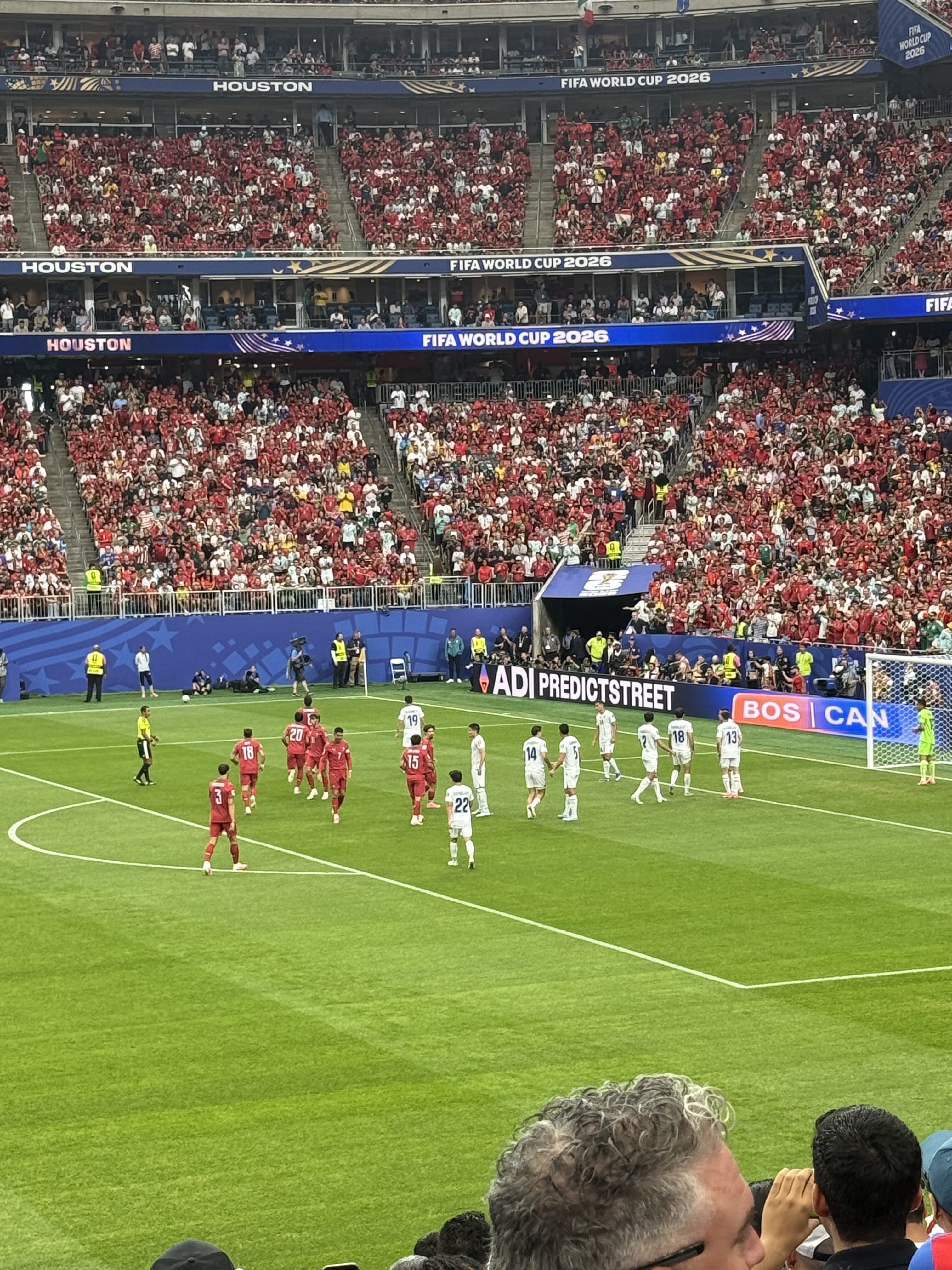
If you have scrolled through socials, turned on your TV or even taken a peek at billboards or restaurants in your neighborhood, then you are probably no stranger to the World Cup and all it entails.
Fans of all nations have traveled to one or more of the 16 cities — including Miami — across three countries to see their team play and make their country proud.
With all the excitement comes changes that affect the surrounding communities of each of the major cities these games are being played in.
More traffic, larger airport crowds and thousands of soccer-themed advertisements driving the economy are all markers of a World Cup season.
One of the most vital aspects of the community affected by the World Cup is the economy, and while most would believe that cities are greatly benefited by its presence, evidence shows that some cities are actually losing money.
In Miami, the city expects to spend about $12.5 million on preparations for the world cup such as security measures, permitting and celebrations. Total visitor spending is expected to be approximately $650 million, but FIFA will collect most of the revenue because of its contract terms.
According to an article from NC State University, FIFA’s contracts with host cities allows them to capture financial gains through media rights and sponsorships. The cities themselves will only see indirect revenue from lodging and tourism.
“FIFA will collect an estimated $8.9 billion from the 2026 World Cup while the 11 U.S. cities hosting it could face a collective shortfall of upwards of $250 million,” said an article in Fortune magazine.
The author credits this loss to the restructuring of how FIFA is going to be running the World Cup moving forward.
For the first time in the tournament’s history, FIFA itself will be dealing directly with host cities, rather than going through national federations that split the profit. So, the company receives almost all the profits made from advertisements, sponsorships, tickets, merchandise,sales and more.
This is also the first time FIFA is using dynamic pricing for tickets, where ticket prices change as demand for tickets fluctuate. The results of this are the nearly $6,000 price tag seen on quarterfinal match tickets, with prices only expected to increase through the remaining rounds as the final game approaches.
Forbes contradicts the conclusions brought up in Fortune, stating that host cities are “generating a significant [economic] boost” thanks to the World Cup.
“Bank of America’s latest consumer spending analysis, which tracked card-based purchases in the tournament’s 16 host cities, found that overall spending has increased 6.3%” compared to this time last year, said Forbes.
Consumer spending by non-locals has increased by nearly 17% in the major host cities as well, as fans travel to support their competing home countries.
According to Forbes, as fans travel and follow their nation’s games, they also explore the surrounding cities and drive revenue for local businesses including transportation, hospitality, and dining.
Taking a broader view, various news and research outlets state that the economic results vary for each World Cup.
The 1994 World Cup, hosted by the United States, is credited with having generated massive revenue for its host cities as it saw almost 69,000 fans per match.
However, in 2014, the World Cup hosted in Brazil was a failed public investment.
The efforts displaced local residents to make way for infrastructure and stadium developments, and cost approximately $11.5 million to cover the costs brought on by the tournament.
“Any potential benefits, sustained or short-lived, come at a steep price, as World Cup events are often exceedingly expensive to host. And in many cases, a city’s financial gains — a mere fraction of FIFA’s — can result in a breakeven scenario or a loss,” said Britannica.
With the World Cup and the Winter Olympics all being held this year, 2026 has seen an unprecedented travel boom.
According to Good Morning America, survey results found that 81% of travelers are influenced by major sporting events when choosing where and when to go.
“What Expedia data shows clearly is that fans booked earlier, are traveling farther, and spending more to be part of the tournament -— so the demand is there — it’s just not showing up evenly in every city,” said Melanie Fish of Expedia Group, a global travel technology company.
Cities like Dallas and Seattle have reported an increase in visitors, and therefore an increase in local revenue. On the other hand, travel bans and visa denials have resulted in lower percentages of travelers than anticipated in certain areas.
“Fans from more than a quarter of the countries taking part in the World Cup are facing travel bans, tighter restrictions or high visa rejection rates,” reported the BBC.
Unlike Mexico and Canada, the U.S. has travel bans on certain countries such as Haiti, Senegal and Ivory Coast, making them ineligible for the type of visa recommended by U.S. officials.
“Analysis of the U.S. State Department data found that the visa rejection rate for citizens of 11 of the 48 countries that have qualified for the World Cup was higher than 40%,” they said.