


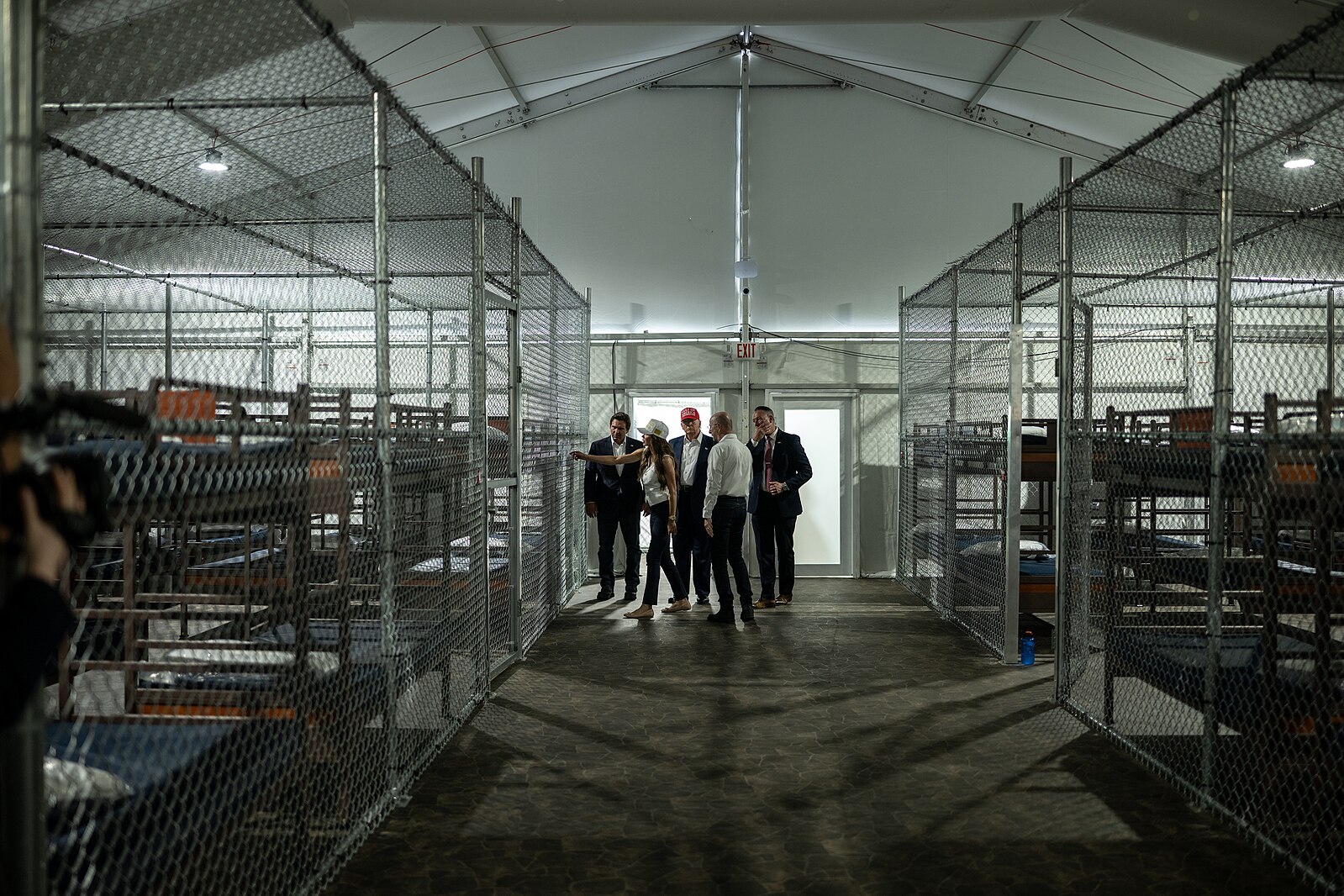
Gov. Ron DeSantis announced the closure of Florida’s immigration detention center in the Everglades, known as “Alligator Alcatraz” on June 25, 2026. DeSantis announced this closure eight days after detainees had been removed from the temporary facility, with the final detainees transferred June 17.
The site of the facility is located approximately 55 miles west from the University of Miami main campus. UM students question the impacts this facility has left on the state budget, environmental impacts on the Everglades, and what tipping point led to this.
“It was unsettling to know that a facility connected to such serious human rights concerns was so close to campus.” Said Isabella Smith, Vice president of the United Human Rights Foundation at UM. It made the issue feel much more real and reminded me that these situations are not always far away, they can be happening within our own community.”
Officials said the temporary facility is no longer necessary because the federal capacity increased and hurricane season is fast approaching, drawing concerns about the facility’s ability to withstand weather. Beyond those reasons, “Alligator Alcatraz” came with legal challenges, opposition from environmental groups and allegations of mistreatment.
Questions remain about the relocation of detainees, payment of vendors and the protections of the Everglades land.
According to CBS News Miami, the facility’s estimated total cost was approximately $1.2 billion over 350 operational days, totaling an estimated $3.4 million per operating day and $3,571 million per detainee per day. Prior to opening, costs were projected to be $245 per person per day.
By August 2025, Florida signed about $405 million in vendor contracts to construct and operate the site. Officials sought $608.4 million in federal funding; but Florida had not received the full reimbursement by the time facilities closed, leaving taxpayers responsible for the cost.
DeSantis added more than 20 acres of pavement and installed fencing, industrial lighting and hundreds of diesel generators at a site surrounded by Big Cypress National Preserve. The Big Cypress helps support the Everglades water system, filters water, and protects habitats for species.
A state environmental assessment found that emissions from generators and vehicle traffic exceeded regulatory thresholds.
The assessment concluded the facility is unlikely to cause a major change to the overall landscape because much of it was mainly occupied by an already developed airport site, but it still identified air pollution concerns.
The complete effects of the construction on the soil, water and wildlife in the Everglades are unclear. Conservation groups protested the facility as it disturbed wetlands and habitat used by protected species, including the endangered Florida panther. In response, the Miccosukee Tribe demanded an independent assessment and restoration plan.
“I think universities and students have a responsibility to speak out when people’s basic rights and dignity are at risk.”