


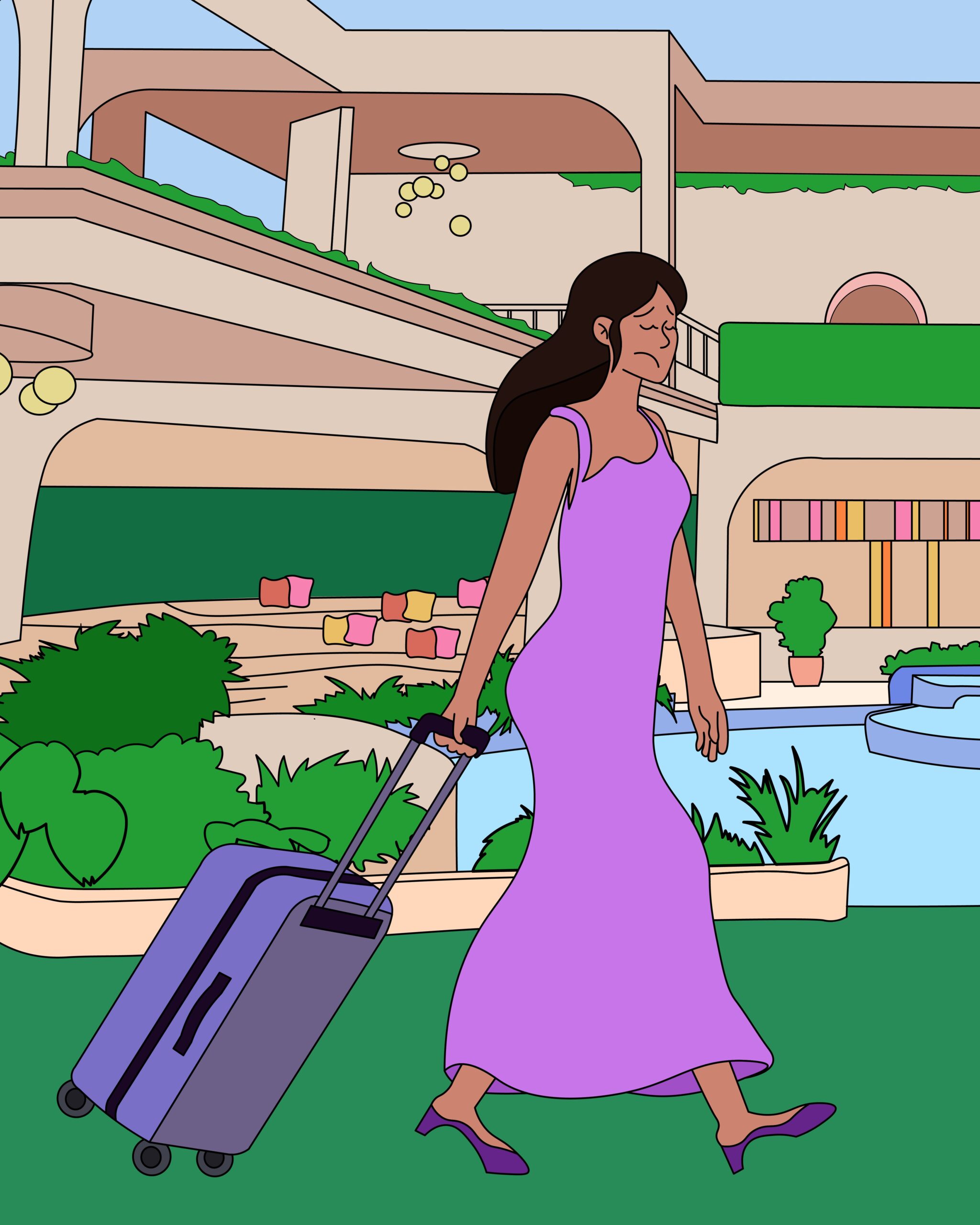
Reality television has always thrived on drama, but for Love Island, that drama often starts well before the proclaimed “hot new bombshells” enter the villa.
Before this season even began, Love Island found itself dealing with negative attention, rather than excitement.
On May 30th, contestant Vasana Montgomery was removed from the show before the season aired, after videos resurfaced of her using racial slurs. According to TMZ, these videos were only recently circulated by someone from Montgomery’s hometown, meaning they were not publicly visible when the producers initially vetted the cast.
Contestants who have a history of harmful behavior, such as using racial slurs, should be removed from shows like Love Island, even if the actions occurred in the past, as their presence reflects poorly on the show and shows the importance of accountability regarding digital footprint.
On shows such as Love Island, contestants are public figures and can in turn cause negative press for the show, potentially reducing viewership.
Over the past few years, the show has become nearly unavoidable, especially for Gen Z audiences, pulling in more than 18 billion streams in its seventh season alone and dominating social media feeds, even for those who don’t actively watch it.
The show’s reach even made its way onto campus, where UM’s social team leaned into the trend, posting mascots Sebastian and Gigi captioned, “The bombshells we’ve been waiting for.” Around the same time, former contestant Elan Bibas visited UM Hillel, speaking to current students about the importance in finding community, as well as figuring out who you are beyond academics and relationships.
This year, the connection between Love Island and our campus has become even closer. UM track and field alum Sincere Rhea is set to appear on the upcoming season, adding student attention to the show’s return. Notably, unlike many contestants, there have been no reports of controversy tied to Rhea.
Because of how widespread the show is, the removal of Vasana Montgomery shows just how quickly shows act when controversy threatens their image.
In one resurfaced clip, Montgomery uses a racial slur while rapping along to a song. In another, she shouts the slur while her friend plays an arcade game. While these videos themselves are not recent, their circulation is, which ultimately cost her a place on the show. The decision to remove her was less about what happened in the past, but more about how the audience would react in the present.
“I think people are definitely capable of growth, but it doesn’t erase their errors and pain they inflicted on others,” said Sara Ruiz-Meza, an anthropology major. “For every ‘racist phase’ someone went through as a kid, there was a brown or black kid who was traumatized from it… it is also not the responsibility of black and brown audiences to forgive a person they do not know personally.”
Regarding accountability, Ruiz-Mena said, “There needs to be a public lesson learned about inflicting what could be generational trauma on a young child and excusing it with the fact that the aggressor, too, was a child.”
This is also not the first time Love Island had to deal with a situation like this. In a previous season, contestant Yulissa faced similar backlash for publicly using racial slurs online. She was quietly removed from the show almost immediately, with little acknowledgement from producers.
Moments like this are happening more often, where a contestant’s time on a show can be cut short — not because of what they do on screen — but by their own digital footprint. This situation results in a larger question about how much someone’s past should affect their present.
Some viewers argue that people are capable of growth and shouldn’t be permanently defined by past mistakes, especially those made at a young age. Others believe that reality TV contestants are being held to unrealistic standards, expected to have flawless histories despite being regular people before becoming famous.
Under a TikTok post discussing the situation, commenters expressed conflicting views about whether or not her removal was justified. One commenter wrote, “This is the digital footprint everyone’s been warned about playing out in real time,” reinforcing the idea that past actions inevitably resurface.
Another commenter argued that people are not perfect and should not be expected to be, stating, “…No one on earth is an innocent person, so maybe let’s stop expecting [people] on these shows to be perfect.”
While personal growth is important, reality TV stars are public figures who voluntarily choose to be platformed and with that visibility comes responsibility. If someone knows their past includes behavior that could be harmful or offensive, choosing to appear on a show like Love Island means accepting the possibility that it may resurface.
Montgomery addressed the situation after her removal, acknowledging the harm caused from her past action in a statement posted to social media. “I am embarrassed and disappointed by my words. I take full responsibility for what I said and understand why it has hurt and upset people,” wrote Montgomery. “Since then, I have grown a lot as a person and taken the time to educate myself, listen, learn, and better understand the impact that language can have. That growth does not erase my mistake.”
Casting is not just about entertainment value, but about who represents the show. Allowing contestants with harmful pasts to remain can damage the show’s credibility. At the same time, removing contestants without acknowledgement can create its own issues, fueling online backlash and leaving little room for growth.
“I honestly believe that everyone deserves a chance to try and be better,” said Yennifer Beltran, a STEM student in the College of Arts and Sciences. “Love Island was put in a tough position with the news coming out, because they would’ve gotten [backlash] regardless of what they did.”
Beltran believes the show may have benefited from addressing the situation more clearly.
“I personally believe they should’ve come out with a statement explaining that they don’t align with the information that came out,” Beltran said. ”This way, they protect themselves as a brand and allow both the communities affected and the contestant to heal. Kicking them out immediately only furthers the fire and social media uproar towards the contestant, and we have seen in the past how tragically that can end.”
Situations like this show that reality TV is no longer just about what happens on screen. Before the show had even started, people began forming opinions, digging into contestant’s pasts and deciding who deserves to be there. At this point, producers can’t just cast for personality or entertainment, as they know the internet will always double check their choices.
And while it’s true that people can grow and change, it doesn’t erase what happened before. Love Island has a huge audience, and who they choose to platform matters. This is no longer about drama among young bombshells, but about what the show chooses to overlook and what it doesn’t.
Letting someone stay on the show sends a message, even if it’s not on purpose. But at the same time, removing someone right away, without any real conversation, shows how quickly things move now. There’s little actual accountability, instead reaction after reaction.
As viewers, we need to realize our voices matter too. How people respond online directly plays a role in shaping decisions in the media, and we must think critically about who we choose to platform.
This is more than just reality TV show drama, it applies to our own lives as ordinary people. The same way repercussions for past behavior can come back for famous people, they can come back for anyone. The things people say or joke about doesn’t disappear when the internet is involved. So while it’s easy to judge from the outside, situations like this remind us to look at ourselves too. The internet doesn’t forget, and eventually, it catches up to us.