


Hundreds of posters were arranged in rows, each bearing a name, a face and a date.
Together, they lined the walls of the Shalala Grand Ballroom at the University of Miami — each representing a life in Miami-Dade County who was lost to a fentanyl overdose.
The Black Poster Project, organized on Aug. 29, 2025 by a local harm reduction organization in Miami-Dade, F*** Fentanyl — along with many on-campus organizations such as URecovery, the Sandler Center and UM Student Health — designed what spreadsheets and public health reports cannot express: to honor an individual life that was failed by the system.
“Walking through the exhibit and seeing rows of posters, each representing a life lost to overdose was powerful in a way that statistics alone can never convey,” described Alan Benoit, program director for Coalicíon Esperanza at Hope for Miami. “The posters reflected people of different ages, backgrounds and communities — young adults, parents, students — making it clear that this crisis does not discriminate.”
The crisis extends beyond the conversation between statistics and record numbers. Every poster is a story that Miami-Dade is learning to tell. Researchers, clinicians and community outreach organizations at the forefront uncover a more humane narrative that most fail to realize.
What are the numbers saying?
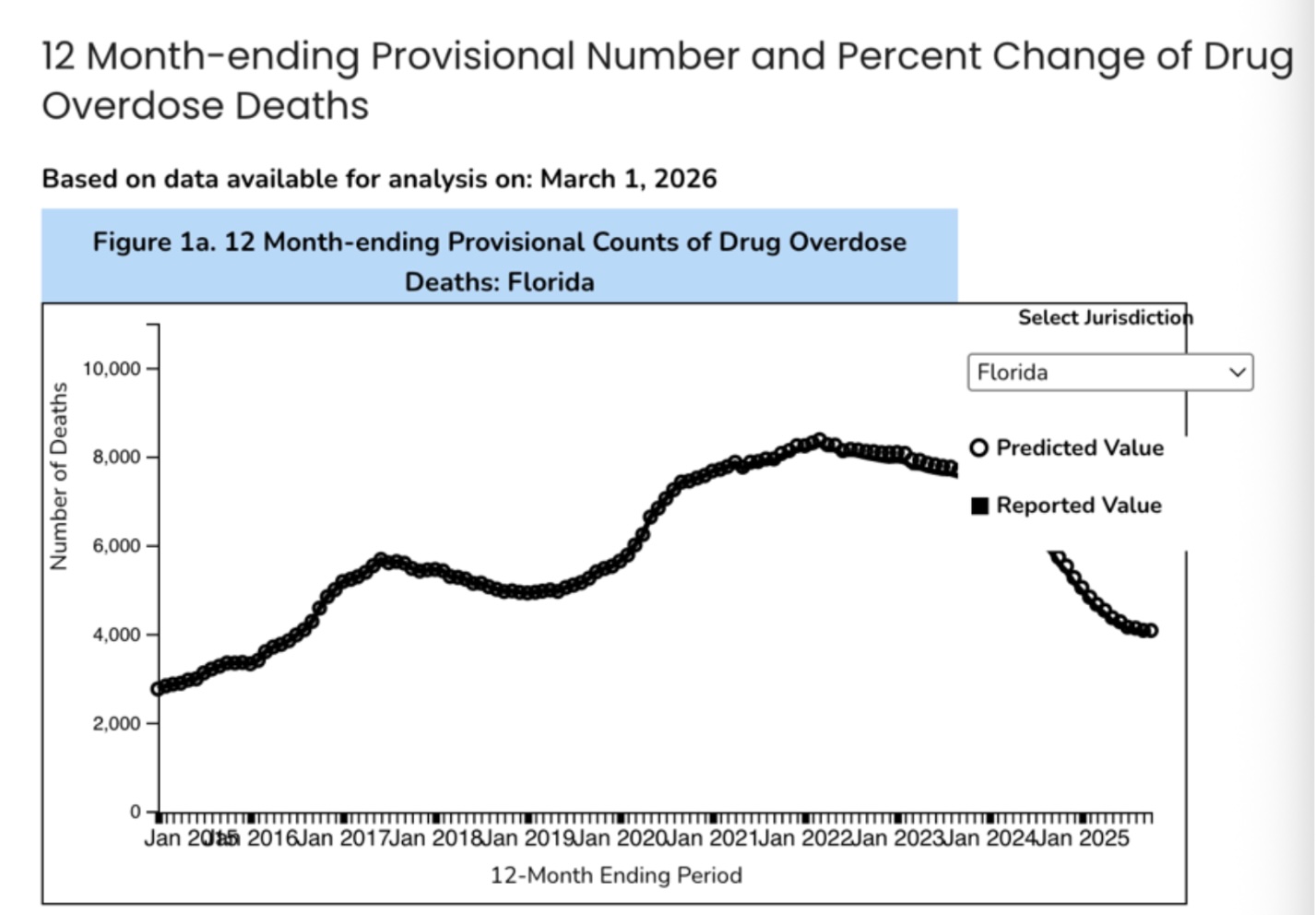
Florida leads the nation in fentanyl seizures. According to an annual drug report from the Florida Department of Law Enforcement released in 2024, fentanyl was responsible for 3,224 deaths, making it the leading drug killer in Florida.
The numbers have been steadily declining over the years with a notable 35% decrease from 2023 to 2024.
However, provisional CDC data from the National Vital Statistics System as of March 1, 2026 suggest that the predicted value of drug overdose deaths in Florida has reached more than 4,000 deaths.
Despite the decline, experts caution that the crisis is far from resolved. They reason that issues like social stigma, economic disparities and accessibility to resources are conducive to the ongoing effects of fentanyl abuse among varying socioeconomic groups.
Fentanyl is a synthetic opioid that is up to 50 times more potent than drugs like heroin that are organic or derived from an actual plant. Because fentanyl can be produced and compressed in small batches, it has become more accessible and easily distributed by supply chains for profit.
Cyrus Owens, supervisor and senior research associate at the IDEA Exchange — Florida’s first and only syringe services program, housed at the UM’s Miller School of Medicine — is also a professor who teaches a course called Drugs and Culture at UM.
He explains fentanyl has acted as an outsider throughout the history of illicit narcotics.
“For 100 years, all of our knowledge, drugs were created in tropical places where you could grow a lot of crops — the Golden Triangle in Myanmar, Colombia, Peru. Synthetic drugs like fentanyl changed that,” Owens explained.
“You do not need a farm; you do not need infrastructure. Instead, it’s a decentralized approach…lots of small-scale operations.”
Fentanyl is now found mixed with other drugs and substances, leading to unpredictable side effects.
Owens describes this as the “chocolate chip dynamic”: similar to how chocolate chips survive while baking them in the oven, concentrated pockets of fentanyl survive the large drug batches they are mixed into — creating lethal spots that the supply chain cannot detect.
Appearing mixed with cocaine, fake prescription pills and in some cases, marijuana, the drug can reach people with no opioid tolerance and who have no idea what they are taking — highlighting how imperative awareness and education surrounding these drugs are.
This issue developed further with the discovery of xylazine — a non-opioid sedative or animal tranquilizer not reversible by naloxone — that flooded Miami’s drug supply about two years ago.
The IDEA exchange documented cases of the contaminant and its qualities, highlighting that it is not approved for use in people as it can slow down breathing, lower blood pressure and make the heart beat slower.
“It was up to a certain point. 60% of all of the folks who were doing urine screenings at our place were testing positive for [xylazine],” Owens explained. “And this was from our perspective an economic decision made on behalf of the drug cartels.”
The combination of xylazine with fentanyl can create hazardous effects on the body where the skin may produce wounds with abnormal redness, rashes, bumps and the further development of ulcers.
The supply chain continued moving, but the drug remained an emerging threat.
“One of the biggest misconceptions is, ‘This could never happen to my family,’” Thomas Guerra urged, the founder and CEO of F*** Fentanyl — where the organization aims to provide support to those who use drugs to ultimately prevent overdose deaths. “Overdose remains the leading cause of death for American ages 18 to 44, and fentanyl is involved in most of those deaths.”
Beyond the statistics, overdose crosses socioeconomic lines
The IDEA Exchange sits in Overtown, a historically Black neighborhood intersected by a highway built about six decades ago. This left behind a plethora of liquor stores and pawn shops.
Owens explained that this location is not a coincidence, but rather an instructive issue.
“What we could characterize as a fentanyl problem, I would characterize as a poverty problem … as an economic opportunity problem. The areas that are in the most need are also the areas where people are the least educated about resources.”
The people most affected by fentanyl are typically not recreational users. They are people who manage chronic pain or addiction that started through medicated prescriptions — a pipeline well-known in Florida as a hub of the prescription opioid epidemic about 20 years ago.
However, the crisis has expanded beyond those communities.
In the past, higher rates of overdose were concentrated in urban, lower-income communities such as parts of Little Havana and Allapattah. These areas already have challenges including access to healthcare, housing instability and economic disparities which makes prevention, treatment and recovery more difficult.
Alan Benoit oversees Coalicíon Esperanza, a youth prevention program under the Hope for Miami umbrella that focuses on substance use and promoting healthy lifestyles by working with schools, law enforcement and healthcare providers to implement more awareness and engagement.
He says the geography of risk has shifted.
“We are now seeing fentanyl affect suburban communities, young people and individuals from middle and higher-income backgrounds at increasing rates,” Benoit described. “Fentanyl is being mixed into other substances … meaning people may be exposed unknowingly, regardless of their background or intent.”
For young people, this drug poses significant risks in settings like nightlife, music festivals and college campuses with the purchase of pills like Adderall that may be counterfeit or contaminated with fentanyl.
The bottom line is anyone could be affected.
Though, the lack of resources to survive the use or exposure of drugs like fentanyl can be more fatal.
Users who come from higher backgrounds with more economic stability have greater access to private rehabilitation than uninsured users who often do not have access.
In shelter programs, residents who test positive for substances create a quicksand effect where many cannot access the stability sought to get off the drug keeping them out of stability.
That stability, however, is surrounded by social stigma.
At the IDEA Exchange, Owens regularly sees people who relapse over short periods of recovery and leave rather than seek help, oftentimes due to shame.
“When you are in recovery, your self-esteem is already very low. That is not going to encourage you to seek care. It is going to encourage you to go underground.”
Luke Bell, UM senior and founder of the Substance Awareness Club on campus, built that organization following his own struggles with substance use. His experiences forced him to take time from school for a year.
He found that campus resources were not enough and wanted to layout a different approach when he returned — a space that met students where they were, not where institutions wanted them to be.
“I talked to someone and I didn’t feel helped at all,” Bell explained. “No one should have to go. There should be something.”
Call to action: what is being done?
Change is happening.
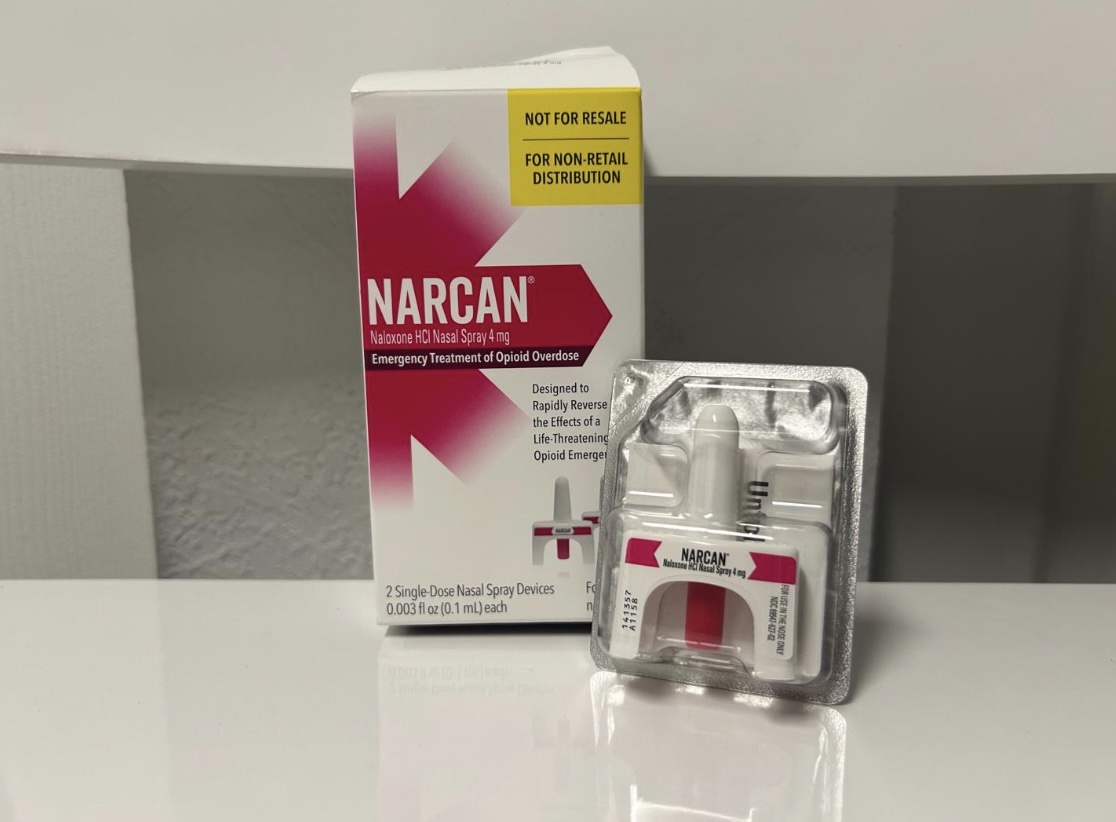
Since 2016, the IDEA Exchange has conducted more than 50,000 needle exchange in the past decade and has distributed more than 16,000 doses of naloxone (or Narcan). The program has singlehandedly recorded more than 4,000 overdose reversals since its birth.
F*** Fentanyl prides itself on harm reduction tactics to meet people wherever they are in their journey, holding on to the fact that not everyone is ready or capable to stop their substance use.
The organization offers free naloxone, fentanyl test strips when available and overdose education — where Guerra gives out resources at public events and gatherings such as Ultra Music Festival, distributing thousands of doses of Narcan.
“Harm reduction is not one single service. It is a mindset of compassion, safety and meeting people where they are,” said Guerra.
Fentanyl strips were legalized in Florida in 2023. Naloxone, or doses of Narcan, are now available without the need of a prescription at most pharmacies.
Coalicíon Esperanza narrows in on young people in underserved communities like Flagami and Little Havana by collaborating with schools, resource fairs and coalitions funded through the CDC.
The crisis remains an environmental and economic issue rooted in the greater management of wealthy and connected communities than in impoverished ones.
With this, Bell’s message to students and every resident in Miami-Dade is simple.
“Take a second to learn about [fentanyl] because it only takes a second to overdose and die,” Bell urged. “If you can take a second, you can save a life.”