


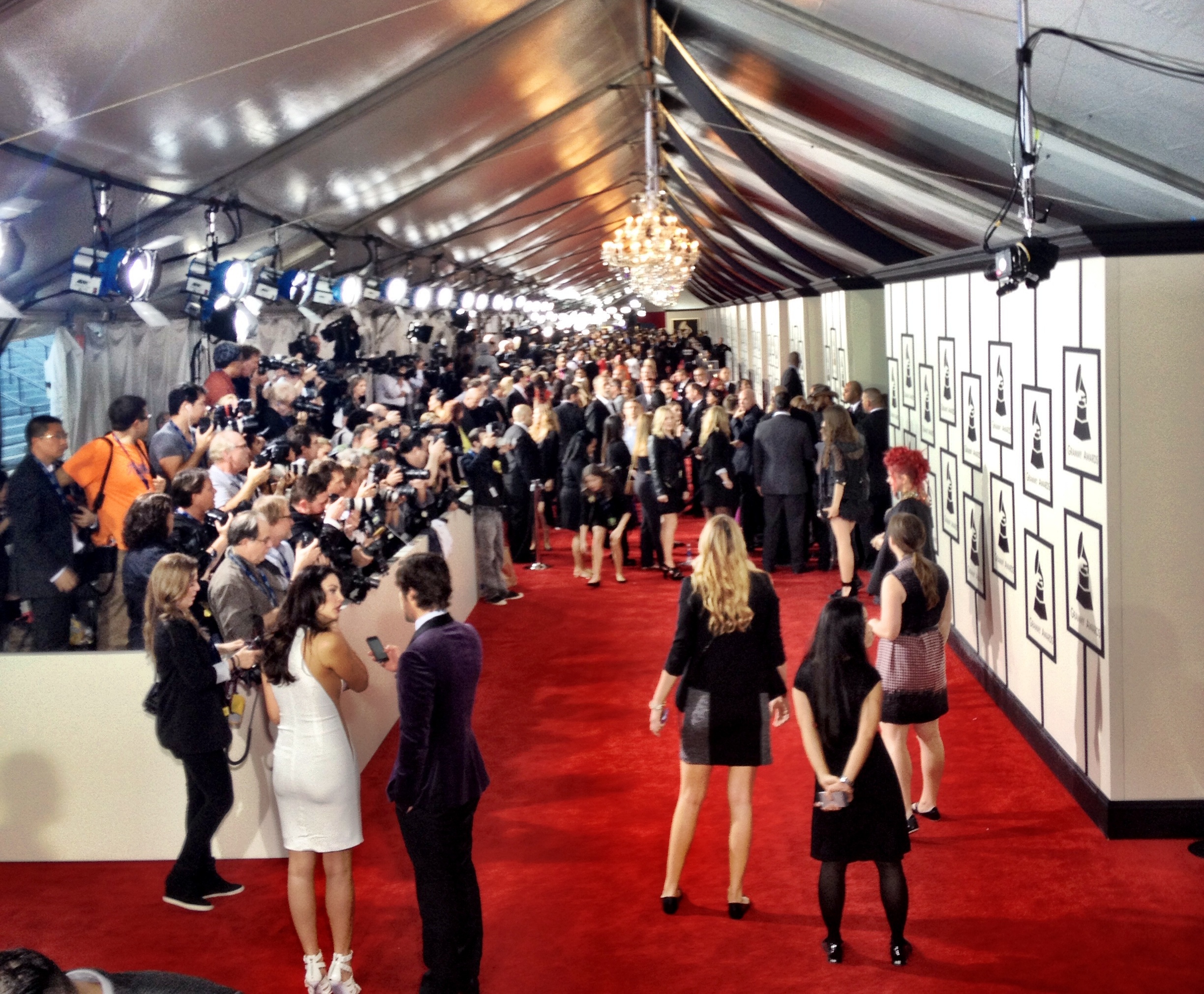
Since 1958, the Grammy Awards stood as the pinnacle of musical achievement — an annual event that brought artists, fans,, and industry professionals together in celebration of creativity, craft, and cultural impact. However, in recent years, the Grammys have struggled to stay relevant in the constantly changing entertainment landscape.
“I just don’t really feel the need to watch the Grammys anymore,” UM freshman Tallulah Steager shared. “I can just look up who won on Google.”
The 68th Annual Grammy Awards, broadcast live on CBS on February 1, 2026, attracted about 14.4 million viewers, a 6.4% drop from the 2025 live showing. This marks the second straight year of declining television audiences for the Grammys.
For television networks and advertisers, the most alarming trend has been the Grammy’s collapse in key demographics. In 2026, viewership among adults aged 18-49 fell by nearly 19%. This erosion among young audiences reveals a widening generational disconnect from not only live television but music culture.
“I do think that the Grammy’s are important to like the music industry,” said UM freshman Elisa Bonaparte-Wyse. “They are just not as they once were in the early 2000s.”
Award shows are memorable but not always for the right reasons. From Will Smith slapping Chris Rock onstage at the Oscars or Kanye West interrupting Taylor Swift’s speech at the VMAs, there have been numerous mishaps—and the 2026 showing of the Grammys are just another addition to this list.
“There were many technical issues that I picked up on throughout the show,” said Bonaparte-Wyse while referencing a clip on her phone.
One moment that illustrated the several production challenges occurred during Best New Artist nominee Alex Warren’s highly anticipated performance of his Hit 100 song, “Ordinary.” Midway through his debut televised set, Warren encountered a technical malfunction with his earpiece, causing him to fall out of sync with the back track and struggle to hear himself onstage.
This wasn’t the only mishap that happened during the 2026 Grammys. While presenting Record of the Year, legendary performer Cher, briefly misread the winner’s name after accepting her Lifetime Achievement Award. This mishap was attributed to teleprompter issues that left her slightly frazzled onstage.
These technical and behind the scenes mishaps—visible to millions watching live—amplified a sense of chaos and disorganization that undermines the ceremony’s prestige.
“I guess today with all the new technology and AI and such, we pick up on these technical mistakes so much more,” claims Staeger. “But again, maybe that is just me.”
Another layer of complication for the 2026 Grammys was the political messaging woven throughout the night. Winners like Bad Bunny, Billie Eilish, and Oliva Dean seized their moments onstage to address immigration issues, with Eilish’s uncensored remarks again U.S. Immigration and Customs Enforcement generating significant online buzz.
While many people online praised the artists for speaking out, others saw the focus on politics as alienating.
“I just wanted to watch the award show, not start up a whole political statement,” claimed an anonymous source.
Additionally, during the 2026 telecast, there was a reduced number of awards presented during primetime, with many categories shifted to non-televised segments.
“I mainly watch the Grammys to see which artists win,” claimed Bonaparte-Wyse. “Like I don’t really care as much for the live performances.”
I would argue that this diminished the recognition of genre diversity and contributed to perceptions that the Grammy’s prioritize spectacle over celebration and achievement of artists’ work.
“It’s sad that the Grammys has turned into a clown show,” wrote an anonymous user on a Facebook post
The 2026 Grammy Awards were the last under the ceremony’s decades-long contract with CBS. Starting in 2027, the show will transition to ABC and streaming platforms like Hulu and Disney+. This seems to be a smart strategic move—that the future of music celebration must meet audiences where they already are, streaming platforms rather than live TV channels.
“Switching to streaming platforms will either break or save the Grammys,” claimed Steager.
Whether this evolution restores the Grammys’ cultural prominence or not, one thing is clear: in an era of fractured attention, digital engagement, and diverse musical expression, the Grammy Awards must continually adapt.