


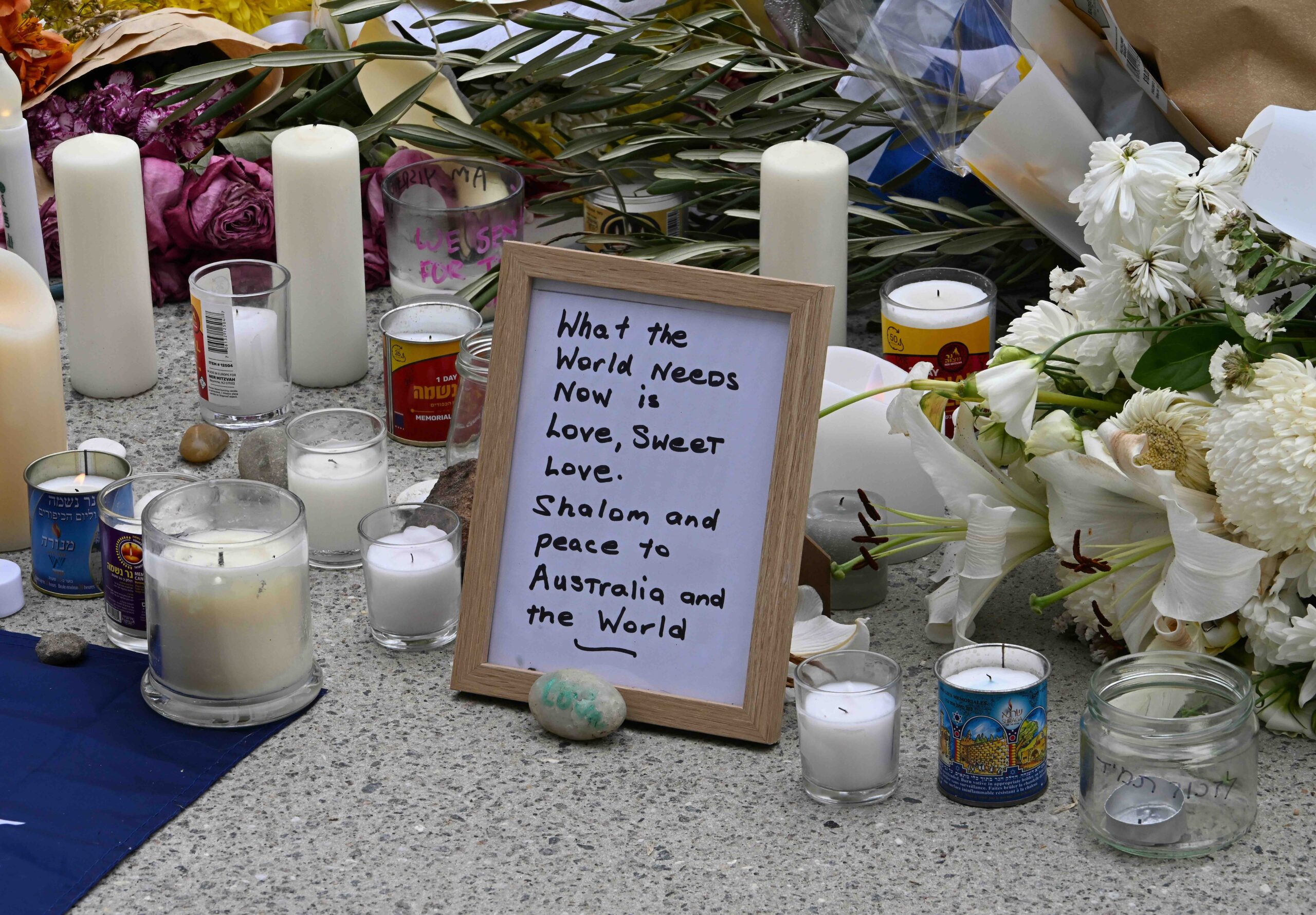
In the aftermath of mass violence, public conversations often spiral into fear, blame and broad generalizations rather than empathy. Islam, in particular, is frequently placed under a microscope in these moments, treated with suspicion instead of understanding. The Bondi Beach attack in Australia challenges that narrative, demonstrating the actions of Ahmed Al Ahmed reflect Islam’s emphasis on peace and compassion.
That truth was made clear through the actions of Ahmed Al Ahmed, whose bravery during the attack reflected the highest moral values of Islam and humanity as a whole. Unarmed and facing immediate danger, Al Ahmed chose to intervene to protect others, guided not by identity, recognition or personal gain, but by a deep sense of responsibility for human life. His actions show that courage is not defined by religion, nationality or background, but by the willingness to act when it matters most.
In widely shared footage from the Dec. 14 attack, which killed 15 people and injured more than 40, Al Ahmed, a 43-year-old Syrian-born father of two, is seen rushing a gunman at a Jewish Hanukkah celebration and wrestling the weapon away. The victims included a 10-year-old girl and a Holocaust survivor, civilians with no connection to political conflict, targeted solely by hatred fueled by dehumanization.
Al Ahmed didn’t act based on religion, nationality or identity, he acted because it was the right thing to do. His choice reflected a core value shared across faiths: protecting human life at all costs. His actions were a reminder that courage isn’t owned by any one religion or community, and that morality has no boundaries.
His response makes one thing clear: real morality shows up in solidarity — not taking sides — and humanity always comes before labels.
Judaism, like Islam, is rooted in principles of peace and justice. Jewish communities have long recognized that safety and equality are collective struggles. During the Civil Rights Movement, Jewish leaders stood alongside other marginalized communities, understanding that justice cannot exist in isolation. Shared humanity has always been central to progress.
Yet mainstream media often amplifies stories that reinforce fear rather than solidarity. Narratives that divide are more easily monetized and widely circulated. Had video footage of Al Ahmed’s actions not existed, public perception may have been shaped very differently. Muslims are frequently required to prove their humanity in ways others are not.
As gunfire erupted, Al Ahmed did not pause to protect himself. Unarmed, he tackled one of the attackers, knowing full well he could be killed. In a moment defined by chaos, he chose to act to protect strangers.
His bravery saved lives and challenged the narratives that too often follow violence involving Muslims.
Muslims and Jews are often portrayed as opposing sides, even though those divisions are solely driven by politics rather than by religion. Al Ahmed’s actions break down that false binary. His bravery highlights the difference between everyday people and those who commit violence.
The Times of Israel reported that Jewish donors helped raise $1.3 million for Ahmed through a GoFundMe campaign. Support poured in from around the world, with many recognizing him as a hero for his actions.
Some claim that calls for unity blur the specific hate faced by Jewish and Muslim communities. But refusing to recognize shared humanity is exactly how dehumanization takes hold. Naming our differences does not mean denying our connection. Antisemitism and anti-Muslim sentiments are not rival injustices — they feed off the same fear, the same lies, and the same systems of hate.
When whole communities get reduced to the actions of those in power, collective blame becomes its own kind of violence. A child has zero responsibility for a geopolitical conflict, yet Jews and Muslims are constantly lumped in with governments and wars they didn’t choose, regardless of who they are, what they believe, or where they’re from.
Al Ahmed’s bravery was impossible to ignore because it was undeniable. But acts of cross-community solidarity happen every day without recognition. They are often excluded from public narratives because they complicate stories built on division.
Heroism is not defined by religion or identity. It is defined by action. In risking his life to save others, Ahmed Al Ahmed reminded the world that moral responsibility has no boundaries and that humanity, when recognized, can still prevail.
Writer’s note:
Balaj: I grew up in a Muslim household where I was taught that Islam is rooted in peace, compassion, and respect for others. My family emphasized values like kindness, humility and the responsibility to care for everyone — regardless of their background or beliefs. But as I got older, I noticed a painful gap between these teachings and how Muslims are often portrayed in the media. Islam is frequently reduced to harmful stereotypes, painting a false picture of Muslims as dangerous or violent. This narrative erases the lived experiences of millions of peaceful Muslims and overlooks the everyday acts of goodness, generosity, and humanity that define our communities.
Hayley: I can relate deeply to Balaj’s experience. I was often the only Jewish student in my school growing up, which made the reality of antisemitism painfully clear. The lessons of my faith, including valuing humanity, standing up for the underdog, and advocating for peace and equality, became guiding principles. Experiencing prejudice firsthand taught me that confronting bigotry in any form is not optional. Addressing bigotry against Jews while ignoring hatred against Muslims is morally indefensible, because our fight for dignity is one. Balaj and I both understand what it feels like to face blame for the actions of governments we neither represent nor control. We also know how easily our faiths are misrepresented by those claiming to act in their name. The heroism of Ahmed Al Ahmed reflected everything we have spent years advocating for: The recognition that our shared humanity comes before all divisions.