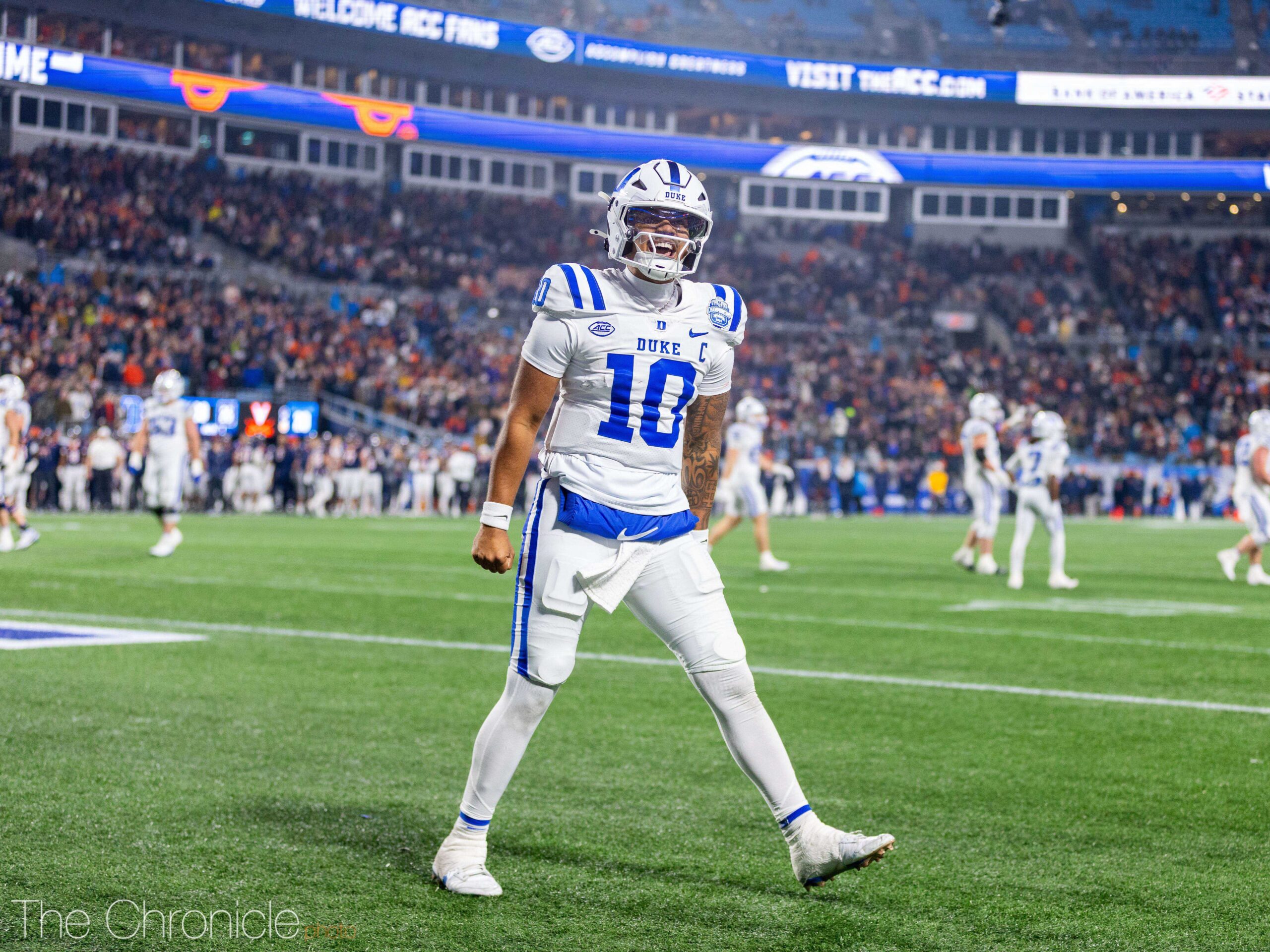
Duke University filed a lawsuit against Blue Devils quarterback Darian Mensah on Tuesday, Jan. 20, arguing he violated his contract by attempting to enter the transfer portal with the intention of joining the University of Miami.
In a 44-page filing to the Durham County Superior Court, Duke argued that Mensah should not be permitted to enter the transfer portal so the two sides can engage in arbitration — a process that removes the dispute from the court room and places the decision in the hands of a neutral third party.
The university also requested a temporary restraining order that would have prevented Mensah from entering the transfer portal, enrolling in another school, playing football for another school and licensing his name, image and likeness to another institution.
However, Mensah’s attorney, Darren Heinter —– an adjunct professor of NIL at the University of Miami School of Law and South Florida-based sport attorney —– announced on social media that Duke’s request to block Mensah from entering the portal was denied.
“Contracts mean something,” Duke wrote in the lawsuit. “Mensah’s actions violate numerous provisions of his contract with Duke University and disregarded his promises and obligations to the University. And, as Mensah agreed when he signed his contract, such breaches cause Duke irreparable harm for which there is no remedy at law and, in the event of any such breach, Duke is entitled to injunctive or other equitable relief.”
Separately, Judge Michael O’Foghludha, who presided over Tuesday’s hearing, recused himself from future proceedings because of a conflict of interest. O’Foghludha is a Duke basketball season-ticket holder, making him a Blue Devils booster.
Although Duke’s request to prevent Mensah from entering the portal was denied, the university was granted a TRO on Wednesday, barring Mensah from enrolling at another school, playing football elsewhere or licensing his NIL until Feb. 2, when an injunction hearing will be held before Judge Ed Wilson.

Heitner is seeking to move the injunction hearing to an earlier date, which could allow Mensah to transfer to Miami sooner.
Mensah announced that he intended to leave the program on Jan. 16, the final day for players to enter the transfer portal. Duke’s lawsuit promptly followed.
He had previously announced in December that he would return to Duke after exploring his options to enter the NFL Draft.
“I’m forever grateful for Duke and the coaching staff,” Mensah wrote in a post on X. “Thank you Duke family for everything. This wasn’t an easy decision, but after talking with my family, I believe it’s in my best interest to enter the transfer portal.”
Miami quickly emerged as the reported favorite to land Mensah, with rumors suggesting UM offered a deal worth up to $10 million as a replacement for quarterback Carson Beck.
He transferred from Tulane to Duke in July 2024, signing a multiyear contract believed to be worth up to $4 million for the 2025 season. Under the terms of that agreement, his NIL deal is set to expire on Dec. 31, 2026, a key point in Duke’s argument that he is legally under contract for another season.
In his sophomore season, Mensah posted career highs, throwing for 3,646 yards and 30 touchdown passes while completing 68% of his passes. The San Luis Obispo, Calif. native led Duke to a 9-5 season, highlighted by the program’s first outright ACC Championship since 1962 and a Sun Bowl victory over Arizona State.
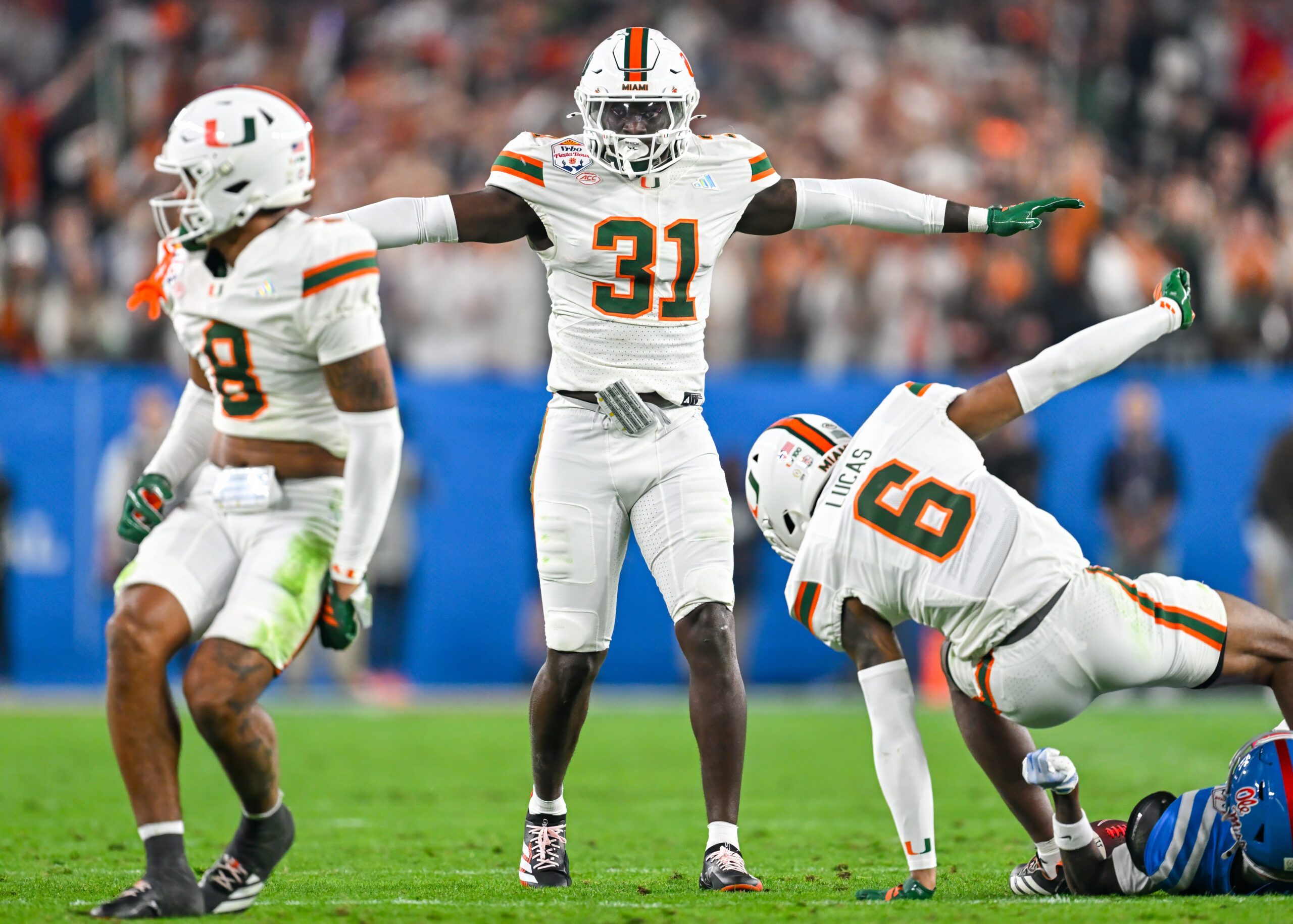
The lawsuit is not the first to affect Miami’s football program. In June 2025, the University of Wisconsin sued Miami for allegedly tampering with cornerback Xavier Lucas.
Wisconsin sought to enforce the terms of Lucas’ multiyear NIL contract, which he signed in 2024. After the Badgers refused to place Lucas in the transfer portal in December 2024, the then-freshman unenrolled from UW and enrolled at UM. That lawsuit remains ongoing.
As NIL contracts continue to reshape the landscape of college athletics, Duke’s legal challenge highlights the growing tension between player mobility and contractual enforcement — a conflict that could set an important precedent for future transfer disputes.