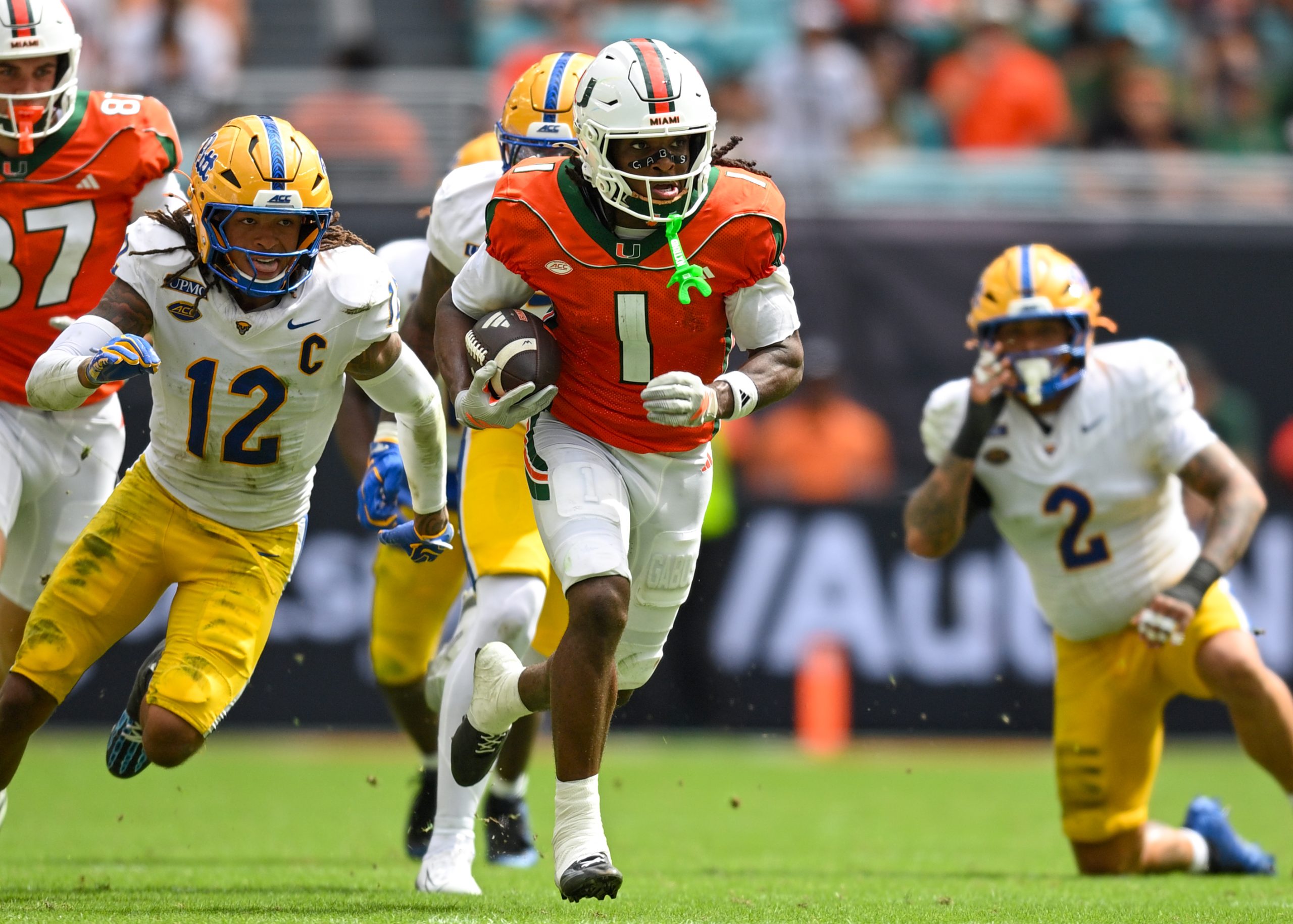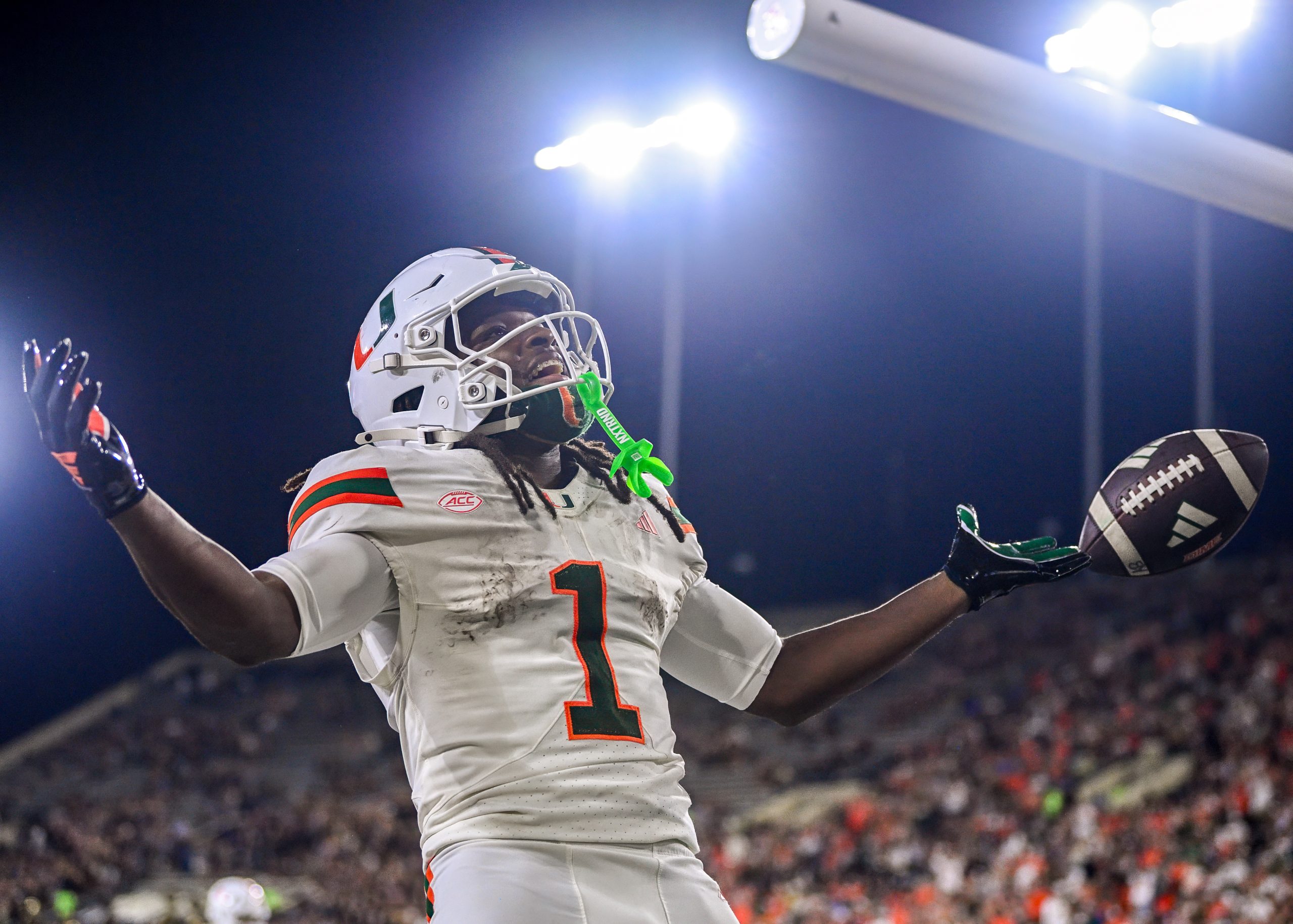
Miami wide receiver Malachi Toney suffered a high ankle sprain during practice on Nov. 4, just three days before the Hurricanes were set to face rival Notre Dame.
The following day, Toney underwent a procedure known as Knotless Syndesmosis TightRope surgery, a technique that has gained attention in college and professional football for its potential to shorten recovery times.
The injury came at a critical point in Miami’s season. The Hurricanes were ranked No. 1 in the College Football Playoff rankings and preparing for one of their biggest games of the year.
Without Toney, Miami suffered its first loss of the season against No.11 Notre Dame that weekend, 31-24.
Toney was also not able to travel with the team due to his surgery, as reported by The Miami Herald.
Now, as the postseason comes within reach, Miami fans are hoping that a procedure that has helped many athletes return to competition in record time will do the same for their star receiver.
What is TightRope surgery?
A high ankle sprain affects the ligaments connecting the two bones in the lower leg, known as the tibia and fibula.
According to the American Journal of Sports Medicine, high ankle sprains typically result from player contact or collision sports.
This injury targets football players even more closely because of swift movements like running and changing direction frequently.
Prior to the introduction of TightRope surgery, athletes with an injury like this would most likely be treated with metal screws to hold the bones together. Now, with TightRope surgery, they are treated by placing a surgical suture attached with metal buttons on either side of the bones.
Unlike traditional screws that require a second surgery for removal, the TightRope implants can typically stay in place.
On top of surgical benefits, athletes may also be able to start rehabilitation sooner.
The history of TightRope surgery
TightRope surgery has become increasingly popular in the sphere of professional athletes.
The technique was created by Irish Orthopedic Surgeon Brian Thornes in 2000, who later licensed the procedure to Arthrex, a Florida based company specializing in medical devices.
In 2005, former Houston Rockets and Texas physician Dr. Thomas Clanton popularized the technique across the NBA and NFL, according to an article by Sports Illustrated in 2019.
The surgery was introduced to the Alabama Crimson Tide football program in 2014 by Orthopedic Surgeon Dr. Norman Waldrop, who completed a fellowship under Clanton.
The first Alabama player to undergo the Tightrope surgery under Waldrop was offensive lineman Cam Robinson, who was eager to return to face off against LSU just two weeks later. Robinson had no complications and played the entire game in Alabama’s 20-13 overtime win.
In 2018, both Alabama quarterbacks Jalen Hurts and Tua Tagovailoa suffered high ankle sprains within six weeks of each other.
Both had TightRope surgery and both recovered in just four weeks.
By fall 2018, Waldrop had performed the procedure on approximately 30 FBS players while Arthrex reported more than 270,000 TightRope implants worldwide at that time.

Recovery and risks
One of the biggest benefits of TightRope surgery is faster rehabilitation for athletes.
In the typical four week period, recovery focuses on rebuilding ankle strength, mobility and stability.
The accelerated rehabilitation process sometimes has athletes run on an anti-gravity treadmill. They also may undergo tests to determine readiness to play like completing 15 single-leg hops.
Although the recovery process depends on several factors like the severity of the injury, rehab progress and demands of the sport, not every high ankle sprain requires surgery.
Some sprains can be healed through rest and rehab alone, leaving people to wonder if both the TightRope surgery or traditional surgery are necessary, and if it’s in the athletes best interest to move forward with surgery.
What this means for Miami
Toney’s performance so far this season has not only made him a Heisman Trophy contender but also one of the nation’s leading receivers.
Recording 13 touchdowns and more than 1,000 receiving yards, Toney is a key player for the Hurricanes, especially as the playoff approaches.
His absence was also significant during Miami’s loss to Notre Dame.
Following the game, head coach Mario Cristobal said the surgery was successful and Toney had a potential to return as soon as four to four and a half weeks.
“He is doing really well, he is attacking the rehab,” Cristobal said on WQAM’s Joe Rose Show Monday. We are on schedule.”
Based on the Nov. 5 surgery date, his earliest return potential would range between Dec. 3-7.
The ACC Championship Game is scheduled for Dec. 5 and the CFP begins Dec. 18, leaving Canes fans optimistic.
While no official return date has been announced, the Hurricanes and fans remain hopeful that Toney will be ready for postseason play.