


Spending five hours in the library studying for an exam, another hour fixing your résumé and then somehow ending the night — or, in some cases, your early morning — at a club in Brickell is not unheard of here at the University of Miami.
The pressure to succeed academically and professionally exists alongside a student body that notoriously knows how to have a good time. As getting into UM became more competitive throughout the 2010s and 2020s, the University simultaneously developed a stronger hustle culture around networking and career preparation.
Nightlife, proximity to South Beach and football culture have always been part of the University’s identity. However, the other half of UM’s identity has changed since the days of Suntan U.
In 2015, UM received 33,415 applications and accepted 38% of students. In 2025, the University received a record 58,139 applications and admitted just 17.55% of applicants.
Our acceptance rate isn’t the only thing that has changed. Once students arrive, there is an increasing expectation to start preparing for life after college on the first day of class.
“I remember walking into my first class of freshman year and the professor told us that if we didn’t already have LinkedIn, then we were behind,” said a junior in the Business School who wished to remain unnamed. “By the end of the semester he said we should have 500 connections.”
It is not enough to just go to class. There is a pressure to join organizations, get an internship and somehow know how to network before establishing what your future job may be.
That pressure continues after an undergraduate degree for some students. Law school, medical school and graduate programs are common paths after earning a bachelor’s degree, meaning students arrive at UM already thinking about the next step toward their ideal future.
“I was surrounded by incredibly intelligent and motivated people who inspired me to keep pushing myself,” said Lauren Ferrer, who earned her undergraduate degree from UM and is now a law student at the University. “The professors and advisors who challenged me were always encouraging me to step outside of my comfort zone and take advantage of new opportunities.”
The Toppel Career Center has extensive resources to prepare students for life after graduation. Students can use Toppel for career coaching, internships, networking and industry-specific Career Circles.
“Building your professional knowledge and experience is crucial in today’s job and internship market,” said Toppel Executive Director Ali Rodriguez in a statement in 2025.
According to UM’s career outcome report for the class of 2023, 99% of graduates had secured post-graduation plans within six months. 62% had full-time jobs, 36% continued their education and 1% had part-time jobs.
Then there is the other half of the equation: maintaining a social life.
Coconut Grove, Brickell, Wynwood and South Beach are all within reach, giving students a wide social scene beyond on-campus events.
“I think every student has their own version of what balance looks like, and being in a city where there is so much happening all the time can definitely make that overwhelming,” Ferrer said. “At the same time, I wouldn’t have wanted it any other way.”
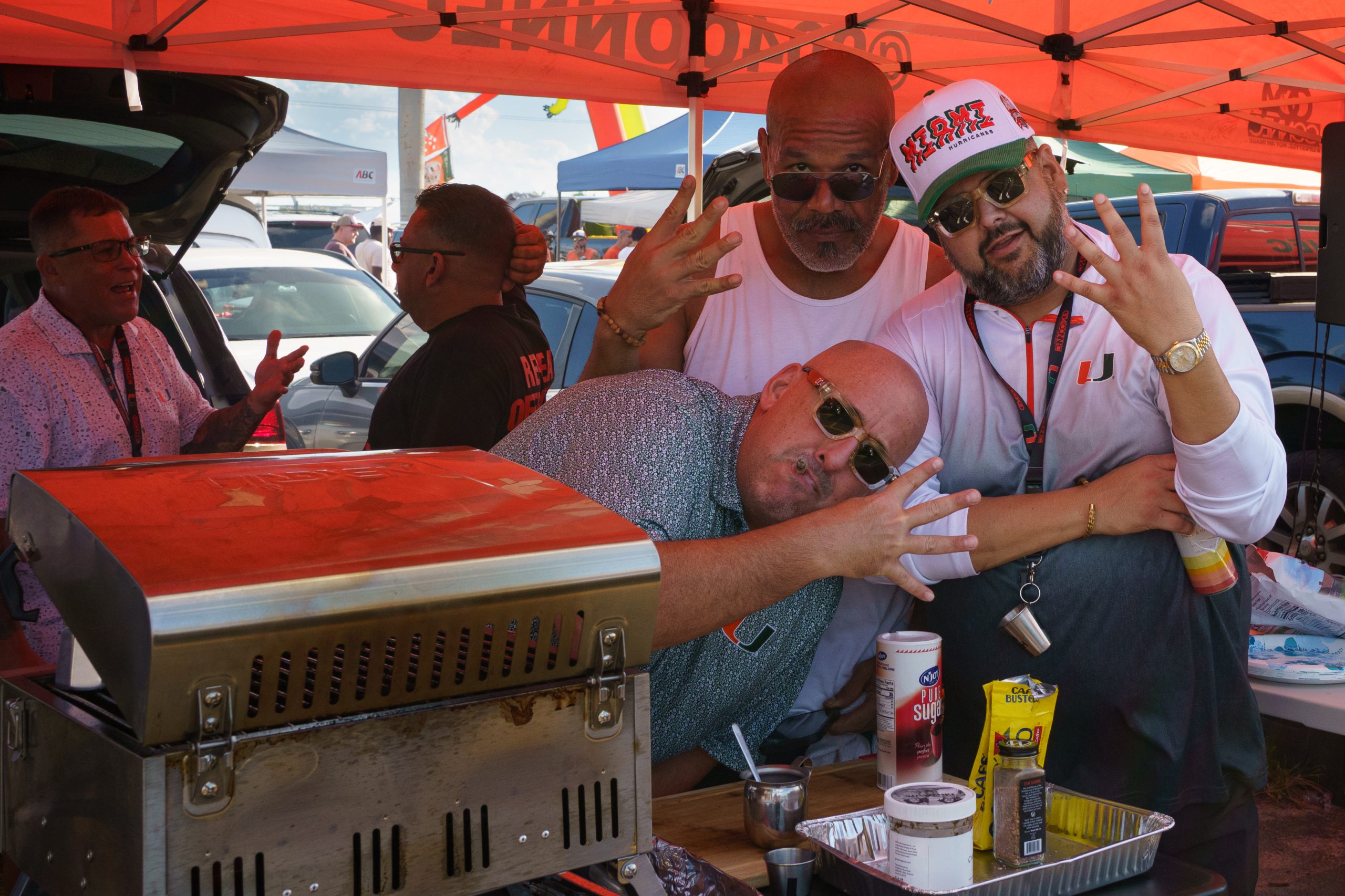
Going out can become just as much a part of the college experience as studying. Football games, tailgates, raves, Greek life and nights out in Miami create a culture where students are not expected to choose between being academically driven and socializing.
“If I’m being honest, I came to this school for its nightlife,” said a freshman in the College of Arts and Sciences who wished to remain unnamed. “I did not want to go to a small school in a small college town. I wanted to be in a city, where there are so many options for going out.”
UM’s transformation wasn’t one sudden switch. The social culture was already thriving. What changed was the intensity surrounding academics, career preparation and expectations for what students should accomplish.
That is what makes UM’s work-hard, play-hard reputation different. The two identities aren’t necessarily opposite. They have become two parts of the same college experience here at UM.