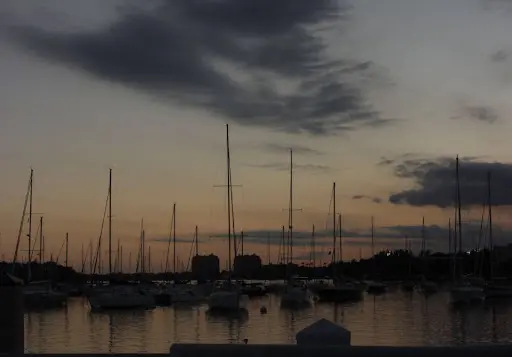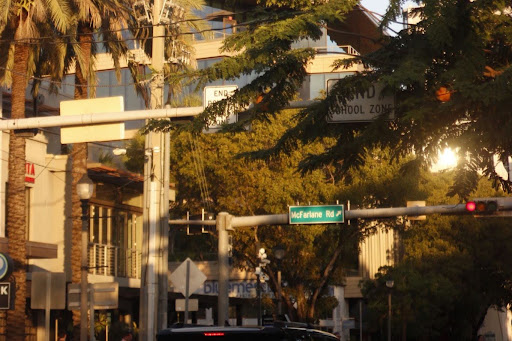
Hundreds of UM students spend their thirsty Thursdays where Grand Avenue meets the main highway in Coconut Grove.
But beyond a Thursday night, students should know more about cultural and population changes happening in the Grove. The Grove has been experiencing rapid rates of gentrification, meaning locals are outpriced by wealthy homeowners and can no longer afford to live in their neighborhood.
The arts-centered community that Miami loves to romanticize has been reshaped by new development. Due to the gentrification people of color and artists being forced out are some of the first to go. The authentic artistic culture is disappearing, and people are noticing.
Coconut Grove continues to change and UM students should be aware of its history, ongoing generation, and its effects on people of color, artists and local businesses.
“The people who lived there were just so different from anything I experienced in Miami outside of the Grove,” said Anai Fonte, owner of ARRAE art gallery in Coconut Grove. “They were … bohemian and artsy and rich in philosophy and just so passionate about life and art and love.”
Like several lower-income neighborhoods in South Florida, The Grove became desirable to developers because of its subtropical foliage and direct view of Biscayne Bay.
Bahamian immigrants have been a part of Coconut Grove for 140 years. The West Grove was officially named Little Bahamas in 2022 by the City of Miami. According to the Miami Herald, the West Grove Black population dropped by 40% from 2000 to 2020, or an estimated 2,600 residents. Compared to, the white population increased 178% to about 2,150 residents.
For generations, Bahamian and Black families built their lives and communities in the West Grove. Homes initially sold in 1998 for $80,000 were sold for upwards of a million back in 2024.
Black Bahamian culture brought craftsmanship, agriculture knowledge and deep community and family culture. The community naturally has a distinct visual identity that gets passed down through generations.
In recent years, community members have made efforts to preserve the Groves authenticity.
Historic West Grove residents have spoken up about moving out of the neighborhood due to the unfair rapid rise in cost to live there. The residents filed a federal housing complaint stating the City of Miami violated the residents’ 1968 Fair Housing Act in 2024. However, federal officials in the U.S. Department of Housing and Urban Development rejected West Grove housing complaint against the City of Miami.
“The Grove is a very special place,” said Fonte. “It’s always been that. And I would love to see us try to preserve or bring back as much of that character and soul that existed.”
The Grove needs people to care for the Grove and maintain its culture. This includes defending minority families who are forced out of their homes, supporting local artists and taking action against gentrification and sourcing from local restaurants that maintain the culture of the Grove.