


GroupMe, a messaging app most organizations on campus use, has recently become a hub for phishing and scamming messages among students.
One of the most common phishing scams on the app is for football game tickets. A UM student who wishes to remain unnamed was scammed in a chat called “UM Official Ticket Swap” when trying to purchase World Cup tickets over the summer.
“A couple different people in the chat were selling World Cup quarterfinals tickets for the England versus Norway game,” said the student. “So I DM’d one of them and I was like, ‘Hey, I’m interested in the tickets. How much are you selling them for?’”
The scammer said they were selling the tickets for $600, which seemed low. However, they seemed like a real student. In fact, the scammer had stolen the identity of a real student, whom the unnamed student found on LinkedIn and Instagram.
According to Coalition Security Labs, gaining a sense of trust and familiarity is a common scammer strategy.
“The scam typically involves a text message that appears to be from a trusted source within the University of Miami,” the University’s Information Technology & Systems Department wrote in an email sent on June 13, 2026.
The unnamed student knew it could be a scam, so they paid through Venmo in case they needed to get the money back. The money for the first ticket went through without any problem.
“So we did the first ticket swap. She sent us the ticket in an email. We opened it up in our wallet, and it was like a legit ticket. So at that point, we were feeling pretty safe,” the student said.
The situation quickly went south when the student tried to pay for the second ticket. The money stopped going through, and the scammer began to message differently than before. The student said that the scammer used “random emojis that didn’t make sense.”
The money transfer finally went through on PayPal, but the scammer sent another email with no ticket attached. When the student opened the link in the email, it led to a phishing website.
The unnamed student confronted the seller about the scam, and the seller stopped responding.
Two days later, the student’s dad received a phone call.
“Some guy randomly called my dad and was like, ‘Hey, did you get my money for the ticket?’ And my dad was like, ‘What do you mean?’ And he was like, ‘Well, someone with your name and your number was selling me tickets and I sent them the money.’ It was happening to other people in that group chat, not just me.”
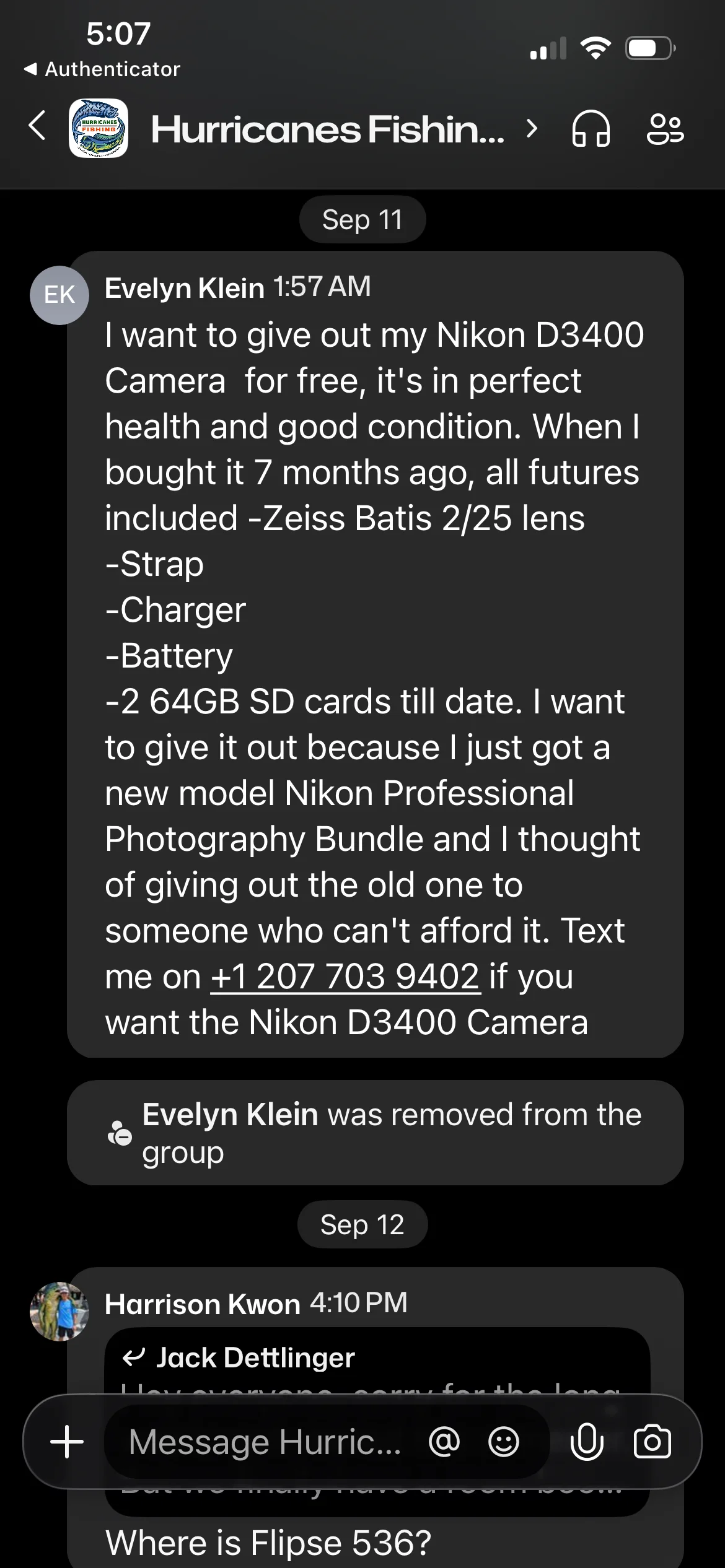
Fake ticket sales are not the only scams on GroupMe — others include selling concert tickets or items like laptops and cameras.
Freshman Anna Cherepowich encountered a scam for a camera in the Aquarium Club GroupMe chat.
“[The message] was from someone who appeared to be a member of the club and was just like, ‘I’m getting rid of this camera … If anybody’s interested in it, please DM me,’” said Cherepowich.
The Aquarium Club chat required admin approval before joining, and the message appeared to be from another student at the University, leading Cherepowich to believe the user was real.
The scammer sent photos showing them holding the camera and gave detailed descriptions of the camera’s model and condition. Instead of meeting in person, the scammer asked to ship the camera to Cherepowich.
“She said ‘I’m still here for my birthday. I’m with my family in Idaho so I can ship this to you,’” said Cherepowich.
Cherepowich barely had time to think because the scammer rushed her into decisions, but she wasn’t suspicious yet.
The scammer sent photos claiming they were at the post office and told Cherepowich there was an additional $55 tax and packaging fee. When Cherepowich asked the seller to bring it to campus when they returned, the seller claimed the camera had been taken for weighing.
Scammers typically try to make victims act quickly and without much thought. UMPD included this in an email sent on April 15, 2025. The email read, “Scammers pressure you to act immediately.”
Cherepowich said she quickly cut off communication with the scammer after a failed attempt to get her money back. She was frustrated, especially because she was unaware of the scammers and believed freshmen were more vulnerable.
“I think it shouldn’t be that easy for [scamming] to happen, especially because you have to have GroupMe here,” said Cherepowich. “As soon as I started reaching out to people about it, I heard how common it is. This shouldn’t continue to be an issue.”
Students should be aware of these scams going forward and should look for the signs when communicating on GroupMe.