


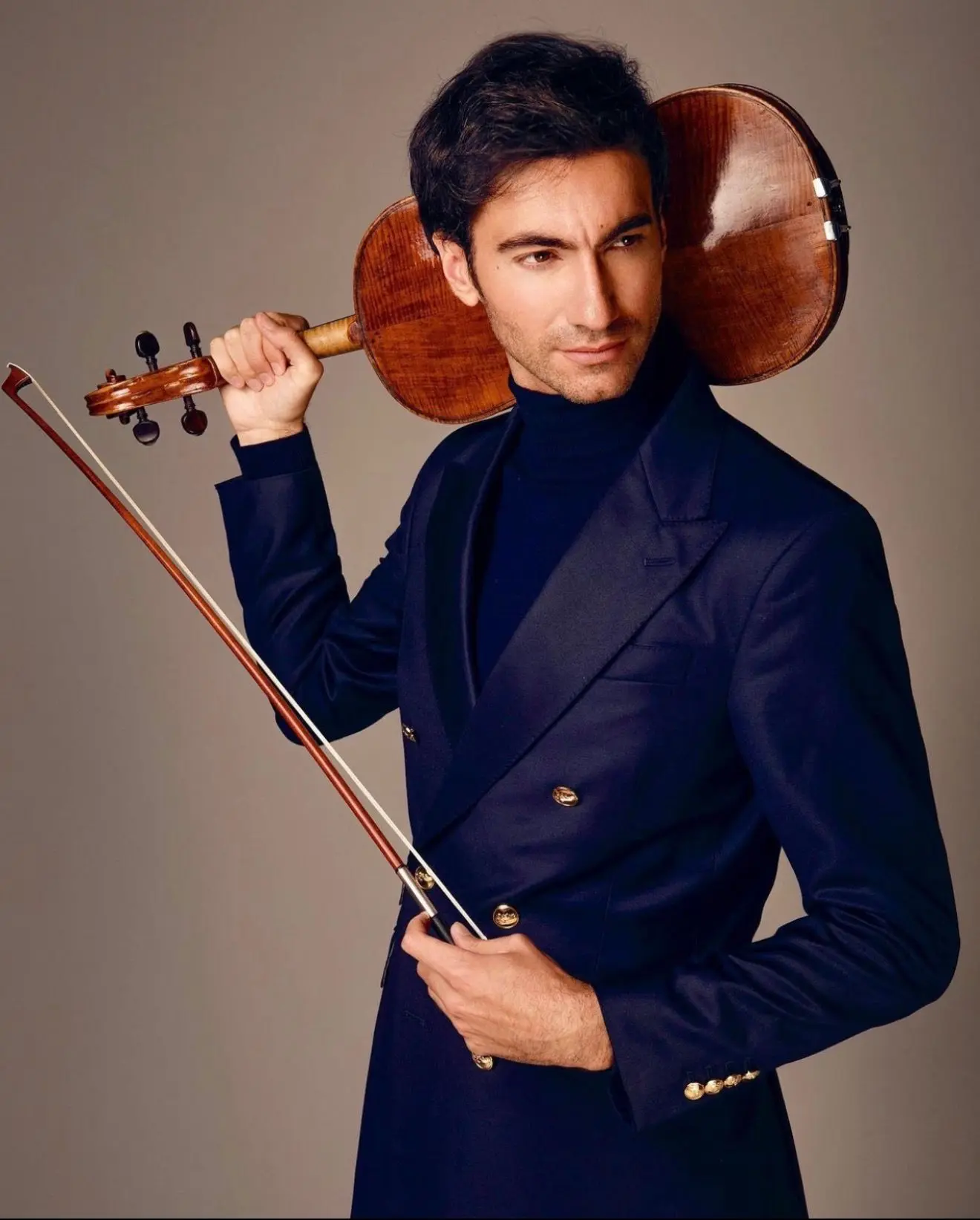
After years of performing with major orchestras around the world and learning from renowned musicians, David Aaron Carpenter is bringing his international experience to the classroom.
Carpenter joined the Frost School of Music as a visiting professor of viola for the 2026-2027 school year.
His relationship with Frost School of Music began before he joined its faculty. Carpenter reached out to Jodi Levitz, the Frost professor of viola, about becoming involved with the school after moving to the Miami area.
What started by teaching one master class evolved into multiple visits, meaning Carpenter became familiar with students and their progress.
When Levitz decided to take a leave this year, she asked Carpenter to temporarily take over her viola studio.
“I’ve never been in a teaching position before,” Carpenter said. “I’ve only given master classes.”
Taking on this position at UM has allowed Carpenter to bring the lessons of his international career into the classroom while challenging himself in a new role. His teaching is also influenced by the mentors who shaped his own career, including violinist and conductor Pinchas Zukerman.
In 2007, Carpenter became the first American selected for the Rolex Mentor and Protégé Arts Initiative, where he studied under Zukerman.
“I would say I’ve been very blessed with the mentors that I have had throughout my career, and I’ve studied with many, many, many teachers,” Carpenter said.
So far, Carpenter’s experience with Frost students and faculty has left him optimistic about the school’s future. He said that the collaborative environment allows students to work closely with accomplished musicians such as conductor Gerard Schwarz, who served as music director of the Seattle Symphony.Carpenter said these opportunities distinguish Frost from other music schools.
That collaboration is central to the Frost Method, the school’s approach to music education that emphasizes learning through performance and collaboration while preparing students for professional careers in music through taking marketing or business classes.
“I would love to see Frost School of Music just grow and become really the premier music school in the country,” Carpenter said, hoping to contribute to that growth during his time at UM.
Now, having 10 to 11 students, Carpenter can work consistently with the same students and watch their development.
“To see one week to the other, and just telling them a minor tweak here and there,” Carpenter said. “ I can even see tremendous progress in the first week or two.”
Despite joining Frost as a professor, Carpenter has also become a student again by auditing a Japanese course.
The class has presented a different kind of challenge for a musician accustomed to performing before large audiences.
“I never get nervous, ever, on performances,” Carpenter said. “This [Japanese quiz] is stressing me out.”
Learning Japanese has also given Carpenter a new appreciation for the workload UM students balance.
“If it takes me hours, then it’s going to take a lot of other students the same amount of time, but they have another four or five courses,” Carpenter said. “I commend all the UM students.”
His wide-ranging interests align with Frost’s emphasis on developing musicians whose education extends beyond performance. Carpenter said his experiences studying various subjects, from theater to economics, encouraged him to remain curious throughout his career.
Carpenter will bring that perspective to Frost students on Sept. 18 with a talk on entrepreneurship and music at Gusman Concert Hall. The event will explore his career and how his experiences both within and beyond music have shaped his approach to the industry.
That curiosity has also shaped Carpenter’s approach to the viola itself.
Throughout his career, he has worked to expand perceptions of what the instrument can do by performing and transcribing repertoire traditionally associated with other instruments.
“It just shows the capabilities of the viola,” Carpenter said. “It could be like a cello or it could be like a violin. It’s right in the middle.”
Carpenter also believes classical music has an opportunity to reach a new generation. After attending the Verbier Festival in Switzerland, he said he was struck by how young the audience was.
“I’ve never seen such a young audience,” Carpenter said. “I feel like classical music is really coming back.”
A classical performance offers an experience that differs from other forms of live music for Carpenter. Sitting through a major orchestral work requires patience and attention, but he believes that experience can create a deeper connection between listeners and the music.
As Carpenter begins his year at Frost, he hopes to pass along the lessons he has gained throughout his career while helping shape the next generation of classical musicians.
“I’m incredibly grateful that I have this opportunity that pushes me to imparting what I’ve known all these years from my mentors and giving it to the next generation, and seeing the level of the musicians here, from the pianist, to the violas, the violinists, cellists, I’m very hopeful for the future of classical music.”