


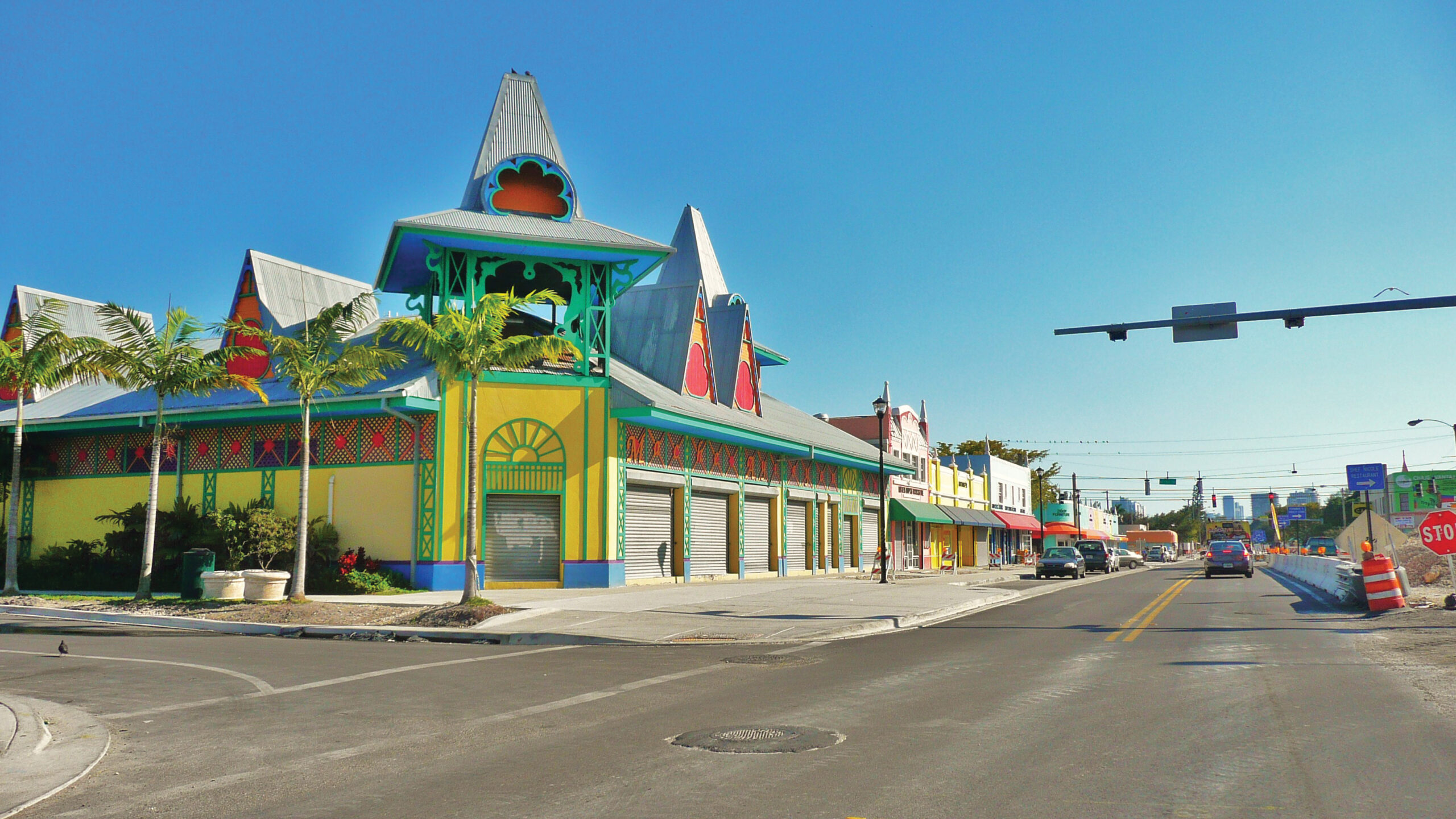
Just over 12 miles away from UM’s Coral Gables campus, a dark cloud has descended over Miami’s famous ‘Little Haiti.’
In late June, the Supreme Court of the United States ruled 6-3 in favor of President Trump’s campaign to roll back Temporary Protected Status (TPS) for Haitians and Syrians currently residing in the country.
Rolling back TPS for the Haitian community will lead to thousands of deportations in South Florida alone, separating families and sending many into extremely life-threatening conditions back in Haiti.
Temporary Protected Status is a government protection granted by the Secretary of the Department of Homeland Security (DHS) to eligible foreign-born individuals who are unable to return home safely due to conditions or circumstances preventing their country from adequately handling the return.
Syrian and Haitian immigrants have been eligible for TPS since 2014 and 2010 respectively. Since then, Florida has become the largest recipient of the Haitian diaspora. More than 500,000 Haitian-Americans call Florida home.
Miami local and Haitian-American, Fabiana Poindujour feels like the Supreme Court’s decision is a huge mistake.
“It makes no sense,” Pindujour said. “Mostly because the government gave temporary status to help with the earthquake that happened which caused the mass migration of Haitians and also still affects the country.”
This is a community that has built new lives here, and has also done its part in contributing to society.
“Of the 350,000+ lawful Haitian TPS holders, roughly 1/3 work in our healthcare system,” U.S. Rep. Mike Lawler, R-N.Y., wrote on X. “Immediately shutting off TPS will create a crisis in our hospitals, nursing homes, and in the (intellectual disabilities) community.”
Haitians have invested in creating legacies so that their culture can still thrive. Separating these families would diminish an important aspect of what makes Florida unique: Caribbean influence.
Chef Creole, a chain of Haitian restaurants in Miami-Dade county, was founded by Chef Wilkinson Sejour. While he was born of Haitian descent, he was raised in the Bahamas and immigrated to Miami. Now the menu of his restaurants combine all of those influences, a testament to the diversity of Miami’s residents.
“But the temporary status is to help lead to permanent residence,” Poindujour said. “However, the government also makes that extremely hard. So you’re kicking out people who have built a life here and really have done nothing wrong but build the country, for no reason.”
Most importantly, taking TPS away exposes innocent people to dangerous conditions. Currently, Haiti has been taken over by rival gang wars and it is rarely safe to even visit. To be deported there is a death-sentence for many, with a death toll currently reaching 16,000 since 2022.
Forcing people who have not committed a crime to return to a place where they could lose their life at any moment is unnecessarily cruel on the part of the U.S government. In terms of humanity, there is little to gain and so much to lose from this kind of domestic policy.
Immigrants who were TPS eligible essentially circumvented the amnesty application process and were able to stay in the country indefinitely. This perspective defends the concept of equality instead of equity. Equitable policy provides aid to those who are most in need, and less to those who are not.
One example of this practice that is common across college campuses is need-based financial aid. In this case, immigrants fleeing from the most dangerous conditions deserve more protection.
While families and communities across the country ask each other what their futures will look like under an increasingly anti-immigration administration, Miami finds itself at the nexus of the issue. An international city with less and less immigration sounds less like the American dream and more like a cautionary tale.