


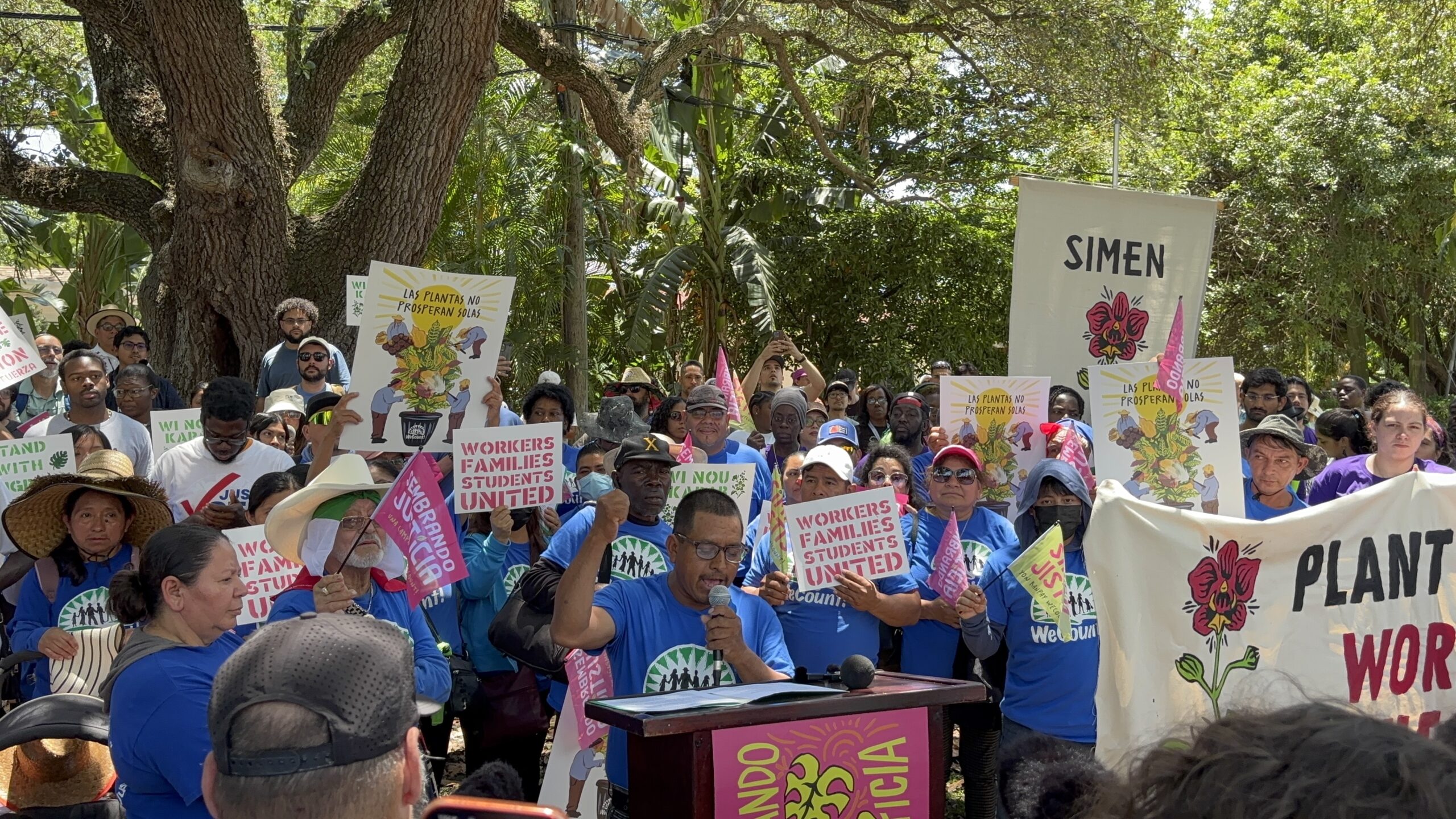
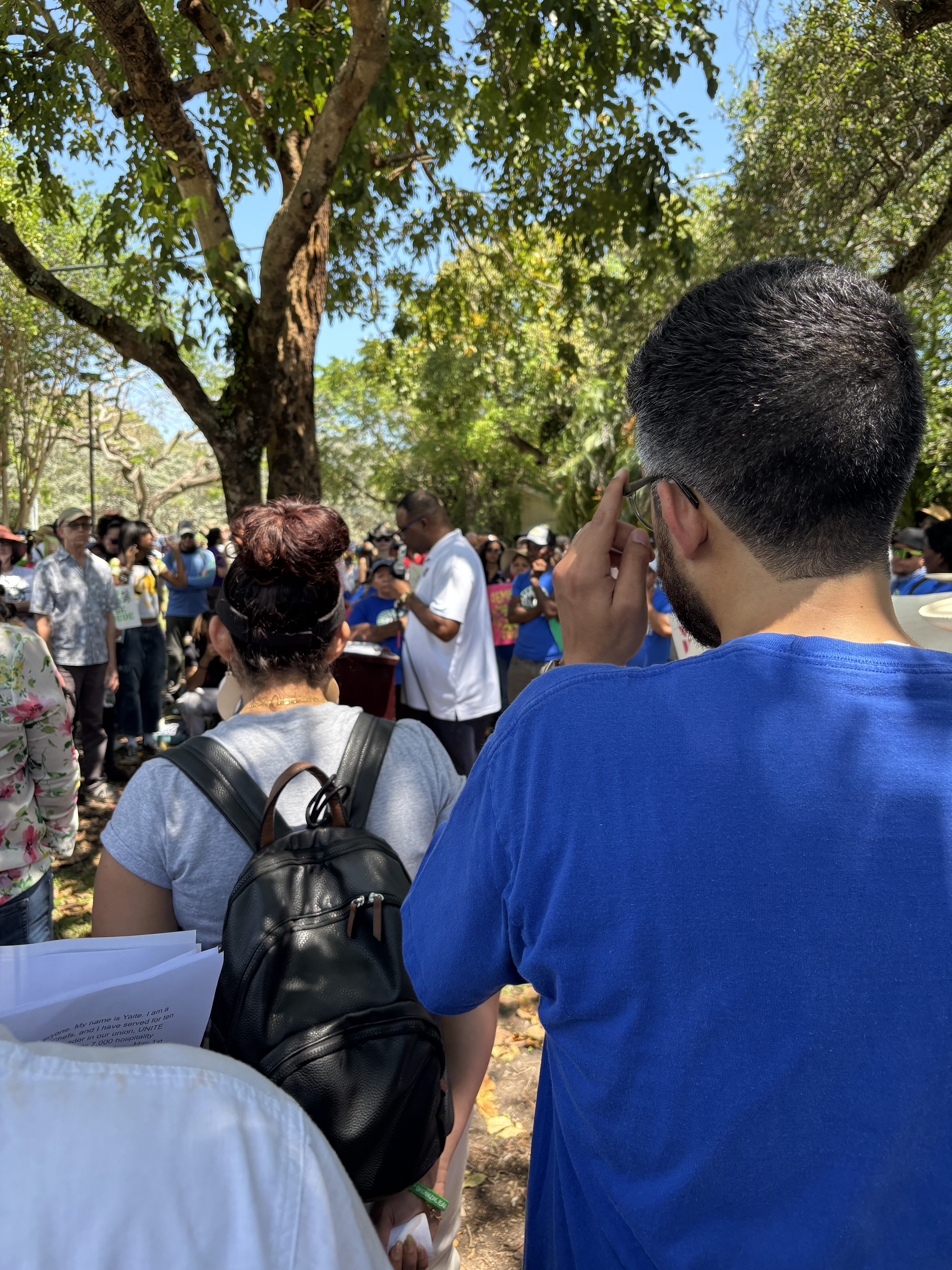
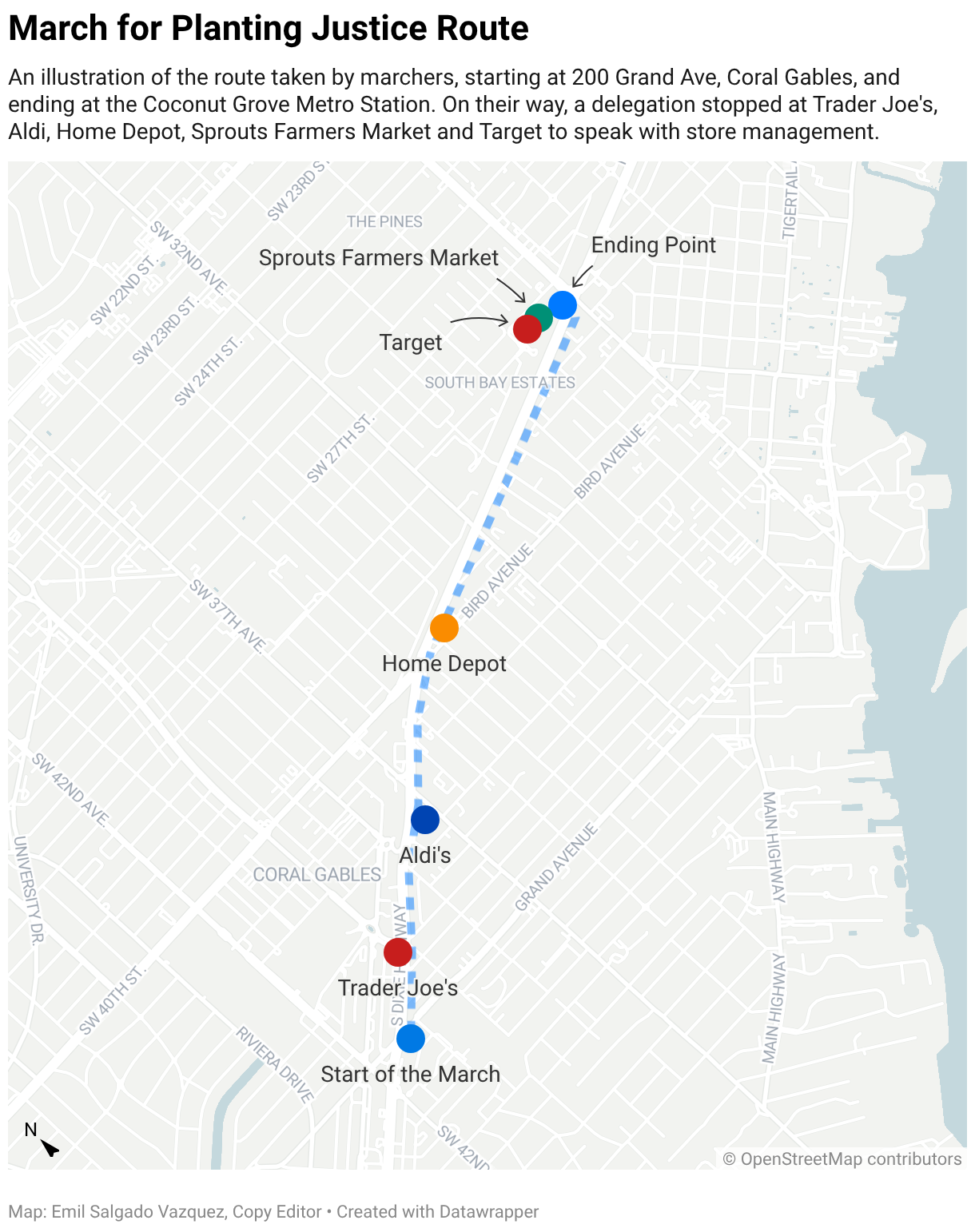
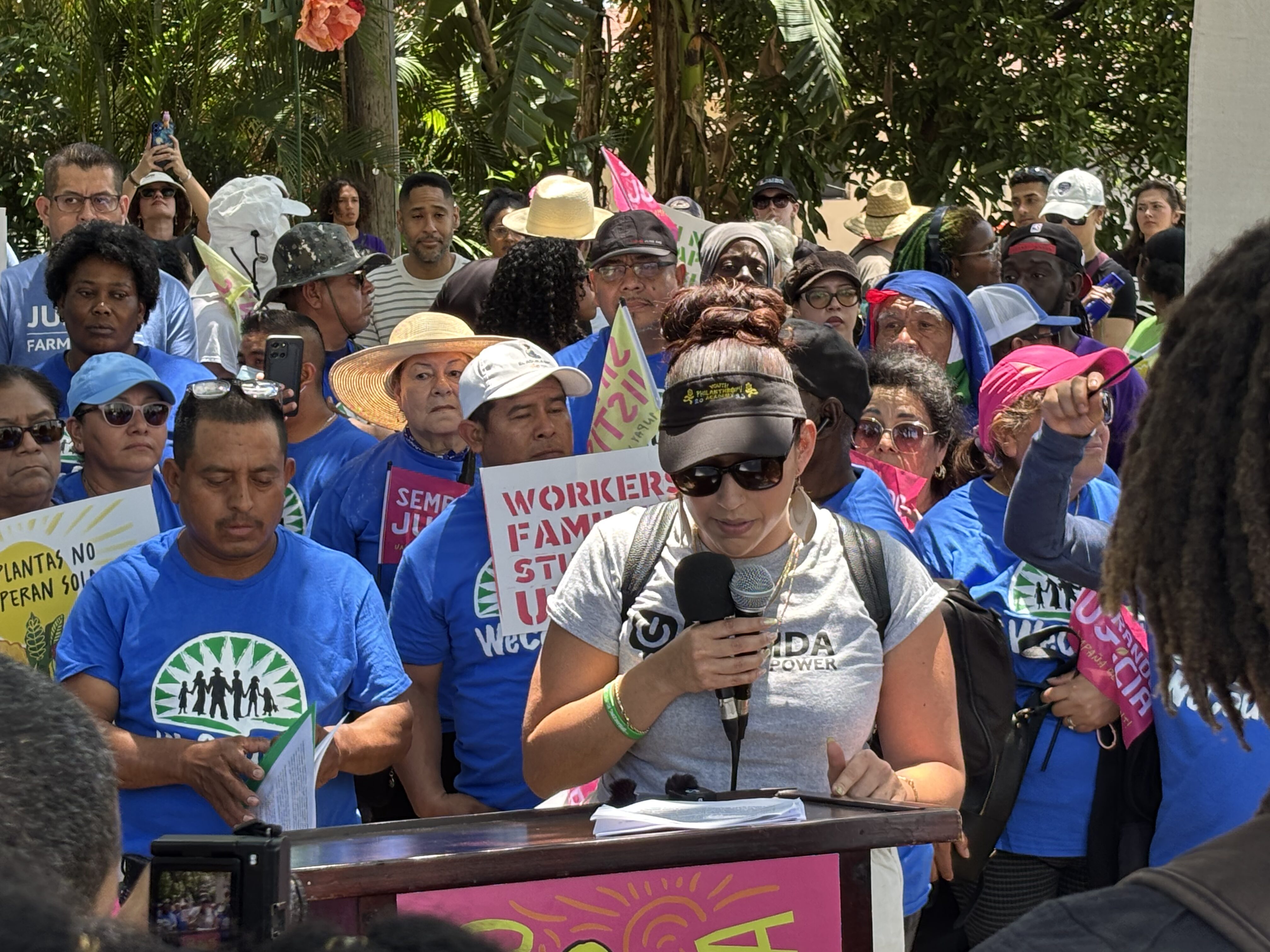
Hundreds of workers, faith leaders, students and community members rallied in Coral Gables to join the 2-mile “March for Planting Justice” along US-1 on May 1.
WeCount!, a nonprofit of immigrant workers and families in South Florida, organized the protest to call on major retailers — such as ALDI US, Trader Joe’s, Target, Home Depot and Sprouts Farmers Market — to join the Planting Justice campaign.
The campaign demands that major retailers commit to buying only from growers who follow a worker-developed “code of conduct.” The proposed standards include heat protections and oversight by an independent monitoring council.
This march was part of May Day protests for International Workers’ Day, and organizations like 32BJ SEIU, the ACLU, Florida AFL-CIO, and Beyond the Bars joined WeCount! in protesting for workers’ rights, social justice and empowerment.
Oscar Londoño and Claudia Navarro, co-executive directors of WeCount!, led the march.
“Many people don’t know that 80% of houseplants are grown by workers here in Florida,” Londoño said. “These workers are experiencing poverty wages, dangerous working conditions and a culture of intimidation and retaliation for speaking up.”
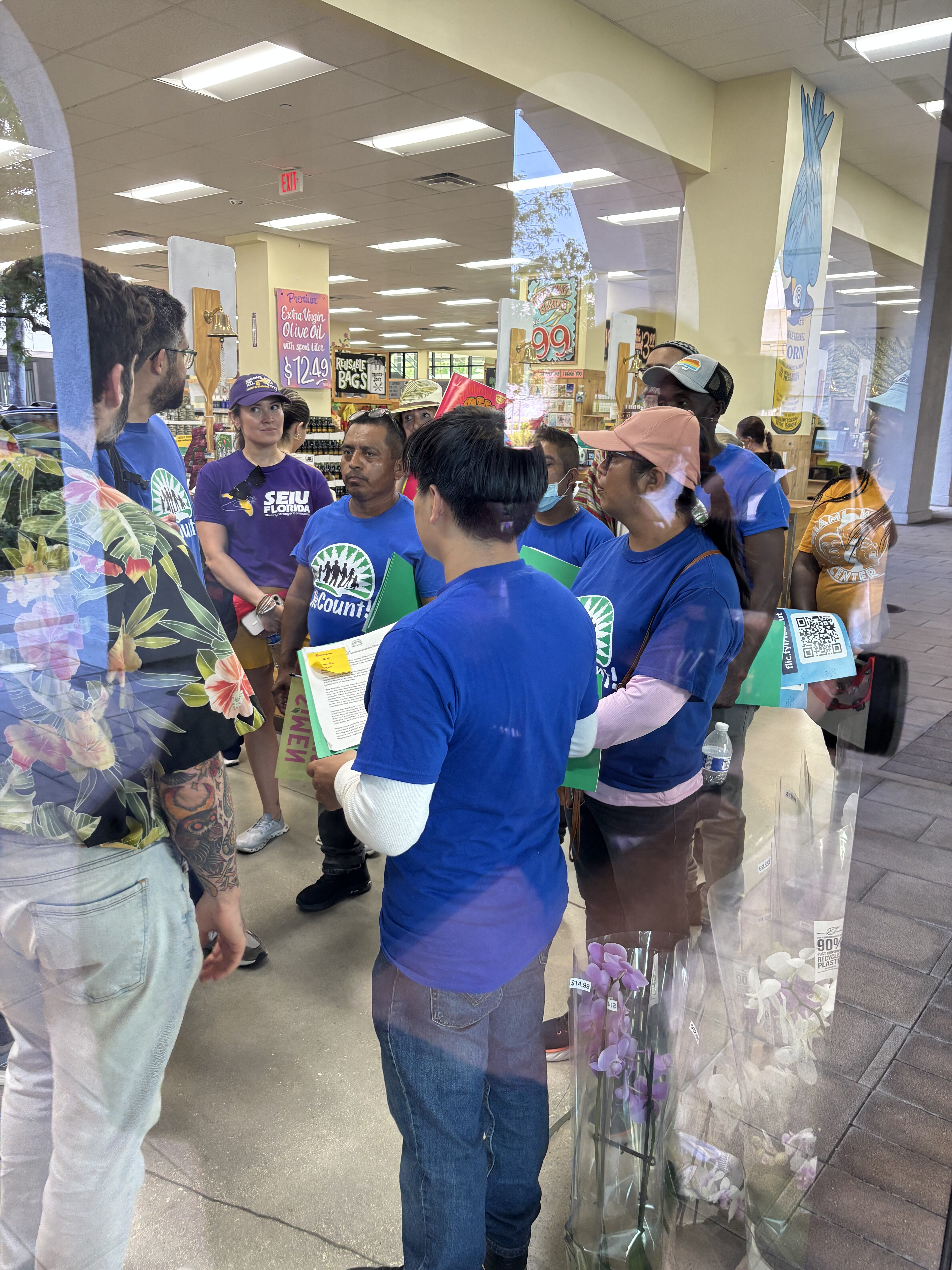
WeCount! provided buses for plant nursery workers from Homestead to participate, many of whom missed work to march with community, labor and faith allies. During the march, a WeCount! delegation of members and allies stopped by several retailers to meet with management, delivering “The Human Cost of Houseplants” report and a letter to corporate leaders requesting a meeting.
“The Human Cost of Houseplants” report surveyed more than 300 workers about their wages and working conditions in the plant nurseries of South Miami-Dade. It found that South Florida’s plant nursery workers — a majority immigrant women workforce — are facing an “invisible” labor and human rights crisis.
Londoño explained that WeCount! previously sent a letter with these details to corporations in April, but received no reply.
“Today, a delegation led by plant nursery workers and community and faith allies, came together, entered the stores, delivered the report directly to the store manager and asked them to share our message with corporate leadership,” Londoño said. “We want a meeting, and we need it now.”
UM students like senior Alejandro Vazquez attended the march. He reflected that, as someone not involved in politics while growing up, he was unaware of local struggles.
Vazquez held a banner that read, “PLANT RETAILERS: WORKERS HAVE THE SOLUTION. JOIN PLANTING JUSTICE.”
“As a Hispanic student, as someone that sees what’s going on and the issues with migrant workers I felt that it would be wrong for me not to come,” Vazquez said. “I think that everyone should find what they believe in, and stand up for it.”
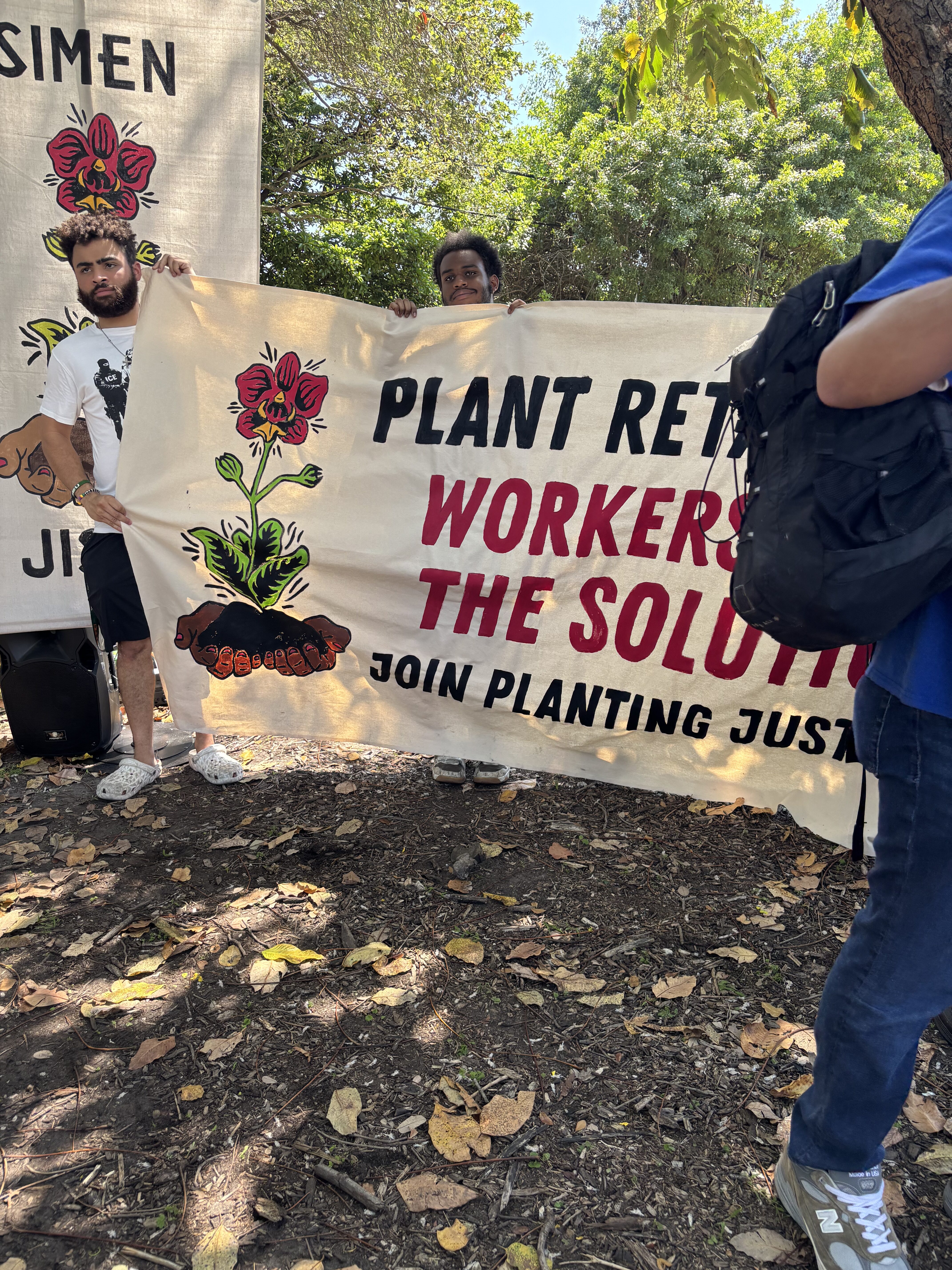
UM medical students Karan Prasad and Elena Bosack attended to support efforts to prevent heat exhaustion among Miami-Dade workers. Bosack said both work at a Doctors Without Borders clinic and frequently see heat-related injuries.
Prasad tries to think ahead to his career as a future physician.
“We’re going to be serving the community,” Prasad said. “So it’s important that we stand up for the community that we’re going to be serving in our future. All these problems that affect [workers] and their health, it trickles down.”
UM and Florida International University alumni also participated in the march.
Laura Muñoz, an FIU alum and member of Florida Student Power, a youth-led nonprofit that builds political power among young people, helped translate speeches from Spanish-speaking workers.
When Muñoz was a student at FIU in 2014, her father passed away in his workplace due to unsafe working conditions. Since then, she has worked to demand better working conditions for workers like her dad. She said that movements like WeCount! need students like her, especially immigrant students, because students are the ones who get access to places of academic and other forms of power.
“We live in a state that has strategically attempted to silence and discourage students [from speaking out],” Muñoz said. “We need to honor the courage of all the students that still do it, and [offer] support so that more can get involved.”
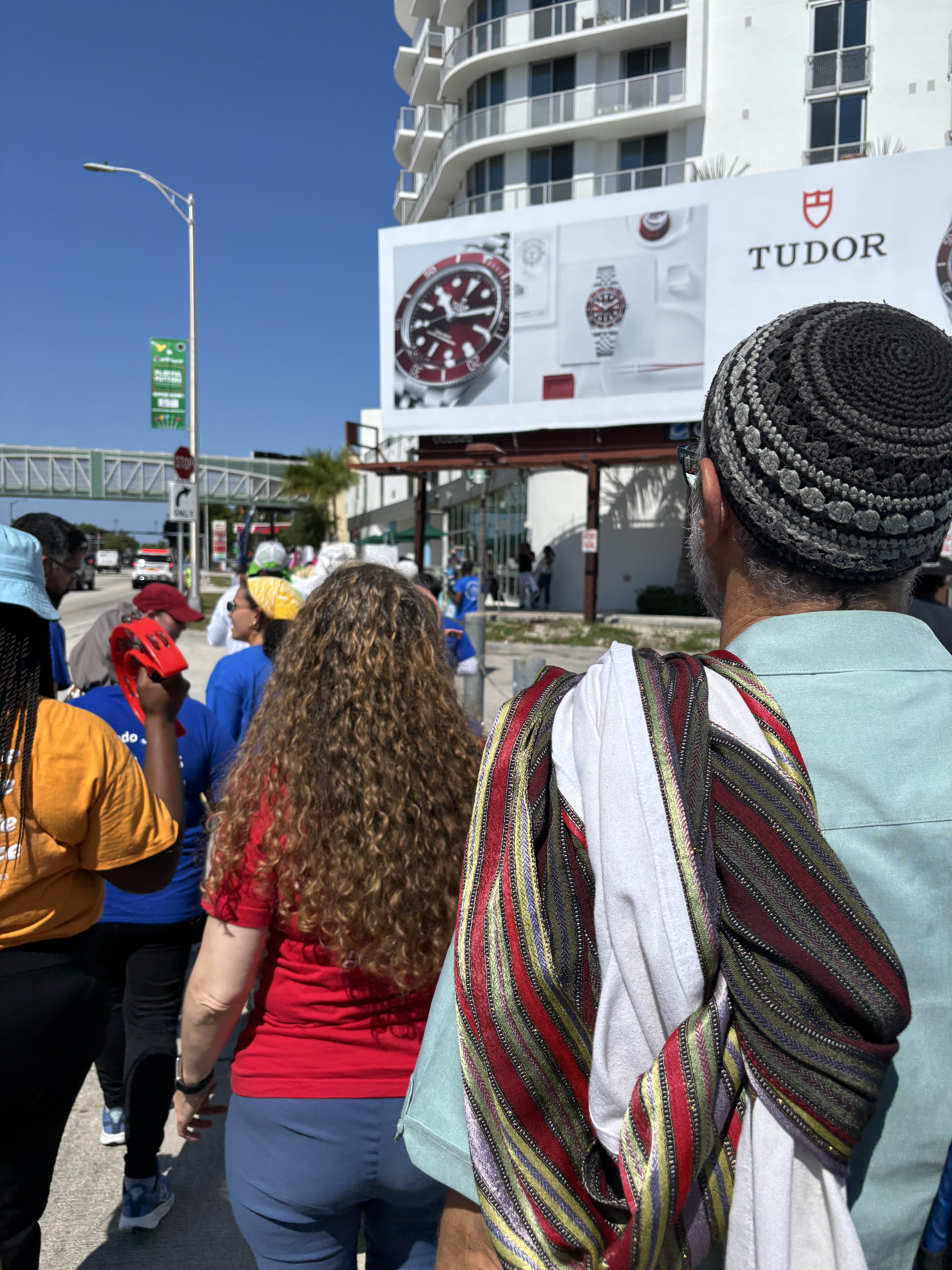
One faith ally at the forefront of the march was Rabbi Nachshon Carmi, an associate rabbi at the Center for Jewish Life at Beth David.
He said he drew inspiration from his own religion to stand with the workers and that, for Jewish students at UM, there is an opportunity for an easy mitzvah. Students may be directly benefiting from the plant nursery workers’ labor without realizing it, and that is not kosher, according to Rabbi Carmi.
“What’s happening in this industry is just not right,” Rabbi Carmi said. “The houseplants that make our homes and offices beautiful are not kosher because they are produced through abusing people in contradiction to the Torah. So [UM students] can join this campaign and feel good about the plants that they buy.”
Politicians, including Richard Lamondin, Miami-born entrepreneur and Democratic candidate for Florida’s State Senate District 38, also attended. District 38 represents UM.
Lamondin said that he believes South Florida workers deserve benefits “as basic as water breaks and shade breaks.” He criticized Florida’s leadership for having workers be the “last on [their minds],” especially as the cost of living is rising in Miami. He also said he believes that UM students should pay attention to the movement.
“Even students that are not from Miami, even students that are planning on going into office jobs and other jobs, we all do better when we all do better,” Lamondin said. “If we don’t stand up for [workers] and make sure that they receive the pay, the rights and the opportunities that everyone else has in this country, then I think we are not doing our job as citizens.”