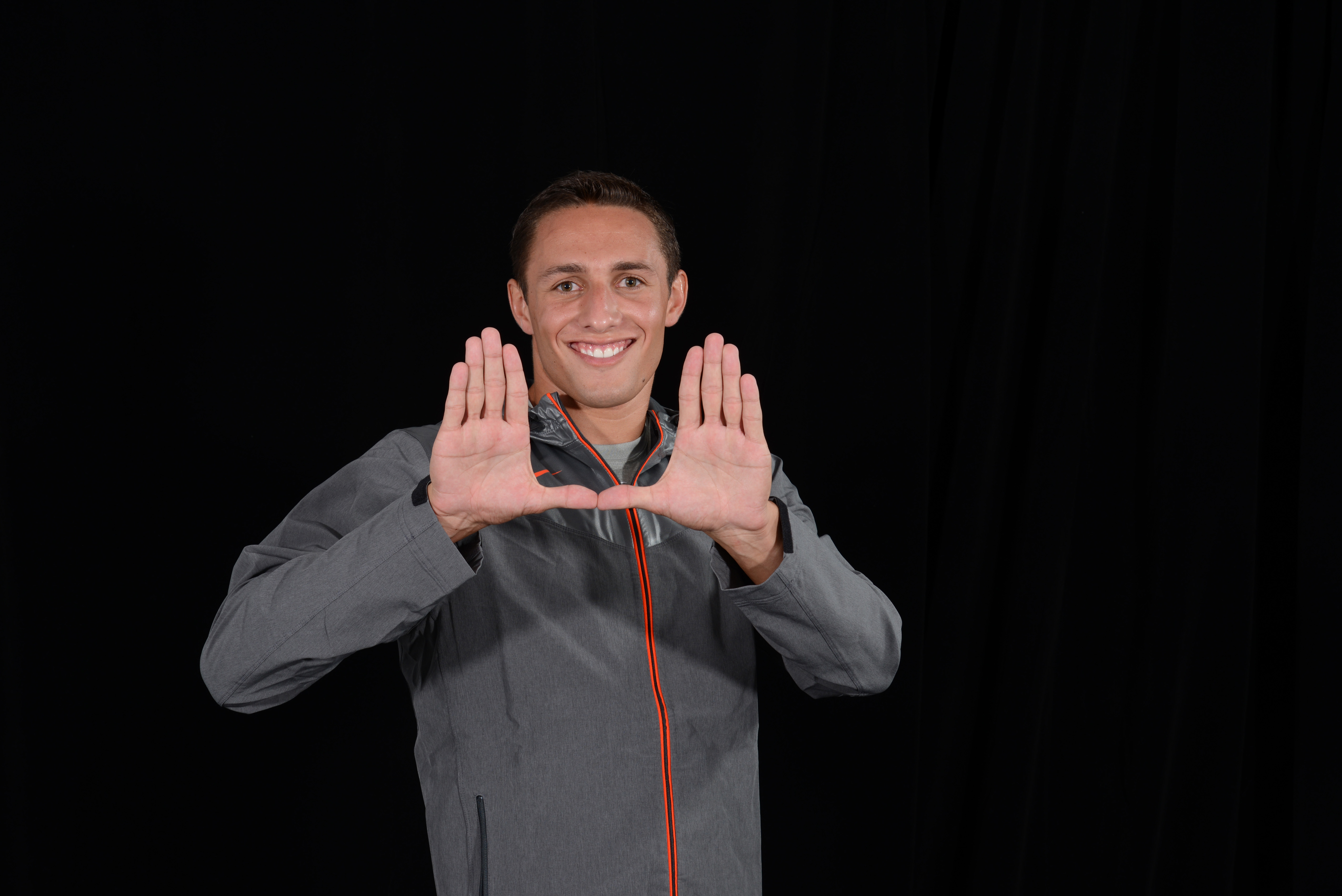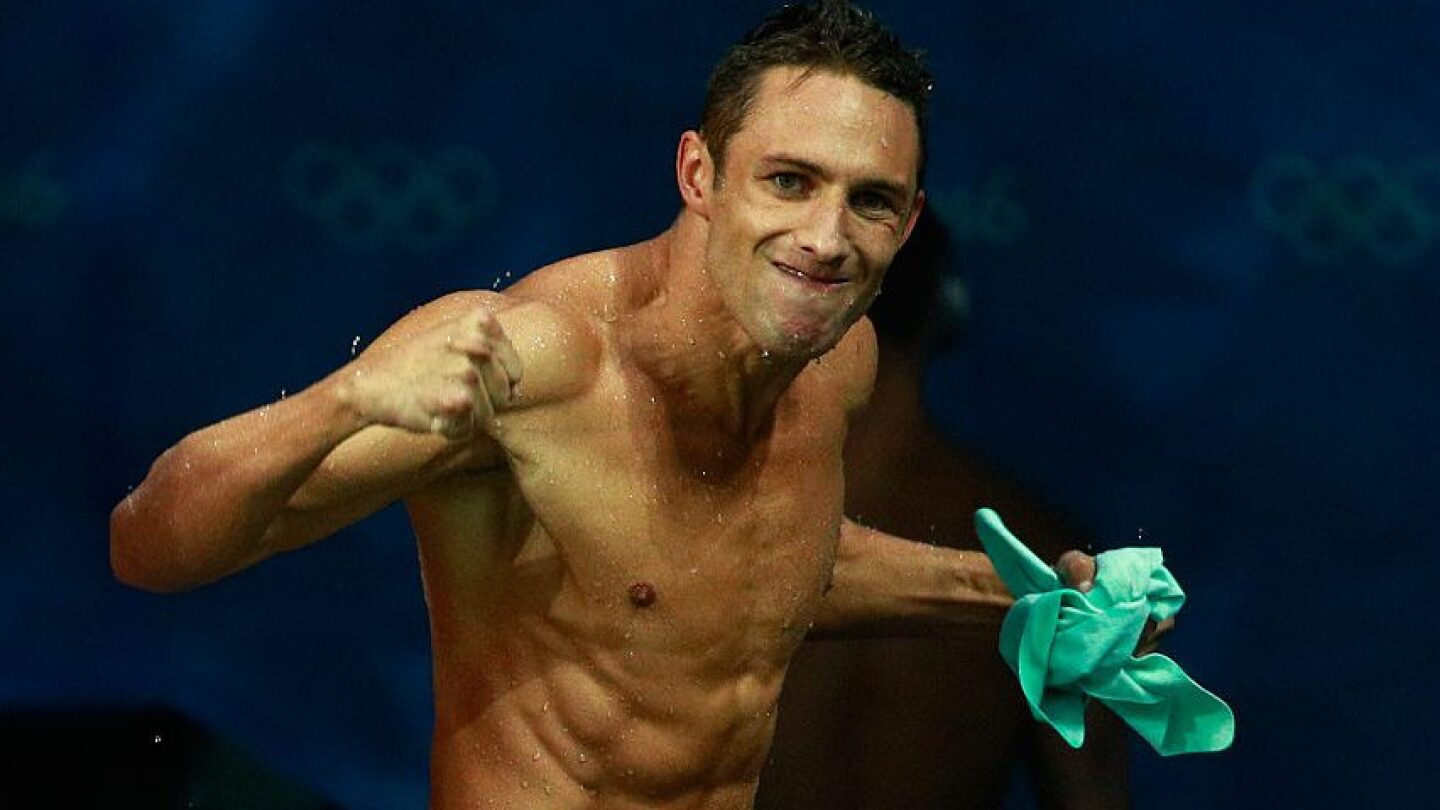
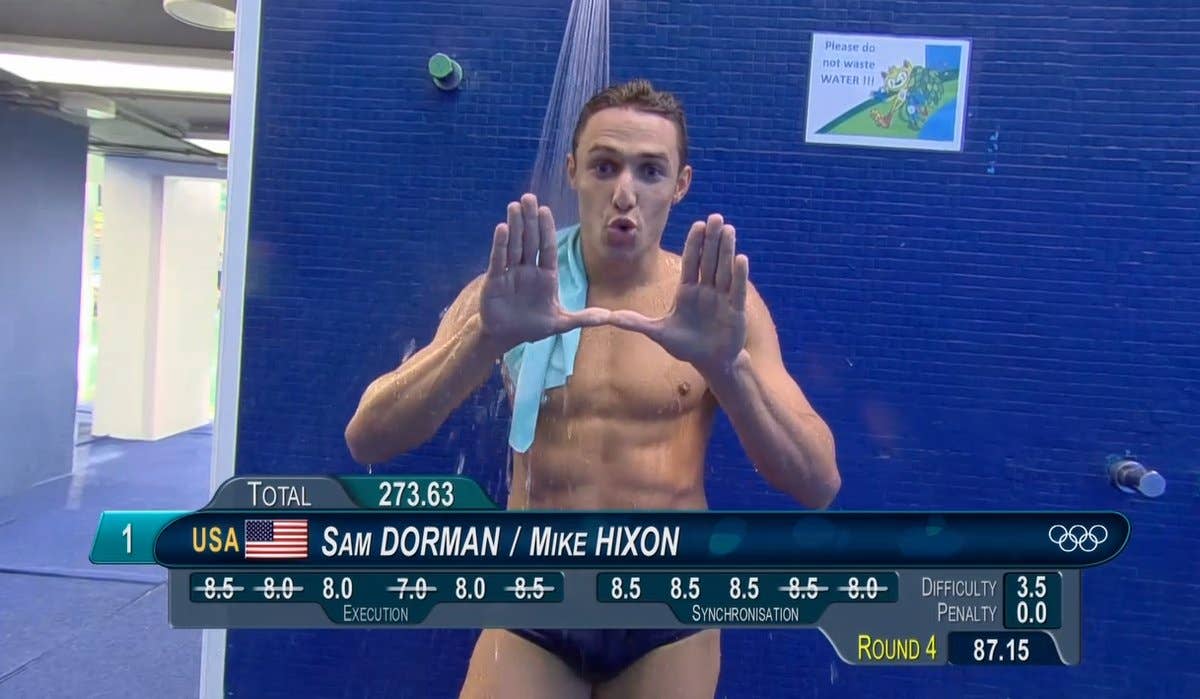
After climbing out of the pool at the 2016 Summer Olympics, Sam Dorman threw up The U.
A small gesture — easy to miss if you weren’t looking for it — but intentional. That moment before he was crowned an Olympic silver medalist wasn’t just about the enormity of what he had accomplished; it was an honor to everyone and everything that got him to that point.
Now, ten years later, Dorman’s name was etched into the University of Miami Athletics Hall of Fame. It’s a permanent honor for a career built on years of sacrifice for singular moments that never lasted long enough.
Diving, unlike its athletes, doesn’t stretch. It doesn’t linger.
It compresses.
Years of training collapse into seconds in the air and into a single splash that decides everything.
Dorman spent nearly two decades building toward that compression.
At the Olympics, it lasted less than a minute. He earned a silver medal alongside synchro partner Mike Hixon, stood on the podium under the American flag, listened to raucous cheering — but then it was over.
“There’s really no such thing as a professional diver,” Dorman said. “The Olympics is it.”
Unlike other sports, where there are stages of professional leagues that feed into one that will sustain careers for decades, divers don’t have that option. The Olympics are not the beginning of something bigger, nor are they a stepping stone.
The Olympics are the end.
It’s bittersweet. You spend your whole life working towards this competition, and, in turn, it throws cold water on your face to remind you that time’s almost up.
But decades before all of that inevitability, diving didn’t feel like something that would eventually end.
For the Olympian, it started as a game.
Growing up in the Arizona heat, Dorman spent his childhood summers in a family friend’s backyard pool, where the earliest version of diving looked a lot more like play than pursuit. A red ball would be tossed into the water, and Dorman, balanced on someone’s back, would watch the dive before trying it himself.
No judges, no scores, no consequence for missing.
Just the feeling of cutting cleanly into the water.
Somewhere along the way, that feeling evolved into a hunger for more.
The game became repetition, repetition became expectation and expectation became identity.
That momentum took him all the way to various national and world championships.
While diving for UM, he was crowned the 2015 NCAA champion in the 3-meter springboard with a score of 529.10 points, setting an NCAA record as the first diver to ever exceed the 500-point mark.
At UM, under longtime head coach Randy Abelman and assistant coach Dario di Fazio, who has since taken over the program, diving continued to sharpen into something precise, controlled and demanding.
By this point, diving had long since stopped being something Dorman did. It had become integral to who he was.
And then, abruptly, it wasn’t anymore.
“Post-Olympic depression is real,” Dorman said. “I spent 19, 20 years training for one hour of competition. Once that’s over, what happens next?”
But that’s the cycle every diver finds themselves tumbling through eventually.
There’s no slow fade into the truth — just a finish line you don’t realize you’ve crossed until you’re already standing on the other side of it.
Nearly a decade after his first and only Olympic medal, Dorman laughs when he talks about life after it — what’s changed and what remains. He’s happy, working for a company that manufactures diving springboards and still spending time in the pool — for fun now, rather than pushing the limits of physics in a body that once felt more like weaponry than anything else.
But freedom, without structure, can feel like falling — except this time, there’s no water waiting to catch you.
Which is why being honored for his career carries its own kind of weight.
It’s a strange contradiction. Diving is a sport defined by movements and routines that begin and end in the span of a few seconds, but have the potential to be remembered forever.
There is a timer on every diver’s career. The human body can only handle so much twisting, so much compressing, until it’s time to walk away for good.
Maybe that’s where the meaning of it all settles. The pool is fixed, even if the career that unfolded within it never was.
“I wouldn’t trade it for anything,” Dorman said. “If I could do it all over again, I wouldn’t change a thing.”
The injuries, the pressure, the tears and the heartbreak were worth the joy he found in the deep end of a pool.
He paused. Just for a second.
“I just hope I represented Miami well,” Dorman said. “I owe them a lot.”
Now, with his place in Miami’s legacy secured, those moments no longer live only in recollection.
Some things are meant to be eternal, even in a fleeting sport like diving. That’s what the hall of fame does — it gives permanence to a career built on moments that vanished almost as soon as they happened.