



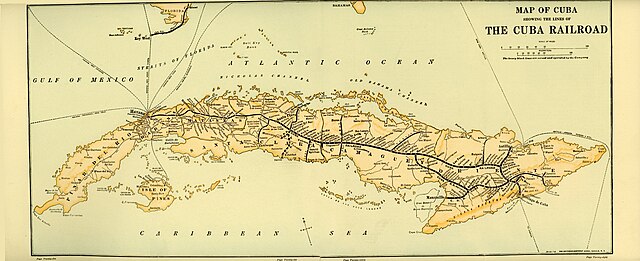
Cuba, an island 90 miles off the coast of Miami, is experiencing a worsening economic and energy crisis. Prolonged power outages, fuel shortages and rising food prices, tied in part to policies from Donald Trump’s administration, are affecting families on the island and students in Miami who remain closely linked to relatives there.
The island has faced economic and energy challenges for decades. After the Cuban Revolution, the island adopted a state-controlled economy and became heavily dependent on support from the Soviet Union. When the Soviet Union collapsed in 1991, Cuba entered a severe economic crisis known as the “Special Period,” marked by widespread shortages of food, fuel and electricity.
Conditions improved slightly in the 2000s with oil support from Venezuela. But as of mid March, U.S intervention in Venezuela has exacerbated issues for Cuba. With efforts to remove Venezuelan President Nicolas Maduro, a blockade of Venezuelan oil and threats of tariffs on Mexico, the Trump administration effectively shut off oil flow to Cuba — aiming to push the communist-run island toward political and economic reforms.
With few allies to turn to, Cuba is running out of resources. As the crisis drags on, life in Cuba is slowly coming to a halt as schools are being shut down and businesses having to stop operating.
“There has been a perfect storm,” said Michael J. Bustamante, director of Cuban Studies and of the Cuban Heritage Collection at UM. “More and more Cuban citizens do not accept the argument that their problems can be laid at the feet of U.S. sanctions alone. Cubans [are] speaking out openly about their desire for not just economic improvement, but political change.”
As possible governmental changes loom over Cuba, students and faculty at the University of Miami, many with family on the island are closely following the unfolding crisis that, for them, is far from distant news.
“Some of us may see reason for great hope that positive change is finally on the horizon,” said Bustamante. “Others may worry rumors of negotiations between the current U.S. administration and the Cuban government will have unsatisfying results. Either way, the situation impacts all of us personally.”
For students with relatives still living in Cuba, that sense of hope is tied to the possibility of reconnecting with relatives and seeing an island they have only heard about.
“I have a higher chance of meeting family members that I have never met before, said Lazaro Chavez, a senior at the University of Miami. “My father’s mother still lives on the island and her business has been struggling for decades but the situation has worsened things along with her aligning health.”
The developments mark a potential turning point after years of economic hardship and political uncertainty on the island. For students with family ties to Cuba, even a small sign of change can spark optimism.
“Now more than ever it feels like there might be a light at the end of the tunnel,” said Jessica Valdes, a senior at UM.
Those aspirations, however, also raises concerns for relatives and the communities currently on the island having to navigate daily shortages and instability.
“Based on what we’re hearing from family and friends in Cuba, there’s no power and no running water,” said Valdes. “It’s like being homeless here, except you just have four walls around you — and even those walls are rotting.”
Beyond the impact the unrest has on individuals, the unfolding events on the island can have broader implications to Florida and the U.S. Changes in Cuba can influence migration patterns, economic opportunity and relations with the Cuban diaspora in South Florida.
“What happens in Cuba will have significant ripple effects in the United States, and especially in South Florida, whether in terms of renewed migration or potential opportunities for greater economic integration and trade,” said Bustamante. “The Cuban diaspora in South Florida represents a significant resource of capital and Cuba’s future.”
Miami offers a unique perspective on Cuba’s history and ongoing struggles. The city’s large Cuban community means that residents, whether they are of Cuban descent or not,
feel the impact.
“Miami almost feels like its own part of the country, said Chavez. “Things that fly here certainly wouldn’t fly in the Midwest or LA or NY, and when everyone around you has experienced or someone they know has experienced oppression at the hands of the regime so it is a very different experience than someone would have if they’re from Kansas for example. It’s a much deeper history.”
For UM students, the crisis is more than just news, it is personal, intertwined with family, heritage and identity. Despite the uncertainty and challenges on the island, many hold onto hope for a brighter future.
“We hope and pray for the people of Cuba and for their long awaited freedom and end to their suffering,” said Emma Balleste, a junior at UM.
“My hope is that one day Cuba will change and I’ll be able to visit the island of my family, my culture, and my identity,” Valdes added.
As Cuba continues to navigate these uncertain times and affect the daily lives of families on and off the island, many hold onto hope that political or economic changes could bring new opportunities for the country’s future.